
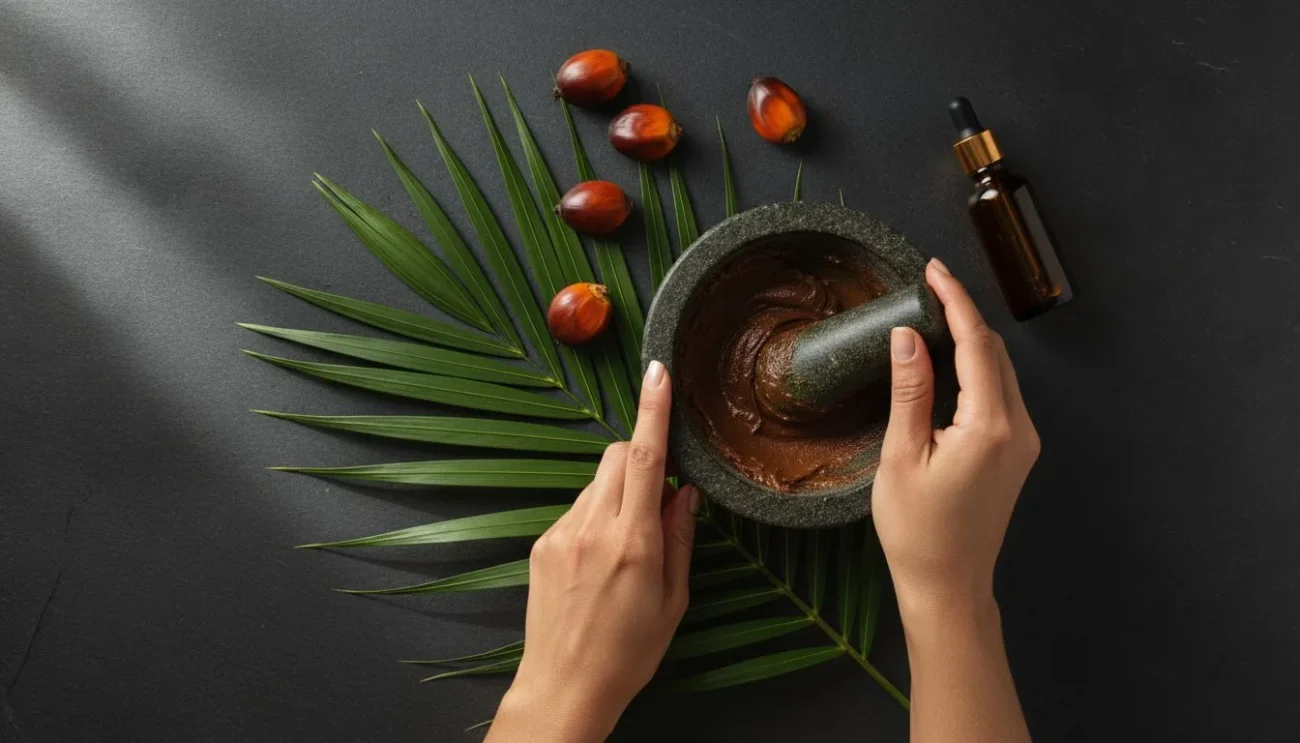
A batana oil hair mask recipe does not need many ingredients. Batana is already rich and thick, so most masks simply soften it, loosen it with a lighter oil or butter, and sometimes add a little essential oil for scent. This guide gives four recipes, explains how to mix and warm them, how to apply and rinse a mask, and how often to use one. Batana masks condition dry hair, add shine and make detangling easier. They do not make hair grow.
Key Takeaways
- Batana is a thick paste at room temperature, similar in texture to caramel, so warm it gently before mixing.
- Mixing batana with jojoba oil, ojon oil or shea butter makes it easier to spread and suits different hair types.
- Keep essential oils in a mask to about 1 percent, and patch test first.
- Apply to dry hair, leave on for 30 minutes to overnight, then shampoo twice.
- Once a week suits most hair. Fine or low porosity hair may need less.
Why Batana Works as a Mask Base
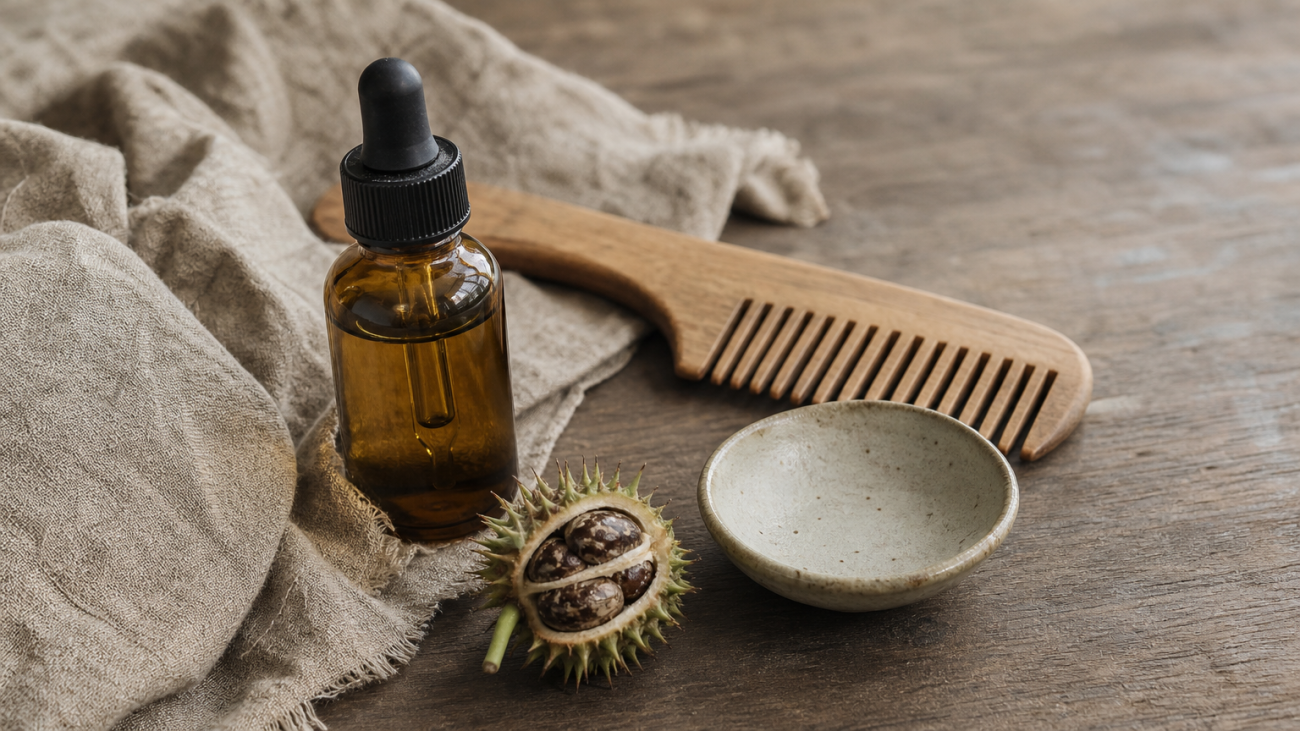
Batana comes from the kernels of the American oil palm, Elaeis oleifera, in La Mosquitia, Honduras. Miskito families make it by boiling the kernels in water and skimming off the oil by hand. As it cools, it sets to a thick paste, golden to deep brown. For more on where it comes from, see our batana ingredient page and batana oil paste guide.
That rich, heavy texture is what makes it a good mask base. It coats the hair, softens dry and rough lengths, adds shine and helps comb-outs go more smoothly. On its own it can feel heavy, which is why it is often mixed with a lighter oil.
What a Batana Mask Can and Can’t Do
A batana mask is a conditioning step for the hair you already have. It can leave dry, coarse or processed hair feeling softer and looking glossier, and conditioned hair tangles and snaps less. It cannot undo damage inside the hair, thicken it or make it grow. We explain the evidence in Batana Oil for Hair: What It Does and Doesn’t Do.
Batana Oil Hair Mask Recipes
Each recipe makes enough for one mask on shoulder-length hair. Halve it for short hair and increase it for long or very thick hair.
1. Basic Batana and Jojoba Mask
For most hair types. The jojoba makes the batana easier to spread.
- 2 tablespoons batana oil
- 1 tablespoon jojoba oil
2. Rich Shea and Batana Mask
For very dry, coarse, curly or coily hair.
- 2 tablespoons batana oil
- 1 tablespoon shea butter nilotica
- 1 teaspoon jojoba oil
3. Batana and Ojon Blend
Batana and ojon come from the same palm. Batana is a thick paste and ojon is a liquid oil, so mixing the two gives a softer, more pourable mask.
- 1 tablespoon batana oil
- 1 tablespoon ojon oil
4. Scented Scalp and Hair Mask
The basic mask with a little essential oil for scent, about 1 percent.
- 2 tablespoons batana oil
- 1 tablespoon jojoba oil
- 2 drops lavender essential oil
- 2 drops rosemary verbenone essential oil
Leave out the essential oils if your scalp is sensitive, if you are pregnant, or if you are making a mask for a child.
Want a ready-made pairing? Our Hair Glow Kit and Scalp Care Kit both include batana.
How to Mix and Warm a Batana Mask
Step 1: Warm the batana. Spoon the batana and any butter into a small heatproof bowl and stand it in a larger bowl of hot water for a few minutes, or use a double boiler on low heat. Avoid the microwave, which heats unevenly and can scorch the edges.
Step 2: Mix. Once the batana has softened, stir in the liquid oil. Let the mixture cool until it feels comfortably warm, not hot, on the inside of your wrist.
Step 3: Add essential oils last. Stir them in once the mix has cooled a little. Patch test the finished mask on the inside of your forearm and wait 24 hours before using it on your scalp for the first time.
How to Apply and Rinse
Step 1: Section your hair. Divide dry hair into four sections. A heavy mask is easier to spread evenly this way.
Step 2: Apply. Work the mask through the mid-lengths and ends first, where hair is driest. Then massage a little into the scalp with your fingertips if it feels dry.
Step 3: Cover and wait. Put on a shower cap, or wrap your hair in a warm, damp towel. Leave the mask on for at least 30 minutes, up to a few hours, or overnight under a silk scarf. See Can You Leave Batana Oil in Your Hair Overnight?
Step 4: Rinse. Apply shampoo to dry hair before wetting it, which helps break up the oil, then rinse with warm water. Shampoo a second time, then condition as usual. A cool final rinse leaves hair feeling smoother.
Some people prefer to apply a mask to freshly washed, towel-dried hair and rinse it with conditioner only. That works too, but because batana is heavy, most people find the pre-wash method above easier to rinse out.
How Often to Use a Batana Mask
- Very dry, coily or chemically processed hair: once or twice a week.
- Normal or wavy hair: once a week or every other week.
- Fine, oily or low porosity hair: every two to four weeks, using the lighter batana and ojon blend. For tightly closed cuticles, see batana oil for low porosity hair.
If your hair starts to feel coated or limp, use the mask less often or use less batana per mask.
Choosing Your Batana
Look for a single-ingredient product, Elaeis oleifera kernel oil, with a named origin in Honduras. Real batana is a thick paste at room temperature; a thin, pourable product sold as pure batana has likely been mixed with other oils. Our batana is 100% pure, boiled and skimmed by hand in La Mosquitia, and comes in a 3.4oz (100ml) jar, a 6oz jar and a 1 litre pack. For a full buying checklist, see Pure Batana Oil: A Label and Product Checklist.
Frequently Asked Questions
How often should I use a batana oil hair mask?
Once a week suits most hair. Very dry or coily hair may like it twice a week; fine or oily hair may only need it every two to four weeks.
Can I leave a batana mask in my hair overnight?
Yes. Cover your hair with a shower cap or silk scarf to protect your bedding, then shampoo twice in the morning.
Does a batana mask help hair grow?
No study shows that it does. A batana mask conditions dry hair, adds shine and makes detangling easier, so less hair snaps along the way. It does not change how fast hair grows. If you are worried about thinning or shedding, see a doctor or a dermatologist.
Can I change the smell of batana?
Yes. Unrefined batana has a natural, earthy smell. Two drops each of lavender and rosemary verbenone in a mask, as in recipe 4, soften it. Keep essential oils to about 1 percent of the mask.
Is a batana mask safe for colour-treated hair?
It is generally fine on coloured or chemically processed hair and helps it feel softer. Test a small section first, especially on very light or freshly coloured hair.
Can I use a batana mask if I have an oily scalp?
Yes, but keep it mostly to the lengths and ends, use the lighter batana and ojon blend, and shampoo twice afterwards.
What is the easiest way to wash batana out?
Apply shampoo to the oiled hair before wetting it, massage it in, then add warm water and rinse. Shampoo a second time and follow with conditioner.
Should I apply a batana mask to wet or dry hair?
Dry hair is easiest. The mask spreads more evenly and is simpler to wash out with shampoo afterwards. Applying it to damp, freshly washed hair also works if you prefer a lighter finish.

Leave a comment
You must be logged in to post a comment.