
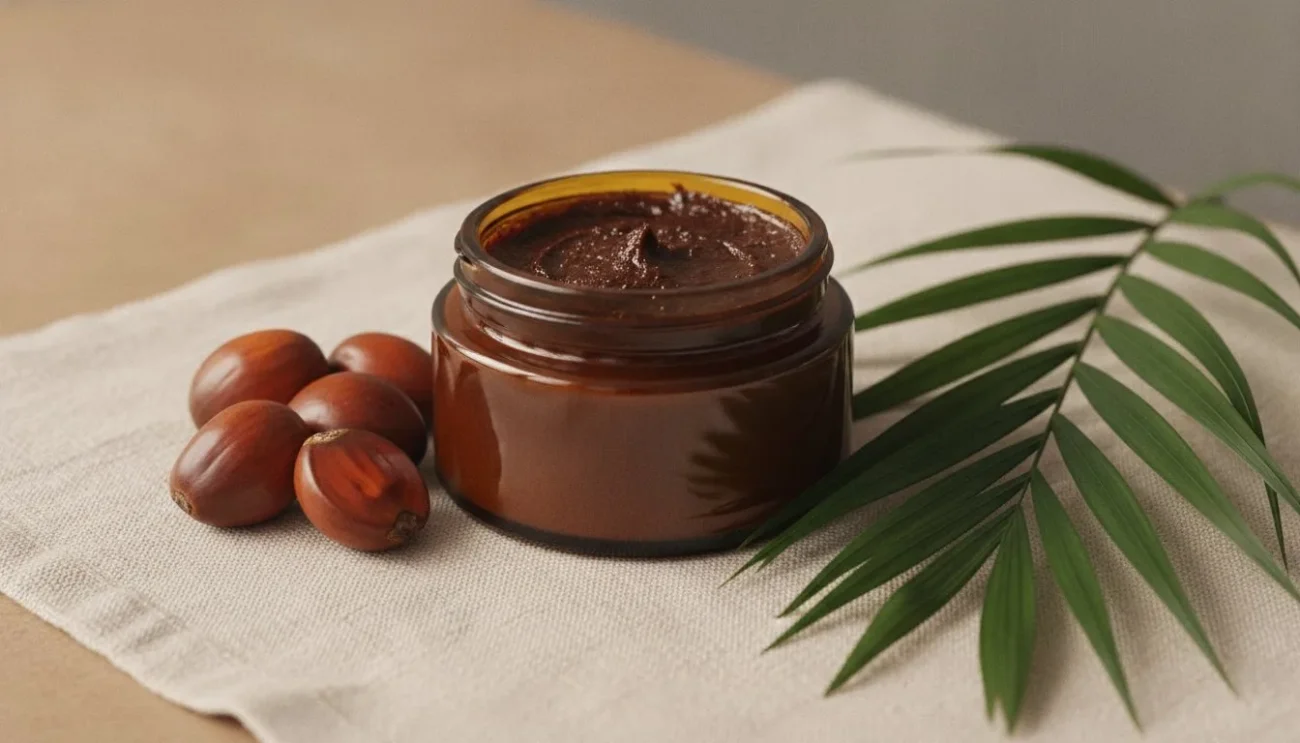
If your Batana oil pours like water at room temperature, it isn’t the hair restoration miracle you were promised. True potency resides in the solid. This frustration is valid in a market where search interest for batana oil paste surged by over 9,900% in early 2024, inviting a wave of counterfeit products that compromise botanical integrity for profit. You deserve a source that values substance over marketing fluff.
We understand the demand for transparency. This guide delivers the scientific and traditional reality of this Honduran treasure, tracing its path from the Miskito people to its superior therapeutic profile. You will learn to identify the smoky, unrefined markers of quality and understand why raw, unrefined textures are non-negotiable for scalp health. We examine the specific nutrient density of the American palm and provide the definitive standards required to verify a product’s origin and efficacy.
Key Takeaways
- Understand why authentic batana oil paste must remain a solid at room temperature to preserve its high concentration of saturated fatty acids and botanical potency.
- Discover the traditional, labor-intensive extraction methods used by the Miskito people in Honduras that distinguish raw botanical integrity from industrial refinement.
- Learn why unrefined paste offers superior hair shaft protection compared to liquid oils due to its higher levels of unsaponifiable matter and minimal heat exposure.
- Master the proper therapeutic application technique, involving heat activation between the palms, to maximize nutrient uptake and scalp circulation.
- Identify genuine Batana through critical sensory markers, specifically its distinct dark brown hue and characteristic roasted-nut aroma.
What is Authentic Batana Oil Paste?
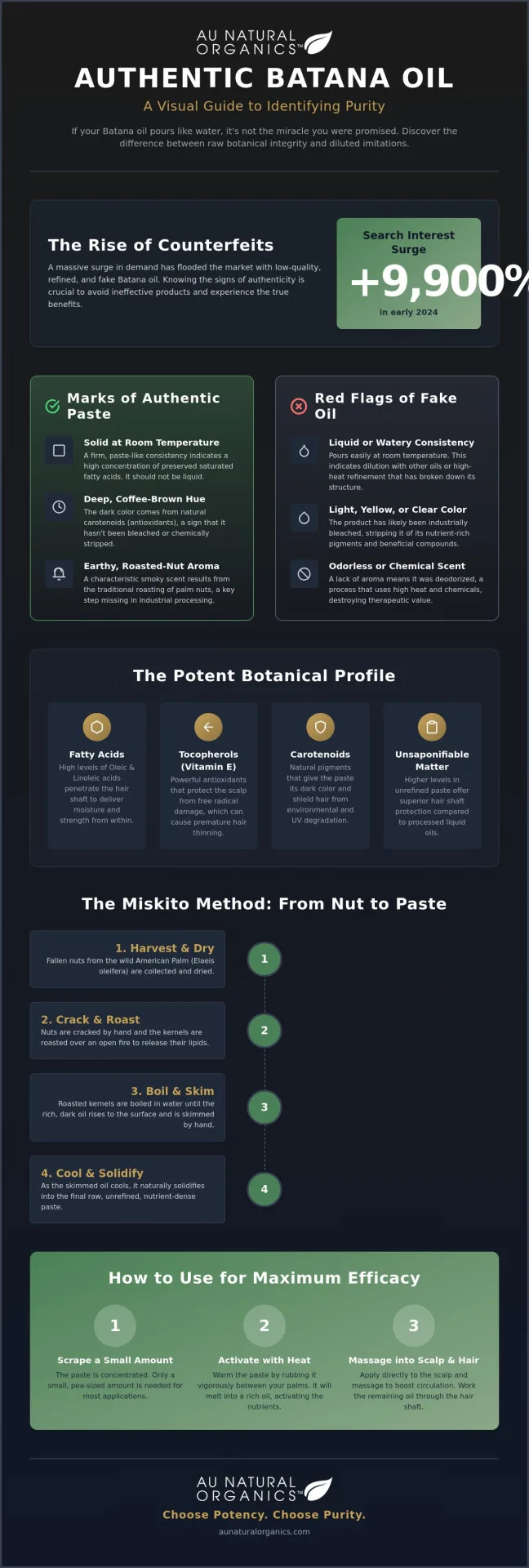
Authentic batana oil paste is the raw, unrefined fat extracted from the American Palm. It is not a formulated cream or a synthetic mask. Instead, it is a pure botanical lipid that serves as the “miracle oil” of the Miskito people of Honduras. At room temperature, the high concentration of saturated fatty acids maintains a solid, paste-like consistency. This physical state is a primary indicator of quality. If a product flows easily or lacks resistance at moderate temperatures, it has likely undergone industrial refinement or dilution.
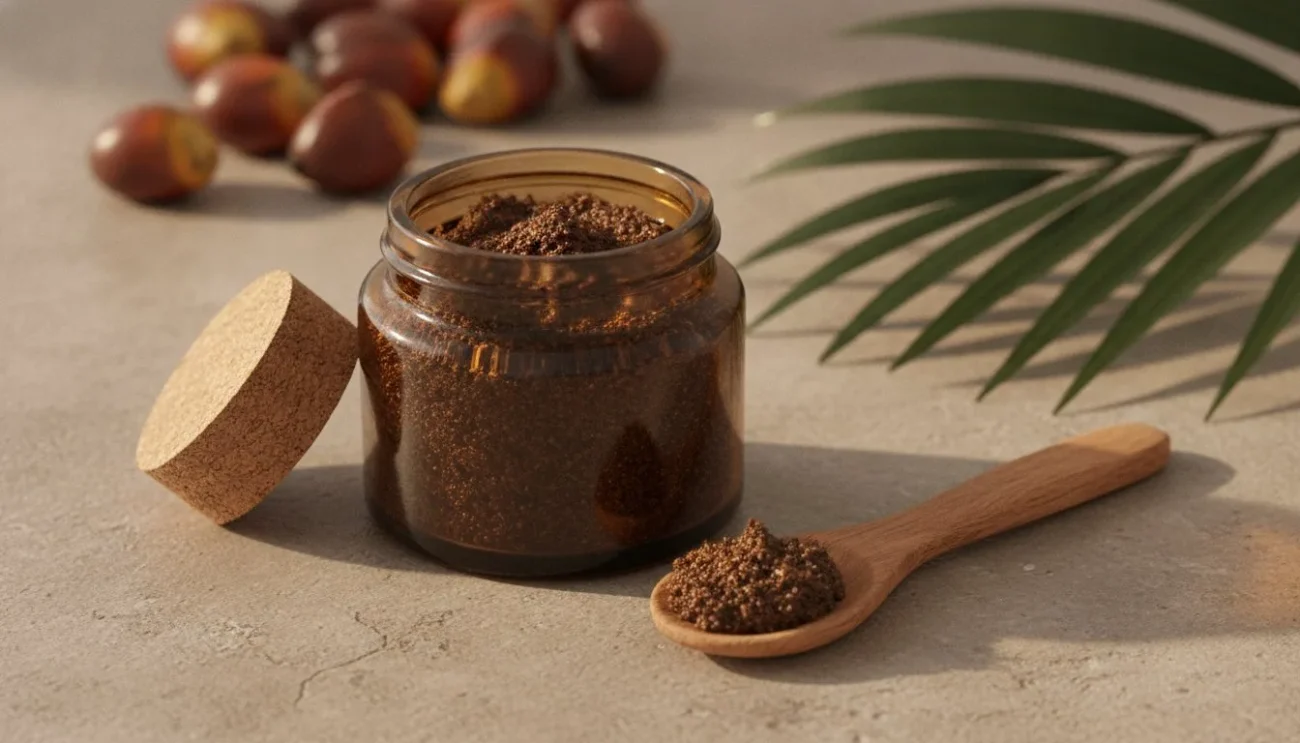
Visual and olfactory markers are equally definitive. A genuine paste is characterized by its deep coffee-brown hue and a distinctive, earthy aroma reminiscent of roasted nuts. These traits aren’t aesthetic choices; they’re the direct result of traditional, low-heat extraction methods that leave the plant’s cellular structure intact. When you choose a raw paste, you’re choosing a substance that hasn’t been bleached, deodorized, or stripped of its biological value.
The Botanical Profile of Elaeis Oleifera
The foundation of this potent treatment is the Elaeis oleifera, a palm species native to the tropical wetlands of Central and South America. Unlike the more common African oil palm, the American Palm is often wild-harvested in its natural habitat, ensuring a chemical profile shaped by rich, undisturbed soil. This wild-harvested nature contributes to a nutritional density that refined liquid alternatives cannot match. The paste’s dark coloration is driven by a high concentration of carotenoids. These natural pigments do more than provide color; they function as robust antioxidants that shield the hair and scalp from environmental degradation.
Chemical Composition and Nutrient Density
The efficacy of batana oil paste lies in its complex lipid structure. It contains high levels of Oleic and Linoleic acids, which are critical for deep follicular penetration. These fatty acids allow the oil to bypass the hair’s outer cuticle, delivering moisture and structural support directly to the cortex. Beyond simple hydration, the paste is a rich source of Tocopherols and Tocotrienols. These specific forms of Vitamin E provide essential scalp protection, neutralizing free radicals that can lead to premature thinning or hair loss.
Preserving these nutrients requires a refusal to use high-heat industrial processing. Many commercial oils are subjected to temperatures that denature sensitive proteins and vitamins. The paste form remains the gold standard because it preserves these heat-sensitive nutrients through a cold or low-heat traditional process. This ensures that every application delivers the full therapeutic spectrum of the original botanical source.
Traditional Extraction: The Origin of Purity in Honduras
Purity is not accidental. It is a geographic and cultural legacy. While many brands use “Honduras” as a vague marketing buzzword, authentic batana oil paste is exclusively tied to the coastal regions of La Mosquitia. This is the only place where the relationship between the land, the American Palm, and the indigenous Miskito people remains unbroken. The extraction process is a manual, labor-intensive tradition passed through generations, requiring a level of patience that industrial manufacturing cannot replicate.
The journey from palm nut to finished paste involves a meticulous series of steps. After harvesting the fallen fruit, the nuts are dried, cracked by hand, and roasted over an open fire to release their lipids. These roasted kernels are then boiled in large pots until the oil rises to the surface, where it is carefully skimmed by hand. As the liquid cools, it naturally solidifies. This transition from liquid to solid creates the raw, unrefined texture that defines the high-quality batana oil paste used for centuries in hair restoration.
The Miskito People: Guardians of Batana
The Miskito people are the true custodians of this botanical wisdom. Historically, they are known as the “Tawira,” which translates to “the people of beautiful hair.” This title is a direct testament to their long-standing use of Batana for both scalp health and skin protection. Their harvesting practices are inherently sustainable; they rely on wild palm groves rather than clear-cut plantations. By following these ancestral rhythms, they prevent the over-exploitation of the forests, ensuring that the Traditional Extraction: The Origin of Purity remains a viable resource for future generations. Ethical sourcing is not just about the final product. It’s about preserving the dignity of the heritage behind it.
Fire-Extraction vs. Industrial Cold-Pressing
There is a persistent debate regarding “raw” vs “cooked” botanical lipids. In the case of Batana, fire-extraction is essential to its character. The gentle roasting process is what develops the signature smoky, coffee-like aroma and the deep brown coloration. Industrial cold-pressing, while useful for lighter carrier oils, often fails to extract the full spectrum of heavy, therapeutic fats found in the palm nut. Without the traditional boiling and cooling cycle, the oil may lack the density required to form a shelf-stable paste. This fire-based method ensures the unsaponifiable matter, which provides the barrier protection your hair needs, remains concentrated. For those who value this level of uncompromising quality, choosing authentic Batana oil ensures you are receiving a product that hasn’t been stripped of its traditional potency.
Batana Paste vs. Liquid Oil: A Technical Comparison
Texture is a direct reflection of chemical integrity. If a product remains liquid at room temperature, it has been fundamentally altered from its natural state. The primary difference between the paste and its liquid counterparts lies in the degree of filtration and heat exposure. High-quality batana oil paste is a complex matrix of lipids that remains solid until it reaches approximately 86°F (30°C). Upon contact with human skin, the paste undergoes a phase change, melting into a rich oil that is immediately bioavailable to the hair and scalp.
This solid state is not a matter of convenience; it is a matter of potency. Raw paste contains a significantly higher concentration of unsaponifiable matter than filtered oils. These are the plant sterols and vitamins that don’t convert to soap when processed. They provide superior barrier protection for the hair shaft, sealing the cuticle against environmental stressors. Liquid “Batana oils” often lack these heavy, protective compounds because they’ve been stripped away to ensure the product remains “pourable” in colder climates. In many cases, these liquids are simply fractionated versions or, worse, diluted with cheaper carrier oils to mimic the appearance of a botanical extract. If you are evaluating how Batana’s unique fatty acid profile compares to other popular growth oils, our in-depth analysis of batana oil vs castor oil for hair provides a molecular-level breakdown to guide your decision.
Fractionation and the Loss of Potency
Processing Batana to remain liquid at cold temperatures requires fractionation. This industrial method involves cooling the oil and removing the solid components, specifically the long-chain fatty acids like stearic acid. While this makes the product easier to pump or pour, it removes the very elements that provide structural support to damaged hair. When these saturated fats are filtered out, the therapeutic profile of the oil is compromised. Convenience in application almost always comes at the expense of results. A truly unrefined batana oil paste retains these lipids, ensuring the hair receives a full spectrum of nourishment.
Texture and Absorption Rates
The physical density of the paste provides unique occlusive properties. It is exceptionally effective for sealing split ends and creating a protective sheath around the hair fiber. Unlike thin oils that may evaporate or rub off quickly, the paste acts as a slow-release nutrient delivery system for the scalp. It stays where you apply it, allowing for deeper penetration over time. For a deeper understanding of how these textures impact quality, consult our Authentic Batana Oil: The Professional Guide to Sourcing and Purity. Selecting the right consistency is the first step in ensuring your hair restoration journey is rooted in botanical reality rather than marketing convenience.
Therapeutic Application: How to Use Batana Paste for Hair Growth
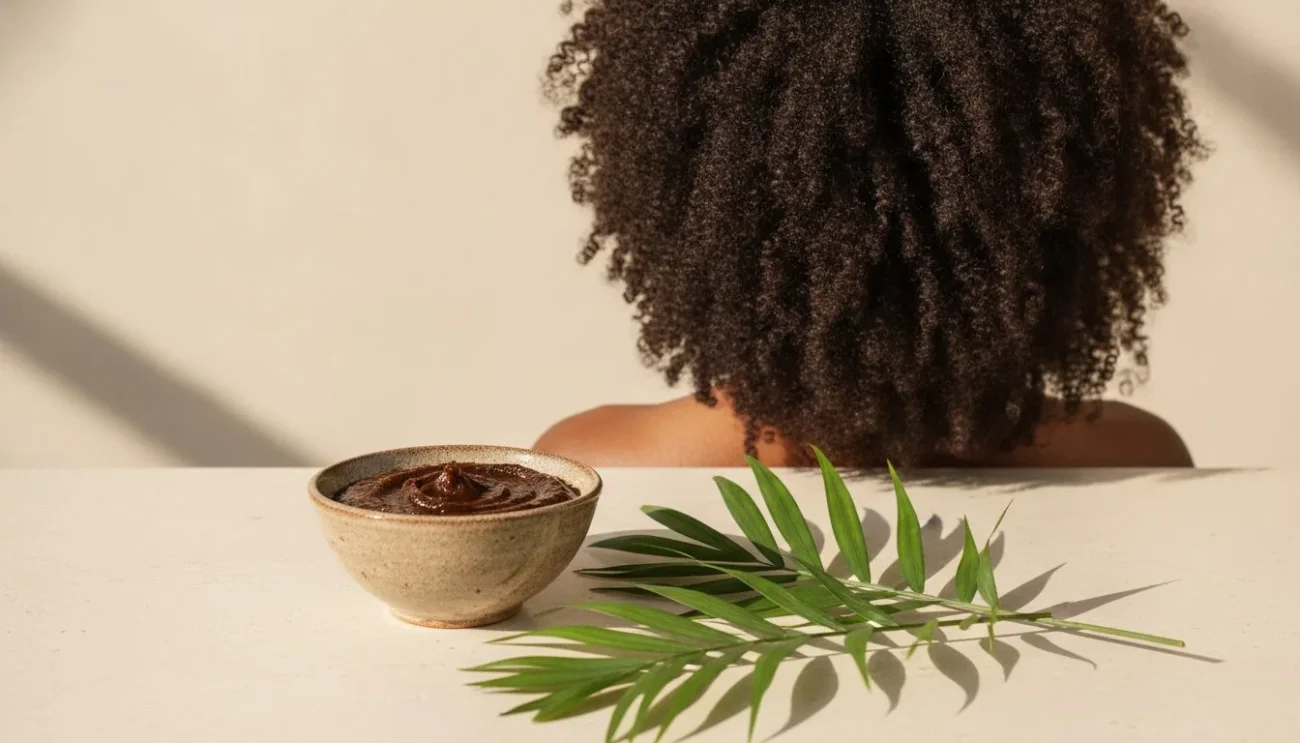
Efficacy is determined by application. To unlock the restorative potential of batana oil paste, one must respect its physical properties. Because the raw paste is a solid at room temperature, the first step is always thermal activation. Scoop a small amount, approximately the size of a nickel, and rub it between your palms. Within seconds, the natural warmth of your skin will liquify the lipids, making them ready for absorption. Avoid using a microwave or direct flame; excessive heat can denature the sensitive tocopherols that provide scalp protection.
Once liquified, prioritize the scalp. Use your fingertips to massage the oil into the roots using firm, circular motions. This mechanical action does more than distribute the product. It stimulates localized circulation, ensuring that the nutrient-dense fats reach the hair follicles where they are needed most. After the scalp is saturated, move to length protection. Work the remaining oil from the mid-shaft down to the ends. This creates an occlusive shield that prevents mechanical breakage during detangling and daily styling. For standard maintenance, a 20-minute window is sufficient. However, for those seeking deep structural repair, leave the treatment in for several hours or overnight.
The Intensive Scalp Mask Protocol
For a professional-grade weekly treatment, follow a structured pre-wash protocol. Apply the liquified paste generously to dry hair, focusing on areas of visible thinning or damage. Once applied, wrap your head in a warm, damp towel. The gentle steam helps open the hair cuticles, allowing the long-chain fatty acids to penetrate deeper than a surface-level application. We recommend maintaining this mask for a specific 2-hour window to achieve maximum follicular saturation before rinsing with a mild, vegan soap. This frequency ensures results without the risk of heavy lipid buildup on the scalp.
Edge and Beard Care for Professionals
The density of batana oil paste makes it an ideal targeted treatment for receding hairlines and thinning edges. Its stay-put consistency ensures the nutrients remain on the skin rather than migrating down the forehead. For men, the paste serves as a superior conditioning agent for coarse beard hair, softening the cuticle while moisturizing the skin beneath to prevent irritation. Men looking to maximize these benefits should explore the precise ritual of using batana oil for beard growth to transition dormant follicles into the active anagen phase and achieve measurable density. If the traditional smoky aroma is too intense for daytime wear, layer the application with a drop of rosemary or peppermint essential oil. This adds a clean botanical note while providing additional circulatory benefits. To begin your regimen with a high-integrity source, secure your supply of raw Batana paste directly from our Honduran heritage collection.
The Standard of Integrity: Identifying Real Batana Paste
Quality isn’t a suggestion. It’s a requirement. Identifying genuine batana oil paste requires a rejection of modern cosmetic standards in favor of raw botanical reality. You cannot rely on “best-seller” badges or generic organic claims. Instead, you must trust a sensory evaluation that confirms the product’s origin and processing. The first indicator is the color check. Authentic paste is always a deep, dark brown. It should never appear bright yellow, cream, or white. These lighter shades are definitive proof of heavy bleaching or the inclusion of filler oils that dilute the nutrient density.
The scent profile is equally revealing. A hallmark of traditional extraction is a robust, smoky aroma that mimics burnt coffee or roasted nuts. This scent is a direct result of the fire-roasting process used by the Miskito people. If a product smells like floral perfume or has no scent at all, it has been chemically deodorized or synthetically fragranced. Furthermore, you should perform a “melting test.” Pure batana oil paste is a thermolabile solid. It should liquify immediately upon contact with body heat. If the substance remains waxy or requires significant friction to break down, it likely contains synthetic thickeners or paraffin.
Packaging serves as the final guardian of integrity. Raw botanical fats are highly sensitive to light and temperature fluctuations. UV-protective glass is the superior choice for preservation. Plastic containers can leach chemicals into the lipids, while clear glass allows light to degrade the sensitive carotenoids and antioxidants. A brand that values the substance of its oil will always invest in the glass that protects it.
Red Flags: When to Avoid a “Batana” Product
Be skeptical of smooth, lotion-like textures. Real Batana is a raw fat; it often possesses a slightly grainy or irregular consistency that smooths out once warmed. Emulsifiers are frequently added to “Batana” creams to create a more familiar cosmetic feel, but these additives interfere with follicular penetration. Additionally, scrutinize the labeling. Vague sourcing descriptions that omit “Honduras” or the “Miskito” heritage are a major warning sign. If a supplier cannot name the specific origin, they cannot guarantee the botanical species or the ethics of the labor involved.
Why Au Natural Organics Rejects Refinement
We reject refinement because we value biological potency over market convenience. Our commitment is to provide the raw state as nature intended, maintaining the botanical integrity from the Honduran jungle to your doorstep. We prioritize small-batch sourcing over mass-market industrial production to ensure every jar meets our uncompromising standards. By acting as an ethical bridge between traditional wisdom and modern needs, we ensure you receive a product that is as effective as it is authentic. We don’t settle for “industry average,” and neither should you.
Restore Your Botanical Heritage
Potency is a choice. By prioritizing batana oil paste in its raw, unrefined state, you’re rejecting industrial shortcuts in favor of time-tested efficacy. We’ve established that true restoration requires the full lipid profile found only in the solid state. This integrity is preserved through the manual, fire-based traditions of the Miskito people. You now possess the expert knowledge to identify authentic quality through sensory markers like the deep smoky aroma and the immediate melting point upon skin contact.
Don’t settle for diluted imitations that compromise your results. Our commitment to quality ensures that every jar is ethically sourced from Miskito communities and remains 100% pure with no synthetic additives. We hand-inspect every batch to verify the traditional texture that your hair restoration journey requires. Secure your jar of raw, authentic Batana oil paste directly from the source. Your path to healthier, more resilient hair begins with a refusal to compromise on botanical truth.
Frequently Asked Questions
Why is my Batana oil a solid paste instead of a liquid?
The solid consistency is a direct result of the oil’s high concentration of saturated fatty acids and a lack of industrial fractionation. Raw batana oil paste remains a solid at room temperature because it hasn’t been stripped of its natural long-chain lipids. This physical state is the hallmark of botanical integrity. If the oil were liquid at 70°F, it would likely be over-processed or diluted with inferior carrier oils that lack the same therapeutic density.
Does Batana oil paste really help with hair growth?
Batana supports hair growth by optimizing the scalp environment and strengthening the hair shaft against mechanical breakage. While no oil can magically create new follicles, the high levels of Oleic and Linoleic acids in batana oil paste penetrate the scalp to nourish existing roots. This intense nutrient delivery, combined with natural antioxidants, reduces the oxidative stress that often leads to premature thinning and hair loss.
How often should I apply the Batana paste to my scalp?
We recommend an application frequency of once or twice per week for most hair types. Using the paste too frequently can lead to heavy lipid buildup, which may inadvertently clog pores and hinder scalp respiration. Consistency is more valuable than volume. By maintaining a weekly rhythm, you allow the scalp to fully absorb the nutrients without overwhelming the hair’s natural balance or requiring aggressive washing to remove excess product.
Can I leave Batana oil paste in my hair overnight?
Leaving the paste in overnight is a highly effective method for achieving deep structural repair. This extended window allows the lipids to bypass the hair cuticle and settle into the cortex for maximum hydration. To prevent transfer to linens, wrap your hair in a silk or satin scarf. In the morning, use a gentle, sulfate-free cleanser to remove the excess oil while retaining the internal moisture and shine gained during the treatment.
What does authentic Batana oil paste smell like?
Authentic Batana possesses a distinct, earthy aroma similar to roasted nuts or dark-roasted coffee. This “smoky” scent is a byproduct of the traditional fire-extraction methods used in Honduras. It is a vital indicator of purity. If your product smells like synthetic flowers or has no scent at all, it has likely been chemically deodorized or heavily refined, which strips away the oil’s essential therapeutic compounds.
Is Batana oil paste safe for color-treated or chemically processed hair?
The paste is exceptionally beneficial for color-treated or chemically processed hair because it replenishes lost lipids. Chemical treatments often strip the hair of its natural protective oils, leaving the shaft porous and brittle. Batana acts as a bio-identical sealant, closing the cuticle and locking in color. Its natural antioxidant profile also helps shield processed hair from the fading effects of UV radiation and environmental pollutants.
How long does a 4oz jar of Batana paste typically last?
A standard 4oz jar typically lasts between two and four months when used as a weekly scalp and hair treatment. Because the raw paste is highly concentrated, a nickel-sized amount is usually sufficient for a single application. Those using it for daily edge control or beard conditioning may find it lasts slightly less time. Its shelf stability is excellent when stored in a cool, dry place away from direct sunlight.

Leave a comment
You must be logged in to post a comment.