
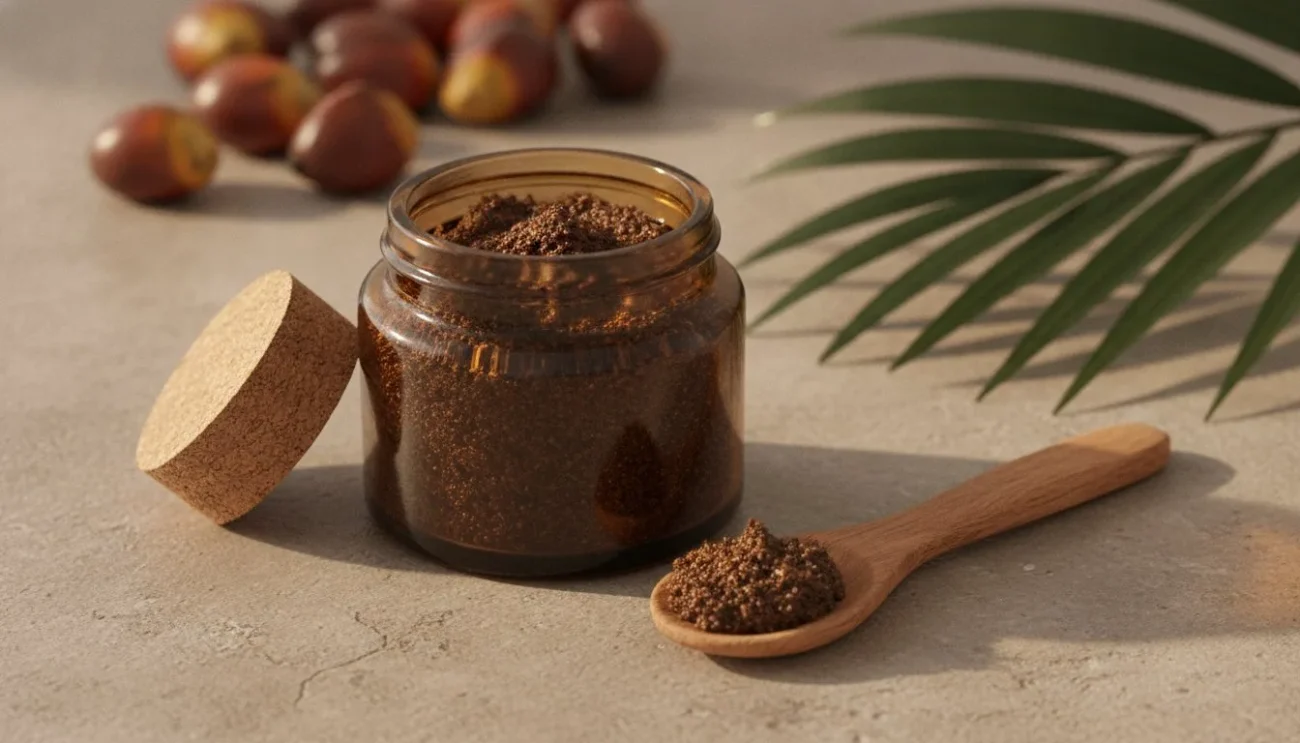
If your Batana oil smells like a generic cosmetic or looks like a perfectly refined cream, you haven’t bought Batana oil; you’ve bought an expensive imitation. Real Batana oil is a raw, sensory experience that cannot be replicated in a sterile laboratory. You likely feel the frustration of searching for 100 pure batana oil only to find shelves crowded with diluted blends and deceptive labels. It’s a common struggle in a market where popularity often invites compromise. The recent 10% tariff on Honduran imports, effective July 24, 2026, adds significant pressure to the market, often driving prices up or tempting unethical suppliers to cut corners with fillers.
We agree that your hair deserves the potent, unrefined strength of traditional Honduran sourcing without the risk of wasted investment. This guide provides an uncompromising, expert-led checklist to verify the integrity of your purchase. You will learn to identify authentic Batana by its signature smoky aroma and distinctive earthy texture. We will examine every critical marker of purity, from visual cues to traditional processing methods, ensuring you support ethical craftsmanship while achieving the hair growth results you expect from nature’s raw potency.
Key Takeaways
- Distinguish true Elaeis oleifera from common palm oil and understand how industrial “purity” labels often mask chemical hexane extraction.
- Master the professional sensory audit to identify the specific smoky, coffee-like aroma and deep color spectrum that defines 100 pure batana oil.
- Recognize the Mosquitia region of Honduras as the only authentic source and understand the ethical importance of the Miskito people’s traditional guardianship.
- Execute a rigorous buyer’s protocol by scrutinizing ingredient lists for additives and selecting glass packaging to prevent plastic-leaching and potency loss.
- Discover why small-batch production is a non-negotiable requirement for preserving the raw, bioactive integrity that mass-market industrialization destroys.
Defining the Standard of 100 Pure Batana Oil
Purity is often reduced to a hollow marketing buzzword. In the context of 100 pure batana oil, it represents a specific chemical and botanical threshold that most commercial offerings fail to meet. Many manufacturers prioritize shelf stability and visual uniformity over biological activity. This results in a product that looks clean on a shelf but lacks the raw power necessary to transform hair health. True botanical integrity requires a refusal to compromise on the extraction process or the source material.
The Botanical Legacy of the Miracle Oil
Batana oil is a rare botanical lipid extracted from the American oil palm. While it’s frequently confused with common African palm oil (Elaeis guineensis), the two are distinct species with vastly different molecular structures. We must look to the botanical origins of Batana oil to understand its unique therapeutic value. Elaeis oleifera grows natively in the wild, humid rainforests of Honduras. Its fatty acid profile is exceptionally rich in oleic and linoleic acids. These lipids penetrate the hair shaft more effectively than synthetic silicones. They provide the structural support required for sustained hair growth and scalp resilience.
The oil’s true potency comes from its high concentration of carotenoids and tocopherols. Carotenoids act as powerful antioxidants. They protect the hair follicle from oxidative stress and environmental damage. Tocopherols, or natural Vitamin E, stimulate blood flow to the scalp. This nutrient density is only possible when the oil is harvested at peak maturity. It’s a delicate balance that industrial farming cannot replicate.
Refined vs. Unrefined: The Integrity Gap
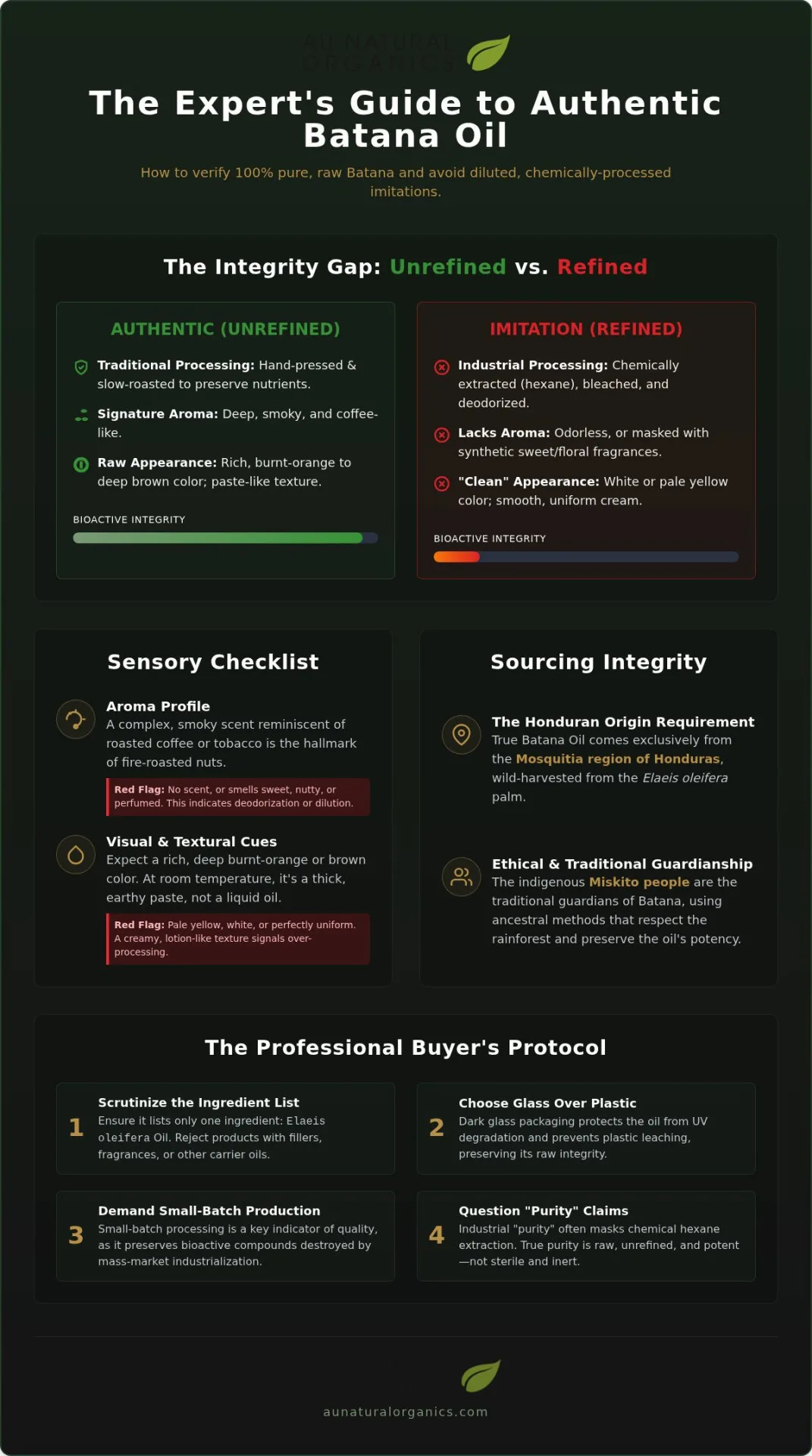
The modern market is saturated with “white” or “odorless” versions of this oil. This is a definitive sign of nutrient failure. High-heat refining and chemical deodorization strip the oil of its bioactive soul. Industrial producers often use hexane extraction to maximize yield. This process leaves behind chemical residues and destroys the organic compounds that make the oil effective. When you’re searching for 100 pure batana oil, you must distinguish between cosmetic-grade and professional botanical grade.
- Cosmetic Grade: Highly refined, bleached, and deodorized. It’s aesthetically “clean” but biologically inert.
- Professional Botanical Grade: Raw, unrefined, and traditionally processed. It retains its deep burnt-orange color and signature smoky scent.
Traditional extraction involves boiling the nuts and hand-pressing the oil. This slow, labor-intensive process preserves the delicate tocopherols. It’s the only way to ensure the oil remains a functional treatment for the hair rather than just another emollient. Don’t settle for industrial shortcuts. Integrity is found in the raw, untouched state of the botanical.
The Sensory Checklist: Identifying Raw Potency
Authenticity leaves a physical footprint. Identifying 100 pure batana oil requires more than a cursory glance at a label; it demands a rigorous engagement of the senses. Because true Batana is a wild-harvested product, it carries the indelible signature of the Honduran rainforest and the traditional fire-extraction methods used to produce it. If a product lacks these sensory markers, it’s likely a diluted imitation or an industrially processed shadow of the real botanical.
The Signature Smoky Aroma
The nose is your first line of defense against counterfeit oils. Authentic Batana oil possesses a deep, complex, and unmistakably smoky aroma. This scent is a direct result of the traditional roasting process, where the nuts of the Elaeis oleifera palm are cooked over open wood fires. This imparts a fragrance often compared to heavy coffee or roasted tobacco. It’s a primal, earthy smell that speaks to its raw origin.
Synthetic fragrances cannot replicate this botanical complexity. While many mass-market brands describe their product as “nutty” or “sweet,” these generic descriptors are often red flags. If your oil smells like floral perfume, vanilla, or has no scent at all, it has been either deodorized or heavily diluted with cheap carrier oils. Real potency is pungent. It’s unyielding. When you choose to invest in authentic Batana oil, you should expect a scent that reflects the craftsmanship of the Miskito people, not a laboratory.
Thermal Stability and Viscosity
Texture reveals the truth about additive content. At room temperature, pure Batana oil should exist as a soft, brown to dark burnt-orange solid. It’s not a fluid liquid, nor is it a rock-hard wax. Visual consistency is rarely perfect in raw batches. You may notice slight sediment or a somewhat “gritty” texture. This is a hallmark of hand-processing. A perfectly smooth, homogenized paste often indicates industrial refining or the addition of emulsifiers.
The “Melting Point Test” is a definitive way to verify purity at home. Pure Batana oil has a low melting point, transitioning from a solid to a translucent liquid almost immediately upon contact with body temperature. Rub a small amount between your palms. It should liquefy within seconds without leaving a waxy or sticky residue. If the product remains clumpy or feels overly greasy like petroleum jelly, it likely contains paraffin or beeswax fillers. These additives are used by unscrupulous sellers to bulk up volume, but they block the hair follicle and prevent the oil’s bioactive compounds from penetrating the scalp. High-quality Batana is clean, reactive, and absorbed by the skin with efficient precision.
Sourcing Integrity: The Honduran Origin Requirement
Geography dictates efficacy. For a product to be considered 100 pure batana oil, it must originate from the Mosquitia region of eastern Honduras. This is not a suggestion; it’s a biological requirement. The unique soil composition and high humidity of this rainforest sanctuary are the only conditions that produce the specific lipid profile required for therapeutic hair restoration. Industrial alternatives sourced from other regions lack the raw, wild-harvested potency that defines the true botanical. Authentic sourcing is the foundation of professional integrity.
The Miskito People’s Craftsmanship
The Miskito people are the traditional guardians of this resource. Their craftsmanship is a labor-intensive ritual that has remained unchanged for generations. Every jar of oil begins with the manual cracking of sun-dried nuts, followed by a meticulous boiling process to release the precious lipids. This traditional knowledge ensures the oil meets the 100 pure batana oil standard without the need for chemical solvents or industrial machinery. You can explore our authentic batana oil guide for deeper sourcing insights into how these indigenous practices preserve botanical activity.
Choosing wild-harvested Batana supports a regenerative economy. Unlike the monoculture plantations that fuel the global palm oil industry, wild harvesting preserves the rainforest canopy and respects the natural growth cycles of the palm. Ethical sourcing means ensuring that the Miskito communities are compensated fairly for their expertise. We reject the “global sourcing” vagueness of mass-market competitors. We demand geographic and cultural accountability.
Avoiding “Batana-Scented” Imitations
Beware of the “Batana-scented” fallacy. Many products currently flooding the market are actually diluted carrier oils masked with synthetic fragrances to mimic the natural smoky aroma. If a label does not explicitly state “Product of Honduras,” it’s likely a fraudulent blend. These imitations often use cheap mineral oils or refined palm oil as a base, which lack the carotenoids necessary for hair follicle health. A “Batana blend” is not a substitute for the raw, unrefined power of the original Honduran lipid. Integrity starts with origin.
- Label Verification: Look for “Product of Honduras” and the scientific name Elaeis oleifera.
- Ethical Check: Ensure the supplier can verify direct community sourcing.
- Purity Guarantee: Avoid any product listing “fragrance” or “parfum” in the ingredients.
The environmental impact of your purchase matters. Wild-harvested palms are part of a balanced ecosystem. They don’t require the pesticides or fertilizers used in industrial farming. By insisting on authentic Honduran sourcing, you protect the biodiversity of the Mosquitia while securing the highest grade of botanical care for your hair. Never compromise on origin.
The Professional Buyer’s Checklist: Verifying Your Source
Marketing results are irrelevant if the material integrity is compromised. While competitors distract with “before and after” photos, a professional buyer looks at the data. Verifying 100 pure batana oil requires a clinical approach to labeling and storage. If a brand cannot provide transparency on its processing or batch history, it doesn’t deserve your trust. Purity is a measurable standard, not a marketing claim.
Ingredient Label Transparency
The most critical rule is simplicity. There should only be one ingredient listed on the back of your jar. The International Nomenclature of Cosmetic Ingredients (INCI) name must be Elaeis Oleifera Kernel Oil. Any deviation from this is a compromise. We apply a strict “Zero Additive” policy. This means your oil should never contain parabens, sulfates, or silicones. These synthetic fillers interfere with the oil’s natural ability to penetrate the hair shaft.
Watch for the “Fragrance” or “Parfum” trap. These terms are often used as legal loopholes to hide synthetic chemicals or masking agents. If an oil is truly raw and unrefined, its natural smoky scent is all the “fragrance” it needs. Adding synthetic scents is a clear admission that the oil has been deodorized or diluted. Professional botanical grade oils embrace their natural olfactory profile. The same principle applies when sourcing wholesale essential oils, where vague “fragrance” labeling frequently conceals synthetic stretching and compromised batch quality.
Packaging and Light Sensitivity
Integrity extends to the container. Raw botanical lipids are sensitive to ultraviolet light and temperature fluctuations. We insist on dark glass or high-quality opaque containers to prevent photo-oxidation. This preserves the delicate carotenoids and tocopherols discussed in previous sections. Light exposure degrades these nutrients, turning a potent treatment into a rancid, ineffective liquid.
Plastic packaging is a major risk factor for raw oils. Essential fatty acids can leach chemicals from plastic containers over time, contaminating the oil and potentially irritating the scalp. We maintain the same rigorous storage standards for our Batana as we do for our 100 pure essential oils. If your oil arrives in a clear, thin plastic tub, the manufacturer has prioritized shipping costs over product potency. Quality requires proper shielding.
Finally, verify batch transparency. A reputable supplier will provide a batch number and a clear expiry date. This ensures you’re receiving fresh, bioactive material rather than inventory that has spent months in an unconditioned warehouse. Professional sourcing is a commitment to these minute details. Secure your hair’s health by choosing a source that refuses to compromise. Shop our authentic Batana oil to experience the difference that professional botanical integrity makes.
Securing Botanical Excellence with Au Natural Organics
Excellence in botanical sourcing isn’t achieved by chance. It requires a deliberate, uncompromising protocol that prioritizes biological activity over industrial convenience. At Au Natural Organics, we act as the transparent guardian of quality for your 100 pure batana oil. Our process begins in the Mosquitia region, where we maintain direct-to-source relationships with traditional producers. We bypass the secondary markets and middle-men who often dilute or refine the oil for easier export. This ensures that the raw, smoky potency discussed earlier remains intact from the rainforest to your hair care regimen. Despite the 10% tariff on Honduran imports enacted in July 2026, we refuse to compromise our sourcing standards or switch to inferior, cheaper alternatives.
A Legacy of Professional Integrity
We reject the standardized shortcuts of the mass market. Industrial volume requires homogenization, which inevitably destroys the delicate tocopherols and carotenoids that drive hair restoration. We prioritize small-batch production instead. This allows us to monitor the integrity of every liter. Our refusal to use synthetic fragrances or chemical additives is a matter of professional principle. We are a master of the craft in botanical oils, dedicated to preserving the raw essence of nature. Every bottle represents a bridge between ancient Honduran traditions and modern, results-oriented wellness needs. It’s a standard of purity that doesn’t allow for “fragrance” loopholes or hidden silicones.
Beyond the Bottle: Ethical Impact
Your choice of professional-grade botanical extracts has a profound ripple effect. By securing 100 pure batana oil, you directly support the wellness and economic stability of the Miskito community. This is a partnership based on mutual respect and the preservation of traditional knowledge. The long-term benefits of this oil extend beyond immediate hair growth; it represents a commitment to a cleaner, more ethical approach to wellness. We believe that true beauty shouldn’t come at the cost of environmental or cultural degradation.
Our Batana oil integrates seamlessly with a holistic routine. It serves as a potent foundation that can be layered with our handmade scrubs or followed by our vegan soaps to maintain scalp health and overall hair vitality. We provide the raw materials; you achieve the results. Integrity is our only ingredient. Secure your 100% pure Batana oil from our latest batch and experience the unyielding standard of true botanical excellence.
Master the Standard of Botanical Integrity
True hair vitality requires a refusal to settle for industrial imitations. You now possess the professional criteria to distinguish 100 pure batana oil from the diluted mass-market alternatives that crowd the digital shelves. By prioritizing the traditional fire-roasting methods of the Miskito people and verifying the sensory markers of raw potency, you protect both your financial investment and your scalp’s long-term health. Integrity isn’t found on a flashy label. It’s found in the signature smoky aroma and deep, unrefined color of a genuine Honduran lipid.
We remain your dedicated bridge to these ancient traditions. Our protocol ensures zero synthetic additives or fragrances, delivering raw, unrefined potency directly to your daily regimen. Take the final step toward measurable hair growth results with a product that honors its cultural and botanical origin. Order Your Authentic Honduran Batana Oil Today and experience the difference of uncompromised quality. Your journey to restored hair health starts with a source you can trust. You’ve done the research; now it’s time to secure the results.
Frequently Asked Questions
Is 100% pure Batana oil supposed to smell like burnt coffee?
Yes, a deep smoky aroma similar to burnt coffee or roasted tobacco is the primary indicator of authenticity. This specific scent develops during the traditional Miskito fire-roasting process. If your oil smells floral, sweet, or chemically neutral, it has likely been refined or deodorized. Such processing strips the oil of its bioactive potency. Always prioritize the pungent, earthy fragrance of a truly raw, untouched botanical.
Can I use Batana oil on my scalp every day?
You can apply Batana oil to your scalp daily, though most users find three to four times per week sufficient for significant results. Focus on massaging a small amount into the roots to stimulate blood flow and nutrient absorption. If you have fine hair, use it as a pre-wash treatment for 30 minutes to avoid excess weight. Consistency is the key to achieving measurable hair growth with 100 pure batana oil.
Why is my Batana oil hard at room temperature?
Batana oil is naturally a solid or soft paste at room temperature due to its high concentration of saturated fatty acids. It typically begins to liquefy at temperatures above 86 degrees Fahrenheit. This physical transition is a definitive hallmark of purity. If your oil remains a thin liquid in a cool environment, it’s likely been diluted with cheaper carrier oils or liquid vegetable fats. Raw, unrefined lipids must react to thermal changes.
How can I tell if my Batana oil has been diluted with palm oil?
Dilution is often revealed by a lack of the characteristic smoky scent and a lighter, yellower color spectrum. Common palm oil lacks the deep brown hue and complex roasted aroma found in 100 pure batana oil. Diluted products often feel excessively greasy or slippery rather than slightly gritty and absorbent. Always verify the INCI name on the label to ensure it specifies Elaeis oleifera rather than Elaeis guineensis.
Does Batana oil expire, and how should I store it?
Pure Batana oil generally has a shelf life of approximately two years when stored under professional conditions. You must protect it from ultraviolet light and oxygen, which cause the lipids to oxidize and go rancid. Keep your jar in a cool, dark cabinet and ensure the lid is sealed tightly after every use. Don’t store it in a humid bathroom where constant temperature fluctuations can compromise its long-term chemical stability.
Is Batana oil safe for color-treated or chemically processed hair?
It’s completely safe and highly beneficial for color-treated or chemically processed hair. Because authentic Batana is free from synthetic sulfates and alcohols, it won’t strip your pigment or further damage the hair cuticle. It acts as a deep structural repair treatment. It replenishes the natural lipids lost during harsh chemical services. This restoration helps maintain color vibrancy while preventing the brittle texture often associated with industrial processing.
What color should genuine, unrefined Batana oil be?
Genuine, unrefined Batana oil should fall within the deep brown to dark burnt-orange color spectrum. This rich pigmentation comes from the high density of natural carotenoids found in the wild-harvested palm nuts. If the oil appears white, pale yellow, or translucent, it’s undergone heavy industrial refining or bleaching. These processes destroy the very nutrients your hair follicles need to thrive. Raw color always indicates raw botanical power.
Can 100% pure Batana oil be used on the skin as well as hair?
Shop Batana Oil: Try our Pure Batana Oil (3.4oz), cold-pressed from Honduran batana nuts, or the larger 100% Raw Batana Oil (6oz).

Leave a comment
You must be logged in to post a comment.