
Applying organic oils to a parched complexion often seals in dryness rather than delivering nutrients. You’ve likely noticed that even the most prestigious botanical blends can sit atop the skin, leaving it feeling simultaneously greasy and tight. This happens because oil requires a water based catalyst to penetrate the lipid barrier effectively. Understanding how to use hydrosols for skin is not just a trend; it’s a professional necessity for anyone serious about skin health. True hydrosols, the potent co-products of steam distillation, provide the cellular hydration that synthetic floral waters simply can’t replicate.
We recognize the frustration of chronic dehydration and the confusion caused by mislabeled products. With organic distillates now making up 35 percent of the global market, the distinction between pure plant medicine and diluted imitations is vital for your results. This guide will teach you to master the professional application of true botanical hydrosols to transform your skin barrier and enhance the efficacy of your organic oils. We’ll examine the science of authentic distillation, differentiate between true hydrosols and scented imitations, and establish a professional grade ritual for a balanced, glowing complexion.
Key Takeaways
- Distinguish between true steam-distilled hydrosols and synthetic floral waters to ensure you’re applying authentic cellular plant medicine to your face.
- Learn how these botanical waters restore the skin’s acid mantle and act as humectants to draw deep moisture into the stratum corneum.
- Master the “wet skin rule” and professional layering techniques to understand exactly how to use hydrosols for skin to maximize the absorption of your organic oils.
- Identify the specific botanical distillates, such as Chamomile or Rosemary, that align with your unique complexion needs for targeted, visible results.
- Discover why traditional, additive-free distillation and ethical sourcing are the only ways to achieve a truly professional-grade home skincare ritual.
The Essence of Distillation: What are True Botanical Hydrosols?
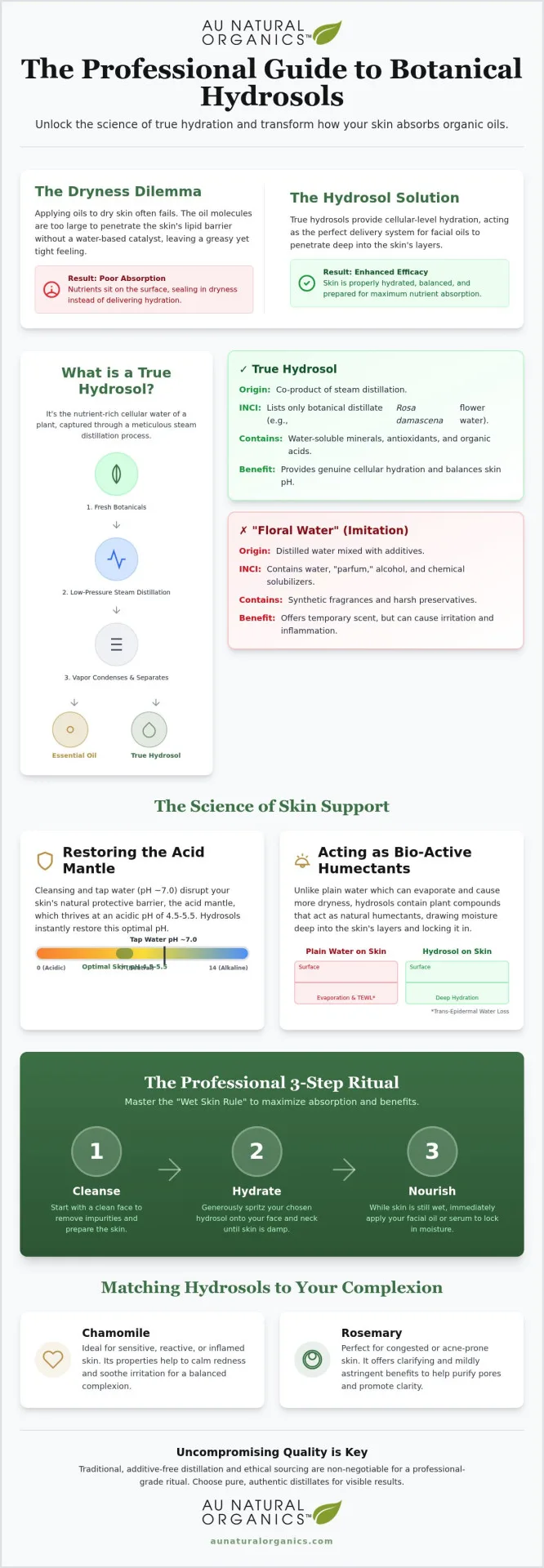
Precision defines the process. A true hydrosol is not merely scented water; it is a complex, living extract. During steam distillation, pressurized vapor passes through fresh plant material, rupturing cellular structures to release volatile compounds. When this vapor cools and condenses, it separates into two distinct substances: a concentrated essential oil and a nutrient-dense aqueous layer. This aqueous layer is the hydrosol. While many industrial producers treat this water as a secondary byproduct, professional grade distillation focuses on the water itself. We distill specifically to capture the full spectrum of water-soluble minerals, antioxidants, and organic acids that oils cannot carry.
The Au Natural Organics standard demands more than basic filtration. We prioritize slow, low-pressure distillation to prevent the thermal degradation of delicate aromatic molecules. This meticulous approach preserves the soul of the plant in a gentle, water-soluble form that remains bioavailable to your cells. When sourcing, the origin of the botanical material dictates the therapeutic grade of the final distillate. This makes ethical, global sourcing a non-negotiable pillar of our philosophy. High-quality distillates are the only way to ensure your ritual is effective.
Hydrosol vs. Floral Water: A Matter of Integrity
Marketing labels often deceive. Most “floral waters” found on retail shelves are simply distilled water mixed with synthetic fragrances and chemical solubilizers. These additives often trigger the very sensitivities and inflammation that users seek to avoid. To ensure authenticity, you must examine the INCI list. A true hydrosol should list only the botanical distillate, such as Rosa damascena flower water, without added “parfum,” alcohol, or harsh preservatives. Because they contain no synthetic stabilizers, these Herbal distillates require pristine sourcing and temperature-controlled storage to maintain their integrity. This distinction is foundational when learning how to use hydrosols for skin health; starting with a pure medium is the only way to achieve professional results.
The Chemistry of Cellular Plant Water
Beyond Hydration: The Functional Benefits of Hydrosols for Skin
The skin is a living shield. Its efficacy depends entirely on a fragile, acidic film known as the acid mantle. When you understand how to use hydrosols for skin, you move beyond simple hydration and into the realm of physiological support. These botanical waters are not mere refreshers. They are functional tools designed to optimize the skin’s natural defenses and repair mechanisms.
Restoring the Acid Mantle
Cleansing is a double-edged sword. While it removes impurities, it also raises the skin’s pH level. Most municipal tap water is too alkaline for the human face, often measuring at a neutral 7.0 or even higher. This shift disrupts the acid mantle, leaving the barrier vulnerable to pathogens and environmental irritants. A quick spritz of a professional distillate resets the skin to its optimal 4.5-5.5 pH range. This immediate correction is vital. It reduces long-term sensitivity and prevents the inflammatory cycles that lead to chronic acne and reactive redness. A balanced barrier is a resilient barrier.
Hydrosols as Bio-Active Humectants
Superficial wetting is not hydration. Plain water can actually accelerate dryness by encouraging evaporation of the skin’s internal moisture. Hydrosols behave differently. They contain microscopic essential oil droplets and water-soluble plant metabolites that act as natural humectants. These compounds draw moisture deep into the stratum corneum rather than letting it sit on the surface. By creating a moisture-rich environment, hydrosols prevent trans-epidermal water loss (TEWL) and ensure that subsequent oil applications are fully absorbed rather than sitting atop the skin. To fully appreciate this synergy, it helps to understand what is a carrier oil and how these functional lipids work in concert with botanical waters to deliver nutrients into the deeper layers of the stratum corneum. This synergy is what creates a truly glowing complexion.
Beyond hydration, these distillates offer robust environmental defense. Peer-reviewed research indicates that many plant-derived waters possess high antioxidant potential, which is essential for neutralizing the free radicals generated by UV radiation and urban pollutants. This protection is delivered in a gentle, non-irritating format that suits even the most sensitive individuals. It’s a level of care that synthetic alternatives can’t match.
- Antioxidant Protection: Scavenges free radicals to prevent the degradation of collagen and elastin.
- Anti-inflammatory Action: Soothes reactive redness using botanical compounds like chamazulene found in chamomile.
- Barrier Reinforcement: Strengthens the lipid layer through consistent, daily pH management.
This professional grade approach to skincare ensures your complexion remains resilient against the stressors of modern life. If you’re seeking to refine your ritual with uncompromising quality, consider the purity of our Au Natural Organics handmade botanical hydrosols as the foundation of your daily health. They are the essential bridge between cleansing and deep nourishment.
The Ritual: How to Use Hydrosols for Skin Optimization
Application is an art. It requires more than a casual misting; it demands a methodical approach to layering that respects the skin’s biological rhythm. When you master how to use hydrosols for skin, you transition from a basic routine to a professional grade ritual. The objective is to create a moisture reservoir within the tissue. This is achieved through the “Wet Skin” Rule. Never apply oils or balms to dry skin. Doing so creates a barrier that traps dryness underneath. Instead, use the hydrosol as a conductive medium that pulls lipid nutrients into the deeper layers of the stratum corneum.
The Pre-Oil Hydration Technique
Efficiency starts with preparation. Follow this three step protocol to maximize the bio-availability of your treatments. First, cleanse the face thoroughly using a gentle vegan soap to remove surface debris without stripping the lipid barrier. Second, mist the face generously. The skin should be damp and cool to the touch but not dripping. Third, while the skin is still wet, immediately apply authentic batana oil or your preferred carrier oil. The oil emulsifies with the botanical water on contact. This creates a makeshift lotion that penetrates the skin instantly, leaving no greasy residue.
Mid-Day Environmental Defense
Modern environments are hostile to skin health. Air conditioning, heating, and air travel rapidly deplete the skin’s moisture levels, leading to a dull and fatigued appearance. Scientific understanding of what hydrosols are suggests they are far more than just aromatic water; they are functional shields. A mid-day misting refreshes makeup without disrupting the surface and provides a “cooling mist” effect that soothes heat induced redness. This practice is essential for maintaining the acid mantle’s integrity throughout the day. It prevents the tight, dehydrated sensation often felt after hours in an office or on a flight.
Enhancing Botanical Masks and Scrubs
Professional results require professional ingredients. Most clay masks suggest mixing with tap water, yet tap water lacks therapeutic value and may contain chlorine. Replace it with a botanical distillate to infuse the mask with active plant metabolites. If a mask begins to dry and crack on the face, it is drawing moisture *out* of your skin. Use your hydrosol to re-activate the mask, keeping it moist and active for the duration of the treatment. For a complete home spa experience, integrate these waters with handmade scrubs. This ensures that as you exfoliate, you are simultaneously replenishing the skin with cellular plant water. Consistency is key. Use these techniques twice daily for maintenance and as needed for targeted therapeutic support.
Botanical Selection: Matching Hydrosols to Your Complexion Needs
Selection is precision work. Not all distillates serve the same purpose. To master how to use hydrosols for skin optimization, you must first identify the primary needs of your complexion. Choosing a botanical that contradicts your skin type can lead to imbalance. For instance, an astringent water on a dry face will only exacerbate tightness. Conversely, a rich, emollient focused distillate might feel heavy on oily skin. We categorize our selections based on their specific chemical profiles to ensure therapeutic success.
Calming Waters for Sensitive Skin
Reactive skin requires a gentle touch. Chamomile hydrosol is a superior choice for topical application compared to traditional chamomile tea. While tea contains tannins that can be astringent and potentially drying, the hydrosol captures only the soothing, anti-inflammatory volatile compounds. It’s exceptionally effective for cooling heat and reducing redness. Calendula hydrosol acts as a powerful companion, known for its role in supporting tissue regeneration and soothing the irritation associated with eczema. When managing reactive skin, the method of application is as important as the ingredient. Mist the face generously and allow it to air dry slightly before sealing with oil. Don’t rub the skin; mechanical friction can trigger further inflammation.
Astringent Hydrosols for Clarity
Congested skin benefits from movement and purification. Rosemary hydrosol is a potent stimulant that encourages microcirculation while refining the appearance of pores. It acts as a gentle tonic for those prone to sluggishness or dullness. Witch hazel is another classic choice, but integrity in sourcing is paramount. Most commercial witch hazel is a hydro-distillate preserved with high percentages of alcohol, which strips the acid mantle. A true, alcohol-free witch hazel hydrosol provides the astringency you need without the irritation. For active blemishes, tea tree hydrosol offers a professional alternative to the concentrated essential oil. It provides the same antimicrobial benefits in a format that’s safe for frequent, direct application. Pairing these clarifying waters with the best carrier oil for skin ensures that your complete skincare ritual addresses both purification and nourishment without compromising the skin barrier.
Achieving a balanced, glowing complexion starts with the right ingredients. Explore our full range of handmade botanical hydrosols to find the perfect match for your professional home ritual.
Uncompromising Quality: Sourcing Botanical Hydrosols with Au Natural Organics
Integrity is our foundation. At Au Natural Organics, we operate with a sense of ethical responsibility that forbids the use of synthetic fragrances, chemical stabilizers, or diluted “floral waters.” Our philosophy is simple. We believe that professional grade results require raw, untouched purity. This no-nonsense approach to quality has earned the trust of holistic practitioners who demand transparency and potency for their clients. We act as a guardian of botanical standards, ensuring that every drop of distillate you apply to your face is as potent as the plant from which it was derived.
Why Sourcing Origin Dictates Purity
The soil is the source. The therapeutic grade of a final distillate is determined by the environmental conditions of the botanical garden. Mineral density, regional climate, and precise harvest timing all play critical roles in the concentration of water-soluble metabolites. We don’t rush the process. Our commitment to traditional, slow distillation methods ensures that we capture the hydrophilic essence without thermal degradation. This methodical pace reflects our respect for the craftsmanship of nature. Every bottle represents a journey from global origins to your vanity, meeting an uncompromising standard of excellence that mass-produced alternatives cannot replicate.
Integrating Hydrosols into Your Global Wellness Ritual
True wellness is synergistic. Understanding how to use hydrosols for skin health is the first step toward a more sophisticated, plant-based lifestyle. These cellular waters are the essential catalyst for our carrier oils, creating a bio-active medium that allows nutrients to penetrate the stratum corneum deeply. This ritual acts as a bridge between ancient traditional wisdom and the rigorous needs of modern skincare. It’s not just about aesthetics; it’s about the long-term reliability of your skin barrier and the health of your complexion.
We invite you to move beyond marketing fluff and embrace a routine rooted in substance. By choosing ethically sourced, handmade distillates, you support a legacy of expertise and a refusal to compromise on core values. Your skin deserves the unfiltered power of nature. Explore the Au Natural Organics Hydrosol Collection and discover the transformative potential of professional-grade botanical waters.
Refining Your Path to Botanical Excellence
Professional skincare is an exacting craft. It requires a departure from marketing-driven trends and a return to high-integrity, botanical science. By distinguishing true steam-distilled hydrosols from synthetic imitations, you protect your acid mantle from unnecessary irritation. Mastery of how to use hydrosols for skin optimization ensures that your organic oils penetrate deeply rather than remaining on the surface. It’s this synergistic approach that transforms a basic routine into a professional ritual that yields visible, long-term results for every complexion type.
Our handmade botanical extracts are produced without synthetic fragrances or additives. We prioritize ethically sourced global ingredients to ensure every bottle delivers raw, untouched quality. This commitment to traditional methods is why practitioners trust our distillates for their most sensitive clients. Your journey toward a balanced, glowing complexion starts with a refusal to compromise on quality. Substance always prevails over style in the pursuit of health. Selecting the best carrier oil for skin to pair with your hydrosol is the final step in building a ritual that delivers genuine, lasting results.
Elevate Your Skincare Ritual with Au Natural Organics Hydrosols
Embrace the unfiltered power of nature and witness the restoration of your skin’s innate vitality.
Frequently Asked Questions
Is rose water the same as rose hydrosol?
No. Most commercial rose water is a simple dilution of essential oil or synthetic fragrance in distilled water. A true rose hydrosol is the authentic co-product of steam distillation. It contains the hydrophilic plant metabolites and cellular water that oils cannot hold. Integrity in labeling is essential for achieving the therapeutic results you expect from plant medicine.
How often should I use a hydrosol on my face?
Use a hydrosol twice daily during your morning and evening skincare rituals. Consistency is paramount for maintaining the acid mantle and ensuring proper oil absorption. You may also mist throughout the day to combat environmental stressors like air conditioning or travel. Learning how to use hydrosols for skin health involves integrating them as a permanent, functional bridge between cleansing and moisturizing.
Do hydrosols need to be refrigerated?
Refrigeration is recommended to maximize the longevity of pure distillates. Keeping your hydrosol in a cool, dark environment extends its life and provides a refreshing, anti-inflammatory sensation upon application. Avoid exposing the bottle to direct sunlight or fluctuating temperatures. This practice preserves the delicate cellular integrity of the botanical water and prevents premature degradation of its active compounds.
Can I use hydrosols if I have very sensitive skin?
Yes, pure hydrosols are often safer for sensitive skin than concentrated essential oils. They provide a sophisticated micro-dose of plant medicine in a gentle, water-soluble format that minimizes the risk of irritation. Choose soothing varieties like Chamomile or Calendula to reduce reactive redness. Always ensure your source is free from synthetic fragrances and alcohol to prevent further barrier disruption.
What is the shelf life of a pure botanical hydrosol?
Most pure hydrosols remain stable for 12 to 24 months when stored correctly in a cool environment. Because they lack synthetic preservatives, their longevity depends entirely on pristine sourcing and sterile bottling processes. Monitor the aroma and clarity of your distillate over time. If the scent changes significantly or the water becomes cloudy, the integrity of the product has likely been compromised.
Can I mix different hydrosols together?
Mixing different hydrosols allows you to create a bespoke solution tailored to your unique complexion needs. You might combine Lavender for its balancing properties with Rose for deep hydration. This synergistic approach allows for a more nuanced application than a single botanical could provide. Ensure you are mixing true distillates rather than products containing conflicting synthetic additives or chemical stabilizers.
Do hydrosols contain preservatives?
Professional grade hydrosols are typically preservative-free. The distillation process itself creates a sterile environment, and the presence of microscopic essential oil droplets provides a natural degree of stability. We refuse the use of parabens or synthetic stabilizers in our distillates. This uncompromising standard ensures that the cellular plant water remains unadulterated, biologically active, and safe for long-term use.
Can hydrosols be used on hair as well as skin?
Hydrosols are highly effective for hair and scalp health. They help balance the scalp’s pH after washing and provide lightweight hydration to the hair shaft without leaving a greasy residue. Rosemary hydrosol is particularly prized for stimulating the scalp and improving natural shine. Understanding how to use hydrosols for skin and hair allows for a total wellness ritual that is both efficient and biologically sound.
Leave a comment
You must be logged in to post a comment.