The Ingredient Library
Black Seed
Nigella sativa
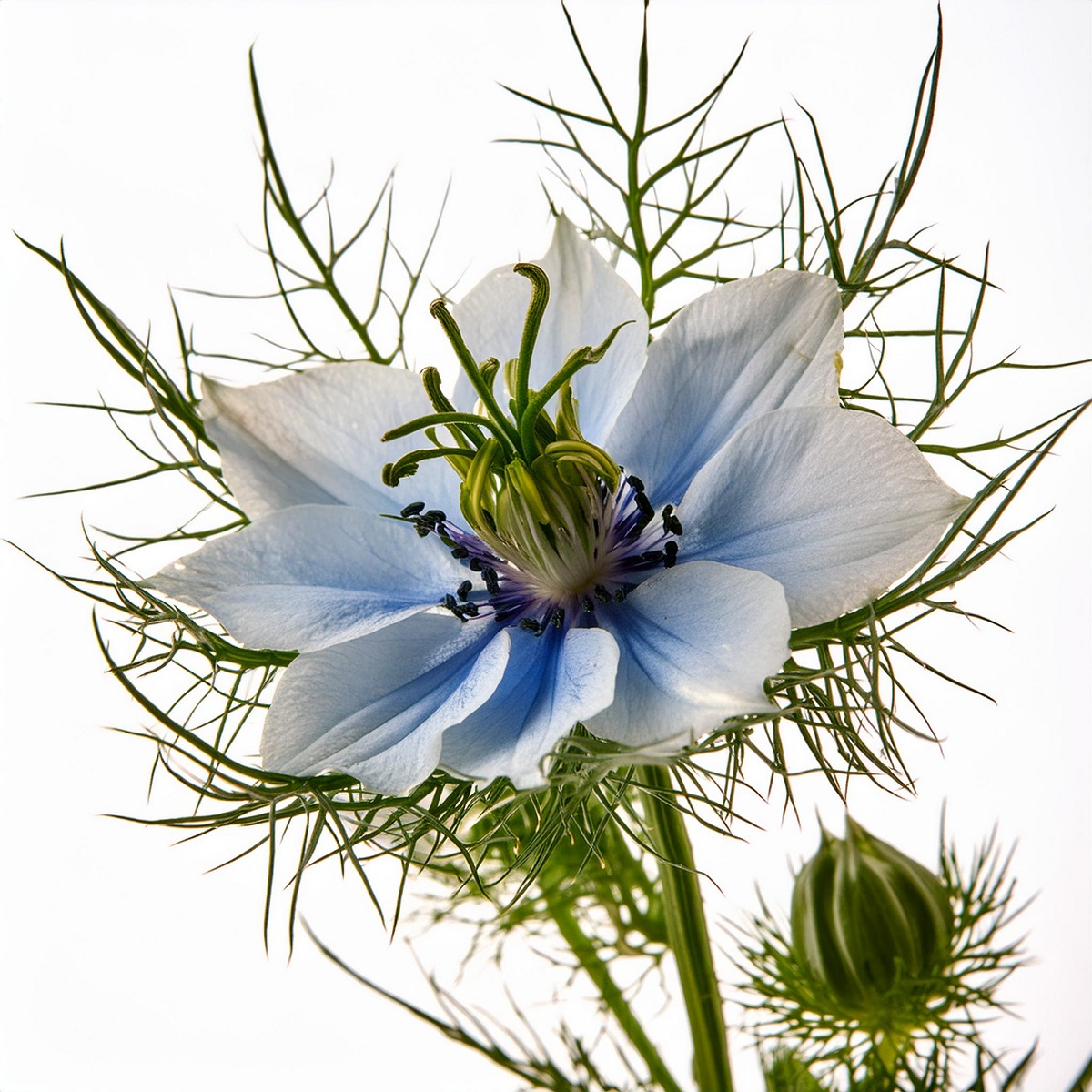
Black seed oil is cold-pressed from the small, jet-black seeds of Nigella sativa, a blue-flowered annual grown in Egypt, Ethiopia, India and the Middle East, and has a peppery scent.
Get to know Black Seed
- Source
- Seed
- Origin
- Egypt, Ethiopia, India
- Extraction
- Cold-pressed
- Texture
- Medium, warm scent
What it is
Black Seed is a botanical carrier oil used in hair and skin care.
Why it belongs in your routine
Peppery, amber oil cold-pressed from the black seeds of Nigella sativa.
How to use
Warm a few drops between your palms and smooth over hair or skin. Patch test before use.
Where Black Seed comes from
Nigella sativa, often called black cumin or kalonji, is a slender annual of the buttercup family that grows 20 to 60 centimetres tall. It has fine, feathery leaves and pale blue or white flowers. The flowers are followed by swollen seed capsules that hold many small, angular black seeds. It is grown as a spice crop across North Africa, the Middle East and South Asia, with Egypt, Ethiopia, India and Turkey among the main producers.
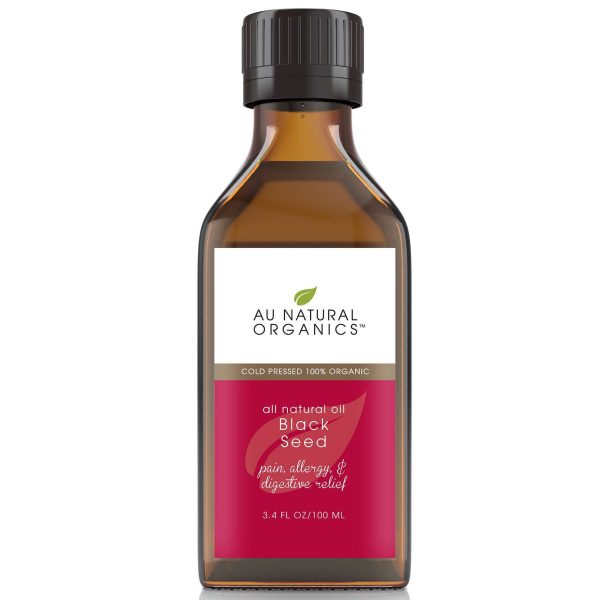
Black seed oil is amber to dark brown with a strong, peppery, slightly bitter and herbal smell. Linoleic acid is its main fatty acid, followed by oleic acid, and it naturally contains thymoquinone and other aromatic compounds that give it its sharp scent. It has a medium weight and is used in hair oils, scalp blends, soaps and body oils, often mixed with milder oils.
Sourcing & extraction
How Black Seed is sourced and extracted
Why it is rare
The seed capsules ripen unevenly and shatter easily, so the harvest has to be timed carefully and is often done by hand on small farms. The oil also needs cool pressing and dark storage to keep its aromatic compounds from fading.
How it is gathered
Black seed is usually sown in autumn or winter and harvested in late spring or early summer, depending on the country. Farmers cut the plants when the capsules turn yellow-brown, dry them in the sun and thresh them to free the seeds. The seed is cleaned and sold as a spice or to oil mills. In Egypt and Ethiopia much of the crop is grown on small family farms.
How it is made
Cold-pressed from the seed
- Threshed seed is cleaned and sieved to remove dust, stones and broken capsules.
- The seed is fed through a screw press at low temperature, which squeezes out a dark amber oil.
- The crude oil is left to settle for several days so that fine seed particles sink.
- The clear oil is filtered and bottled in dark glass to protect its aromatic compounds.
How to use Black Seed
- Start with a few drops and warm them between your palms.
- Massage into clean skin, or work through the lengths of damp or dry hair.
- Use on its own, or add a few drops to your moisturizer or conditioner.
For external use only. Patch test on a small area before first use and stop if irritation occurs. If you are pregnant, nursing or have a medical condition, ask a healthcare professional before use.
From ingredient to routine
Products with Black Seed
Find this ingredient in our collection.
Questions about Black Seed
Where does Black Seed come from?
Black seed is usually sown in autumn or winter and harvested in late spring or early summer, depending on the country. Farmers cut the plants when the capsules turn yellow-brown, dry them in the sun and thresh them to free the seeds. The seed is cleaned and sold as a spice or to oil mills. In Egypt and Ethiopia much of the crop is grown on small family farms.
How is Black Seed extracted?
Cold-pressed from the seed. Threshed seed is cleaned and sieved to remove dust, stones and broken capsules. The seed is fed through a screw press at low temperature, which squeezes out a dark amber oil. The crude oil is left to settle for several days so that fine seed particles sink. The clear oil is filtered and bottled in dark glass to protect its aromatic compounds.
Why is Black Seed considered rare?
The seed capsules ripen unevenly and shatter easily, so the harvest has to be timed carefully and is often done by hand on small farms. The oil also needs cool pressing and dark storage to keep its aromatic compounds from fading.