
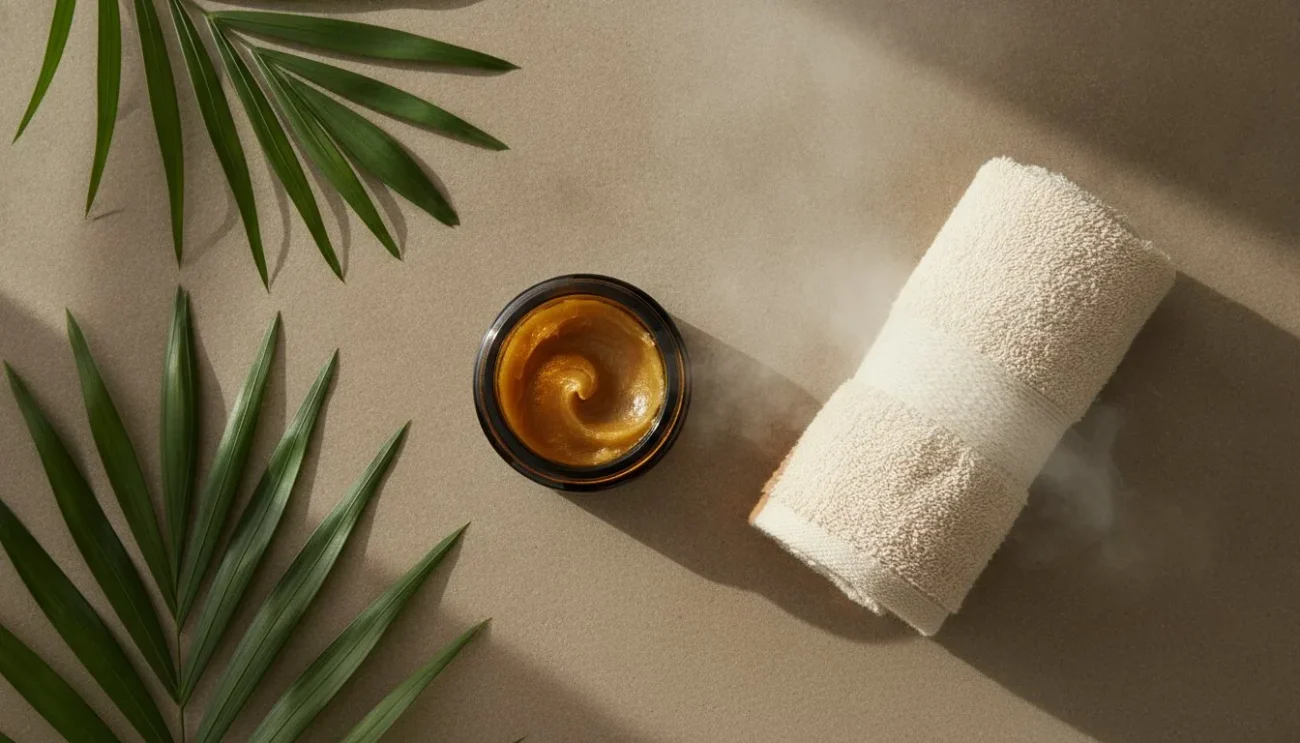
The heaviest botanical fats are often the most effective for your strands, provided you stop treating the hair cuticle like an open door. If you’ve experimented with batana oil for low porosity hair only to end up with limp, greasy buildup, the failure wasn’t the oil. It was the delivery. Tightly shingled cuticles require more than just a topical coating. They require a strategic thermal opening. Without precise heat, even the purest raw lipids will sit uselessly on the surface while the inner cortex remains dangerously parched.
We recognize the exhaustion that comes from chronic dryness and the confusion of why celebrated treatments aren’t working for you. You deserve a routine that yields deep, lasting hydration and visible growth without compromising scalp health. This guide serves as your professional manual for thermal infusion. You’ll learn the exact methodology to make nutrient-dense Batana oil penetrate the hair shaft, ensuring your moisture stays locked in where it belongs. It’s time to transition from guesswork to a science-backed, professional-grade regimen that respects your hair’s unique biological structure.
Key Takeaways
- Understand the shingle-like cuticle structure of low porosity hair and why it requires specific thermal activation to accept moisture.
- Master the precise thermal infusion protocol to ensure batana oil for low porosity hair penetrates the cortex without leaving a greasy residue.
- Explore the molecular profile of Batana oil, specifically its high concentration of OMEGA-9 and OMEGA-6 fatty acids, for deep strand revitalisation.
- Adopt the LCO (Liquid, Cream, Oil) layering method to strategically seal in hydration and prevent the product buildup common with traditional oiling.
- Learn why sourcing authentic, unrefined Batana oil is critical for maintaining the lipid integrity required for high-performance hair care.
Decoding the Low Porosity Barrier: Why Most Oils Fail
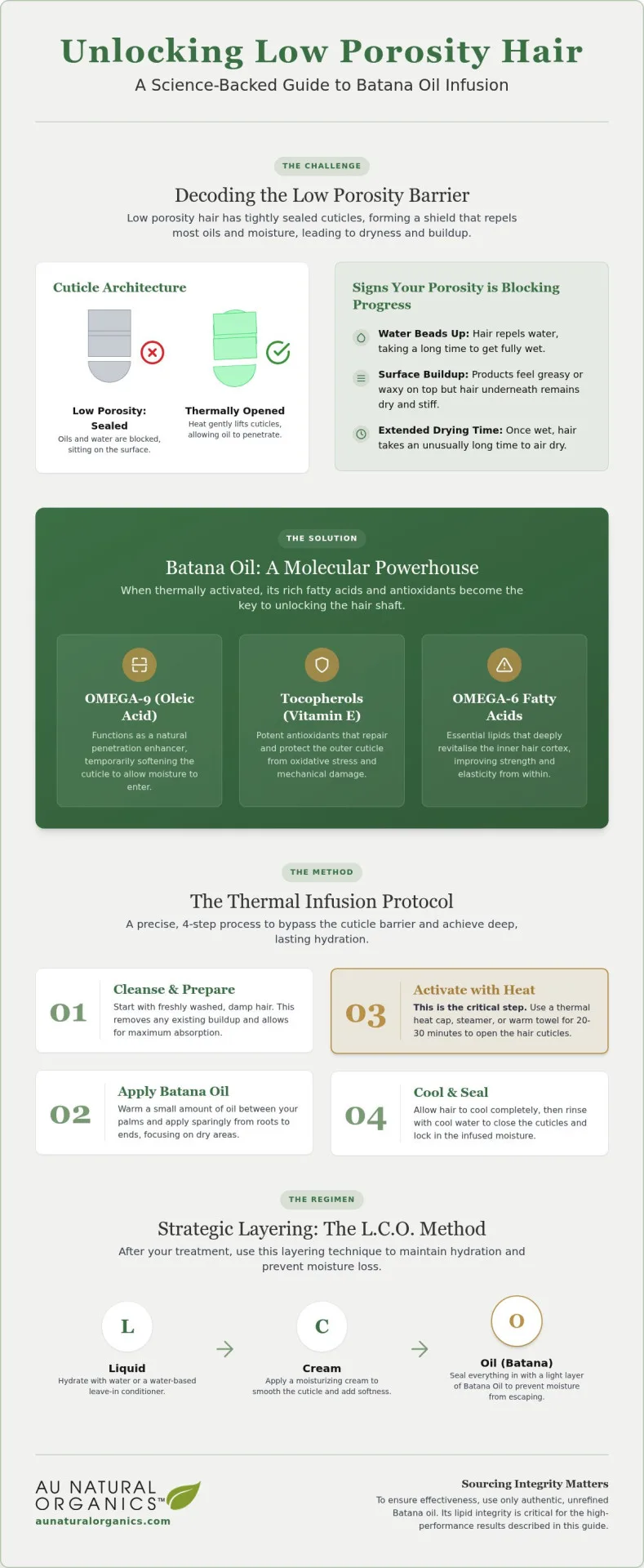
Hair type is a cosmetic descriptor. Porosity is a biological reality. While many consumers focus on curl patterns, the true determinant of hair health is the ability of the cuticle to regulate moisture. Low porosity hair is defined by a cuticle layer that mimics the shingles on a roof. These protein scales lay flat and are tightly bound, creating a nearly impenetrable hydrophobic shield. This structure is designed to repel external elements, which becomes a disadvantage when attempting to introduce nutrient-dense treatments. For those using batana oil for low porosity hair, the primary obstacle is this biological fortress. Without a strategy to bypass these scales, even the most potent botanical lipids will sit uselessly on the surface.
When oils fail to penetrate, they accumulate. This leads to product buildup that suffocates the hair shaft and creates a phenomenon known as flash drying. In this state, the hair appears shiny or greasy, yet it feels stiff and parched underneath. This discrepancy occurs because the oil has formed a superficial film that prevents any subsequent moisture from entering. Understanding this mechanism is essential. You aren’t just applying a product; you’re attempting to engineer a molecular entry into a resistant structure.
The Cuticle Architecture and Lipid Resistance
The cuticle consists of overlapping protein scales that protect the inner cortex. In low porosity hair, these scales are exceptionally flat and resistant to opening. Natural sebum often compounds this issue by creating a waxy seal that repels water-based moisturisers. When you use raw extracts from the American oil palm (Elaeis oleifera), you are introducing a complex profile of fatty acids. However, without thermal intervention, these large molecular chains simply cannot find an entry point. They remain on the surface, attracting environmental debris and causing the hair to feel heavy and coated. This lipid resistance is why cold-pressed oils often feel like a failure on low porosity strands.
Signs Your Porosity is Blocking Your Progress
Identifying your hair’s specific needs requires more than a visual assessment. The “Water Bead Test” is a definitive diagnostic tool. Place a clean, product-free strand in a glass of room-temperature water. If it remains floating after five minutes, your cuticles are tightly sealed. Another sign is the phenomenon of “product sitting.” If your hair feels greasy to the touch but remains brittle and prone to snapping, you’re experiencing surface accumulation rather than internal hydration. This lack of penetration leads to chronic breakage, as the hair lacks the elasticity provided by deep moisture. Effectively utilizing batana oil for low porosity hair requires moving beyond topical application to a deep-infusion mindset that respects the hair’s natural resistance.
The Molecular Profile: Why Batana Oil is a Low Porosity Paradox
Batana oil presents a biochemical contradiction. In its room-temperature state, it is a dense, smoky paste that appears far too heavy for delicate strands. On the hair, it can either be a suffocating weight or a revitalising elixir. This outcome depends entirely on your understanding of its molecular weight. Unlike heavy sealing waxes that sit permanently on the surface, batana oil for low porosity hair offers a sophisticated blend of OMEGA-9 and OMEGA-6 fatty acids. These unsaturated lipids possess a unique fluidity that, when thermally activated, allows them to navigate the tight gaps between cuticle scales. Heat is the catalyst for this transformation.
The presence of Tocopherols, specifically Vitamin E, acts as a biological repair agent within the oil. These antioxidants are vital for maintaining the integrity of the hair cuticle structure, which is often compromised by oxidative stress and mechanical handling. By reinforcing the outer sheath, Batana oil ensures that once moisture is infused, it remains trapped within the cortex. This is the paradox of Batana. It is a substantial, nutrient-dense substance that, through the application of heat, transforms into a high-penetration liquid capable of reaching the innermost layers of the hair fiber.
Oleic Acid: The Secret Penetration Enhancer
Oleic acid is a mono-unsaturated OMEGA-9 fatty acid that comprises a significant portion of Batana’s lipid profile. It functions as a natural penetration enhancer by temporarily softening the keratinised scales of the cuticle. This softening effect is brief but critical. It provides a window for the oil’s smaller molecular components to slip beneath the surface. In contrast, mineral oils and synthetic silicones lack this biological affinity. They simply coat the hair in a plastic-like film, leading to the chronic dehydration often seen in low porosity strands. Choosing our Authentic Batana Oil ensures you are applying a lipid profile that works with your biology, not against it.
Raw vs. Refined: Preserving the Lipid Chain
Industrial refining is a process of destruction. High-heat filtration and chemical bleaching strip away the very fatty acid chains and sterols that make batana oil for low porosity hair effective. For these resistant strands, refined oils are a liability. They lack the molecular complexity needed to interact with the hair’s natural sebum. We maintain a strict, no-nonsense approach to sourcing, ensuring our oil remains in its raw, unrefined state to preserve every nutrient. To understand the depth of this commitment to quality, consult our guide on Authentic Batana Oil: The Professional Guide to Sourcing and Purity. Purity is the only path to performance.
The Thermal Infusion Protocol: A Step-by-Step Guide
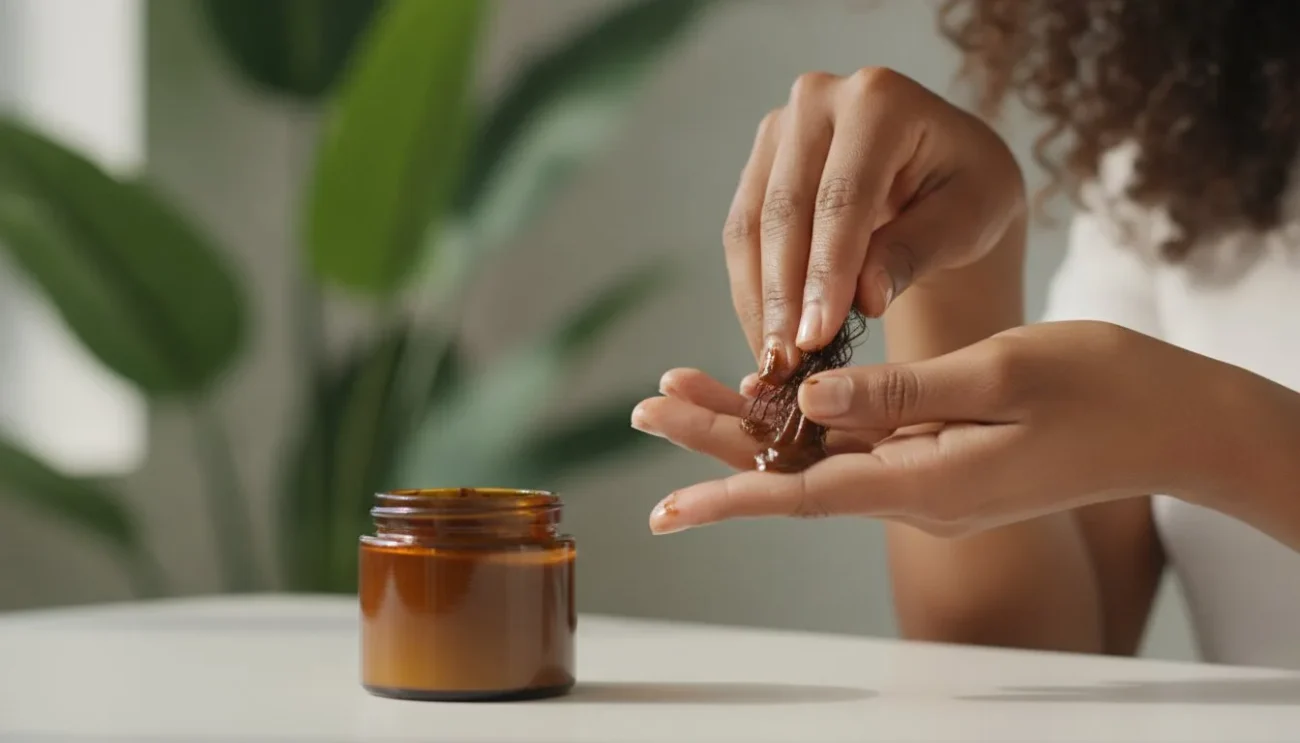
Thermal infusion is not a suggestion. It is a requirement for biological success. If you apply batana oil for low porosity hair to cold, dry strands, you are essentially wasting a premium resource. The Master Rule is absolute: never apply Batana oil to hair that hasn’t been prepped with warmth and moisture. Without this preparation, the lipid chains will simply solidify on the surface, creating the very buildup we aim to avoid. Preparation begins with gentle liquefaction. Place the raw paste in a glass vessel submerged in a warm water bath. Avoid the microwave at all costs. Intense, direct radiation destroys the delicate fatty acid composition that makes this oil a superior choice for deep-strand revitalisation.
We reject the casual application of high-performance botanicals. Professional results require professional discipline. Once the oil is liquefied and the hair is properly prepared, the application must be methodical. You are not just coating the hair; you are engineering a molecular entry. This requires a steady hand and a commitment to the process. By following this protocol, you ensure that every drop of oil performs its intended function within the hair cortex.
Step 1: The Pre-Heat and Dampen Phase
Begin by introducing a warm mist or steam to the hair. This initial warmth is critical because it begins the process of softening the keratinised scales of the cuticle. Aim for hair that is damp, not soaking wet. Excess water occupies the very space the oil needs to inhabit, effectively blocking absorption. Thermal activation is the process of using controlled heat to expand the cuticle for lipid entry. This phase ensures the “door” is unlocked before the oil arrives.
Step 2: The Indirect Heat Method
Work the melted Batana oil into the hair, focusing heavily on the mid-shaft to the ends. These areas are the oldest parts of the hair and require the highest concentration of OMEGA-9 fatty acids. Once applied, cover the hair with a plastic cap and use a hooded dryer or a thermal heat cap for 20-30 minutes. Indirect heat is non-negotiable. Direct high heat from a blow dryer is detrimental; it causes flash drying, where the surface moisture evaporates too quickly, leaving the cuticle parched and prone to snapping.
Step 3: The Cool-Down Rinse
The final step is the seal. After the heat treatment, allow the hair to cool slightly before rinsing with cool water. This temperature shift is necessary to “lock” the nutrients inside by encouraging the cuticle scales to lay flat again. Select a sulfate-free cleanser to remove any excess oil from the surface. This ensures your batana oil for low porosity hair treatment leaves the strands hydrated from within rather than greasy on the outside. A disciplined rinse preserves the integrity of the infusion.
Strategic Layering: Integrating Batana into the LCO Method
The LCO method (Liquid, Cream, Oil) is the only logical sequence for resistant strands. Many enthusiasts mistakenly follow the LOC method, which places oil directly onto the cuticle before moisture can be established. For those using batana oil for low porosity hair, this sequence error leads to instant flash drying and surface greasiness. The oil must serve as the final, definitive seal. It acts as a hydrophobic barrier that prevents internal moisture from evaporating. This strategic order ensures that the hydration you’ve worked to introduce remains trapped within the cortex. You aren’t just applying products; you’re building a moisture fortress.
For daily maintenance where full thermal infusion isn’t feasible, consider a synergistic blend. Mixing the dense Batana paste with lighter lipids creates a more manageable consistency for the final sealing step. This allows for a thinner, more even application that provides the benefits of OMEGA fatty acids without the risk of weighted buildup. Explore our The Professional Guide to Botanical Carrier Oils to select the ideal lighter lipid for your custom blend. A well-constructed blend maintains the efficacy of the batana oil for low porosity hair while improving daily hair manageability.
Liquid: The Hydration Foundation
Hydration is a non-negotiable prerequisite for oiling. You must always begin with a water-based leave-in treatment or a botanical hydrosol. These liquids penetrate the gaps in the cuticle scales more easily than dense oils. Without this foundation, you are simply greasing dry hair. To understand how to properly balance moisture before sealing, consult our Beyond Hydration: The Authoritative Guide to Botanical Body Butters. A hydrated strand is a flexible strand. Plain water often evaporates too quickly; botanical liquids provide the sustained dampness required for successful layering.
Cream and Oil: The Double Seal
The second layer should be a lightweight cream. This softens the cuticle and provides a secondary moisture reservoir. Finally, apply a minimal amount of Batana oil as the final “moisture trap.” It creates a protective sheath that prevents environmental factors from stripping away the previous layers. If the hair feels heavy, you’ve likely exceeded the necessary quantity. A small, pea-sized amount, properly emulsified in the palms, is usually sufficient for sealing the ends. This double-seal approach is the professional standard for moisture retention. To achieve this level of performance, secure your supply of Authentic Batana Oil and begin your strategic layering regimen today.
Sourcing Integrity: Why Au Natural Organics Raw Batana Wins
Purity is the final pillar of performance. When managing batana oil for low porosity hair, the chemical composition of the oil determines whether the cuticle accepts or rejects the treatment. We adhere to an uncompromising standard: our Batana oil is 100% pure, unrefined, and ethically sourced from the wild-grown American palm in Honduras. Many commercial variants are subjected to industrial deodorisation or “scenting” to mask the natural, smoky aroma of the raw paste. These synthetic fragrances are more than just aesthetic choices. They are chemical additives that can interfere with the hair’s lipid balance and cause irritation to a sensitive scalp. We reject these fillers. Our no-nonsense approach ensures that the botanical integrity of the oil remains undisturbed, providing a direct bridge between traditional wisdom and your modern hair care needs.
Traditional extraction is a slow, deliberate process. We preserve these methods because they are the only way to maintain the high-potency OMEGA-9 and OMEGA-6 profile required for deep-strand revitalisation. Refined oils often lose the very lipids that allow for the thermal infusion we’ve discussed. By maintaining the oil in its raw state, we ensure that the molecular weight remains consistent with the needs of resistant, low porosity strands. Integrity isn’t just a marketing term. It’s a biological requirement for results.
Ethical Responsibility in Botanical Sourcing
Our commitment extends beyond the bottle to the indigenous communities of Honduras who harvest the American Palm. We act as a transparent guardian of quality, ensuring that the traditional knowledge of the Miskito people is respected and fairly compensated. There is a profound difference between mass-produced industrial palm oil and wild-harvested Batana. Industrial methods prioritising volume often result in a degraded product that lacks the nutrient density of wild-grown fruit. Our “master of the craft” philosophy prioritises the slow, careful processes of nature over the efficiency of the factory. This transparency builds a foundation of trust that you can feel in every application.
Maximising Your Results with Professional Support
A high-potency formula requires less product to achieve superior outcomes. When using our batana oil for low porosity hair, a disciplined application focused on scalp health and length retention yields the best growth results. Because our oil is unrefined, the concentration of Tocopherols is significantly higher than in processed alternatives, meaning a small amount goes further in repairing the cuticle sheath. This efficiency prevents the product buildup that often plagues low porosity routines. You’re investing in a professional-grade tool that respects your hair’s biological limits while pushing its growth potential to the maximum. Experience the integrity of Raw Batana Oil for your low porosity hair.
Mastering the Infusion
Success with resistant strands requires more than high-quality ingredients. It demands a disciplined application sequence. By prioritising thermal infusion and the LCO layering method, you ensure that batana oil for low porosity hair acts as a transformative elixir rather than a superficial weight. You’ve moved beyond the frustration of chronic dryness and into a regimen of professional-grade hydration. Mastery over your hair’s unique structure is no longer a mystery; it’s a science.
Performance is inextricably linked to botanical integrity. Our standard is uncompromising. We provide 100% Raw and Unrefined Batana oil, ethically sourced from Honduras and entirely free from synthetic fragrances. This level of purity preserves the precise lipid profile your strands require for true, deep-seated revitalisation. It’s time to provide your hair with the substance it deserves. Shop Authentic Raw Batana Oil to begin your transformation. Your journey toward resilient, deeply hydrated strands starts with a commitment to quality and a refusal to compromise.
Frequently Asked Questions
Is Batana oil too heavy for low porosity hair?
It is only perceived as heavy when applied incorrectly without thermal activation. While its raw state is a dense paste, the high concentration of OMEGA-9 fatty acids becomes exceptionally fluid under controlled heat. This fluidity allows the oil to navigate the tight cuticle scales of low porosity strands rather than sitting on the surface. Proper dosage and heat ensure a lightweight, high-performance finish.
How often should I use Batana oil on low porosity hair?
Deep thermal treatments should occur no more than twice per month to prevent lipid overload. For daily sealing, use a pea-sized amount emulsified with a lighter carrier oil. Low porosity hair is prone to buildup, so monitoring the hair’s elasticity and tactile response is essential for determining frequency. Over-application can lead to the very stiffness we aim to resolve.
Can I leave Batana oil in my hair overnight?
Leaving raw Batana oil in the hair overnight is largely unnecessary for low porosity strands. Because these cuticles are tightly sealed, the oil requires active heat to penetrate; body heat alone during sleep is often insufficient. Extended exposure without absorption can lead to product accumulation and scalp irritation. A focused 30-minute thermal session is far more effective for deep-strand revitalisation.
What is the best way to heat Batana oil without losing nutrients?
The most effective method for melting the raw paste is a gentle, indirect warm water bath. Place the required amount in a glass vessel and submerge it in warm water until it reaches a liquid state. Never use a microwave. High-intensity radiation compromises the delicate batana oil for low porosity hair nutrient profile, specifically the heat-sensitive Tocopherols and fatty acid chains.
Does Batana oil cause buildup on low porosity hair?
Buildup only occurs when the oil is applied to cold strands or used in excessive quantities. When the cuticle is not thermally opened, the lipids have no entry point and solidify on the hair’s surface. Following the LCO method and ensuring a thorough cool-water rinse after treatment will prevent the greasy film often associated with improper oiling. Discipline in application prevents accumulation.
Should I apply Batana oil to wet or dry hair?
Always apply Batana oil to damp, freshly warmed hair for maximum absorption. Dry low porosity hair is inherently hydrophobic and will repel the oil immediately. Dampening the strands with a botanical hydrosol or warm mist provides the necessary hydration foundation. The oil then acts as a definitive seal to lock that moisture into the cortex, ensuring long-term hydration retention.
What happens if I use Batana oil without heat on low porosity hair?
Using batana oil for low porosity hair without heat results in a superficial coating that blocks future moisture. The tightly bound cuticle scales remain closed, preventing the oil’s OMEGA-6 and OMEGA-9 chains from entering the hair shaft. This leads to flash drying, where the hair feels parched and brittle despite appearing shiny or oily on the surface. Thermal intervention is non-negotiable.
Can Batana oil help with low porosity hair growth?
Batana oil facilitates growth by providing the scalp with essential lipids and antioxidants that support follicular health. Its high Vitamin E content reinforces the hair’s outer sheath, significantly reducing mechanical breakage and length loss. When combined with the thermal infusion protocol, it ensures the hair remains elastic and resilient enough to retain its natural growth. Consistency is the key to visible results.
Shop Batana Oil: Try our Pure Batana Oil (3.4oz), cold-pressed from Honduran batana nuts, or the larger 100% Raw Batana Oil (6oz).
Leave a comment
You must be logged in to post a comment.