
The pursuit of genuine hair restoration is often undermined by diluted products and impossible promises. Many individuals struggling with thinning crowns or heat-induced breakage find themselves trapped in a cycle of wasted investment on oils that lack botanical integrity. When you analyze batana oil before and after hair results, it’s vital to separate viral marketing trends from the biological reality of the hair growth cycle. Authentic results are not a cosmetic quick-fix. They are the product of consistent lipid saturation and follicular nourishment.
We understand the frustration of slow growth and the prevalence of synthetic imitations in a market projected to reach 386 million dollars by 2032. This guide promises a transparent look at the 90-day transformation timeline. You will learn to identify the raw, unrefined paste used by the Tawira people of Honduras; this ensures you bypass the fakes for a solution rooted in traditional expertise. We examine the specific fatty acid profiles required for restoration and the milestones you can realistically expect during this biological journey.
Key Takeaways
- Understand why unrefined lipids from the American Palm are essential for neutralizing oxidative stress and restoring follicular health.
- Track your progress through the 90-day biological timeline to set realistic expectations for your batana oil before and after hair results.
- Discover how to tailor application methods for high porosity hair and thinning edges to maximize restorative efficiency and follicle recovery.
- Learn to utilize our authenticity checklist to distinguish between potent, raw Honduran paste and diluted, ineffective liquid imitations.
- Implement a structured regimen featuring deep conditioning treatments and targeted scalp massages to stimulate blood flow and nutrient absorption.
The Science of Restoration: Why Batana Oil Produces Unique Results
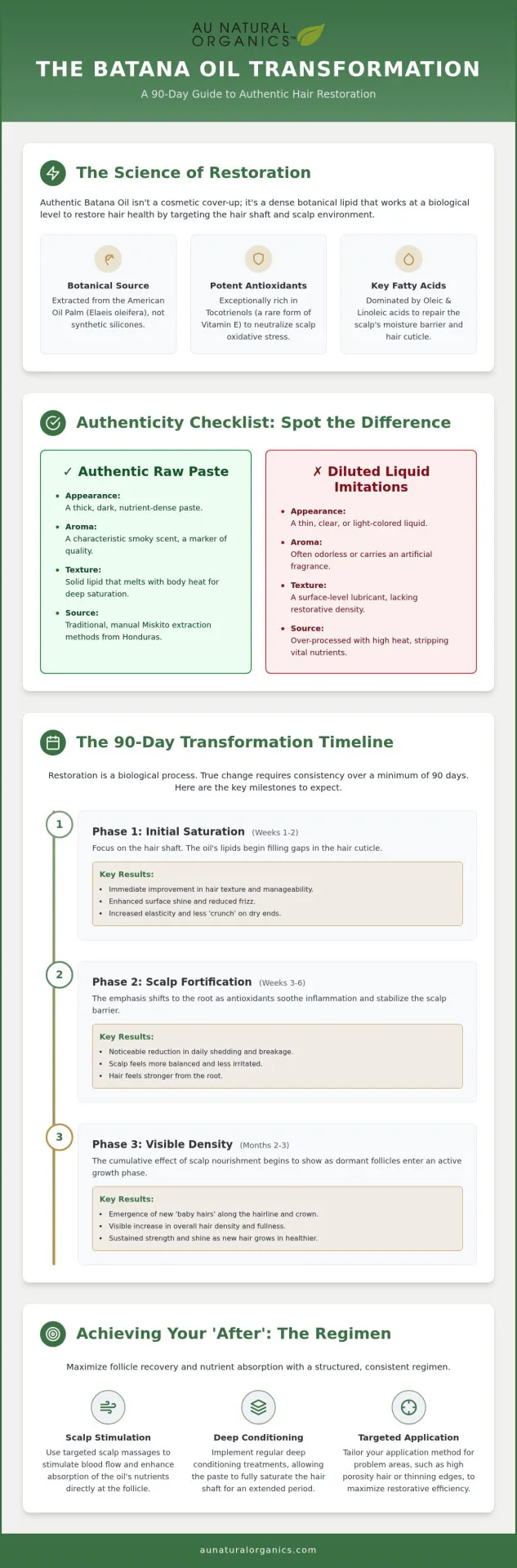
Authentic Batana oil is not a standard cosmetic oil. It is a dense, nutrient-rich botanical lipid extracted from the fruit of the American oil palm (Elaeis oleifera). While many hair treatments rely on synthetic silicones to create a temporary illusion of health, Batana oil operates through deep lipid saturation. It targets the biological structure of the hair shaft and the health of the scalp environment. The oil is exceptionally rich in tocotrienols, a rare and potent form of Vitamin E. These antioxidants work to neutralize oxidative stress on the scalp; this is a primary contributor to follicle degradation and premature thinning. When users document batana oil before and after hair results, they are witnessing the cumulative effect of this cellular-level protection.
The distinction between raw Honduran paste and refined, liquid alternatives is absolute. Refined oils often undergo high-heat processing that strips away the very compounds required for restoration. Raw Batana remains in its unrefined state. It is a thick, dark paste that carries the full biological weight of its source. This density is necessary to effectively seal the hair cuticle and provide a sustained release of nutrients to the scalp. Without this unrefined integrity, the oil becomes just another surface-level lubricant rather than a restorative treatment.
Fatty Acids and Follicle Stimulation
The restorative power of this oil lies in its specific fatty acid profile, dominated by oleic and linoleic acids. These lipids are essential for maintaining the scalp’s moisture barrier. Because Batana oil closely mimics the composition of human sebum, it integrates seamlessly into the scalp environment to repair damage caused by chemical treatments or environmental stressors. The physical weight of the oil allows it to fill gaps in the hair cuticle. This creates a smooth, reflective surface that reduces breakage and preserves internal hydration. It is this structural reinforcement that leads to the visible increase in hair density and shine seen in genuine transformations.
The Role of Traditional Miskito Extraction
Traditional extraction methods are vital for maintaining botanical potency. The Miskito people of Honduras utilize a manual process that avoids the destructive temperatures of industrial refining. This meticulous craftsmanship is evidenced by the oil’s deep color and its characteristic smoky aroma. This scent is not a fragrance additive; it is a definitive marker of unrefined quality. If an oil is clear or lacks this signature scent, it has likely been diluted or over-processed. Purity is the only path to results. Blended or refined oils lack the lipid concentration required to reverse chronic breakage or stimulate dormant follicles effectively. To achieve the batana oil before and after hair results seen in traditional cultures, one must use the 100% pure, unrefined paste.
The 90-Day Transformation Timeline: What to Expect
Restoration is a marathon, not a sprint. When evaluating batana oil before and after hair results, one must respect the chronological requirements of the hair follicle. While synthetic serums offer a fleeting sheen, the deep-acting lipids of the American Palm require a minimum of 90 days to facilitate a true biological shift. Consistency remains the primary variable. Skipping applications disrupts the saturation process and resets the progress of your scalp’s recovery. This timeline provides a realistic map of the milestones you’ll encounter during a disciplined regimen.
- Phase 1: Initial Saturation (Weeks 1-2): The focus is on the hair shaft. You will notice immediate improvements in texture, manageability, and surface shine as the oil fills structural gaps.
- Phase 2: Scalp Fortification (Weeks 3-6): The emphasis shifts to the root. A notable reduction in daily shedding and breakage occurs as the scalp barrier stabilizes and inflammation subsides.
- Phase 3: Visible Density (Months 2-3): This is the emergence of ‘baby hairs’. Dormant follicles begin to transition into the active growth phase, resulting in a visible increase in crown and edge density.
Weeks 1-4: Immediate Structural Changes
The first month is characterized by cuticle repair. The cosmetic science of batana oil reveals that its unique lipid composition allows it to penetrate the cortex more effectively than standard carrier oils. This leads to increased elasticity and the elimination of ‘crunch’ in dry, brittle ends. Some users may experience a brief ‘detox’ period where the scalp adjusts to the heavy lipid load. This is a normal part of the barrier-repair process. Don’t mistake this temporary adjustment for a lack of efficacy; it’s a sign that the scalp environment is recalibrating its natural sebum production.
Months 2-3: Biological Growth Indicators
True growth occurs when follicles move from the telogen (resting) phase to the anagen (growth) phase. This transition is not instantaneous. By month two, the cumulative nourishment of the tocotrienols begins to manifest as new growth. Your baseline hair porosity will influence the speed of these visual changes. High porosity hair often displays a more dramatic ‘before and after’ in texture early on, whereas low porosity hair may require more frequent, light applications to achieve deep penetration. To accurately track your batana oil before and after hair results, document your progress with high-resolution photos in consistent lighting every 30 days. To begin your own documented journey, starting with unrefined Batana oil provides the necessary biological foundation.
Hair Type Specific Results: Tailoring Expectations
Results are not uniform. Your hair’s biological blueprint determines the pace of transformation. High porosity hair typically exhibits the most immediate batana oil before and after hair results. Because the cuticle is naturally compromised or raised, the oil’s dense lipids penetrate the cortex without resistance. This leads to a rapid shift from porous, frizzy strands to a reflective, sealed surface within the first few applications. Low porosity hair requires a more methodical approach. To ensure the oil actually penetrates the shaft, users should apply the paste to damp hair or utilize a warm towel wrap to gently lift the cuticle. Without these techniques, the oil may simply sit on the surface, failing to deliver its restorative payload.
Batana oil serves as a restorative bridge for chemically treated hair. Bleaching and relaxing processes strip the hair of its natural protective lipids; this leaves the protein structure exposed and vulnerable. Reintroducing dense fatty acids restores the protein-lipid balance necessary for elasticity. This prevents the “snap” associated with over-processed strands. While the oil cannot “heal” dead tissue, it reinforces the existing structure to prevent further degradation.
Repairing Heat and Chemical Damage
Batana oil acts as a natural cement for compromised hair bonds. In cases of severe heat damage, the hair often loses its ability to retain moisture, resulting in a brittle, straw-like texture. Over a 60-day period, consistent saturation can transition these strands from brittle to supple. For a holistic approach to moisture, many users find success by integrating Batana oil with nutrient-dense botanical body butters. This combination provides a multi-layered barrier that locks in hydration and protects the hair from further environmental stress.
Addressing Thinning and Scalp Health
Regrowth efforts should focus on the crown and hairline, as these areas often respond most visibly to topical stimulation. A clinical study on hair growth involving tocotrienols supports the idea that neutralizing oxidative stress is vital for follicle recovery. You may experience a subtle “tingle” during application. This sensation often indicates increased microcirculation in the scalp, which is a positive sign of nutrient delivery. However, it’s essential to manage expectations regarding permanent damage. If a follicle is merely dormant, Batana oil can provide the environment needed for reactivation. If the area is permanently scarred or the follicle has completely ceased function, topical treatments will likely focus on improving the health of the surrounding hair rather than creating new growth.
Identifying Potency: Why Your ‘Before’ Depends on Sourcing
Sourcing dictates efficacy. You cannot expect transformative results from a biologically hollow product. Many consumers fail to achieve expected batana oil before and after hair results because they unknowingly purchase refined, diluted, or outright counterfeit variants. Authentic Batana is not a clear liquid. It is a dense, unrefined paste that retains the full spectrum of its native nutrients. If the starting material is compromised by industrial refining, the restorative potential is lost before the product even touches your scalp. Quality is the foundation of restoration.
To ensure you are using a potent medium, utilize this Authenticity Checklist:
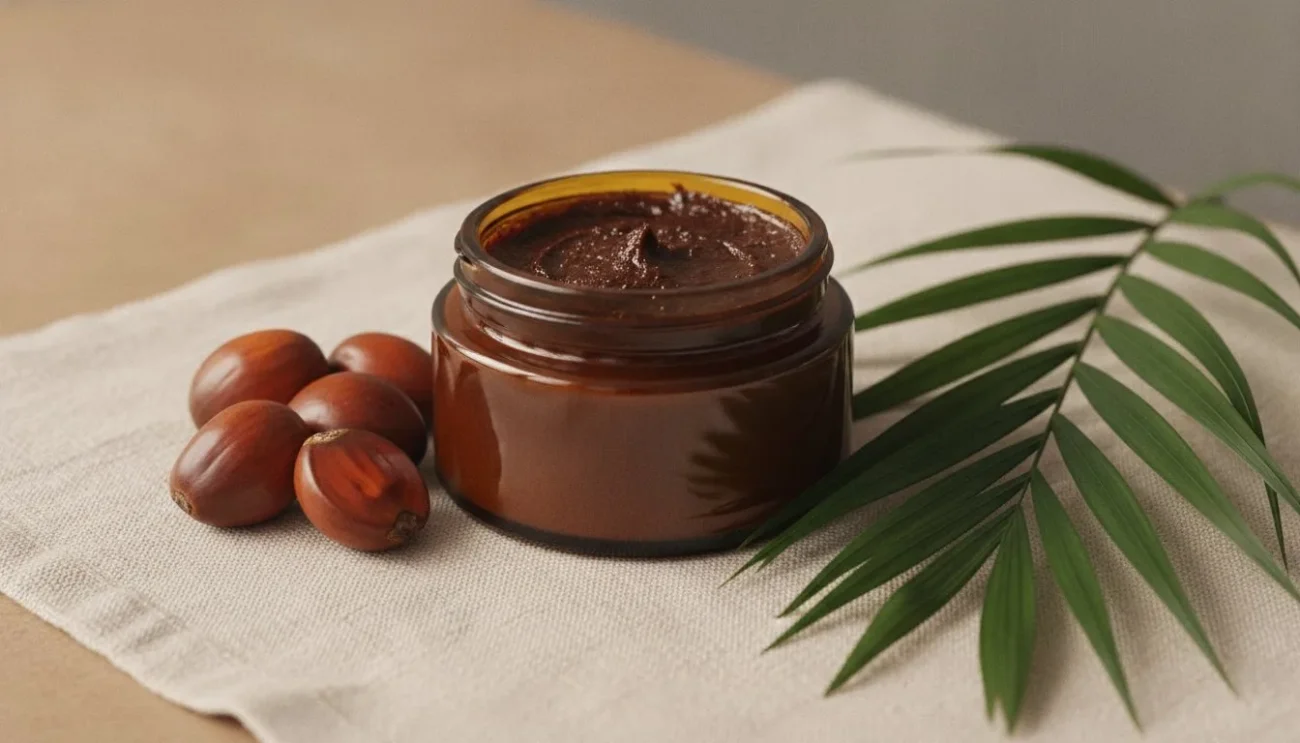
- Color: Real Batana oil exhibits a deep brown to rich mahogany hue, never a pale yellow or clear transparency.
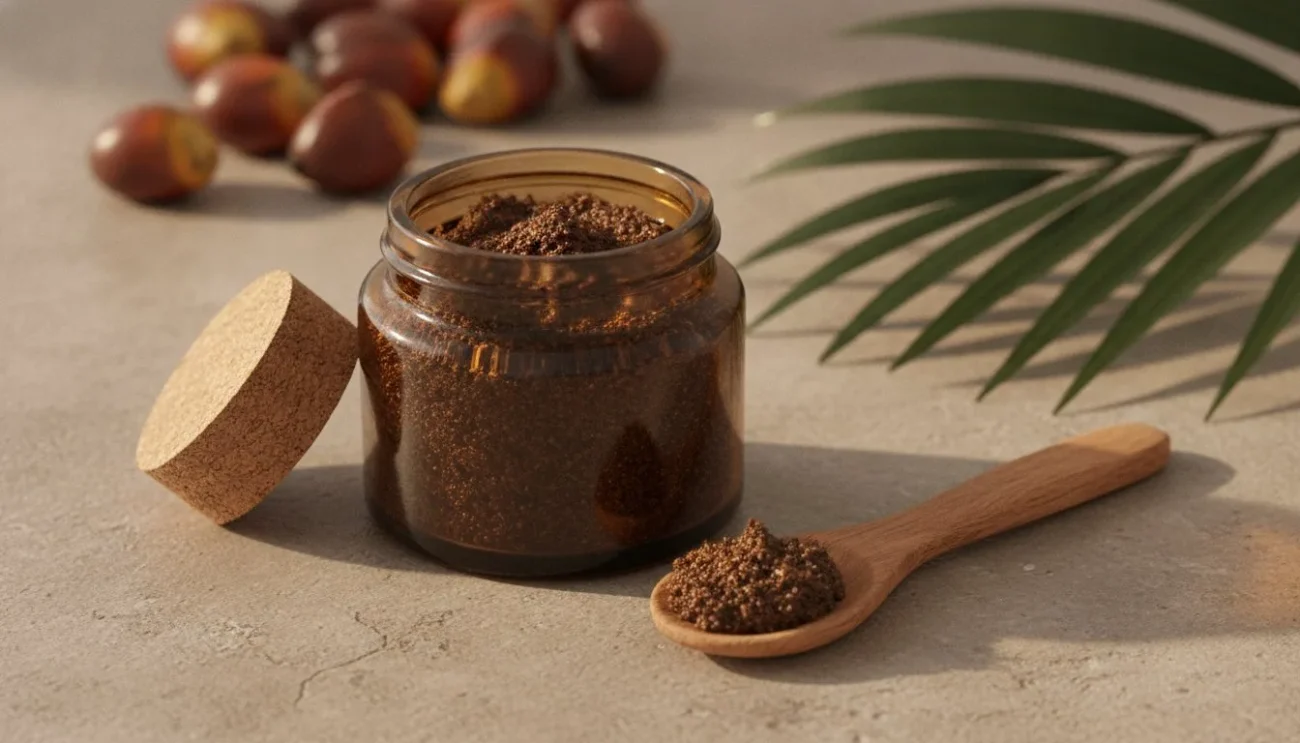
- Texture: It must be a solid, slightly gritty paste at room temperature that melts instantly upon contact with skin.
- Scent: A distinctly smoky, “burnt coffee” aroma is the primary indicator of traditional fire-roasting methods.
Liquid Batana oils sold in clear bottles are a significant red flag. Clear packaging allows UV light to penetrate and degrade the rare fatty acids, while the liquid state suggests the oil has been highly refined or blended with cheaper carrier oils. Refining processes use high heat to remove the natural aroma and color. This heat simultaneously destroys the tocotrienols and lipids required for follicle reactivation. Furthermore, synthetic additives often masquerade as “natural” growth boosters in these diluted products. These synthetics can clog pores and interfere with the scalp’s natural barrier, stalling the progress you seek.
The Visual Indicators of Raw Paste
The “burnt coffee” or earthy smell is non-negotiable for results. This aroma is a chemical marker of the traditional extraction process used in Honduras. It confirms that the oil has not been subjected to chemical deodorization, which strips away restorative power. When comparing authentic batana oil against clear cosmetic oils, the difference in molecular density is obvious. The raw paste provides a sustained release of nutrients, whereas refined oils offer only temporary surface lubrication. To secure the results described in this guide, you must source unrefined Batana oil from a verified, ethical supplier.
Sourcing Integrity and Ethical Impact
The Miskito people of Honduras are the traditional masters of this craft. Their manual extraction methods are slow, deliberate, and essential for maintaining oil potency. Ethical sourcing ensures these traditional communities are supported while preventing the over-processing that ruins batana oil before and after hair results. Unrefined is the preservation of a plant’s original molecular structure. By maintaining this structure, the oil remains bioavailable to your hair and scalp. This integrity allows the rare fatty acids found in the American Palm to penetrate the hair shaft effectively, providing the structural reinforcement necessary for genuine growth and repair.
Achieving the ‘After’: The Au Natural Organics Regimen
Transformative results are the product of discipline. To document successful batana oil before and after hair results, your routine must prioritize the delivery of raw lipids directly to the follicle. A haphazard application will not suffice for chronic thinning or structural damage. We’ve developed a four-step regimen designed to maximize the bioavailability of the unrefined paste while respecting the biological growth cycles discussed in previous sections. Consistency is mandatory. Results follow discipline.
- Step 1: Deep Conditioning Treatment. Apply the raw paste generously to the hair and scalp. Allow it to penetrate for a minimum of 20 minutes. For severe breakage, an overnight application provides the duration needed for deep cortex saturation.
- Step 2: Targeted Scalp Massage. Spend five minutes massaging the oil into the scalp using circular motions. This mechanical stimulation increases blood flow; this ensures that the tocotrienols reach the root where they can effectively neutralize oxidative stress.
- Step 3: Protective Styling. After treatment, utilize protective styles like braids or low buns. This seals in the lipids and protects the newly fortified strands from environmental friction and moisture loss.
- Step 4: The Consistency Rule. For individuals addressing thinning edges or crown loss, a three-times-a-week application is required. This frequency maintains a constant nutrient supply to the follicle without overwhelming the scalp’s natural balance.
Optimizing Your Batana Routine
Heat is a double-edged sword. Never utilize a microwave to soften the paste, as extreme temperatures destroy the delicate fatty acids and antioxidants. Instead, place the required amount in a small glass bowl and set it inside a larger bowl of warm water. This gentle warming preserves the oil’s botanical integrity. If your goal is growth, focus the application on the scalp. If you seek length retention, prioritize the ends to prevent splitting. Always pair your regimen with a gentle, sulfate-free cleanser. This prevents the heavy lipids from clogging the follicles over time, ensuring the scalp remains a healthy environment for new growth.
The Au Natural Organics Promise
We refuse to compromise on the traditional Honduran extraction methods that define true Batana oil. Our commitment to a raw, unrefined, and small-batch approach ensures that every jar contains the full molecular structure of the American Palm. Mass-marketed oils often prioritize shelf life over potency; we prioritize the restoration of your hair. When you choose our traditionally processed paste, you’re choosing a legacy of expertise and a standard of purity that diluted liquids cannot match. Secure your supply of raw, unrefined Batana oil and begin the journey toward your own batana oil before and after hair results today.
Commit to Biological Restoration
Our commitment to quality is absolute. We source our oil directly from Honduras using traditional Miskito methods to ensure every batch is expert-vetted for nutrient density. There are no synthetic fillers; there is only 100% pure, unrefined integrity. This transparency allows you to bypass the diluted imitations that saturate the market. It’s time to prioritize substance over marketing fluff.
Secure your supply of raw, unrefined Batana oil. Your journey toward a fortified scalp and restored density begins with a single, uncompromising choice. Trust the process and remain consistent.
Common Restoration Inquiries
How long does it take to see hair growth with Batana oil?
Visible density typically requires 90 days of consistent application. While texture and shine improve within the first two weeks, biological growth depends on the follicle’s transition into the anagen phase. This process cannot be rushed. Consistency is the only variable that guarantees these results. You must respect the biological timeline of your hair’s natural growth cycle to see a true transformation.
Can Batana oil regrow edges lost to traction alopecia?
Regrowth is possible if the hair follicles remain dormant rather than permanently scarred. The oil’s high tocotrienol content neutralizes oxidative stress, creating a fertile environment for recovery. If the scalp is completely smooth and scarred, results will be limited to improving the health of surrounding strands. Early intervention is vital. Targeted scalp massages with the raw paste maximize the chances of follicle reactivation.
Should I leave Batana oil in my hair overnight for better results?
Overnight application is highly effective for deep cortex saturation and addressing chronic breakage. The extended duration allows the dense lipids to penetrate the hair shaft fully. This is particularly beneficial for high porosity hair types that struggle to retain moisture. Ensure you protect your linens. The unrefined paste carries a rich mahogany hue that can stain fabrics due to its raw, botanical integrity.
What does real Batana oil smell like, and why does it matter?
Authentic Batana oil possesses a distinct, smoky aroma reminiscent of burnt coffee or roasted nuts. This scent is a definitive marker of the traditional fire-roasting process used in Honduras. If an oil lacks this aroma or smells synthetic, it has likely been over-processed or diluted. Such products are often ineffective for achieving batana oil before and after hair results. The scent is your guarantee of potency.
Is Batana oil safe for color-treated or chemically relaxed hair?
It is exceptionally safe and beneficial for chemically altered hair. Bleaching and relaxing treatments often strip the hair of its natural protective lipids, leaving it vulnerable to breakage. Batana oil reintroduces these essential fatty acids to restore elasticity. It acts as a natural sealant. This prevents the brittle snapping often seen after intensive chemical processing while preserving the vibrancy of your color.
Can I use Batana oil if I have a sensitive scalp or dandruff?
How often should I apply Batana oil for maximum thickness?
A frequency of three times per week is the professional standard for addressing thinning and maximizing thickness. This schedule maintains a constant nutrient supply to the follicles. Over-application can lead to unnecessary buildup. Use a gentle, sulfate-free cleanser to keep the scalp pores clear between treatments. This balance ensures the oil remains bioavailable to the roots without suffocating the scalp.
Does Batana oil expire, and how should I store it to keep it potent?
Pure Batana oil generally remains potent for up to two years when stored correctly. Keep the jar in a cool, dark environment away from direct sunlight and moisture. Heat and UV light degrade the rare fatty acids and antioxidants. Maintaining a stable temperature is vital for preserving the molecular integrity needed for genuine batana oil before and after hair results. Avoid leaving the jar in a humid bathroom.
Leave a comment
You must be logged in to post a comment.