
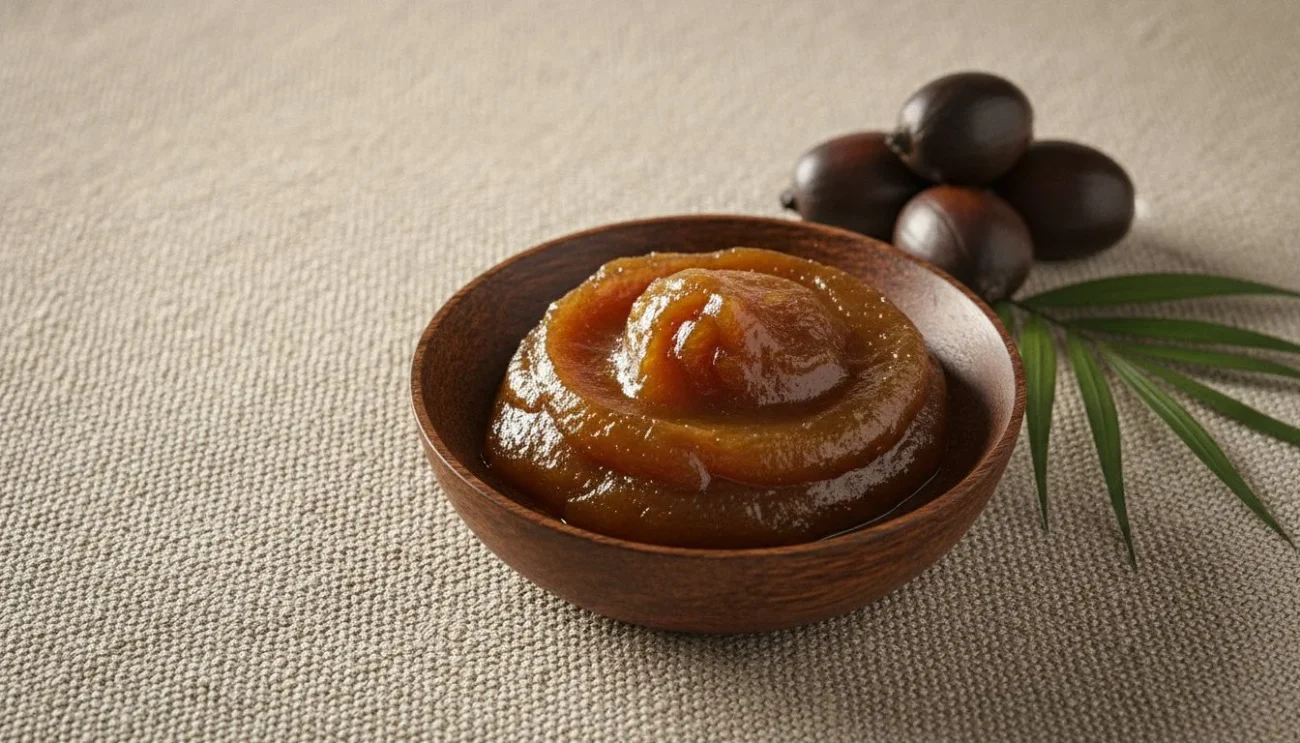
The global market for hair restoration is currently saturated with refined, deodorized imitations that strip away the very nutrients your scalp requires. If you’ve ever opened a jar expecting the earthy, smoky aroma of traditional Honduran craft only to find a synthetic floral scent or a thin, colorless liquid, you’ve experienced the industry’s compromise on quality. It’s frustrating to invest in your hair’s health only to receive a diluted extract that yields no visible results. Finding authentic batana oil has become a challenge of professional discernment rather than a simple transaction.
True restoration requires an uncompromising commitment to raw, unrefined purity. This professional guide establishes the definitive criteria for identifying genuine Batana oil sourced directly from the remote regions of Honduras. You’ll learn why traditional roasting methods are the only path to preserving the oil’s vital fatty acids and how to distinguish between artisanal quality and industrial shortcuts. We’ll examine the specific textures, scents, and colors that define a premium extract, ensuring your path to fuller, stronger hair is built on a foundation of absolute transparency and ethical integrity.
Key Takeaways
- Recognize the cultural heritage of “Sahual” and why the specific soil composition of the Mosquitia region is vital for nutrient density.
- Utilize our professional verification framework to identify authentic batana oil through its characteristic deep amber hue and semi-solid consistency.
- Examine the unique molecular profile of Oleic and Linoleic acids that allow this rare fat to provide genuine hair shaft restoration.
- Prioritize wild-harvested, hand-processed extracts over mass-produced alternatives to guarantee the preservation of delicate Vitamin E complexes.
- Establish a sourcing standard that bridges traditional Honduran craftsmanship with modern wellness needs for long-term hair health.
Defining Authentic Batana Oil: Legacy of the Miskito
Authentic Batana oil is not a mere cosmetic additive. It’s a nutrient-dense fat, a rare substance forged through centuries of cultural practice. For the Miskito people of Honduras, this oil, known traditionally as Sahual, represents more than a beauty ritual. It’s a legacy of restoration. While modern marketing often leans on celebrity endorsements, the true value of authentic batana oil lies in its wild-harvested origins and the manual labor of the communities that guard it. This is a substance prized for its profound ability to repair damaged hair fibers and stimulate the scalp, yet its efficacy is entirely dependent on traditional extraction methods that remain unchanged by industrialization.
The Botanical Origin: Elaeis oleifera
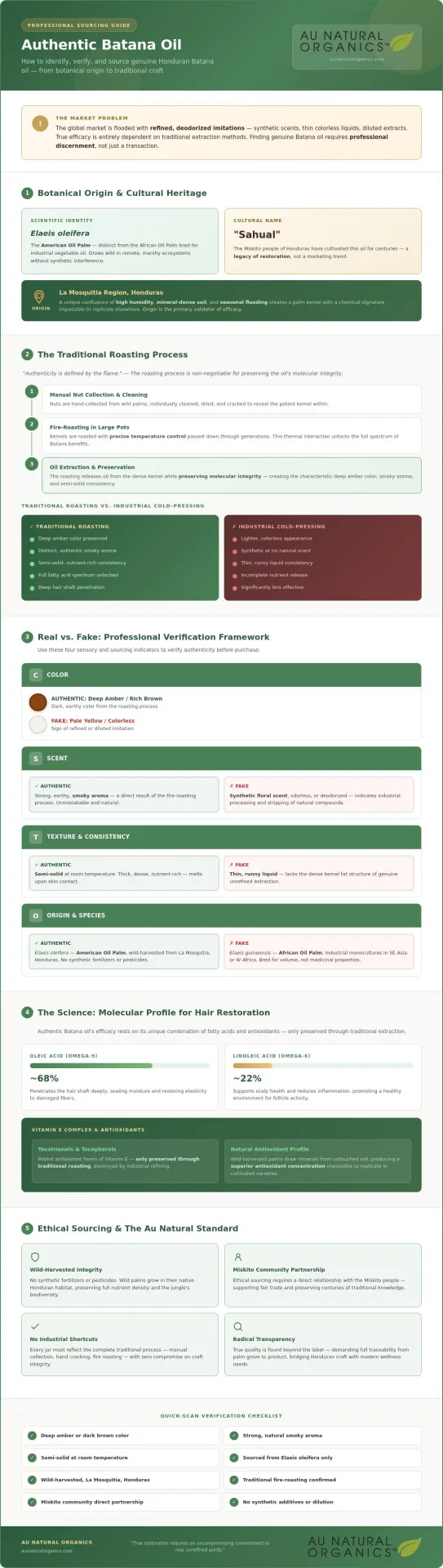
The American Oil Palm, scientifically classified as Elaeis oleifera, is the botanical heart of this restorative craft. It is distinct from the African Oil Palm, which dominates global industrial production. While the African variant is bred for high-yield vegetable oil, the American palm thrives in the remote, marshy ecosystems of the La Mosquitia region in Honduras. This wild-harvested nature is critical. These palms grow without synthetic interference, drawing minerals directly from the rich, untouched soil. This environmental purity translates into a superior nutrient profile that cultivated palms simply cannot replicate. It ensures a high concentration of natural antioxidants and essential fatty acids that are the hallmarks of genuine quality.
The Traditional Roasting Process
Authenticity is defined by the flame. Traditional processing is a methodical, unhurried craft that begins with the manual collection of nuts. Each nut is cleaned, dried, and cracked by hand to reveal the potent kernel within. These kernels are fire-roasted in large pots, a delicate stage that requires precise temperature control passed down through generations. This roasting serves two vital purposes:
- It releases the oil from the dense kernel structure while preserving its molecular integrity.
- It creates the distinct, smoky aroma and deep amber color that distinguish it from refined imitations.
Industrial cold-pressing often fails here. While cold-pressing is excellent for many carrier oils, it lacks the thermal interaction necessary to unlock the full spectrum of Batana benefits. Without the traditional roasting step, the resulting oil is often lighter, less fragrant, and significantly less effective at penetrating the hair shaft. True authentic batana oil requires this human-centric, fire-led process to maintain its status as the industry gold standard for hair restoration.
The Honduran Connection: Why Origin Dictates Quality
Geography is a biological imperative. While industrial palm oils are produced globally, authentic batana oil is inextricably linked to the specific ecosystem of the La Mosquitia region in Honduras. This isn’t a matter of brand preference; it’s a matter of phytochemistry. The unique confluence of high humidity, mineral-dense soil, and seasonal flooding produces a palm kernel with a chemical signature that cannot be replicated in the monocultures of Southeast Asia or West Africa. When manufacturers attempt to market “Batana-style” oils sourced from other palm variants, they’re offering a fundamentally different product that lacks the concentrated antioxidant profile required for genuine hair restoration. Origin is the primary validator of efficacy.
The market is currently flooded with generic palm extracts that masquerade as Honduran craft. These imitations often utilize the African Oil Palm, a species bred for high-volume vegetable oil production rather than the specific medicinal properties found in the wild Elaeis oleifera. To ensure you’re receiving the true restorative benefits of this rare fat, you must look beyond the label. True quality is found in the untouched wild-harvests, where the palms grow in their native habitat without the interference of synthetic fertilizers or industrial pesticides. When you choose to secure your supply of authentic batana oil directly from those who respect these traditional boundaries, you participate in a cycle of ethical restoration.
Ethical Sourcing and Fair Trade
Wild-harvesting is a deliberate act of environmental and social stewardship. Unlike industrial plantations that raze biodiversity, the traditional collection of Batana nuts by the Miskito people preserves the Honduran jungle’s integrity. Ethical sourcing requires a direct relationship with these indigenous communities, ensuring they receive fair compensation that reflects the intensive manual labor involved in the harvest. Cheap Batana oil is a red flag. It almost always indicates either exploitative labor practices or a product that has been heavily diluted with low-grade carrier oils to maximize profit margins at the expense of the harvester and the consumer.
The Supply Chain of Purity
Transparency must extend from the jungle floor to the final bottling facility. The greatest risk to purity occurs at the hands of intermediary “cutters” who purchase raw oil and blend it with cheaper fats to increase volume. A professional-grade supply chain eliminates these opaque middle layers. By maintaining a closed loop from the Honduran harvest to the final container, a provider ensures that no additives or inferior oils compromise the botanical integrity of the extract. Direct sourcing is the only definitive method to guarantee 100% purity and protect the nutrient density of the raw oil.
Real vs. Fake: The Professional Verification Framework
Authenticity leaves a distinct physical footprint. To distinguish authentic batana oil from its industrial counterparts, you must move beyond marketing claims and utilize a rigorous sensory framework. Refinement is the enemy of restoration. The more processed an oil becomes, the more it loses the very phytochemicals that stimulate hair growth. Genuine Batana is a raw, unrefined fat that retains the characteristics of its traditional fire-roasting. If a product lacks these specific markers, it’s likely a diluted carrier oil or a heavily processed extract that will fail to deliver results.
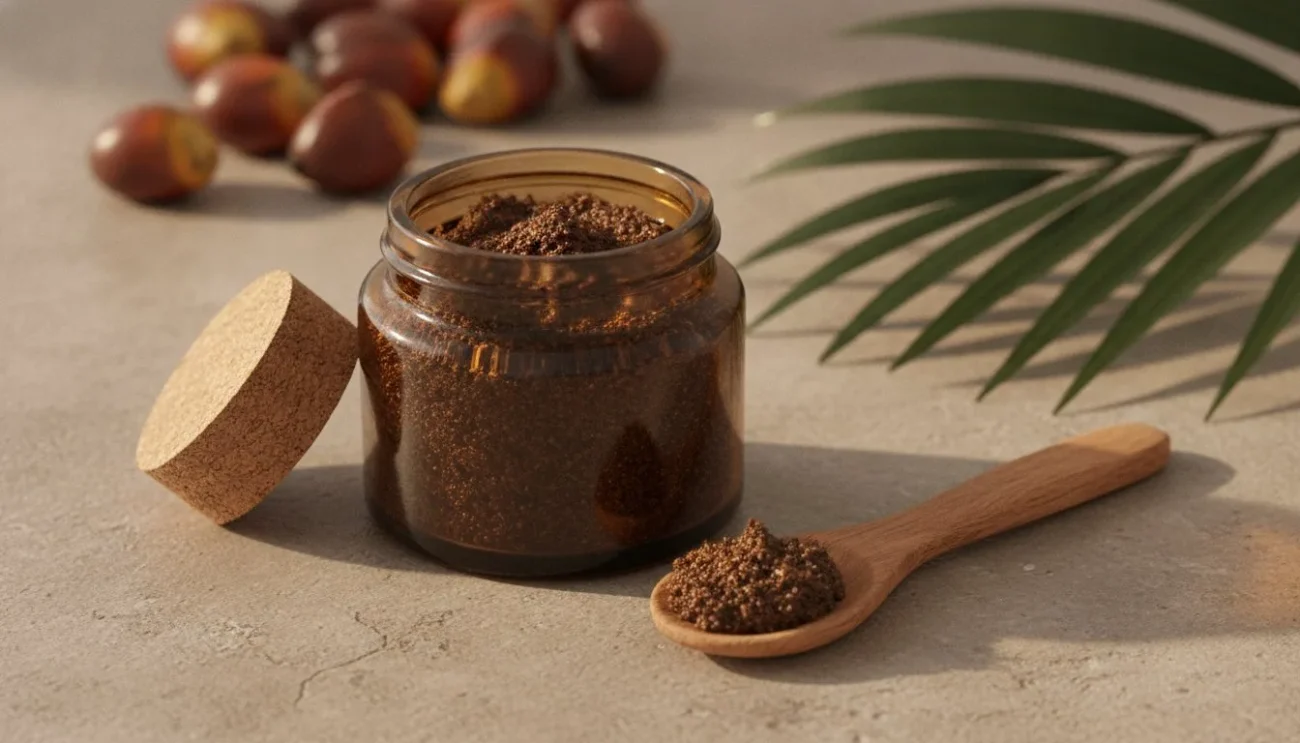
Physical state is the first validator. At standard room temperature, true Batana oil is never a clear liquid. It exists as a batana oil paste, a thick paste that only transforms into an oil when it’s exposed to the warmth of the skin. Its color range is equally definitive. Expect a spectrum from deep, rich caramel to a dark, earthy brown. Vibrant yellows or transparent textures indicate heavy filtration or the use of inferior palm variants that lack the concentrated nutrient density of the Honduran Elaeis oleifera.
The Sensory Test: Scent and Sight
The olfactory profile of raw Batana is unmistakable. It carries a potent, smoky aroma reminiscent of roasted coffee or burnt nuts, which is a direct result of the traditional fire-roasting process. This scent is a badge of purity. Manufacturers often use synthetic floral fragrances or neutral deodorizers to mask the smell of rancid oils or to appeal to consumers who find the traditional scent too strong. Avoid these “perfumed” versions. A neutral or pleasant floral scent is a red flag that the oil’s been refined, stripping away the volatile compounds necessary for scalp health.
Labelling Red Flags and Marketing Myths
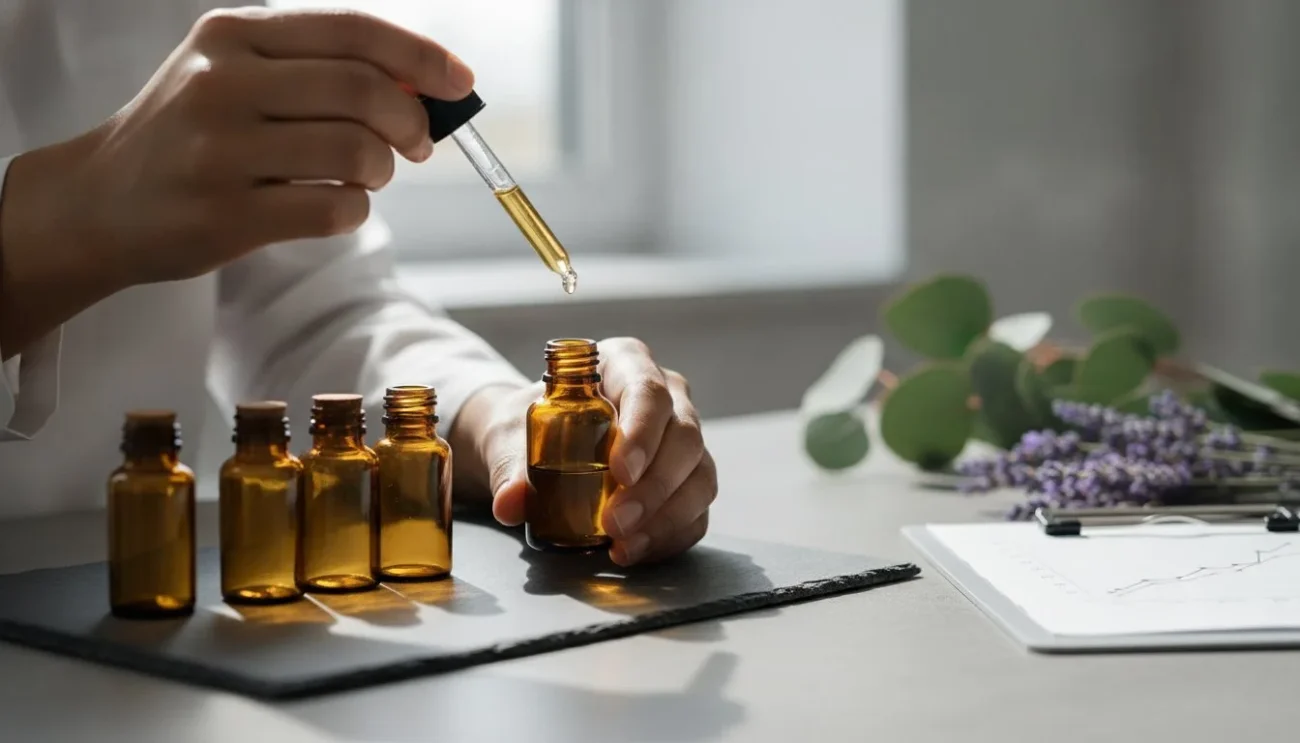
Labels can be deceptive. While many consumers seek “Certified Organic” seals, it’s vital to understand that authentic batana oil is traditionally wild-harvested from jungle palms, not grown on farm-certified plantations. The lack of a USDA seal doesn’t imply inferiority. It often confirms the wild, untouched nature of the source. Examine the ingredient list with clinical precision. It should contain exactly one item: 100% Elaeis Oleifera Kernel Oil. Treat “Dr. Sebi Approved” stamps as marketing hooks rather than quality guarantees. Purity is verified in the lab and through sensory analysis, not through the legacy of a single name. The same scrutiny that applies to botanical oils extends to all plant-based preparations; understanding how to evaluate extracts & tinctures for genuine botanical potency equips you with a broader framework for identifying professional-grade formulations across the wellness market.
Why Authenticity Matters: The Science of Hair Restoration
Restoration is a biological process. While the Miskito people have utilized Sahual for generations, modern biochemistry now confirms the efficacy of authentic batana oil through its complex lipid profile. Unlike synthetic treatments that merely coat the hair surface, the raw fats within this extract operate at a cellular level. The biological value of the oil is found in its high concentration of bio-active compounds that are frequently destroyed during industrial refinement. When an oil undergoes bleaching or deodorization, industry data suggests that up to 70% of these vital nutrients are lost, rendering the final product a hollow shell of its raw state. Efficacy depends on molecular integrity.
Fatty Acid Profiles and Scalp Vitality
The scalp is a complex ecosystem that requires specific lipids to function. The restorative power of Batana stems from its high ratio of Oleic and Linoleic acids, which reinforce the natural lipid barrier and prevent transepidermal water loss. This barrier is essential for maintaining the elasticity of the hair shaft and protecting the scalp from environmental stressors. While many professionals use Batana as a standalone treatment, its molecular weight allows it to act as an efficient delivery system when paired with other carrier oils for hair growth. Tocotrienols act as high-potency antioxidants that neutralize oxidative stress within the hair follicle to facilitate cellular repair. This deep penetration is what separates a professional-grade extract from a superficial cosmetic oil. Men seeking to leverage these same follicle-nourishing properties for facial hair will find that using batana oil for beard growth applies the same biological principles to transition dormant follicles into the active anagen phase.
The “Raw” Advantage for Hair Growth
Heat sensitivity dictates potency. Preserving the “raw” state is a technical necessity rather than a stylistic choice. The traditional roasting method is a controlled process that releases carotenoids without reaching the volatile temperatures used in mass-production factories. These carotenoids are essential for follicle stimulation and long-term scalp health. Over extended periods of application, the high pigment density of authentic batana oil acts as a natural darkening agent for grey hair, gradually restoring a deeper tone through repeated exposure. These results are impossible to achieve with refined oils that have been stripped of their natural pigments and antioxidants. To experience these biological benefits without compromise, secure the raw purity of our authentic batana oil for your restoration regimen.
The Au Natural Standard: Uncompromising Botanical Integrity
Au Natural Organics operates with a singular mandate. Quality is non-negotiable. We reject the dilution of traditional wisdom for the sake of mass-market appeal. While the broader industry frequently prioritizes shelf-stability and artificial fragrance, our focus remains fixed on the raw, unrefined paste that has served the Miskito people for centuries. Providing authentic batana oil requires a refusal to compromise on the slow, manual processes of the Honduran jungle. We believe that professional-grade hair restoration is only possible when the botanical integrity of the extract is preserved from the moment of harvest. Substance must always precede style.
From Jungle to Jar: Our Process
Integrity is maintained through vigilance. Our logistics chain is designed to protect the oil’s fragile antioxidant profile during its journey from the La Mosquitia region to our facilities. We refuse the use of chemical bleaching or deodorizing agents that strip away the oil’s natural power. By delivering the oil in its raw, semi-solid state, we ensure that every jar contains the full spectrum of phytochemicals necessary for follicle repair. You can Explore our full range of Honduran Batana products to see the results of this unyielding commitment to quality and traditional craftsmanship.
The Ethical Choice for Professionals
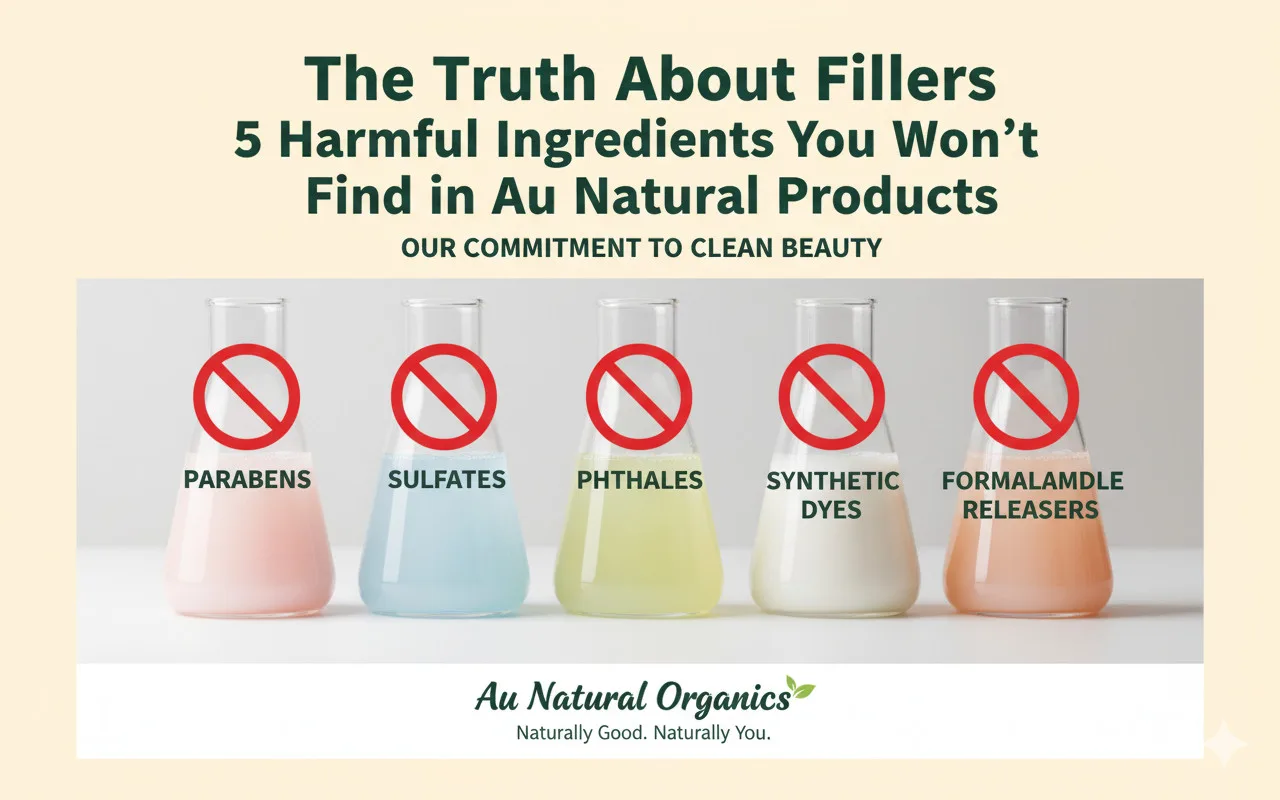
Professionals demand transparency. Salon owners and holistic practitioners recognize that their reputation rests on the efficacy of the ingredients they recommend. Au Natural Organics serves as a reliable bridge for those who require wild-harvested, hand-processed extracts without the interference of synthetic fillers or hidden additives. We provide wholesale opportunities for businesses that value substance over marketing fluff. Our commitment to ethical extraction ensures that your investment supports both the health of your clients and the survival of the indigenous communities in Honduras. Beyond hair care, many of our clients extend this same standard of botanical purity to their skin care routines, choosing unrefined botanical body butters that restore the skin’s lipid barrier without synthetic fillers. It’s time to move beyond industrial imitations. Secure your jar of authentic Batana oil today and experience the definitive standard of botanical purity.
Commit to Uncompromised Purity
Restoration isn’t found in a laboratory; it’s harvested in the wild. We’ve established that the efficacy of authentic batana oil is inseparable from its Honduran origin and the traditional fire-roasting methods of the Miskito people. By utilizing a rigorous sensory framework and prioritizing raw, unrefined extracts over industrial imitations, you protect the molecular integrity of the lipids your scalp requires. Choosing wild-harvested, hand-processed botanical fats ensures that your hair growth journey is supported by the highest antioxidant concentrations available. We invite you to move beyond the diluted promises of mass-market brands. Our commitment to transparency means providing a substance with no synthetic fragrances, no fillers, and no compromises. It’s time to align your wellness regimen with the slow, unhurried processes of nature. Experience the power of raw, unrefined Batana oil and reclaim the strength of your hair with a source you can trust. You deserve the results that only genuine craftsmanship can provide.
Professional Sourcing FAQ
How can I tell if my Batana oil is 100% pure?
Purity is verified through a combination of ingredient transparency and sensory analysis. The label must list Elaeis oleifera as the sole ingredient, devoid of fillers or synthetic fragrances. Authentic batana oil will always present as a semi-solid, dark brown paste at room temperature; any product that remains a clear liquid in cool environments has likely been diluted or heavily refined. For a comprehensive breakdown of what genuine texture and consistency should look like, our guide on raw batana oil paste and its markers of botanical integrity provides the definitive reference.
Does authentic Batana oil always smell like coffee?
A smoky, nutty, or coffee-like aroma is the definitive signature of the traditional roasting process. This scent confirms that the oil hasn’t been subjected to industrial deodorization, which strips away vital phytochemicals. If your oil is odorless or smells like a floral perfume, it’s a red flag that the extract has been processed and its molecular integrity compromised.
Why is my Batana oil solid? Is that normal?
A solid or paste-like consistency is entirely normal and indicates a high-quality, unrefined fat. Because it’s a natural botanical extract, it solidifies in cooler temperatures and only liquefies when exposed to the warmth of your skin or a gentle heat source. This transition from solid to oil is a key indicator that you’re using a raw, potent product rather than a processed liquid imitation.
Can I use Batana oil on my skin as well as my hair?
You can certainly apply this oil to your skin to utilize its high concentration of Vitamin E and carotenoids. It acts as a powerful emollient that reinforces the natural lipid barrier and provides deep hydration for dry or damaged skin. Many professionals recommend it for its ability to soften the skin’s texture without the use of synthetic chemicals. For those seeking a complementary full-body skin treatment, exploring raw botanical body butters formulated for lasting barrier restoration offers a similarly uncompromising approach to skin nourishment.
How long does it take to see hair growth results with real Batana?
Is Batana oil better than Rosemary oil for hair growth?
These two oils serve different biological functions and are often most effective when used together. Rosemary oil primarily acts as a vasodilator to improve scalp circulation, while authentic batana oil provides the essential fatty acids and tocotrienols needed for structural repair and follicle nourishment. One provides the stimulus, while the other provides the building blocks for restoration.
What is the shelf life of raw, unrefined Batana oil?
Raw Batana oil remains stable for 12 to 24 months when stored in a cool, dark environment. Its natural antioxidant content acts as a preservative to prevent rancidity. To maintain its potency, you should keep the jar tightly sealed and avoid introducing water or contaminants into the container.
Where does the best authentic Batana oil come from?
The definitive source for this oil is the La Mosquitia region of Honduras. This specific geographical area possesses the unique soil composition and climate required for the American Oil Palm to develop its characteristic nutrient profile. Sourcing directly from this region ensures you’re receiving the variant of Elaeis oleifera that has been used by the Miskito people for centuries. For men looking to apply this same regional purity to their grooming practice, our detailed ritual guide on how to use pure batana oil for beard growth outlines the precise steps to maximize follicle stimulation and density.

Leave a comment
You must be logged in to post a comment.