
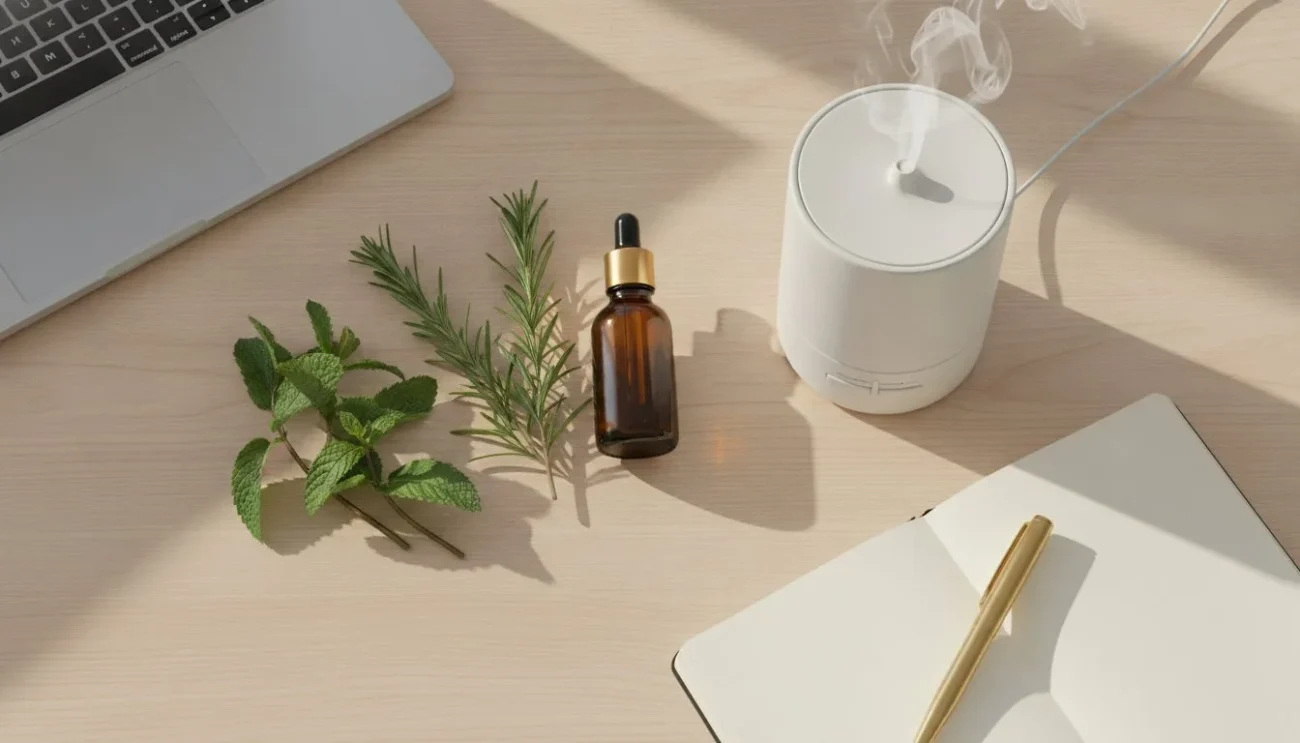
The synthetic scent in your workspace is likely a chemical barrier to genuine cognitive performance rather than a catalyst for it. You understand the frustration of mid-afternoon brain fog and the mental fatigue that follows hours of scattered attention. Achieving sustained mental clarity requires more than a pleasant aroma; it demands high-integrity essential oil blends for focus and concentration that respect your biology. In an environment where 71% of consumers trust organic-certified products over unverified natural claims, the distinction between pure botanicals and industrial-grade additives is critical.
This guide masters the science of botanical focus through a professional, no-nonsense lens. We move beyond marketing fluff to examine the precise chemical ratios that support neural stamina. You will gain a clear understanding of focus-boosting botanicals and practical recipes for daily use. We provide the expertise needed to identify pure, ethical oils with confidence. Prepare to refine your environment with uncompromising standards and professional integrity.
Key Takeaways
- Understand the neurological pathway that allows botanical molecules to bypass the blood-brain barrier for immediate cognitive stimulation.
- Master the use of high-integrity botanicals like Rosemary and Peppermint to formulate effective essential oil blends for focus and concentration.
- Apply the architectural 30-50-20 rule to craft balanced, long-lasting aromatic synergies that sustain mental clarity throughout the day.
- Learn the professional methods for diffusion and topical application that optimize the absorption of active plant compounds.
- Discover why uncompromising purity and ethical sourcing are the definitive factors in achieving true cognitive efficacy.
The Neurological Link: How Aromatherapy Stimulates Concentration
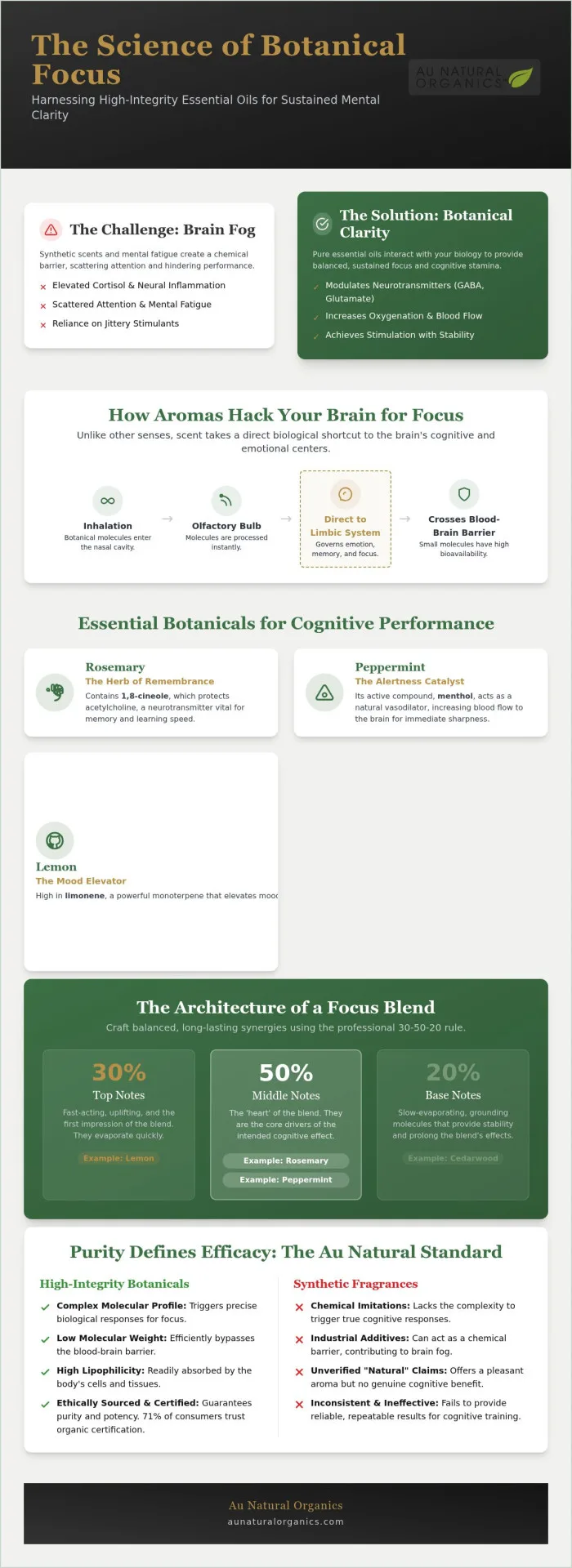
The human brain processes scent with a speed and intimacy that no other sense can replicate. While visual or auditory stimuli must undergo complex relay through the thalamus, aromatic molecules enjoy a direct, uninhibited pathway to the brain’s emotional and cognitive centers. This unique biological shortcut is the foundation for using high-integrity essential oil blends for focus and concentration. When you inhale a pure botanical extract, the molecules travel via the olfactory bulb directly into the limbic system. This region governs emotion, motivation, and memory formation. Focus is biological. It is a state of neural alignment.
Unlike many pharmaceutical interventions, volatile organic compounds in essential oils possess a low molecular weight and high lipophilicity. These characteristics allow them to bypass the blood-brain barrier with remarkable efficiency. Once inside, they interact with the hippocampus, which serves as the brain’s indexing system for memory. By stimulating this area during periods of deep study or professional labor, specific botanicals help anchor information, making recall more efficient. Synthetic fragrances fail here. They are mere chemical imitations lacking the complex molecular profile required to trigger these precise biological responses. To understand the broader context of these practices, one might ask, What is Aromatherapy? in a clinical sense. It is the application of these potent, nature-derived molecules to achieve a measurable physiological shift.
The Olfactory-Limbic Connection
The limbic system is the brain’s command center for survival and focus. It operates on a fast-track basis. This immediate connection explains why a single breath of a specific scent can instantly shift your mental state from lethargy to alertness. By consistently using the same botanical profile during work, you create a Pavlovian response. You are effectively training your brain to enter a state of deep work the moment those molecules hit the olfactory receptors. Integrity matters. Only pure oils provide the chemical consistency needed for this cognitive training.
Brain Fog vs. Mental Clarity
Essential Oil Profiles: The Best Botanicals for Mental Clarity
Botanical efficacy is not a matter of opinion. It’s a matter of chemistry. When formulating high-integrity essential oil blends for focus and concentration, the selection of raw materials is paramount. Each plant profile offers a specific molecular signature that dictates its effect on the central nervous system. We don’t look for “scents.” We look for active constituents that trigger a measurable cognitive response. Purity is the only path to performance.
Rosemary, the “Herb of Remembrance,” is a cornerstone of cognitive aromatherapy. Its primary constituent, 1,8-cineole, inhibits the enzyme that breaks down acetylcholine. This neurotransmitter is vital for memory and learning speed. Peppermint complements this by utilizing menthol to act as a natural vasodilator. Increased blood flow to the brain translates to immediate alertness and a sharp reduction in mental fatigue. Selecting pure essential oils ensures your brain receives these correct chemical signals without synthetic interference.
Stimulating Oils for Alertness
Rosemary’s impact on acetylcholine levels is well-documented in clinical settings. When combined with the uplifting limonene found in Lemon oil, the result is a significant reduction in task-related stress. Understanding How Aromatherapy Stimulates Concentration involves looking at these specific chemical interactions rather than vague aromatic qualities. High-energy citrus oils provide the necessary mood elevation to sustain productivity during monotonous tasks. They act as the catalyst in a focused environment.
Grounding is the silent partner of stimulation. Cedarwood is rich in sesquiterpenes, which are heavy molecules capable of crossing the blood-brain barrier. These compounds promote oxygenation and emotional stability, preventing the scattered thinking that often derails a workday. Frankincense acts similarly, deepening the breath and enhancing concentration through improved oxygen delivery to the prefrontal cortex. Don’t settle for adulterated oils that provide nothing but a pleasant smell; the brain requires the raw, untouched power of the whole plant.
Grounding Oils for Sustained Attention
Cedarwood is essential for those who struggle with mental hyperactivity. It provides a structural anchor for the blend. Vetiver and Frankincense offer a calming yet focused presence that prevents the “crash” often associated with stimulants. By balancing high-energy top notes with these earthy base notes, you ensure the aromatic synergy lasts throughout the workday. This architecture creates a stable environment for sustained attention. It’s about longevity, not just a momentary spark.
Crafting Your Focus Blend: Synergistic Ratios and Recipes
Precision is the hallmark of a professional blend. While a single-note oil provides a targeted chemical response, a synergy creates a sustained cognitive environment. In the botanical world, the whole is frequently greater than the sum of its parts. Creating effective essential oil blends for focus and concentration requires an understanding of aromatic architecture. You aren’t just mixing scents. You are balancing volatility and chemical interaction to ensure the therapeutic effect doesn’t evaporate within minutes.
Professional blending relies on the 30-50-20 rule. This structural framework ensures a balanced, long-lasting result. Top notes comprise 30 percent of the blend, providing the immediate “alertness” signal to the brain. Middle notes make up 50 percent, forming the heart of the blend and providing the primary cognitive support. Base notes represent the final 20 percent. These heavy molecules act as fixatives, slowing the evaporation of the more volatile top notes. This architecture ensures your focus zone remains active for hours rather than seconds. Avoid the random drop method. It’s inefficient and lacks integrity.
The Blending Process: A Step-by-Step Guide
Start with your Hero oil. This is the primary botanical chosen for your specific need, such as Rosemary for memory or Peppermint for alertness. Next, integrate Supporting oils that enhance the chemical profile. If your Hero is Rosemary, a citrus oil like Lemon provides the necessary limonene to lift the mood. Finally, anchor the blend with a Base note. Cedarwood or Frankincense provide the sesquiterpenes required for endurance. This methodical approach ensures your essential oil blends for focus and concentration are both potent and stable.
Professional Focus Recipes
Safety dictates strict adherence to dilution ratios. For most workspace applications, a 2 to 3 percent dilution in a carrier oil is standard for topical use, while 5 to 8 drops total is sufficient for most ultrasonic diffusers. Use these master-level recipes to calibrate your environment:
- The Executive Blend: 4 drops Rosemary, 3 drops Lemon, 3 drops Cypress. This combination is designed for sharp decision-making and professional stamina.
- The Student Blend: 4 drops Peppermint, 4 drops Basil, 2 drops Cedarwood. Use this synergy for intense memory retention and long periods of structured study.
- The Creative Flow: 2 drops Frankincense, 5 drops Orange, 3 drops Bergamot. This ratio encourages unblocked thinking while maintaining a grounded, calm perspective.
Don’t compromise on the quality of your ingredients. A recipe is only as effective as the purity of the oils used. High-integrity botanicals respond predictably. Adulterated oils do not.
Application Methods: Optimizing Absorption for Sustained Focus
Diffusion is the most efficient way to establish a dedicated focus zone. By dispersing volatile organic compounds into the air, you ensure a steady, low-level interaction with the olfactory system. This maintains the limbic connection without overwhelming the senses. For high-stress environments or moments requiring immediate intervention, personal inhalers provide a concentrated dose of botanical integrity. They are the professional’s tool for on-the-go clarity. Focus is a discipline. Your delivery method should reflect that.
Diffusion vs. Topical: Which is Better?
Neither method is superior; they are complementary. Diffusion maintains an ambient cognitive state, ensuring the workspace remains conducive to deep work. Topical use provides a targeted response by allowing active constituents to enter the bloodstream through the skin’s thin layers. The following comparison clarifies their specific roles:
| Method | Speed of Onset | Duration | Best Use Case |
|---|---|---|---|
| Diffusion | Immediate | Ambient/Long-term | Establishing a workspace ‘focus zone’ |
| Topical | Moderate | Sustained | Targeted physiological response |
| Personal Inhaler | Rapid | Short-term | High-stress or on-the-go clarity |
The Role of Carrier Oils in Focus Blends
Never apply pure essential oils directly to the skin. This neat application increases the risk of sensitization and causes the oils to evaporate too quickly. High-integrity carrier oils, such as Jojoba or Fractionated Coconut Oil, act as a physical barrier and a delivery vehicle. They weight the volatile molecules, ensuring they absorb into the dermis rather than vanishing into the air. For a deeper understanding of these vital components, consult The Professional Guide to Botanical Carrier Oils. Choose your base with the same scrutiny you apply to your essential oils. Consistency in quality is the only way to ensure consistent results.
Secure your cognitive performance by choosing to source professional-grade carrier oils from a provider that prioritizes botanical purity over marketing hype.
The Au Natural Standard: Why Purity Defines Cognitive Efficacy
Purity is not a preference; it’s a prerequisite. When you seek essential oil blends for focus and concentration, you are looking for a specific physiological outcome. Adulterated oils or those marketed under the vacuous “Therapeutic Grade” banner often lack the complex molecular structure required for neural stimulation. This term is a marketing invention, not a regulated standard. True efficacy comes from botanical integrity. This means every drop contains the raw power of the plant as nature intended, without the interference of fillers or synthetic extenders. Your brain knows the difference.
To identify high-quality oils, look beyond the price tag. Professional labeling should include the Latin name, the country of origin, and the specific part of the plant used. The aroma should have depth. A pure oil evolves as you breathe it in, revealing different layers of its chemical profile. Synthetic imitations are one-dimensional and static. We refuse to compromise on these standards because we know that your cognitive performance depends on the substance of the oil, not the style of the marketing. High-integrity oils respond predictably. Adulterated oils do not.
The Problem with Synthetic Fragrances
Many commercial scents are constructed in a laboratory using petrochemical derivatives. These synthetic “scents” are flat. They lack the nuanced chemical diversity of whole-plant extracts. They can be counterproductive. While a pure botanical clears the mind, a synthetic fragrance often triggers the very headaches and brain fog you are trying to eliminate. Purity is a requirement for aromatherapy. It’s not a luxury. If the oil isn’t pure, the biological pathway to focus remains closed. You cannot trick the limbic system with a chemical mimic.
Sourcing for Performance
The chemical profile of a plant is a direct reflection of its environment. For example, the 1,8-cineole content in Rosemary depends heavily on the specific soil composition and climate of its origin. Au Natural Organics prioritizes transparent, global sourcing to ensure our oils meet these exacting standards. We understand that a master-level ingredient requires a master-level origin. Ethical sourcing isn’t just a moral choice; it’s a quality control measure. Plants harvested at the wrong time or grown in depleted soil lack the potency required to clear mental fatigue.
Our commitment to these standards extends across our entire catalog, from these potent extracts to our foundational products. For those seeking comprehensive botanical care that respects the same principles of purity, explore Beyond Hydration: The Authoritative Guide to Botanical Body Butters. We provide the tools for a high-performance life. We don’t use synthetics, we don’t use fillers, and we don’t make compromises. We deliver the raw, untouched quality your work demands.
Master Your Mental Environment
Peak cognitive performance is not a matter of chance; it is the result of intentional environmental design. You now possess the professional framework required to utilize essential oil blends for focus and concentration with absolute precision. By understanding the neurological pathways of the limbic system and adhering to the structural 30-50-20 blending rule, you can transform your workspace into a sanctuary of productivity. The distinction between a scattered mind and sharp mental clarity often resides in the integrity of the botanicals you choose. Purity is the definitive factor.
Don’t compromise your biological potential with synthetic imitations that offer nothing but empty fragrance. True cognitive support demands the raw, untouched power of whole-plant extracts. Secure Your Cognitive Edge with Au Natural Organics Pure Essential Oils. Our commitment to uncompromising 100% purity and professional botanical integrity ensures that every drop is ethically sourced worldwide for maximum efficacy. You have the knowledge. Now, choose the master-level ingredients your work deserves. Command your focus with confidence.
Frequently Asked Questions
Can I use essential oil blends for focus every day?
Daily use is acceptable provided you practice aromatic rotation to avoid olfactory fatigue. Constant exposure to the same molecules can lead to a diminished sensory response, making the blend less effective over time. We recommend a five-day cycle followed by a two-day break. This ensures your neural pathways remain sensitive to the botanical triggers. Always prioritize high-integrity extracts to avoid the buildup of synthetic residues in your workspace.
Which essential oil is best for ADHD-related concentration issues?
Vetiver is frequently cited as the superior choice for grounding a hyperactive mind. Its high sesquiterpene content promotes emotional stability and oxygenation, which are critical for those managing ADHD-related focus challenges. Cedarwood serves as a primary alternative, offering similar stabilizing properties. While these botanicals are powerful tools, they should complement a professional management plan. These oils help anchor attention without the jittery side effects of traditional stimulants.
How many drops of essential oil should I use in my focus blend?
For a standard 100ml ultrasonic diffuser, five to eight drops of your chosen essential oil blends for focus and concentration are sufficient. Overloading a diffuser can lead to sensory overwhelm or headaches. If you’re creating a topical roll-on, aim for a 1 to 2 percent dilution. This translates to roughly three to six drops of essential oil per 10ml of carrier oil. Precision in these ratios ensures safety and sustained cognitive performance.
Are focus blends safe for children and students?
Focus blends are safe for students provided you adjust the concentration for their age. For children under 12, reduce the drop count by half and avoid high-menthol oils like Peppermint near the face. Rosemary and Lemon are excellent, gentle choices for a study environment. Always ensure the oils are 100 percent pure. Synthetic fragrances found in mass-market products can disrupt a child’s endocrine system and cause significant distraction.
Can I apply focus oils directly to my temples?
Never apply undiluted essential oils directly to your temples or any other skin surface. This neat application poses a high risk of skin sensitization and rapid systemic absorption that may be overwhelming. Instead, blend your oils into a stable carrier oil like Jojoba. Apply this mixture to the pulse points on your wrists or behind the ears. This method provides a controlled, steady release of molecules into the bloodstream for long-term clarity.
What is the best carrier oil to use with a concentration blend?
Jojoba oil is the professional standard for cognitive blends due to its chemical similarity to human sebum. It absorbs efficiently without leaving a greasy residue that might distract you from your work. Fractionated Coconut Oil is a secondary option, favored for its long shelf life and lack of scent. Both oils act as effective fixatives. They hold the volatile top notes on the skin longer, extending the duration of your focus session.
How long does the effect of a focus blend last?
Aromatic effects typically peak within 20 minutes and can influence your cognitive state for 30 to 90 minutes through diffusion. Topical applications last longer. When properly diluted in a carrier oil, the active botanical constituents may remain systemically active for two to four hours. The duration depends heavily on the blend’s architecture. Including heavy base notes like Frankincense ensures the more volatile stimulating oils don’t evaporate prematurely.
Why do some essential oils make me feel sleepy instead of focused?
You may be using oils with high linalool content, such as Lavender, which are primarily sedative. While these reduce anxiety, they can induce lethargy if not balanced with stimulants like Peppermint or Rosemary. Additionally, some individuals experience paradoxical reactions to specific terpenes. If a blend makes you sleepy, analyze its chemical profile. You likely need a higher ratio of monoterpene-rich oils to promote alertness and counteract the calming effects of the base notes.


Leave a comment
You must be logged in to post a comment.