
Description
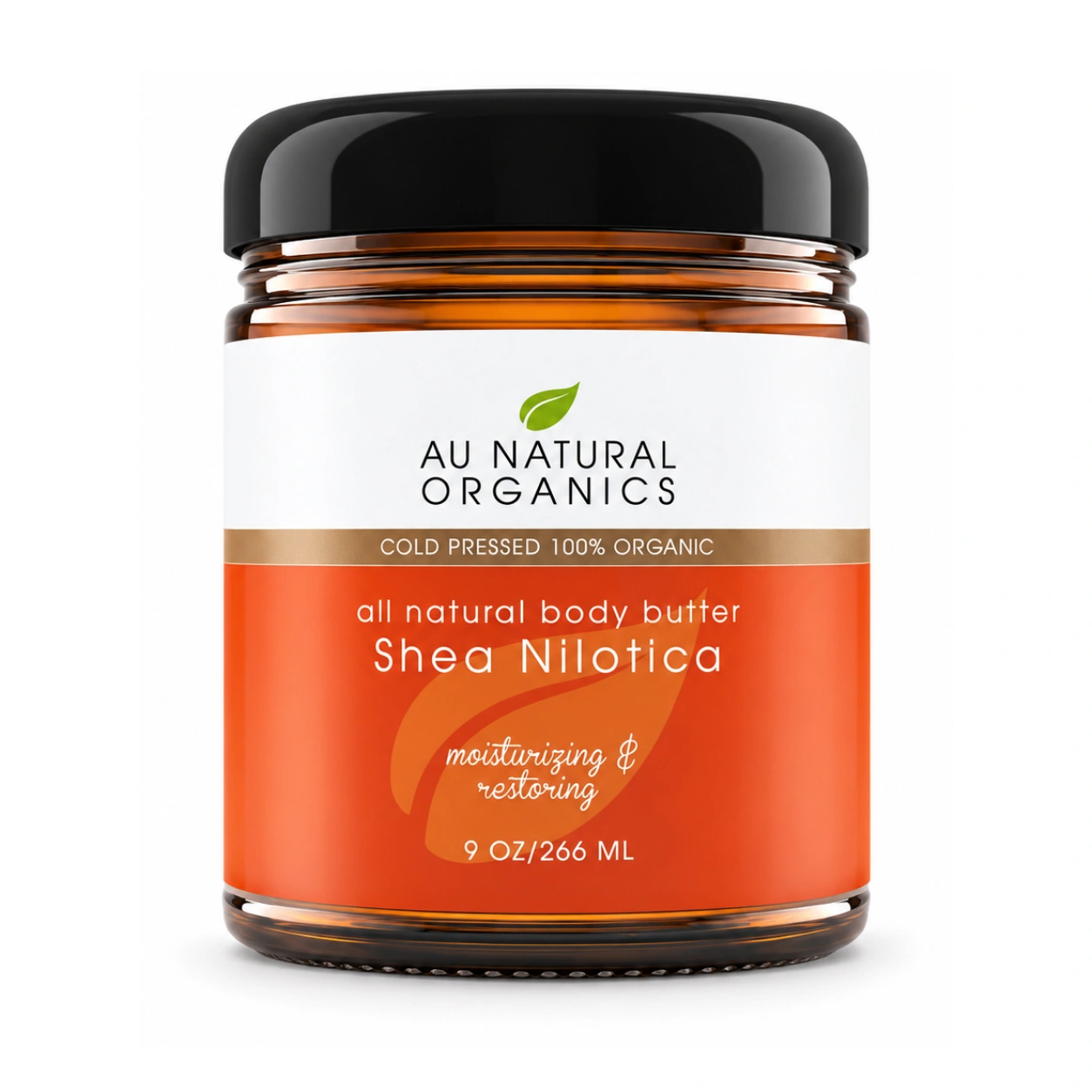
Shea nilotica is the eastern subspecies of the shea tree. It grows wild along the Nile watershed in northern Uganda and South Sudan, and a tree takes 15 to 20 years to bear fruit. Women in rural communities collect the fallen fruit between about April and August. The butter is ivory with a mild, nutty smell. It has more oleic acid and less stearic acid than West African shea, so it spreads straight from the jar.
Details
| Botanical name | Vitellaria paradoxa subsp. nilotica |
|---|---|
| Origin | Northern Uganda, South Sudan |
| Part used | Nut kernel |
| Processing | Hand-processed from the kernel |
| Texture | Soft, creamy, melts on contact |
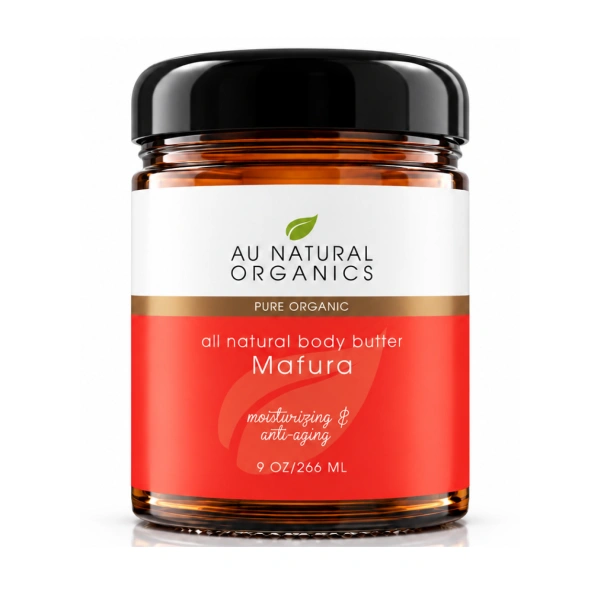
| Size | 9oz (266ml) |
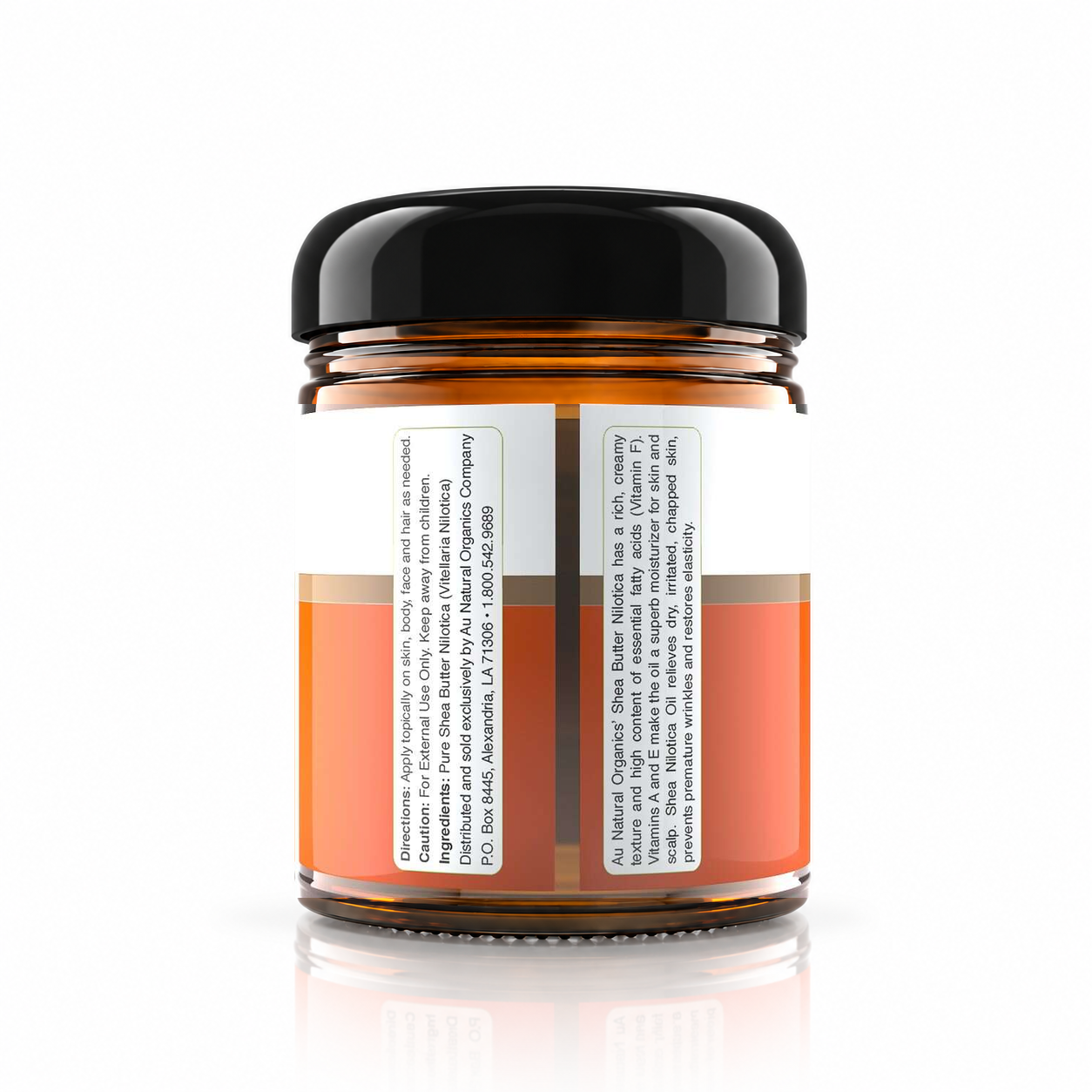
| Ingredients | 100% shea nilotica butter |
How to use
- Body: take a fingertip amount and smooth it over dry skin, especially elbows, knees and heels.
- Lips: apply a thin layer as a plain lip balm.
- Hair: rub a small amount through dry ends.
- DIY: whip it with a liquid oil for a lighter body butter.
Store below 25°C (77°F). If shea melts and cools slowly it can turn grainy. Remelt it gently and cool it quickly in the fridge to smooth it again.
FAQs
How is nilotica different from regular shea butter?
It comes from a different subspecies in East Africa. It’s softer, creamier and milder in scent than West African shea.
Why has my shea turned grainy?
Temperature swings let some fats crystallise. It’s harmless, and remelting fixes it.
Can I use it on my face?
Yes, but use very little because it’s rich.
Read where shea butter nilotica comes from and how it is made.
Browse more natural body butters.
Reviews