
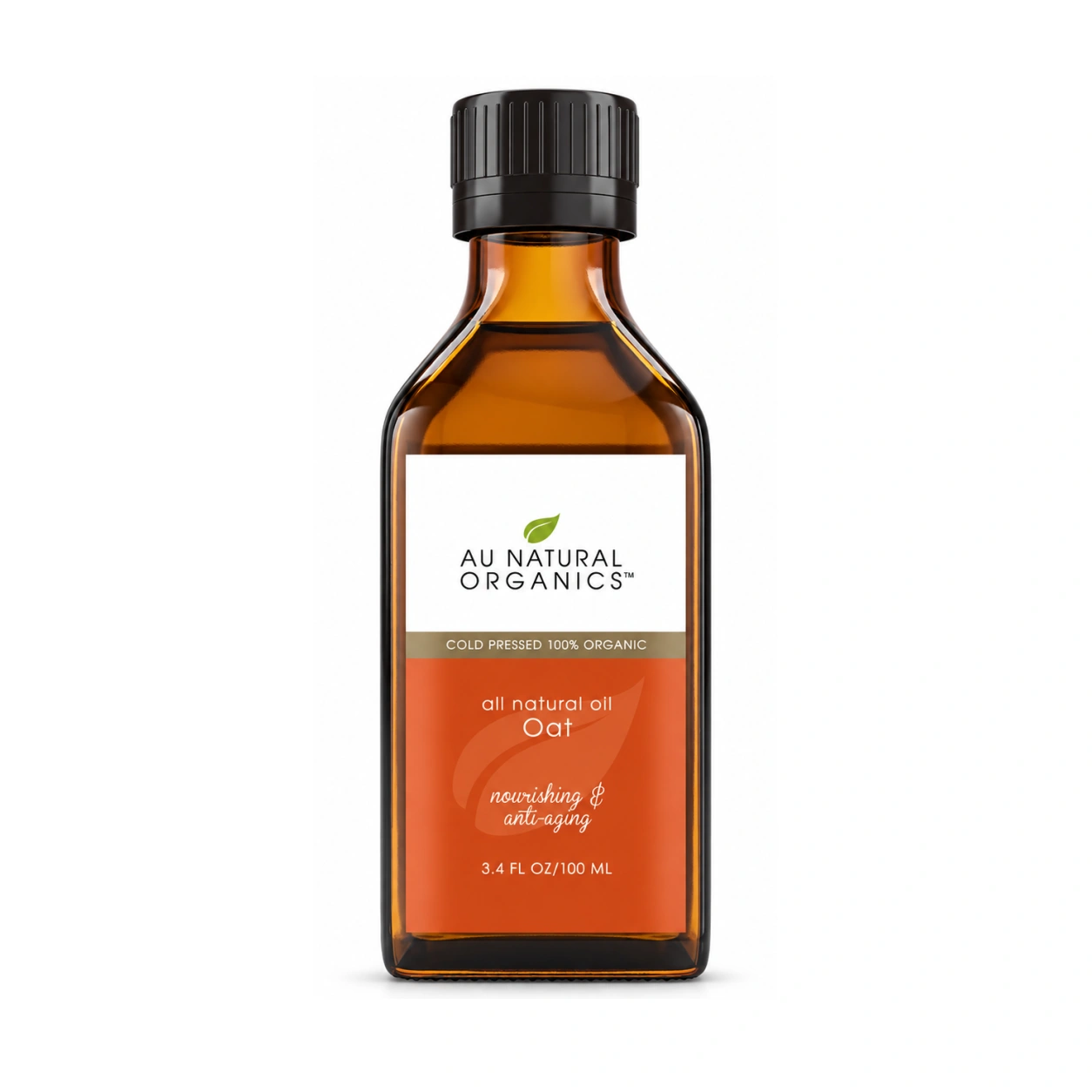
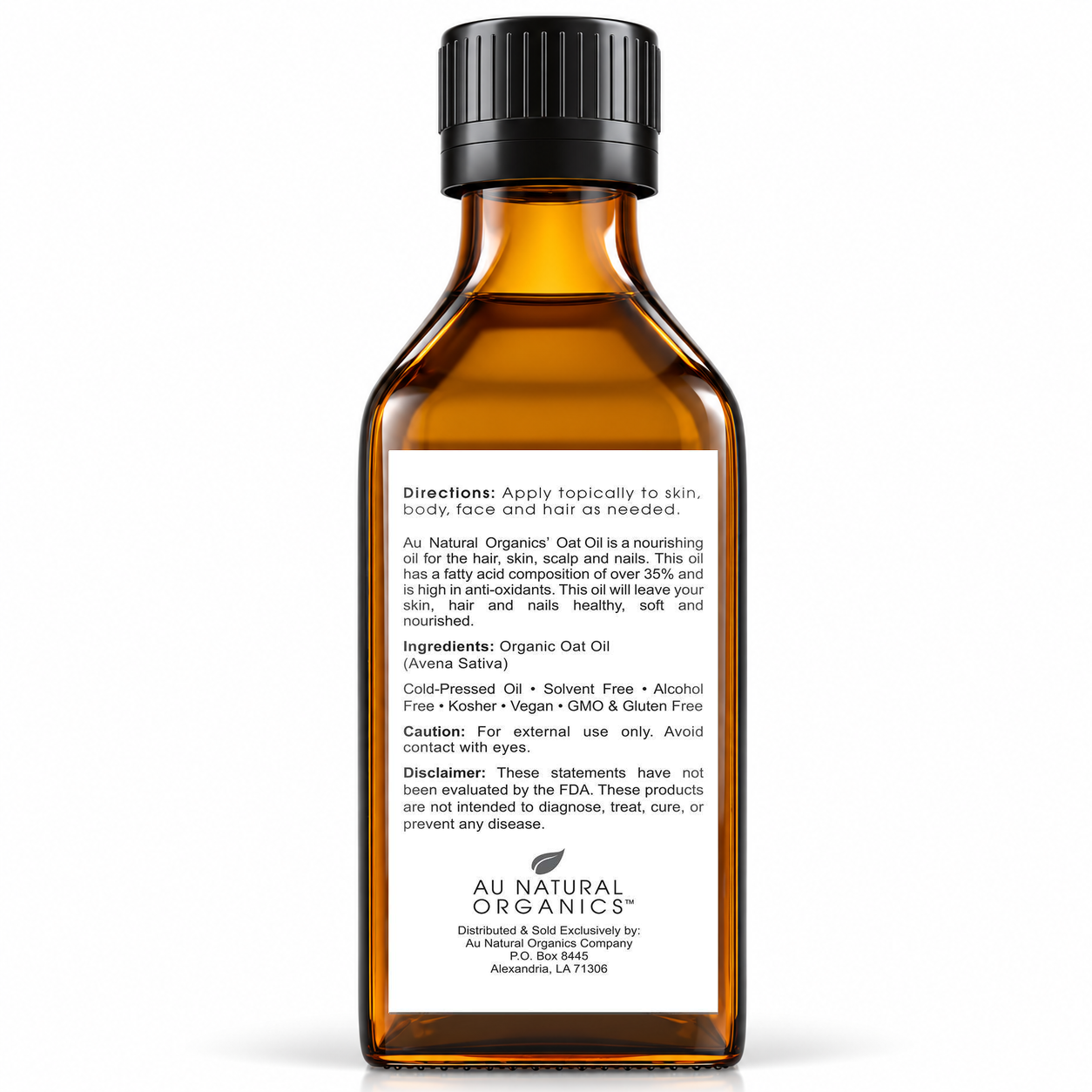
Description
Oat oil comes from the familiar cereal oat, grown in northern Europe and Canada. Oat kernels hold only about 5 to 9% fat, so a lot of grain goes into a small volume of oil. Because the grain is dry and low in fat, the oil is usually extracted with CO2 or food-grade ethanol rather than pressed. It is golden to amber with a light cereal smell. It contains linoleic, oleic and palmitic acids, plus phospholipids and glycolipids.
Details
| Botanical name | Avena sativa |
|---|---|
| Origin | Northern Europe, North America |
| Part used | Dehulled kernel (groat) |
| Extraction | Extracted from dehulled oat kernels |
| Texture | Silky, medium weight |
| Size | 3.4oz (100ml) |
How to use
- Face and body: smooth 3 to 4 drops over dry areas after washing.
- With lotion: stir a few drops into an unscented lotion.
- Formulating: add to creams and lotions; the polar lipids help it blend with water-based formulas.
FAQs
Why isn’t oat oil cold-pressed?
Oats contain too little fat for pressing to work well, so it’s extracted instead.
What are polar lipids?
Fat molecules with a water-loving end. They give oat oil its silky feel and help it mix into lotions.
Does it smell of oats?
Faintly, like cereal. The smell fades after application.
Reviews