
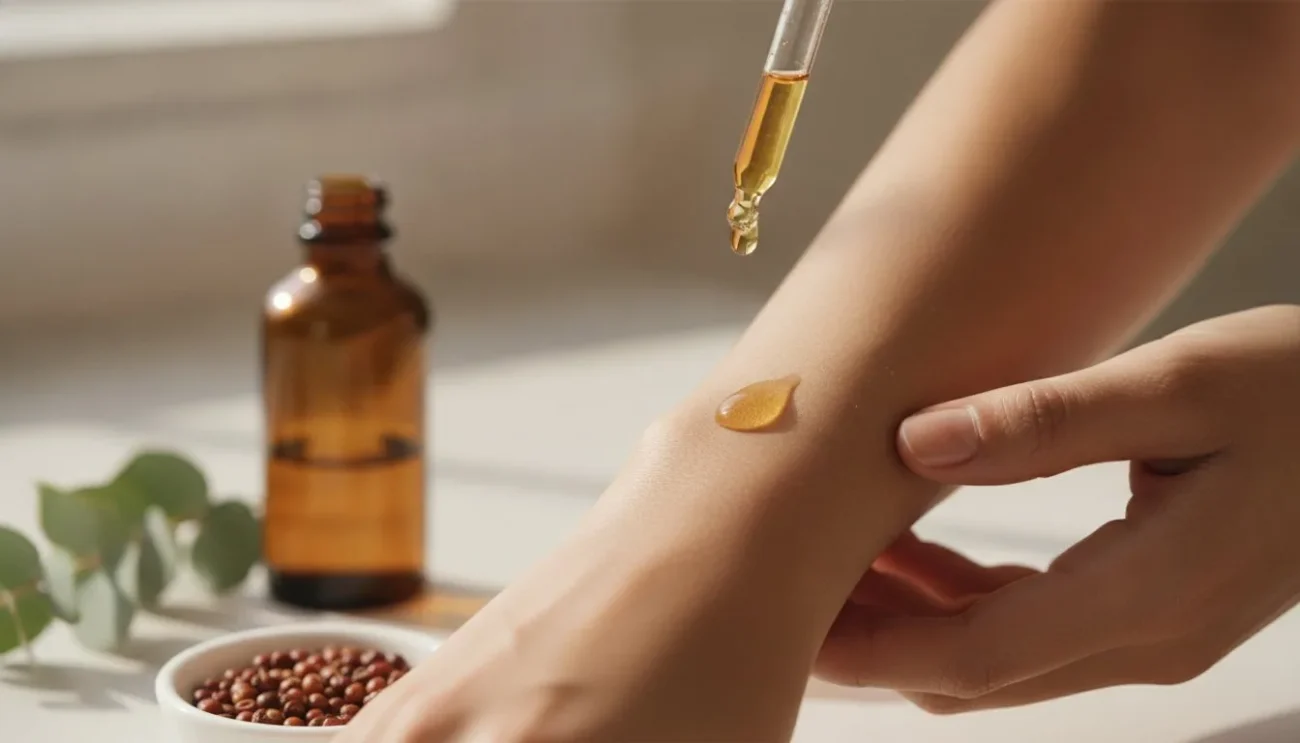
Why does your skin reject the very nutrients you’re trying to provide? Most users assume a heavy, lingering film is evidence of deep hydration. It’s actually a sign of poor molecular affinity. You’ve likely experienced the frustration of an oil that sits stubbornly on the surface, ruining fabrics and clogging pores while the tissue beneath remains parched. Identifying the best carrier oils for skin absorption isn’t a matter of trial and error. It’s a calculation of botanical chemistry.
We believe true efficacy depends on a foundation of integrity and precise sourcing. This guide moves beyond the surface to explore how fatty acid ratios and molecular weights dictate dermal penetration. You’ll learn to distinguish between occlusive barriers and fast-absorbing lipids, ensuring your essential oil blends deliver results rather than residue. We’ll analyze the specific profiles of professional-grade botanicals to help you master the science of your own skin. By understanding the structural differences between linoleic and oleic acids, you can finally achieve deep hydration without the grease.
Key Takeaways
- Understand the biological mechanisms of the stratum corneum to ensure your botanical treatments penetrate the lipid barrier effectively.
- Identify the best carrier oils for skin absorption by matching specific fatty acid profiles to your unique dermal chemistry.
- Learn why a “dry” oil’s rapid absorption doesn’t always correlate with its comedogenic rating or long-term pore health.
- Master professional application techniques, such as the “damp skin” rule, to significantly enhance the permeability and efficacy of your oil blends.
- Recognize the critical difference between nutrient-dense cold-pressed oils and refined alternatives that lack the structural integrity required for optimal skin health.
The Science of Dermal Absorption: How Carrier Oils Penetrate the Skin
Dermal absorption is the transport of botanical constituents through the stratum corneum, the skin’s outermost layer. It isn’t a simple soaking process. Instead, it’s a complex migration through a matrix of lipids and proteins. A Carrier oil serves as the primary medium for this migration. To identify the best carrier oils for skin absorption, we must first respect the skin’s role as a biological gatekeeper. The lipid barrier regulates what enters the deeper epidermal layers, acting as a selective filter that favors substances with specific chemical profiles.
Fatty Acid Ratios: Linoleic vs. Oleic Acid
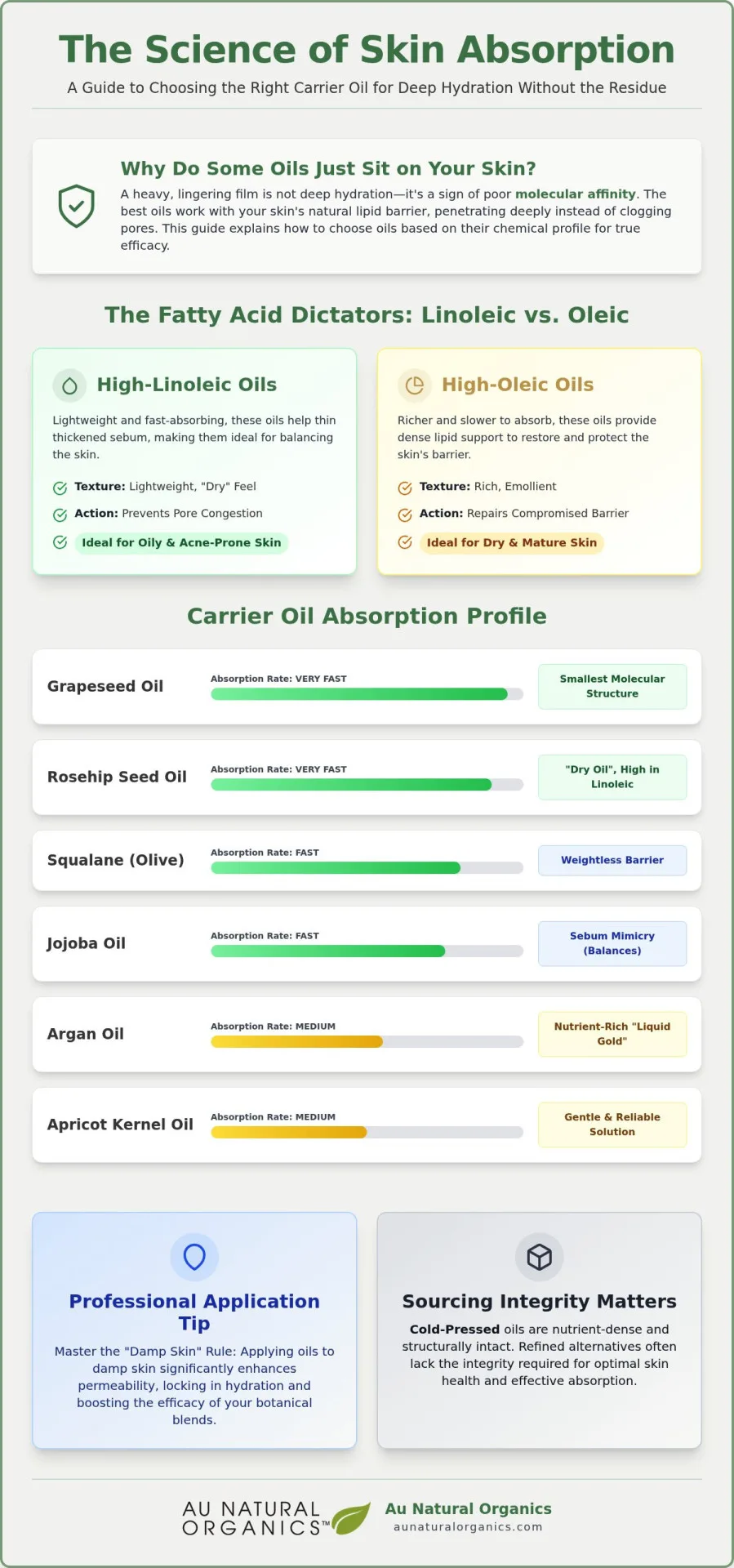
The ratio of fatty acids within an oil dictates its behavior upon contact. High-linoleic oils are lightweight and fast-absorbing. They’re essential for oily or acne-prone skin, as linoleic acid helps thin out thickened sebum and prevents pore congestion. In contrast, high-oleic oils are richer and slower to absorb. These are restorative for dry, mature complexions, providing the dense lipid support necessary to repair a compromised barrier. Finding the “Golden Ratio” involves balancing these acids based on your specific climate and skin concerns.
The Transdermal Delivery System
Carrier oils function as sophisticated vehicles for volatile essential oils. Without this lipid foundation, essential oils would evaporate before they could reach the dermis. Viscosity plays a critical role here; lower viscosity allows for a faster rate of nutrient delivery. This is why “dry oils” are the gold standard for rapid absorption. They offer the therapeutic benefits of the plant without leaving a heavy, synthetic-feeling residue. For those seeking maximum permeability, combining these oils with hydrosols for skin creates a synergistic effect that enhances the transdermal delivery of every active constituent. Use the best carrier oils for skin absorption to transform a basic topical application into a deep cellular treatment.
Profiling the Best Carrier Oils for Maximum Skin Absorption
Selecting the correct botanical base requires more than a cursory glance at a label. It demands an understanding of how specific lipids interact with your skin’s biological architecture. Jojoba oil stands as a premier example of this interaction. It isn’t a true oil, but a liquid wax ester that mirrors human sebum with uncanny precision. This structural similarity allows it to integrate into the skin’s lipid matrix almost instantly. It doesn’t just sit on the surface. It communicates with the skin, signaling it to balance its own oil production while delivering deep hydration.
For those seeking rapid delivery, rosehip seed oil and grapeseed oil are the essential choices. Rosehip is a high-linoleic powerhouse. It’s frequently categorized as a “dry oil” because it vanishes into the epidermis without leaving a trace of shine. Grapeseed oil offers an even lighter touch. It possesses one of the smallest molecular structures among botanical foundations, making it one of the best carrier oils for skin absorption in humid climates or for those with congestion-prone complexions. If you require a medium-weight bridge between surface protection and deep penetration, apricot kernel oil provides a gentle, reliable solution. Meanwhile, fractionated coconut oil offers a modified triglyceride profile that remains liquid at room temperature, providing a weightless, non-greasy finish that’s ideal for professional massage or lightweight body mists.
Fast-Absorbing Oils for Daily Complexion Care
Daily hydration requires efficiency. The combination of rosehip and jojoba creates a dual-threat for facial serums, balancing immediate absorption with long-term barrier support. Squalane, specifically when olive-derived, provides a weightless barrier that mimics the skin’s natural protective layers without the risk of clogging pores. Argan oil, often called “Liquid Gold,” offers a unique middle ground. It’s nutrient-dense yet surprisingly agile. A Systematic Review on…Skin Penetration Enhancers highlights how these specific fatty acid profiles actively reorganize the stratum corneum to facilitate the entry of therapeutic compounds.
Deep-Reaching Oils for Intensive Repair
Intensive recovery demands a slower, more deliberate pace. Avocado and evening primrose oils possess higher oleic acid content, which results in a slower absorption rate. This makes them perfect for overnight restorative masks where prolonged contact is beneficial. Tamanu oil is similarly viscous, providing a thick, therapeutic layer for targeted skin recovery. For those focusing on both scalp health and dermal vitality, integrating authentic batana oil provides a rare, nutrient-rich foundation that traditional processing preserves. Choosing these high-quality carrier oils ensures that every drop serves a functional purpose in your skin’s health.
Comedogenic Ratings vs. Absorption Rates: Navigating Your Skin Type
Absorption speed doesn’t guarantee pore clarity. While we’ve discussed how molecular weight facilitates entry, the comedogenic scale provides a necessary second dimension for selection. This scale, ranging from 0 to 5, measures an oil’s potential to cause follicular occlusion. A rating of 0 indicates a negligible risk of clogging, whereas a 5 suggests a high probability of breakout for most users. Identifying the best carrier oils for skin absorption requires a nuanced understanding of how these ratings interact with your specific sebum production. Research in The Science of Carrier Oil Skin Penetration demonstrates that an oil’s ability to fluidize the stratum corneum is distinct from its tendency to oxidize within the pore.
The myth that “fast-absorbing” always means “non-comedogenic” persists in amateur circles. It’s a dangerous oversimplification. Some oils penetrate the upper layers quickly but possess chemical structures that trigger inflammation in congestion-prone skin. Oily skin types thrive on high-linoleic carriers like Hemp or Safflower, which help balance the thick, oleic-heavy sebum typically found in acne-prone individuals. Conversely, mature skin benefits from the slow-release moisture of Marula or Baobab. These oils don’t just vanish. They provide a sustained lipid presence that mimics the resilience of younger tissue.
Best Carrier Oils for Acne-Prone and Oily Skin
Pore health is the priority here. When formulating for oily complexions, we prioritize oils with a comedogenic rating of 0 or 1. Grapeseed and Hazelnut are the professional’s choice; they offer high astringency and rapid penetration without leaving a film. Understanding what is a carrier oil is vital when using these as bases to dilute potent anti-acne essential oils like Tea Tree or Manuka. The carrier must be light enough to allow the active constituents to reach the bacteria within the pore without adding to the blockage.
Solutions for Dry and Dehydrated Skin Barriers
Professional Application: Techniques to Enhance Botanical Penetration
Dermal penetration is not a passive event. It is an active process that requires intentional preparation. Many users fail to see results because they apply lipids to a dry, resistant barrier. The professional standard is the “Damp Skin” Rule. When the stratum corneum is saturated with moisture, its permeability increases significantly. This allows the best carrier oils for skin absorption to integrate into the lipid matrix rather than pooling on the surface. By applying oils immediately after a bath or a targeted misting, you create a direct pathway for deeper nutrient delivery.
Temperature also dictates efficiency. Cold oils have a higher viscosity, which slows their movement through skin layers. Gently warming your oil between your palms before application lowers this viscosity and increases kinetic energy. This simple step ensures you are utilizing the best carrier oils for skin absorption to their maximum therapeutic potential. Layering logic is equally critical. Always move from the thinnest, water-based serums to your carrier oils, finishing with heavy botanical butters to seal the active ingredients beneath a protective shield. Water-based serums contain small, hydrophilic molecules that must reach the skin first. If you apply an oil beforehand, you create an occlusive barrier that prevents these serums from ever reaching their target.
The Hydrosol-Oil Connection
Water and oil are traditionally seen as opposites. On the skin, however, they form a functional micro-emulsion that is superior to either element used alone. Learning how to use hydrosols for skin allows you to provide the hydration that oils lack. When you mist a hydrosol and immediately follow with a carrier, the oil traps the botanical water against the skin. This prevents evaporation and forces moisture into the epidermal layers. For a professional result, pair Rosehip oil with a Rose or Helichrysum hydrosol to maximize the restorative synergy of the plants.
Massage and Lymphatic Drainage
Manual stimulation acts as a mechanical catalyst for absorption. Massaging the skin increases localized blood flow, which in turn accelerates the uptake of nutrients into the dermis. This is particularly effective when using tools like Gua Sha or rollers. These instruments require high-slip, fast-absorbing carriers to prevent tugging while they stimulate lymphatic drainage. Focus on the areas of the face where the skin is thinnest, such as the temples and the jawline, where blood vessels are closer to the surface. Use rhythmic, upward strokes to move fluid and encourage the skin to accept the oil. To experience the difference that purity makes, select from our collection of professional-grade carrier oils today.
The Au Natural Standard: Sourcing Integrity for Optimal Skin Health
Quality isn’t a marketing claim. It is a biological necessity. Most commercial options are refined, bleached, and deodorized (RBD) to ensure a long shelf life and a neutral profile. This industrial processing strips away the very antioxidants, phospholipids, and sterols that facilitate dermal penetration. Without these minor constituents, the oil becomes a hollow lipid. It sits on the surface because it lacks the chemical “keys” to unlock the skin’s barrier. We prioritize cold-pressed, raw oils that retain their full molecular integrity. This nutrient density is the primary driver of effective skin absorption. When an oil is unadulterated, the skin recognizes it as a compatible biological building block rather than a foreign substance.
Beyond the Bottle: Ethical Sourcing and Global Impact
Integrating Specialty Treatments
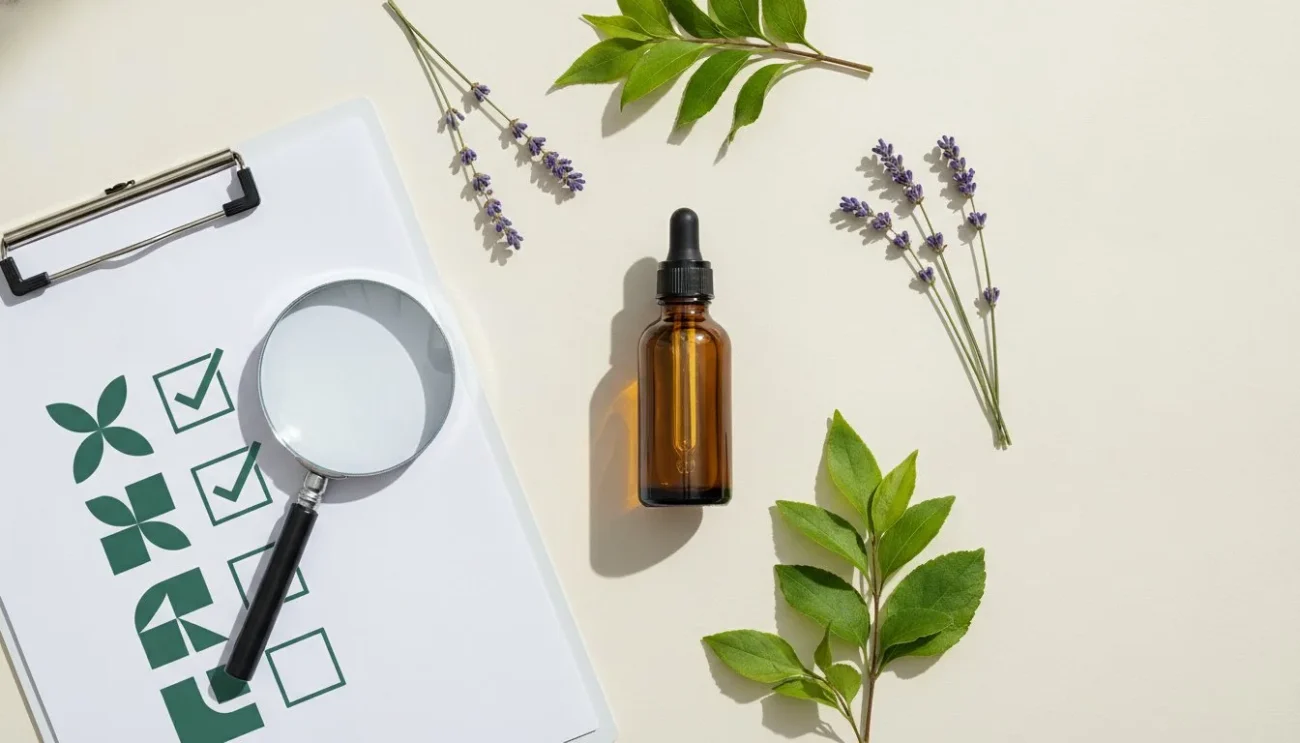
A professional skin ritual often requires a multi-layered approach to hydration. Pairing your chosen carriers with body butters creates a comprehensive barrier repair system. The oil provides the initial penetration, while the butter offers a long-lasting occlusive shield. You can further enhance your formulations by leveraging the power of extracts & tinctures within your oil blends. This creates a potent, customized treatment that addresses specific concerns like hyperpigmentation or loss of elasticity. Use this final checklist to verify the integrity of your botanical oils:
- Extraction Method: Always prioritize cold-pressed or expeller-pressed over solvent-extracted.
- Visual Profile: High-quality oils should possess a rich, natural color, not a clear, bleached appearance.
- Aromatic Sincerity: A faint, nutty, or herbaceous scent indicates the presence of volatile nutrients.
- Small-Batch Freshness: Handmade batches ensure the oil hasn’t oxidized on a warehouse shelf for years.
By adhering to these standards, you ensure that you are using the best carrier oils for skin absorption to maintain long-term dermal health.
Master Your Botanical Foundation
True skin health requires a precise alignment between botanical chemistry and your unique biological needs. You’ve learned that dermal penetration isn’t a matter of chance; it’s a direct result of molecular weight, fatty acid balance, and the integrity of the extraction process. By selecting the best carrier oils for skin absorption based on these professional standards, you’ve moved beyond surface-level care into the realm of functional skin nutrition. You now possess the knowledge to distinguish between oils that merely sit on the surface and those that actively integrate into the lipid matrix.
Our commitment to purity ensures that every oil remains bioavailable and potent. We provide foundations that are Ethically Sourced Worldwide and Expertly Crafted in Small Batches, containing No Synthetic Fragrances to ensure your skin receives only what it can truly utilize. It’s time to refine your ritual with ingredients that respect your skin’s integrity. Explore Our Collection of Pure, Fast-Absorbing Carrier Oils and experience the difference that raw, unadulterated quality makes for your complexion. Your skin is a living organ; treat it with the precision and respect it deserves.
Frequently Asked Questions
Which carrier oil absorbs the fastest into the skin?
Rosehip seed oil and grapeseed oil are among the fastest-absorbing botanical foundations available. Rosehip is frequently categorized as a “dry oil” due to its high linoleic acid content, which allows it to vanish into the epidermis almost instantly. Grapeseed oil possesses a very low viscosity and small molecular structure, making it one of the best carrier oils for skin absorption when a weightless, matte finish is required.
Can fast-absorbing oils still clog my pores?
Yes, rapid absorption does not guarantee a non-comedogenic profile. Some oils penetrate the upper layers of the stratum corneum quickly but contain chemical structures that can still cause follicular occlusion in sensitive individuals. It’s critical to cross-reference an oil’s absorption rate with its comedogenic rating; you should typically aim for a rating of 0 or 1 if you’re prone to congestion.
Do I really need to use a carrier oil for essential oils?
You must use a carrier oil to ensure both safety and therapeutic efficacy. Essential oils are highly volatile and will evaporate rapidly if applied “neat” to the skin. A lipid base acts as a delivery vehicle, anchoring the volatile compounds and facilitating their transport into the deeper dermal layers while preventing the sensitization or chemical burns associated with undiluted application.
What is the best carrier oil for facial use versus body use?
Jojoba and Rosehip are superior for facial care due to their sebum-mimicking properties and lightweight textures. They provide hydration without overwhelming the delicate pores of the face. For the body, more viscous options like Sweet Almond or Avocado oil are preferable. They offer a higher degree of emolliency and a slower absorption rate that’s ideal for treating larger, drier surface areas.
How does the molecular weight of an oil affect its absorption?
Molecular weight dictates the depth and velocity of dermal penetration. Oils with low molecular weights navigate the interstitial spaces between skin cells with minimal resistance, leading to faster uptake. Conversely, oils with higher molecular weights remain on the surface to form an occlusive barrier. This barrier is essential for preventing trans-epidermal water loss; however, it provides less direct nutrient delivery, which is why identifying the best carrier oils for skin absorption involves balancing these weights.
Is Jojoba oil actually an oil or a wax, and why does it matter?
Jojoba is technically a liquid wax ester, not a triglyceride oil. This distinction is vital because its chemical structure almost perfectly mirrors the wax esters found in human sebum. Because of this mimicry, the skin accepts jojoba more readily than other botanicals. It integrates into the lipid barrier to balance oil production without triggering a defensive response or leaving a greasy residue.
Can I use carrier oils on my skin if I have an oily complexion?
You can and should use specific carrier oils even if your skin is naturally oily. Oily complexions are often deficient in linoleic acid, which leads to thick, sticky sebum that clogs pores. Applying high-linoleic oils like Safflower or Hemp seed oil helps thin out this natural sebum. This process encourages better flow and reduces the likelihood of breakouts while maintaining essential barrier health.
How long should it take for a high-quality carrier oil to fully absorb?
A fast-absorbing oil should integrate into the skin within two to five minutes of application. Heavier, more restorative oils may require ten to twenty minutes to lose their surface sheen. If an oil remains on the surface for over thirty minutes, it’s a sign that you’ve applied too much or that the oil’s molecular weight is too high for your current skin profile.

Leave a comment
You must be logged in to post a comment.