
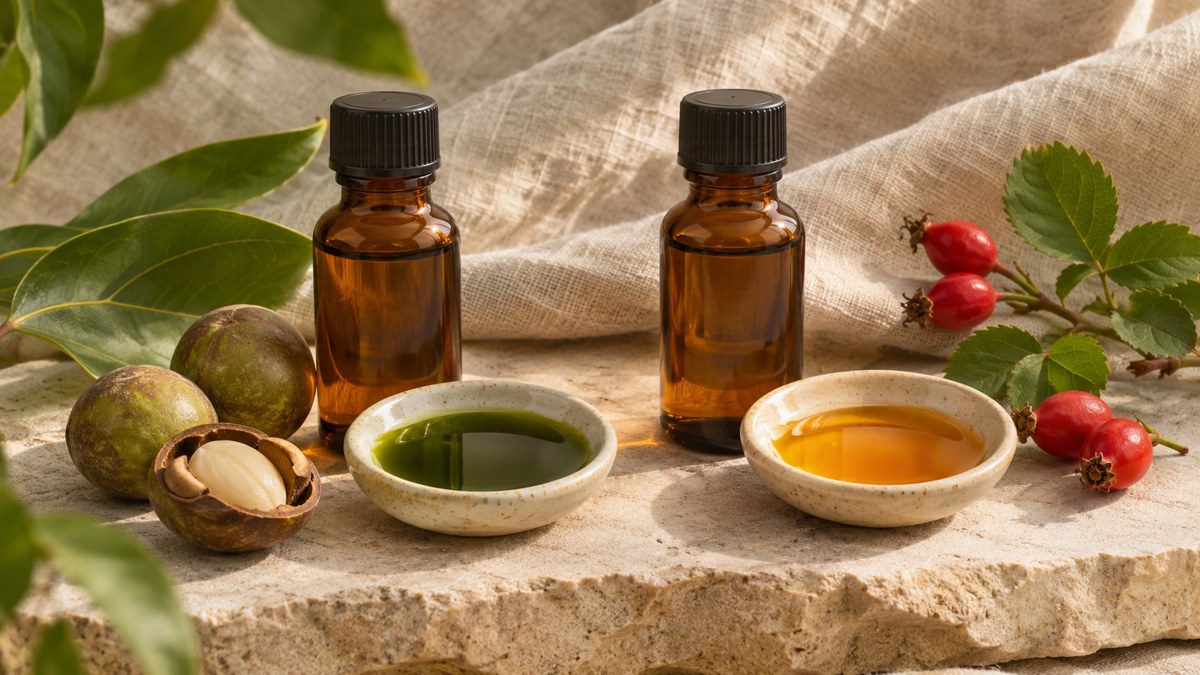
When comparing tamanu oil vs rosehip oil, start with texture and scent. The current Au Natural Organics listings describe tamanu as thick, green and distinctly nutty-spicy, while rosehip seed oil is lighter with a dry finish and a faint earthy scent.
That gives you a useful way to narrow the choice. It does not establish that either oil is universally better for a particular skin type.
What each bottle contains
Tamanu oil is listed as 100% Calophyllum inophyllum seed oil, cold-pressed from dried nut kernels. The store describes it as a rich oil for softening dry, rough-feeling areas.
Rosehip seed oil is listed as 100% rose hip seed oil, cold-pressed from wild rose seeds. Its page identifies Rosa rubiginosa and Rosa canina and describes a golden to amber-red color.
These are carrier oils. Rosehip seed oil is different from rose essential oil made from petals, and tamanu oil is different from a finished tamanu body butter.
Compare the everyday experience
Tamanu’s richer consistency may appeal if you like a substantial finish on small dry areas such as elbows or heels. Its pronounced natural scent is worth considering before buying it for a face routine.
Rosehip may appeal if you prefer a lighter finish. The store suggests two to three drops for an evening face routine. A lighter feel does not guarantee that every person will tolerate an oil or prefer it.
Color alone is not a reliable authenticity test. Natural oils can vary, and processing or added ingredients can change appearance. Use the full ingredient list and supplier information to understand the bottle.
A simple way to choose
- Decide where you want to use the oil. A small rough-feeling body area and a whole-face routine can call for different amounts and finishes.
- Consider scent honestly. If strong botanical aromas bother you, do not assume a naturally scented oil will become comfortable through repeated use.
- Read the complete product label. A blend containing tamanu or rosehip may behave differently from the single-ingredient oils compared here.
- Introduce one product at a time. Try a small area first, follow the directions, avoid the eyes and stop if irritation occurs.
- Evaluate the finish before adding more. A few drops can spread farther than expected, especially with a rich oil.
Keep notes about comfort, scent and whether the finish works with your existing products. Those observations are more useful for choosing your next bottle than chasing a promised universal winner.
Can you blend the two?
The store suggests blending tamanu with a lighter carrier oil and offers blending guidance for rosehip too. You do not need a blend to begin. Trying each oil separately first makes it easier to understand your preferences.
If you later combine products, prepare only a small amount for immediate use with clean hands. Avoid adding unfamiliar ingredients to an entire bottle or changing a finished skincare formula.
Quick questions
Which is better for scars or acne?
This comparison is about cosmetic feel and routine selection. It does not establish treatment results for scars or acne. Choose care for those concerns with a qualified healthcare professional.
Can I use either in the morning?
Follow your bottle’s directions and check how it layers with your existing products. Neither oil replaces sunscreen.
Where can I check botanical details?
Read the tamanu ingredient guide and rosehip ingredient guide, then compare them with the current product labels.
For a richer feel, review the tamanu oil listing. For a lighter, dry finish, review the rosehip seed oil listing.
For a comparison where two names describe one ingredient, read maracuja oil vs passion fruit oil.

Leave a comment
You must be logged in to post a comment.