
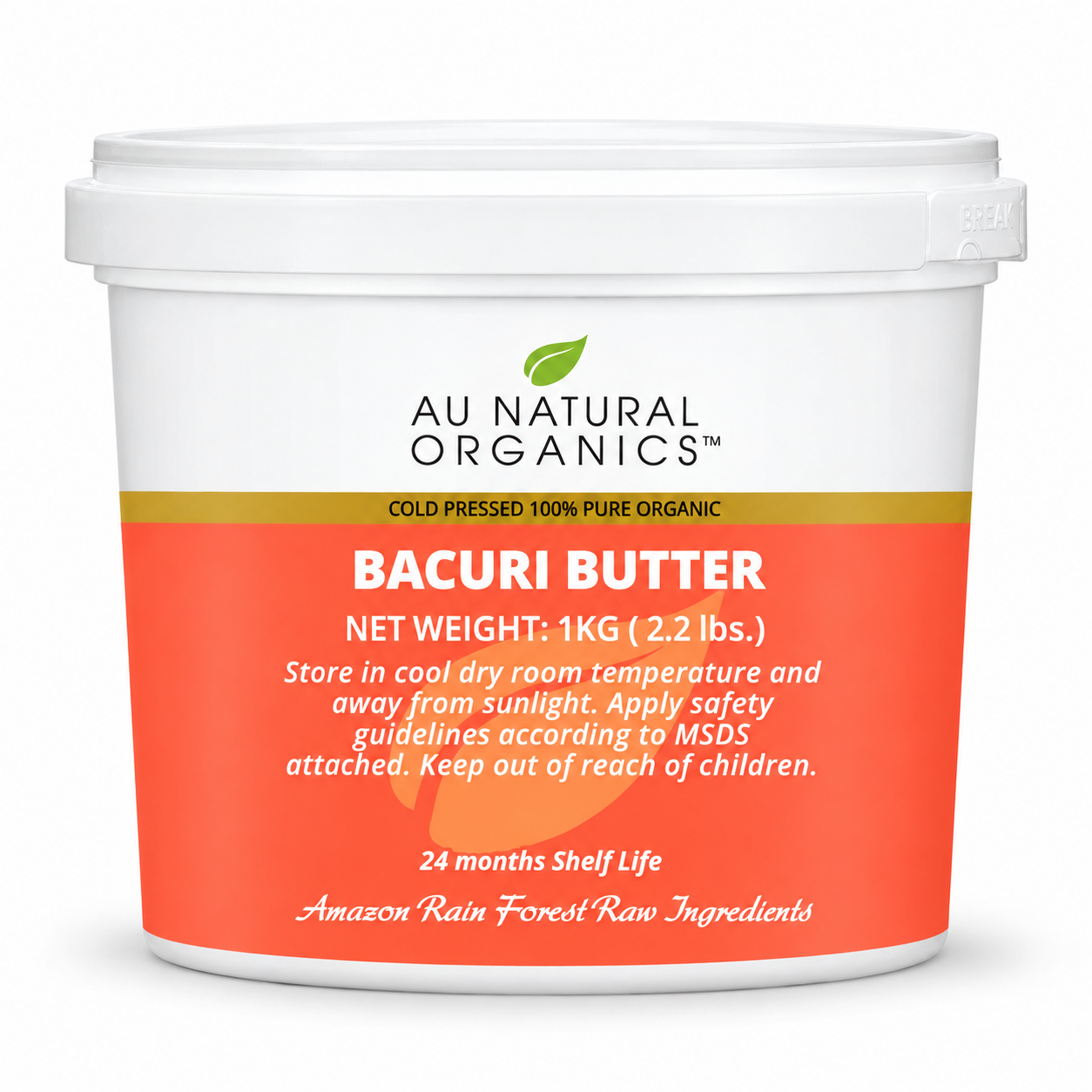
Description
Bacuri is a tall tree of the mangosteen family native to the eastern Amazon. Its round yellow fruit drops when ripe, and rural families in Pará, Maranhão and Piauí collect it from the ground in the first months of the year. The sweet-sour white pulp is sold for ice cream and juice, and the large, oily brown seeds are washed, dried and pressed by small local processors. Bacuri butter is dark brown to reddish brown with an earthy, slightly smoky smell. It is firm in the jar but softens quickly on the skin and absorbs well.
Details
| Botanical name | Platonia insignis (bacuri) |
|---|---|
| Origin | Pará and Maranhão, Brazil |
| Part used | Seed |
| Extraction | Pressed from the seed |
| Texture | Firm, melts on skin |
| Ingredients | 100% Platonia insignis seed butter |
Why supply is limited: bacuri is gathered mostly from wild and semi-wild trees, and only the seeds left over from the pulp trade are pressed, on a small scale.
How to use
- Body: warm a small amount between your hands and smooth over dry skin.
- Hair: work a little through dry lengths as a pre-wash mask, then shampoo.
- DIY: melt into body butters, soaps and lip balms.
Patch test on the inner arm before first use. Store below 25°C (77°F), sealed. Its natural dark colour may tint pale recipes.
FAQs
Why is bacuri butter so dark?
Its dark brown colour is natural to the seed fat.
What does it smell like?
Earthy and slightly smoky.
Does it melt on the skin?
Yes. It is firm in the jar but softens quickly with body heat.



Reviews
There are no reviews yet.