
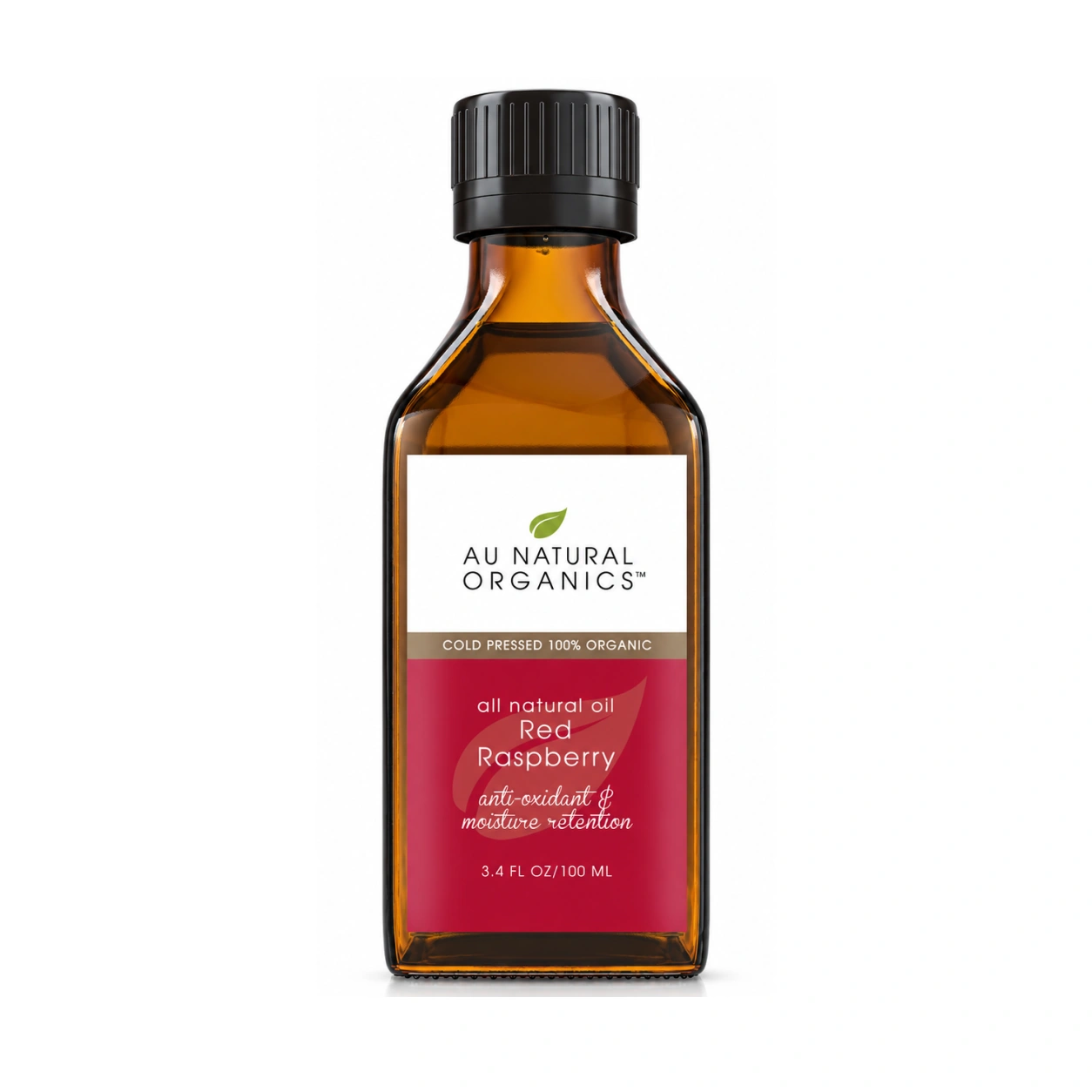
Description
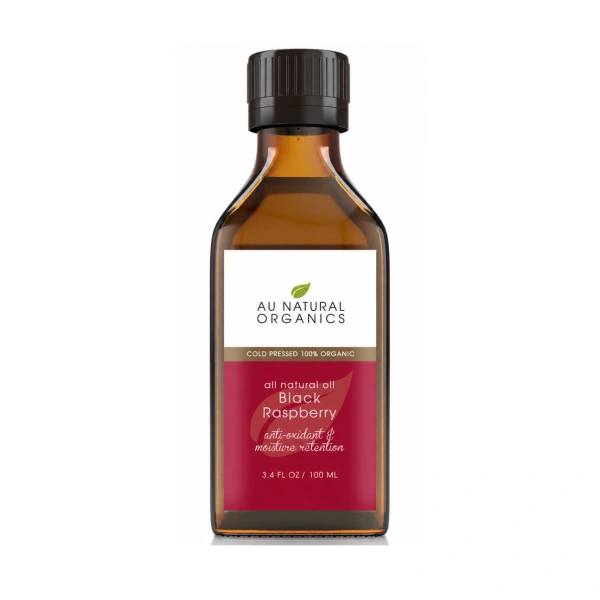
Raspberries are grown across Europe, Chile and North America, and most of the crop is frozen or made into juice, purée and seedless jam. At the processing plant the tiny seeds are sieved out of the pulp, washed, dried and sent to be cold-pressed. The oil is golden to amber with a faint fruity smell. It is around half linoleic acid and a quarter alpha-linolenic acid, with natural vitamin E and carotenoids, and it feels light and smooth on the skin.
Details
| Botanical name | Rubus idaeus (red raspberry) |
|---|---|
| Origin | Europe and Chile |
| Part used | Seed |
| Extraction | Cold-pressed |
| Texture | Light, smooth |
| Size | 3.4oz (100ml) |
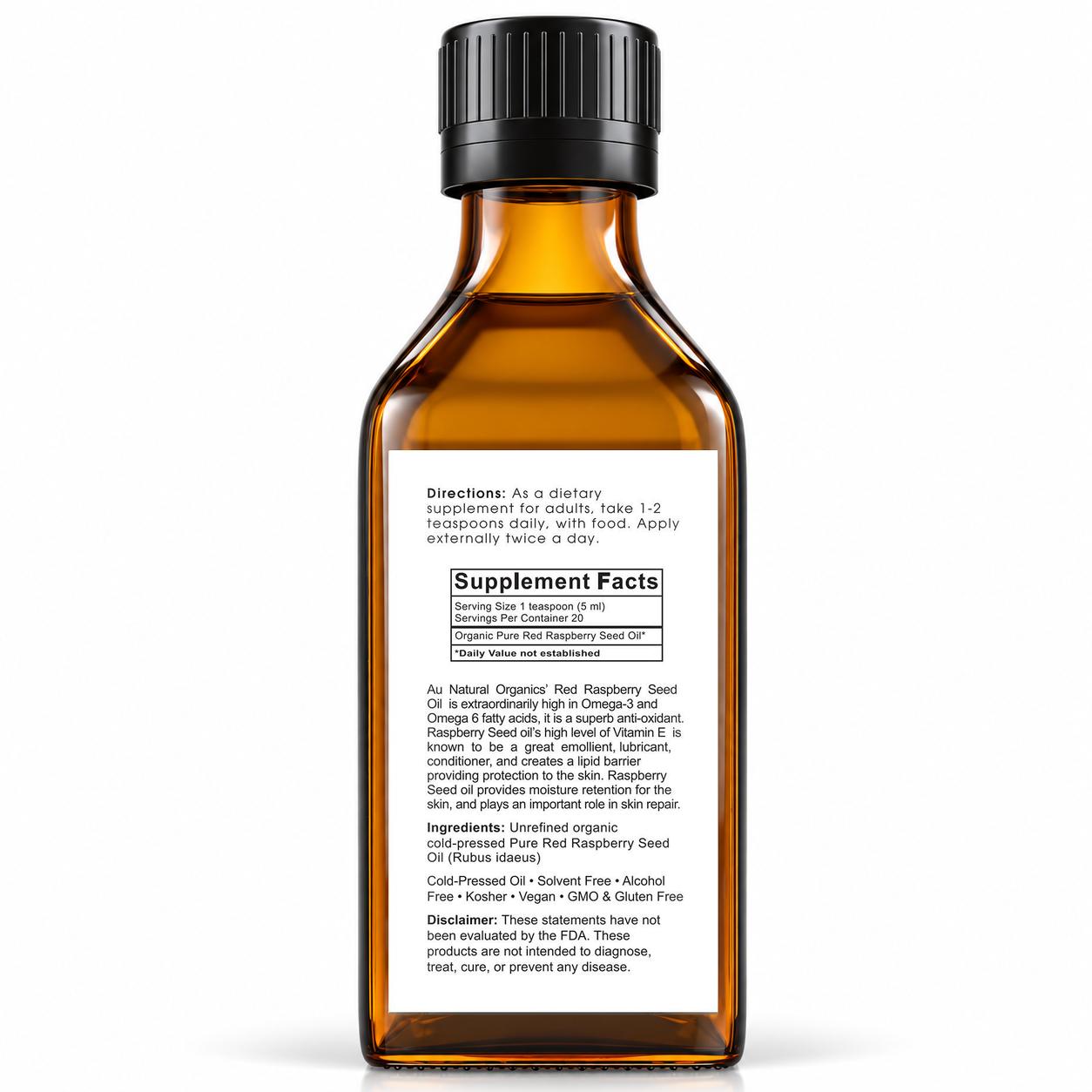
| Ingredients | 100% Rubus idaeus seed oil |
Why supply is limited: the seeds make up only a few percent of the fruit’s weight, so a large volume of fruit waste has to be sieved to gather enough seed to press.
How to use
- Face: press 2 to 3 drops into clean skin, morning or evening.
- Lips: smooth a drop over dry lips.
- Blends: add to face oils and light creams at up to 30%.
Patch test on the inner arm before first use. Keep away from the eyes. Store somewhere cool and dark with the cap closed.
FAQs
Does raspberry seed oil provide sun protection?
No. It is not a sunscreen. Use a tested sunscreen for sun protection.
What does it smell like?
A faint, fruity smell.
Is it suitable for oily skin?
It is light and absorbs well, so many people with oily or combination skin use it. Patch test first.
Read where red raspberry seed oil comes from and how it is made.
Reviews