
Description
Black currant seed oil is pressed from the tiny seeds left over when black currants are made into juice. The berries are grown in Poland, the United Kingdom, Scandinavia and Germany. After juicing, the seeds are dried, sieved from the skins and sent to specialist oil mills. The oil is golden to greenish yellow with a mild, slightly fruity smell. Linoleic acid is its largest fatty acid, with GLA and alpha-linolenic acid alongside.
Details
| Botanical name | Ribes nigrum |
|---|---|
| Origin | Northern Europe |
| Part used | Seed |
| Extraction | Cold-pressed |
| Texture | Light, dry, fast-absorbing |
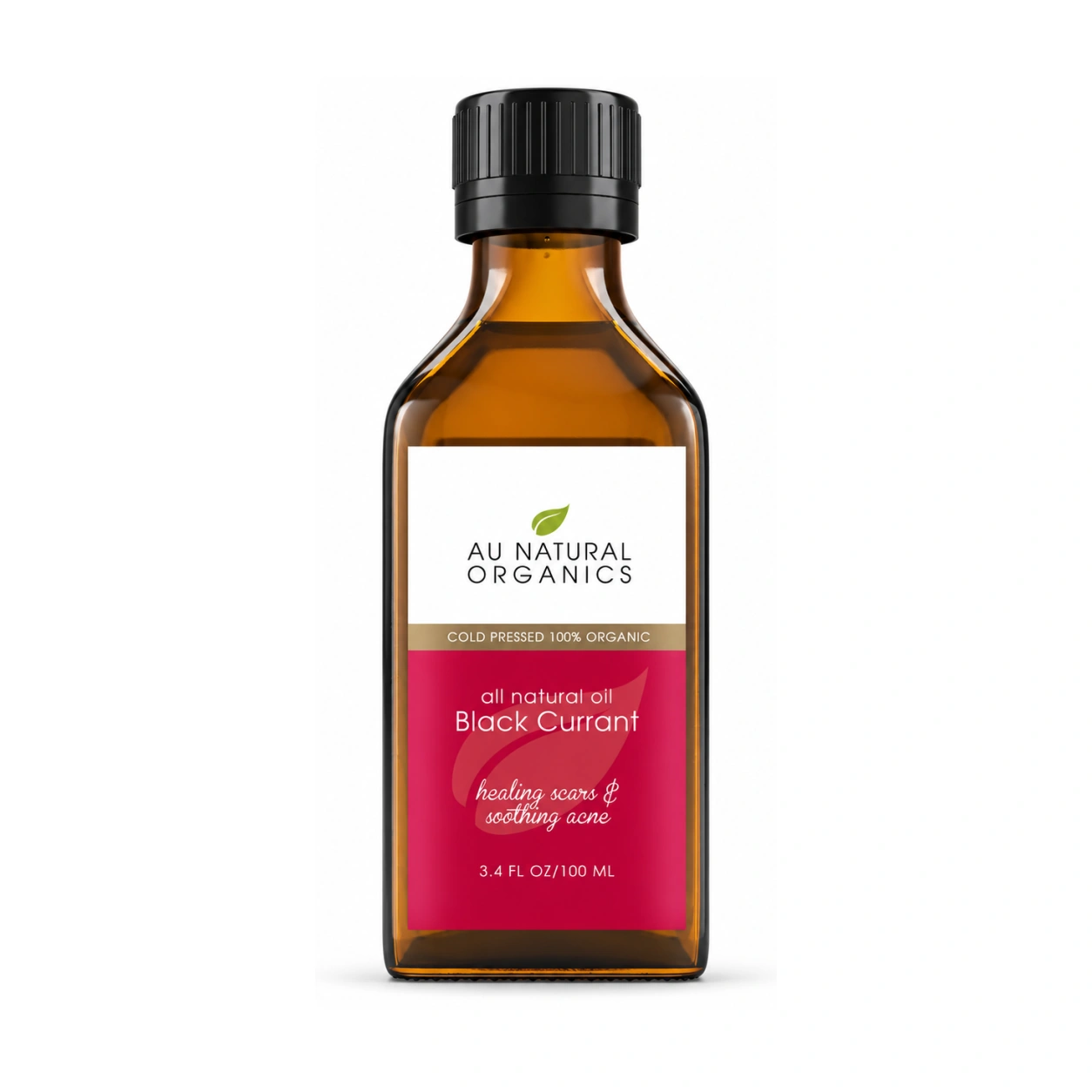
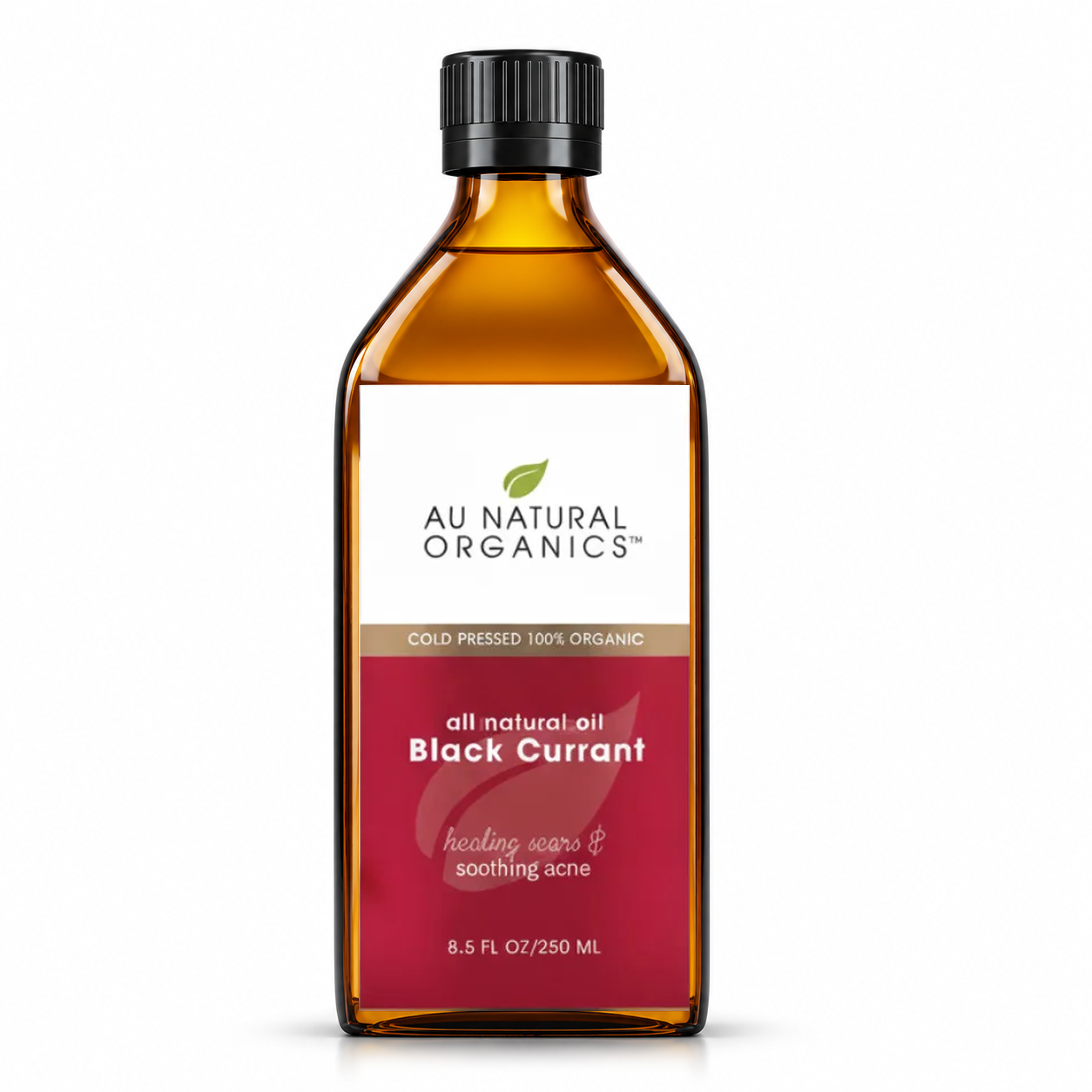
| Sizes | 3.4oz (100ml), 8oz (250ml) |
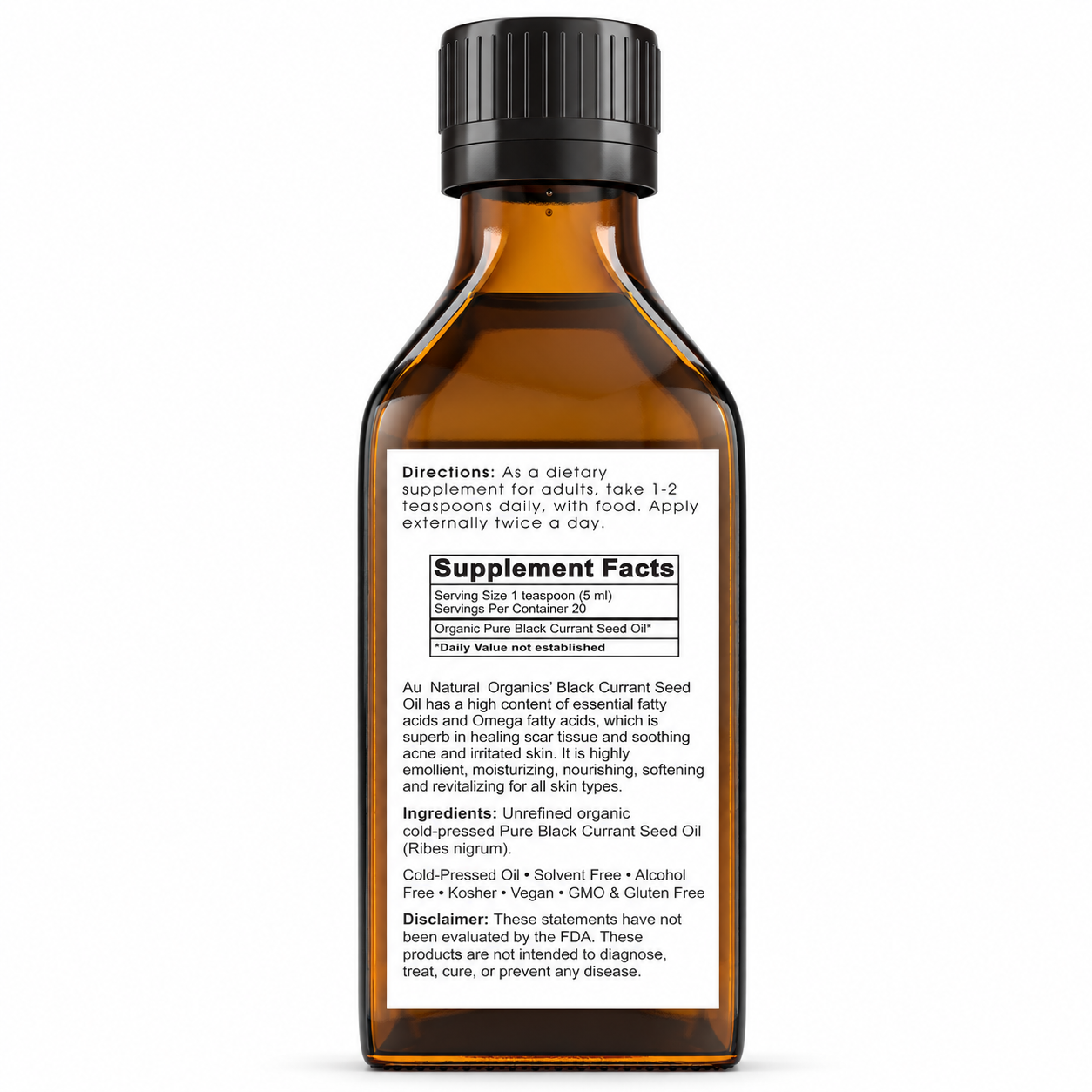
| Ingredients | 100% Ribes nigrum seed oil |
How to use
- Face oil: press 2 to 3 drops into damp skin after cleansing, morning or night.
- With moisturiser: mix 1 to 2 drops into your usual cream.
- Nails and cuticles: massage a drop into each nail bed.
The oil is delicate. Keep the cap closed and store it somewhere cool and dark. Refrigerating after opening keeps it fresh for longer.
FAQs
What is GLA?
Gamma-linolenic acid is an omega-6 fatty acid. Few plant oils contain it; the best-known are black currant, borage and evening primrose.
Does it feel greasy?
No. It’s one of the lighter oils in the range and sinks in within a minute or two.
Why does it need cool storage?
Oils high in polyunsaturated fats oxidise faster in heat and light.
Read where black currant seed oil comes from and how it is made.
Reviews
There are no reviews yet.