
Description
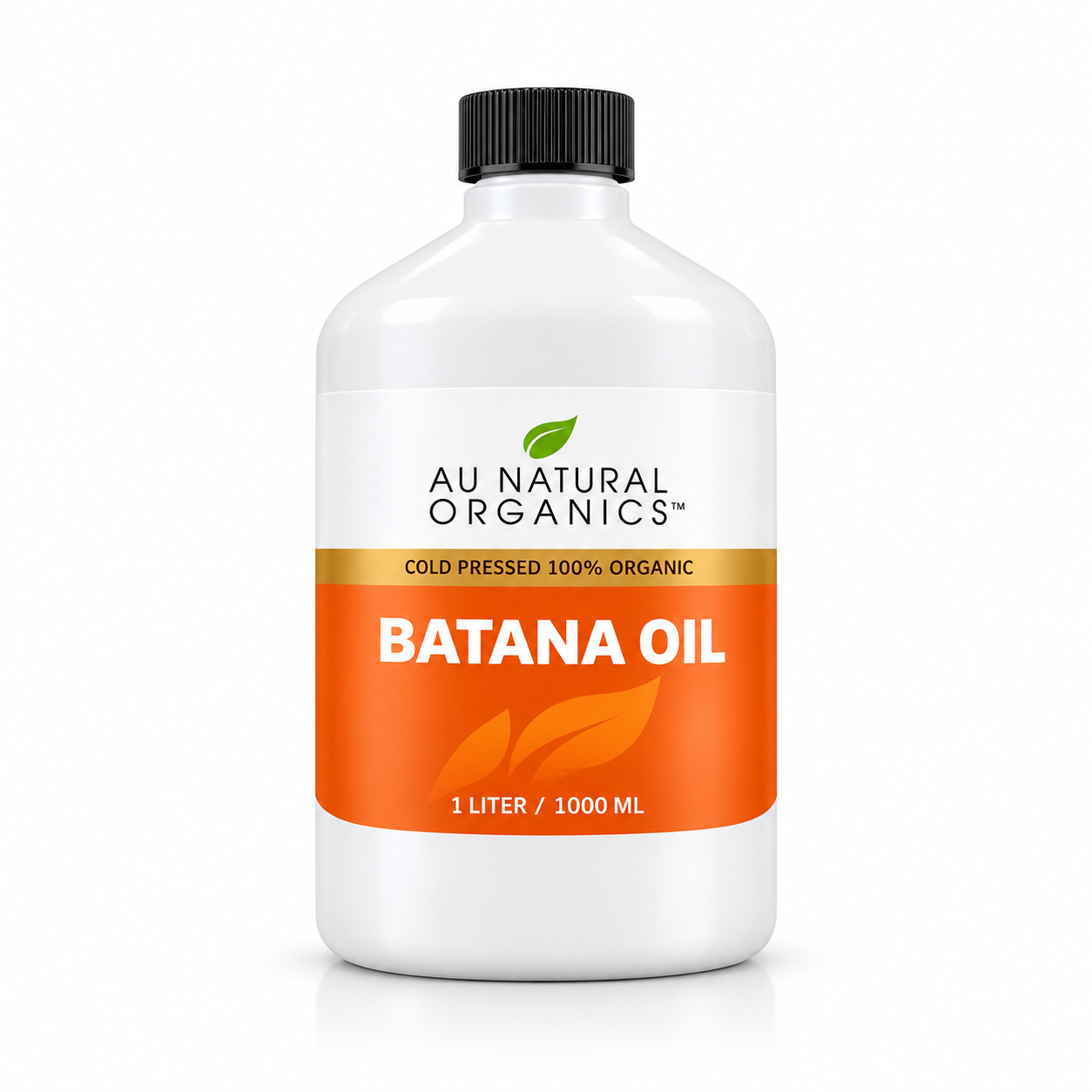
This 1 litre bottle of batana oil is intended for salons, formulators and small-batch makers who need a larger quantity. The single ingredient is Elaeis oleifera kernel oil from La Mosquitia, Honduras, made the traditional way: the kernels are boiled in water and the oil is skimmed off by hand. Its thick, often semi-solid texture requires careful portioning and clean, dry storage containers.
Details
| Botanical name | Elaeis oleifera (American oil palm) |
|---|---|
| Origin | La Mosquitia, Honduras |
| Part used | Palm nut kernel |
| Extraction | Wet extraction: boiled and skimmed by hand |
| Texture | Thick paste, like caramel; softens with warmth |
| Size | 1 litre |
| Ingredients | 100% Elaeis oleifera kernel oil |
Why batana is rare: the palm grows wild in a small area reached by boat, small plane or rough road. Families gather the fruit by hand and process it in small quantities, so supply follows the harvest.
How to use
- In formulas: melt gently in a warm water bath before weighing, then add to the oil phase of balms, butters and hair oils.
- Salon masks: warm a portion and apply to dry hair from mid-lengths to ends before washing.
- Decanting: warm the container slightly so the oil pours evenly, and fill clean, dry containers.
Store below 25°C (77°F), sealed and away from light. Batana firms up when cool; this is normal and doesn’t affect quality.
FAQs
Can I resell or use this in my own products?
Yes, it is sold as a raw ingredient for makers. Label your finished products according to your local cosmetic rules.
Do you sell larger quantities?
Yes. Apply for a wholesale account for volume pricing.
How do I get it out of the container?
Stand the closed container in warm water for 20 to 30 minutes until the oil softens.
Read where batana oil comes from and how it is made.
Related reading
For a comparison of texture, processing and cosmetic use, read Batana Oil vs Castor Oil. The article distinguishes cosmetic observations from hair-growth claims.

There are no reviews yet.