The Ingredient Library
Prickly Pear
Opuntia ficus-indica
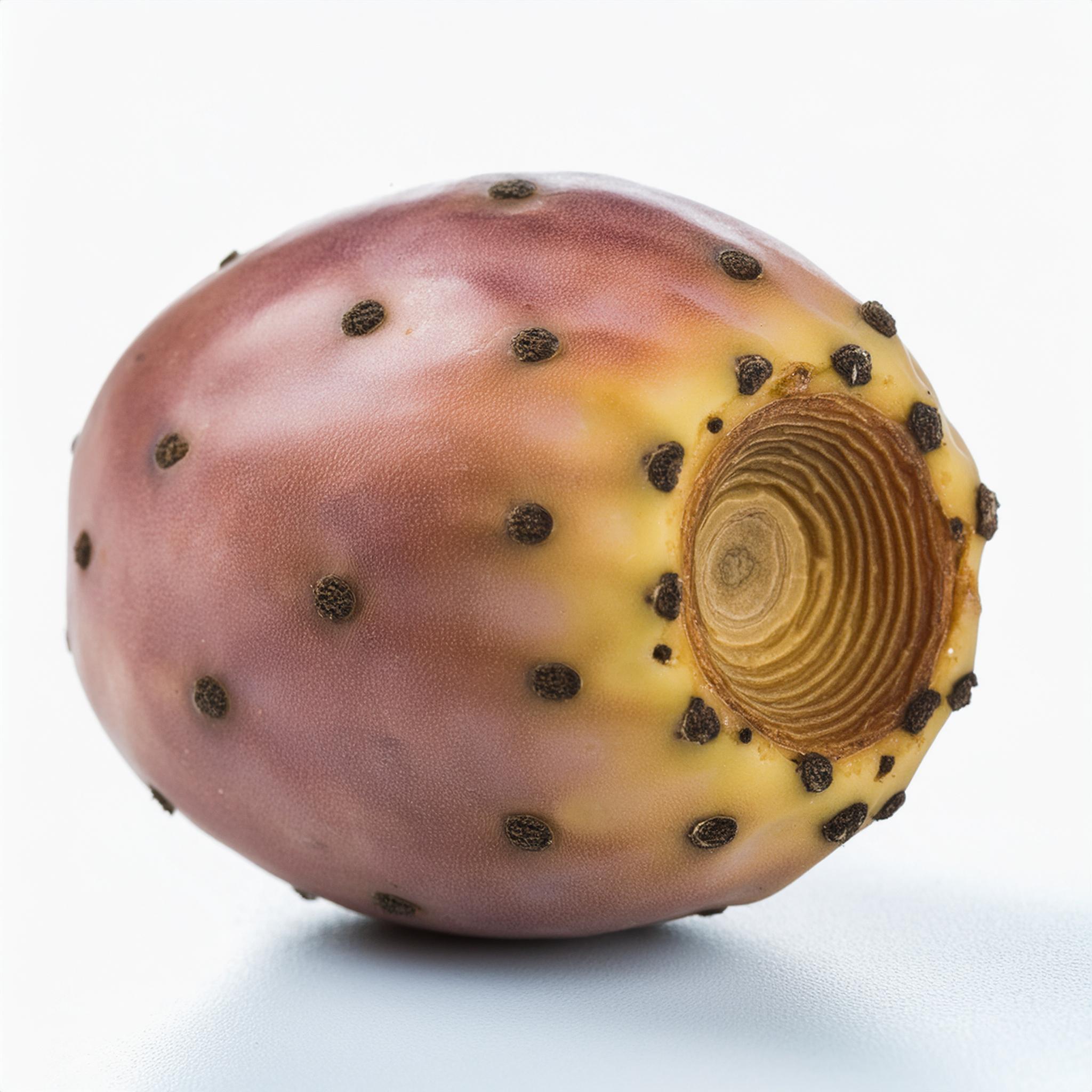
Prickly pear seed oil comes from the tiny seeds of the tuna fruit of Opuntia ficus-indica, the nopal cactus of Mexico. It takes roughly a tonne of fruit to press a single litre of oil.
Get to know Prickly Pear
- Source
- Fruit seed
- Origin
- Native to Mexico
- Extraction
- Cold-pressed
- Texture
- Light, dry, fast-absorbing
What it is
Prickly Pear is a botanical carrier oil used in hair and skin care.
Why it belongs in your routine
Light, dry seed oil from the fruit of the Mexican nopal cactus.
How to use
Warm a few drops between your palms and smooth over hair or skin. Patch test before use.
Where Prickly Pear comes from
Prickly pear seed oil comes from Opuntia ficus-indica, known in Mexico as nopal. This cactus has flat, paddle-shaped stems called pencas, covered in spines and tiny hooked bristles, and grows up to about 5 metres tall. It was domesticated in central Mexico, where it appears on the national flag, and the country remains the largest grower of its fruit, known as tuna.
The oil is pale yellow to golden with a light, green, slightly herbal scent. It is high in linoleic acid, often around 60 percent or more, and naturally contains vitamin E and plant sterols. It feels light and absorbs quickly, so it is used in face oils, serums, eye area products and light hair oils.
Sourcing & extraction
How Prickly Pear is sourced and extracted
Why it is rare
The tiny seeds contain only around 5 percent oil. Roughly 1,000 kg of fruit is needed to recover enough seed for one litre of oil, and the seeds must be separated from the pulp, washed and dried by hand or with simple equipment.
How it is gathered
In Mexico, nopal is grown in plantations and gardens across states such as the State of Mexico, Zacatecas, Puebla and Hidalgo. The tuna harvest usually runs from about June to September. Pickers wear gloves and use tongs or blades to twist the spiny fruits off the pads, and the fruit is brushed to remove the glochids before sale. For seed oil, the fruit is peeled and pulped, and the seeds are separated, washed and sun-dried before pressing.
How it is made
Cold-pressed from the seed
- Ripe tunas are picked, brushed free of spines and peeled, and the pulp is mashed to free the seeds.
- The seeds are washed clean of pulp and dried in the sun or in low-heat dryers.
- The dry, very hard seeds are fed through a screw press that slowly squeezes out the small amount of oil.
- The oil is left to settle, then filtered and bottled in dark glass.
How to use Prickly Pear
- Start with a few drops and warm them between your palms.
- Massage into clean skin, or work through the lengths of damp or dry hair.
- Use on its own, or add a few drops to your moisturizer or conditioner.
For external use only. Patch test on a small area before first use and stop if irritation occurs. If you are pregnant, nursing or have a medical condition, ask a healthcare professional before use.
From ingredient to routine
Products with Prickly Pear
Find this ingredient in our collection.


Questions about Prickly Pear
Where does Prickly Pear come from?
In Mexico, nopal is grown in plantations and gardens across states such as the State of Mexico, Zacatecas, Puebla and Hidalgo. The tuna harvest usually runs from about June to September. Pickers wear gloves and use tongs or blades to twist the spiny fruits off the pads, and the fruit is brushed to remove the glochids before sale. For seed oil, the fruit is peeled and pulped, and the seeds are separated, washed and sun-dried before pressing.
How is Prickly Pear extracted?
Cold-pressed from the seed. Ripe tunas are picked, brushed free of spines and peeled, and the pulp is mashed to free the seeds. The seeds are washed clean of pulp and dried in the sun or in low-heat dryers. The dry, very hard seeds are fed through a screw press that slowly squeezes out the small amount of oil. The oil is left to settle, then filtered and bottled in dark glass.
Why is Prickly Pear considered rare?
The tiny seeds contain only around 5 percent oil. Roughly 1,000 kg of fruit is needed to recover enough seed for one litre of oil, and the seeds must be separated from the pulp, washed and dried by hand or with simple equipment.