The Ingredient Library
Licuri
Syagrus coronata
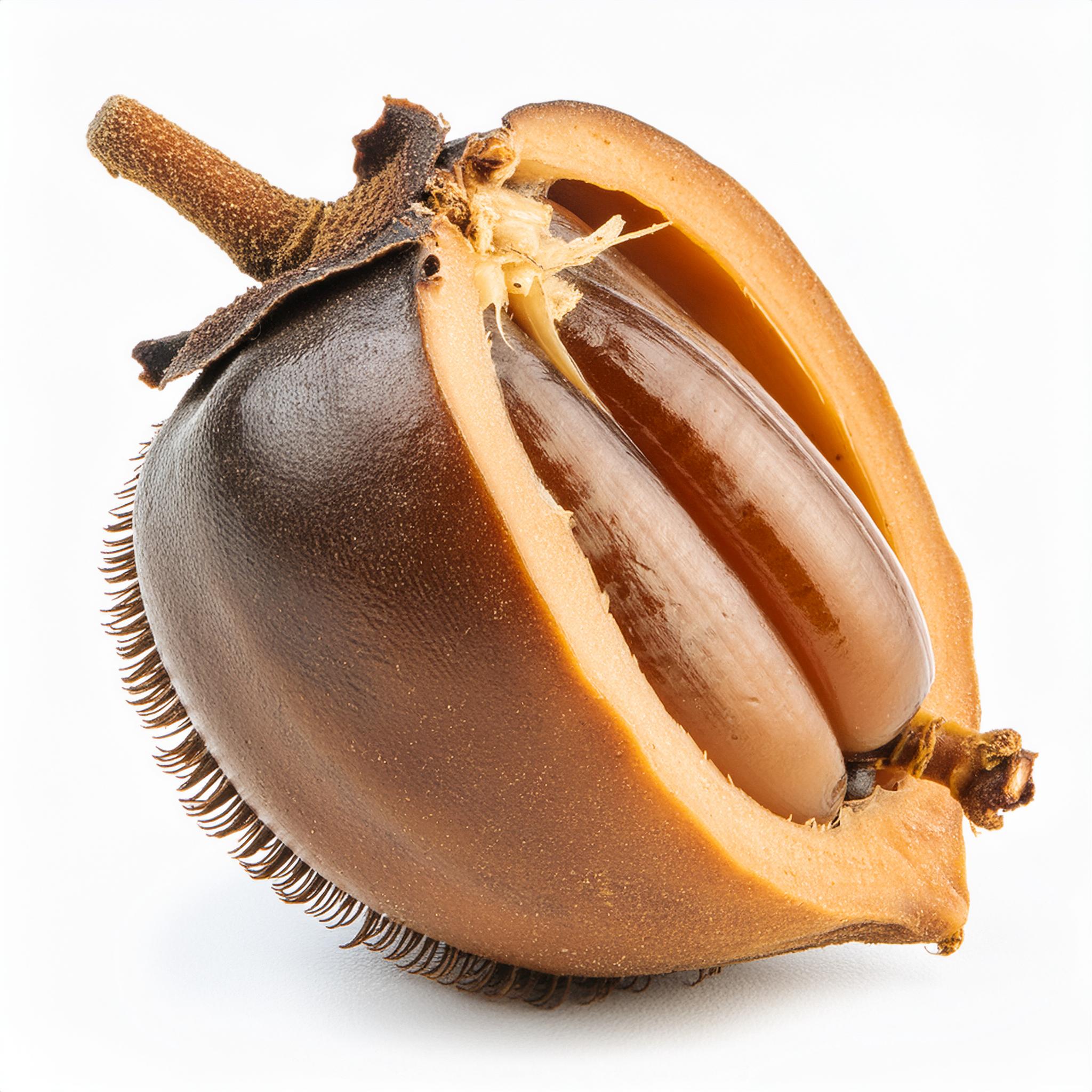
Licuri oil is pressed from the small kernels of the licuri palm, which grows in the dry caatinga of north-east Brazil, where families crack the hard nuts one at a time with stones.
Get to know licuri oil
- Source
- Palm nut kernel
- Origin
- Bahia, Brazil
- Extraction
- Pressed from kernel
- Texture
- Light, fluid, coconut-like
What it is
Licuri is a botanical carrier oil used in hair and skin care.
Why it belongs in your routine
Light, coconut-scented palm kernel oil from the Brazilian caatinga.
How to use
Warm a few drops between your palms and smooth over hair or skin. Patch test before use.
Where does licuri oil come from?
The licuri palm, Syagrus coronata, grows from southern Pernambuco through Bahia into northern Minas Gerais in eastern Brazil. It reaches 3 to 12 metres, and its old leaf bases spiral up the trunk in a crown-like pattern. The palm carries heavy bunches of small fruits for much of the year, each holding a kernel about 2 cm across that tastes strongly of coconut.
Licuri oil is pale yellow and fluid, with a mild coconut aroma. Like coconut and babassu oil, it is rich in lauric acid, alongside other medium-chain fatty acids, which gives it a light, fast-absorbing feel. In the caatinga it is used for cooking and soap making, and in body care it goes into hair oils, lotions and bar soaps.
Sourcing & extraction
How licuri oil is sourced and extracted
Why it is rare
Licuri grows only in north-east Brazil and is gathered from wild groves, not plantations. Every nut is cracked by hand, and the palm is also the main food of the endangered Lear's macaw, so the fruit has to be shared with wildlife.
How it is gathered
In the Piemonte da Diamantina region of Bahia, harvesting usually runs from January to May. Collectors, many of them women from small rural communities, cut the bunches with knives or sickles and carry them home in woven baskets or by mule. The fruit is dried, then each nut is cracked by hand between stones, often seated in the shade of the trees. The kernels are sold to local cooperatives or pressed nearby for oil.
How it is made
Pressed from the dried kernel
- Ripe licuri bunches are cut from wild palms and the fruits are spread out to dry in the sun.
- Each dried nut is cracked by hand with a stone to free the small white kernel from its hard shell.
- The kernels are cleaned and dried again to lower their moisture, which helps the oil keep.
- The kernels are pressed in a mechanical expeller, and the oil is filtered or left to settle before bottling.
How to use licuri oil
- Start with a few drops and warm them between your palms.
- Massage into clean skin, or work through the lengths of damp or dry hair.
- Use on its own, or add a few drops to your moisturizer or conditioner.
For external use only. Patch test on a small area before first use and stop if irritation occurs. If you are pregnant, nursing or have a medical condition, ask a healthcare professional before use.
From ingredient to routine
Products with Licuri
Find this ingredient in our collection.

Questions about Licuri
Where does Licuri come from?
In the Piemonte da Diamantina region of Bahia, harvesting usually runs from January to May. Collectors, many of them women from small rural communities, cut the bunches with knives or sickles and carry them home in woven baskets or by mule. The fruit is dried, then each nut is cracked by hand between stones, often seated in the shade of the trees. The kernels are sold to local cooperatives or pressed nearby for oil.
How is Licuri extracted?
Pressed from the dried kernel. Ripe licuri bunches are cut from wild palms and the fruits are spread out to dry in the sun. Each dried nut is cracked by hand with a stone to free the small white kernel from its hard shell. The kernels are cleaned and dried again to lower their moisture, which helps the oil keep. The kernels are pressed in a mechanical expeller, and the oil is filtered or left to settle before bottling.
Why is Licuri considered rare?
Licuri grows only in north-east Brazil and is gathered from wild groves, not plantations. Every nut is cracked by hand, and the palm is also the main food of the endangered Lear's macaw, so the fruit has to be shared with wildlife.