The Ingredient Library
Laurel Berry
Laurus nobilis
Laurel berry oil is the green fruit oil of the bay laurel, traditionally made around Aleppo in Syria and Hatay in Turkey by boiling ripe berries and hand-skimming the oil, as used in Aleppo soap.
Get to know laurel berry oil
- Source
- Ripe berries (fruit)
- Origin
- Syria, Hatay (Turkey)
- Extraction
- Boiled and skimmed
- Texture
- Thick, soft-solid
What it is
Laurel Berry is a botanical carrier oil used in hair and skin care.
Why it belongs in your routine
Green, aromatic fruit oil from bay laurel, the soap oil of Aleppo.
How to use
Warm a few drops between your palms and smooth over hair or skin. Patch test before use.
Where does laurel berry oil come from?
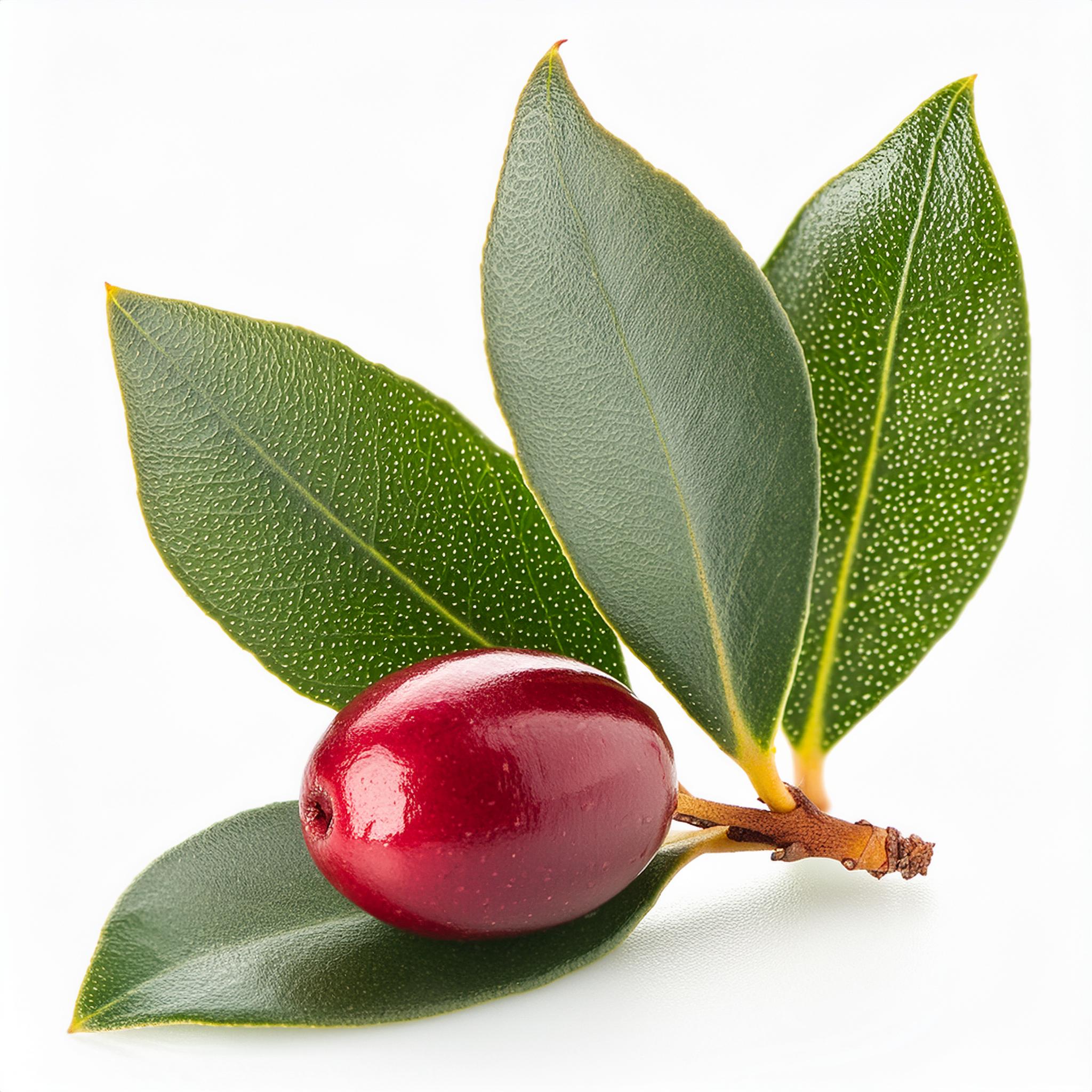
Bay laurel, Laurus nobilis, is an evergreen tree of the eastern Mediterranean, usually 5 to 15 metres tall, with the glossy, aromatic leaves used as bay leaves in cooking. Male and female flowers grow on separate trees, and female trees bear small oval berries that ripen from green to glossy black in autumn. It grows wild in the hills of north-west Syria and the Hatay province of southern Turkey.
Laurel berry oil is dark olive-green with a strong, spicy, bay-like smell. It is thick and turns soft-solid below about 21 degrees Celsius. It naturally contains oleic, linoleic, palmitic and lauric acids along with aromatic compounds from the fruit. It is best known as the laurel oil in Aleppo soap, and is also used in hair oils and balms.
Sourcing & extraction
How laurel berry oil is sourced and extracted
Why it is rare
Only female trees bear fruit, the berries ripen once a year in autumn, and the oil is still mostly made in small village batches by boiling and hand skimming. Supply from Syria in particular has been disrupted in recent years.
How it is gathered
Laurel berries are typically gathered each autumn from wild and village trees in the hills of north-west Syria and Hatay in Turkey, often by local families. Pickers shake or beat the branches and collect the ripe black berries from sheets on the ground. The berries are carried in sacks to village workshops, where they are boiled and skimmed within days of picking.
How it is made
Water extraction: boiled and skimmed
- Ripe black laurel berries are gathered in autumn, cleaned of leaves and twigs, and often crushed.
- The berries are boiled in large cauldrons of water until the oil separates and rises to the surface.
- Workers skim the green oil from the surface by hand, often over several boiling rounds.
- The skimmed oil is left to settle, separated from remaining water, and filtered before use.
How to use laurel berry oil
- Start with a few drops and warm them between your palms.
- Massage into clean skin, or work through the lengths of damp or dry hair.
- Use on its own, or add a few drops to your moisturizer or conditioner.
For external use only. Patch test on a small area before first use and stop if irritation occurs. If you are pregnant, nursing or have a medical condition, ask a healthcare professional before use.
From ingredient to routine
Products with Laurel Berry
Find this ingredient in our collection.

Questions about Laurel Berry
Where does Laurel Berry come from?
Laurel berries are typically gathered each autumn from wild and village trees in the hills of north-west Syria and Hatay in Turkey, often by local families. Pickers shake or beat the branches and collect the ripe black berries from sheets on the ground. The berries are carried in sacks to village workshops, where they are boiled and skimmed within days of picking.
How is Laurel Berry extracted?
Water extraction: boiled and skimmed. Ripe black laurel berries are gathered in autumn, cleaned of leaves and twigs, and often crushed. The berries are boiled in large cauldrons of water until the oil separates and rises to the surface. Workers skim the green oil from the surface by hand, often over several boiling rounds. The skimmed oil is left to settle, separated from remaining water, and filtered before use.
Why is Laurel Berry considered rare?
Only female trees bear fruit, the berries ripen once a year in autumn, and the oil is still mostly made in small village batches by boiling and hand skimming. Supply from Syria in particular has been disrupted in recent years.