The Ingredient Library
Baobab
Adansonia digitata
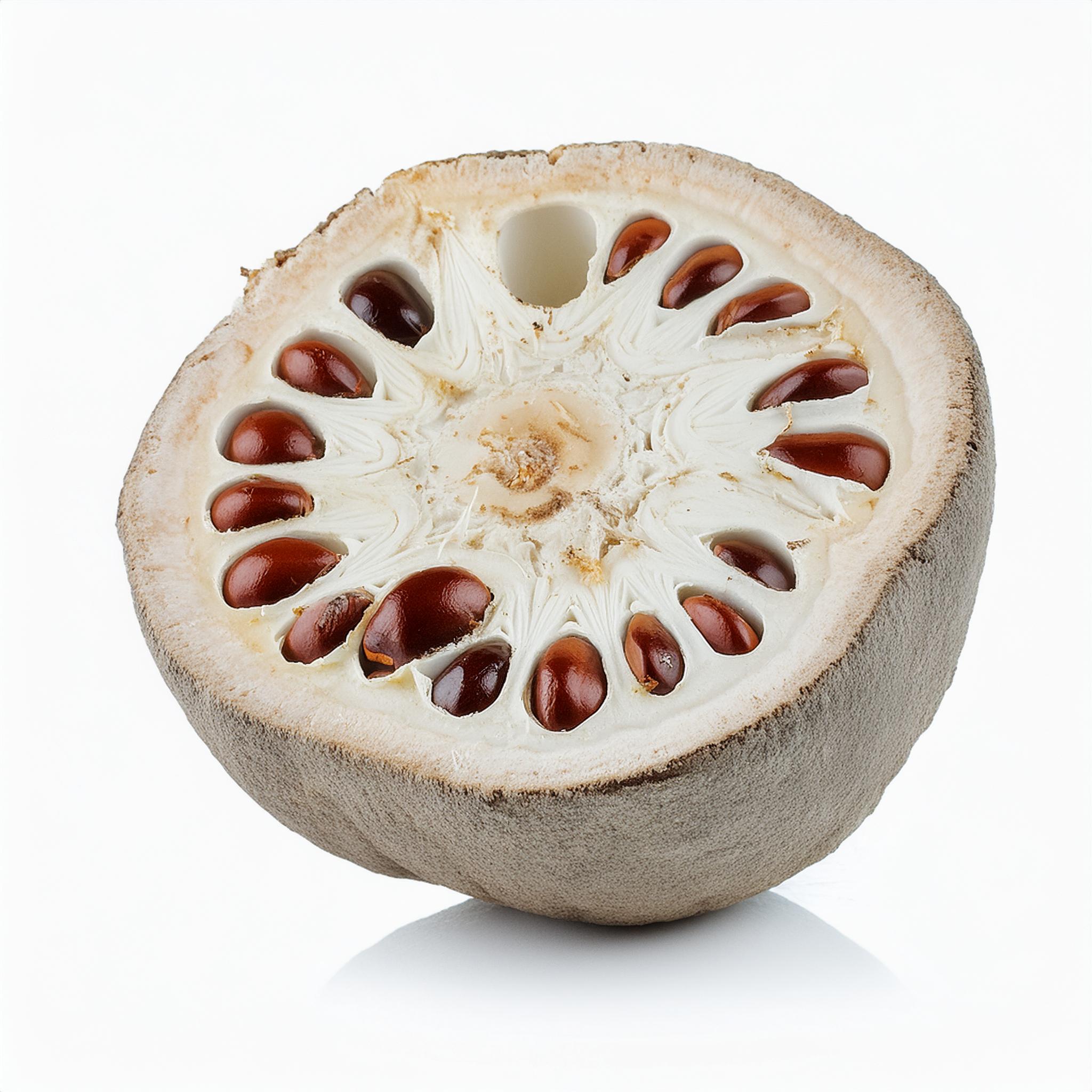
Baobab oil is pressed from the hard seeds of the African baobab, a savanna tree that can live for over a thousand years, and the seeds are gathered by rural families across Africa.
Get to know baobab oil
- Source
- Seed
- Origin
- Sub-Saharan Africa
- Extraction
- Cold-pressed
- Texture
- Medium, soft
What it is
Baobab is a botanical carrier oil used in hair and skin care.
Why it belongs in your routine
Golden, soft oil pressed from the seeds of Africa's baobab tree.
How to use
Warm a few drops between your palms and smooth over hair or skin. Patch test before use.
Where does baobab oil come from?
The African baobab, Adansonia digitata, grows across the dry savannas of sub-Saharan Africa, from Senegal to Sudan and south to Malawi, Zimbabwe and northern South Africa. It has a huge, swollen trunk that stores water and can reach 20 metres in height. Large velvety pods hang from long stalks, and inside a dry, chalky white pulp surrounds dozens of hard, kidney-shaped seeds.
Baobab oil is golden yellow with a mild, slightly nutty smell. Its fatty acids fall into roughly equal thirds of oleic, linoleic and palmitic acid, and it naturally contains vitamin E and plant sterols. It has a medium, soft feel that absorbs steadily without a heavy film. Baobab oil is used in face and body oils, creams, lip balms and hair oils.
Sourcing & extraction
How baobab oil is sourced and extracted
Why it is rare
Baobab trees are almost never farmed, so nearly all seed comes from wild trees. The seeds are small, very hard and hold only about 10 to 12 percent oil, so a large weight of seed is needed for each litre of baobab oil.
How it is gathered
Baobab fruit dries naturally on the tree, and rural communities, often women, collect the pods during the dry season, roughly May to October in southern Africa. The shells are cracked open and the pulp and seeds are removed. The pulp is sold as a food powder, while the seeds are washed free of remaining pulp, sun-dried and sold to local processors. Main source countries include Malawi, Zimbabwe, Mozambique, Senegal and Burkina Faso.
How it is made
Cold-pressed from the seed
- Baobab pods are cracked open and the chalky pulp is separated from the hard seeds inside.
- The seeds are washed, dried in the sun and cleaned of any remaining pulp and fibre.
- Dried seeds are fed through a screw press, which squeezes out a small amount of golden oil.
- The oil is settled and filtered to remove seed particles, giving a clear, golden baobab oil.
How to use baobab oil
- Start with a few drops and warm them between your palms.
- Massage into clean skin, or work through the lengths of damp or dry hair.
- Use on its own, or add a few drops to your moisturizer or conditioner.
For external use only. Patch test on a small area before first use and stop if irritation occurs. If you are pregnant, nursing or have a medical condition, ask a healthcare professional before use.
From ingredient to routine
Products with Baobab
Find this ingredient in our collection.
Questions about Baobab
Where does Baobab come from?
Baobab fruit dries naturally on the tree, and rural communities, often women, collect the pods during the dry season, roughly May to October in southern Africa. The shells are cracked open and the pulp and seeds are removed. The pulp is sold as a food powder, while the seeds are washed free of remaining pulp, sun-dried and sold to local processors. Main source countries include Malawi, Zimbabwe, Mozambique, Senegal and Burkina Faso.
How is Baobab extracted?
Cold-pressed from the seed. Baobab pods are cracked open and the chalky pulp is separated from the hard seeds inside. The seeds are washed, dried in the sun and cleaned of any remaining pulp and fibre. Dried seeds are fed through a screw press, which squeezes out a small amount of golden oil. The oil is settled and filtered to remove seed particles, giving a clear, golden baobab oil.
Why is Baobab considered rare?
Baobab trees are almost never farmed, so nearly all seed comes from wild trees. The seeds are small, very hard and hold only about 10 to 12 percent oil, so a large weight of seed is needed for each litre of baobab oil.