

What does organic mean in skincare? In the United States, less than most shoppers assume. The Food and Drug Administration, which regulates cosmetics, does not define the word at all. The definition comes from the USDA National Organic Program, the farm standard written for food, and it reaches a face oil or a hair butter only when the product is made from agricultural ingredients and claims to meet that standard.
This guide covers the rules behind organic skincare and hair care labels, the four USDA label tiers, how COSMOS and Ecocert certification work outside the US, and what an organic claim does and does not tell you about the product in the bottle.
What does organic mean in skincare, legally?
Organic is a farming term. Under USDA rules a crop is organic when it is grown without synthetic fertilisers and most synthetic pesticides, without genetic engineering, irradiation or sewage sludge, on land that has been free of prohibited substances for three years. A USDA-accredited certifier inspects the farm, and the companies that process the crop afterwards are certified as well.
The USDA sets out where its authority stops in its fact sheet on organic cosmetics. The FDA does not define or regulate the word organic for cosmetics, body care or personal care products. The USDA does, and only for products made of agricultural ingredients that claim to meet the organic standard. A lotion built mostly from water, minerals and lab-made ingredients sits outside that system.
The four USDA organic label tiers
A skincare product that does qualify falls into one of four categories. Water and salt are left out of the calculation.
| Label wording | Organic content | USDA Organic seal |
|---|---|---|
| 100 percent organic | Every ingredient is organic | Allowed |
| Organic | At least 95 percent | Allowed |
| Made with organic ingredients | At least 70 percent | Not allowed |
| No organic claim on the front | Under 70 percent | Not allowed |
Products in the third tier can name up to three organic ingredients on the front of the pack. Products in the last tier can identify organic ingredients only in the ingredient list. A single-ingredient product is the simple case: a bottle of jojoba or argan oil either comes from a certified organic crop or it does not.
Organic vs natural skincare
The two words answer different questions. Organic describes how a plant was farmed, and it is backed by a legal standard and an inspection. Natural describes where an ingredient came from. In US cosmetics law it has no definition, and no certifier stands behind it.
Some ingredients can be natural but never organic. Clay, salt and water are not farmed, so there is no organic version of them. Plants gathered from the wild are a separate case. The USDA has a wild-crop standard, and a wild harvest can be certified organic when the collection area has been free of prohibited substances for three years and the harvest does not damage the plant population.
Certified organic skincare outside the US: COSMOS and Ecocert
In Europe, organic skincare relies on a private standard instead of a farm law. COSMOS was set up by five bodies: BDIH in Germany, Cosmebio and Ecocert in France, ICEA in Italy and the Soil Association in the UK. Ecocert and the Soil Association are among the certifiers that audit brands against it. The COSMOS standard has two levels:
- COSMOS Organic: at least 95 percent of the physically processed agricultural ingredients must be organic, and at least 20 percent of the whole product must be organic. Rinse-off products such as shampoo need 10 percent.
- COSMOS Natural: limits which ingredients and processes are allowed, with no minimum organic content.
The 20 percent figure looks low next to the USDA’s 95 percent because COSMOS counts water in the total and the USDA leaves it out. A cream that is two thirds water cannot score high, however its oils were grown.
How to read an organic skincare label
- Find the certifier. A certified product names who certified it: a USDA-accredited certifier, Ecocert, the Soil Association or another COSMOS body.
- Read the ingredient list. Ingredients appear in descending order of quantity, and organic ones are usually marked with an asterisk.
- Check the wording. “Organic” and “made with organic ingredients” are two separate tiers with a 25 point gap between them.
- Look at what the product is. For a pure oil or butter the claim covers the whole bottle. For a cream or shampoo it covers a share of the formula.
Does organic skincare work better?
Organic skincare certification describes farming and handling. It does not measure how a product feels or performs. Organic and conventional sunflower oil are both mostly linoleic and oleic acid, and on the skin they feel much the same. Texture, scent and colour depend more on the plant variety, on whether the oil was cold-pressed or refined, and on how fresh it is.
What the word does tell you is how the crop was grown, and that someone independent checked the paperwork from field to bottle. For many buyers that is reason enough, and it is a different reason from how the oil feels on the skin.
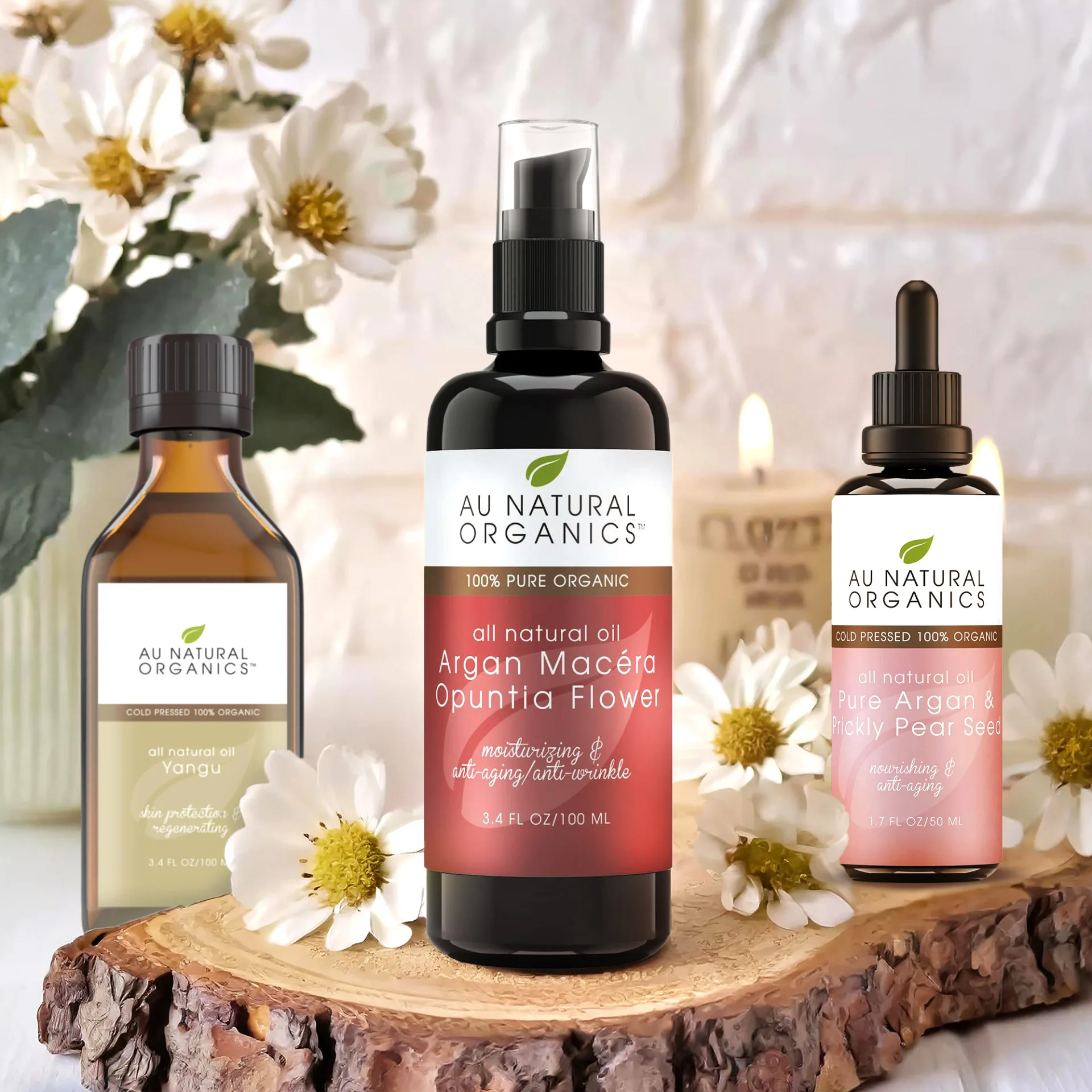
Organic oils and butters at Au Natural Organics
Most of what we sell is a single ingredient: one carrier oil, one body butter or one essential oil per bottle, which keeps the label short. Our ingredient library covers where each plant grows and how its oil is pressed or distilled.
Organic skincare FAQs
Is organic skincare regulated by the FDA?
The FDA regulates cosmetics for safety and labelling, but it does not define organic. The USDA does, through the National Organic Program.
Can a product with 70 percent organic ingredients carry the USDA seal?
No. It can say “made with organic ingredients” on the front, without the seal. The seal starts at 95 percent.
Is natural the same as organic?
No. Natural has no legal definition in US cosmetics. Organic is defined by the USDA and checked by a certifier.


Leave a comment
You must be logged in to post a comment.