
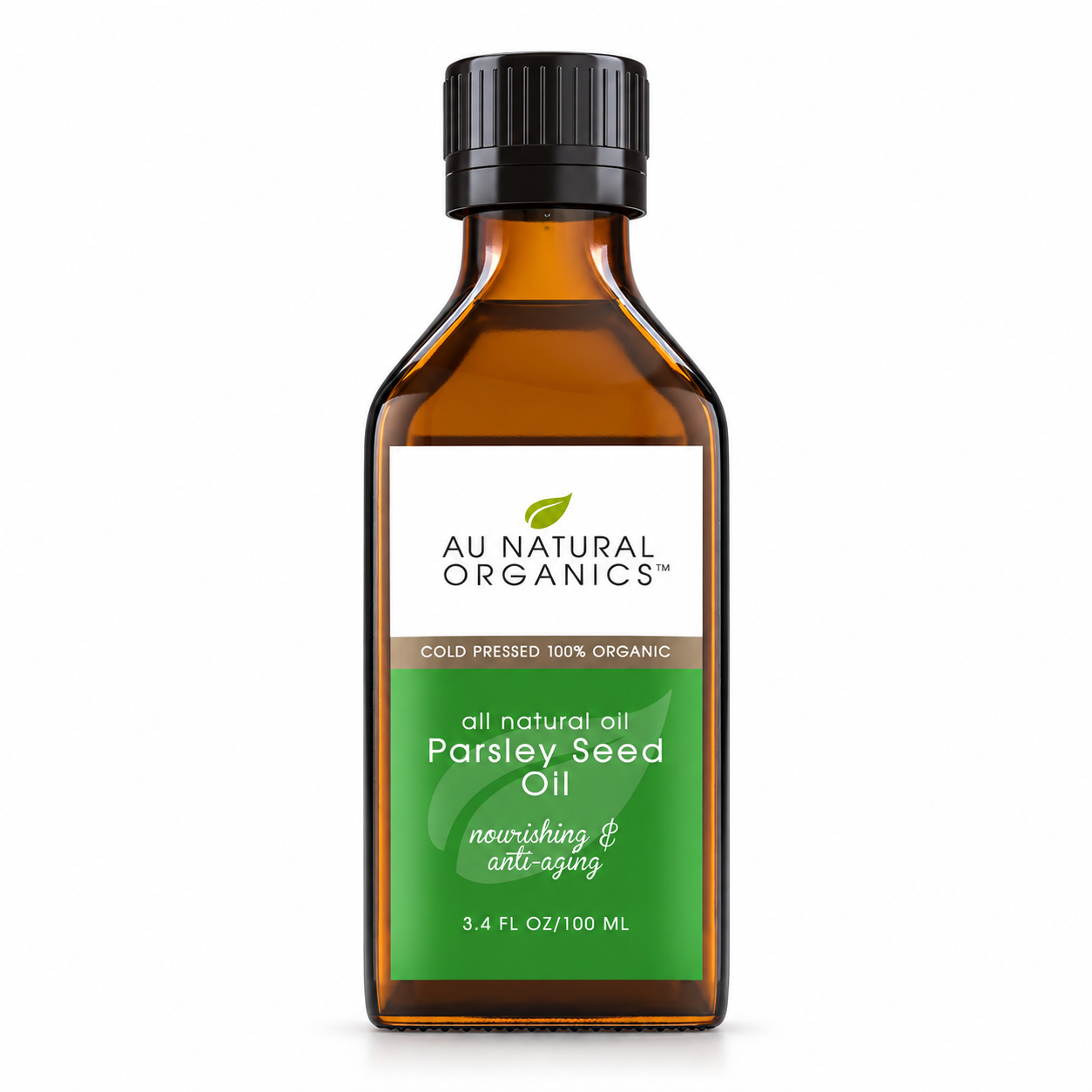
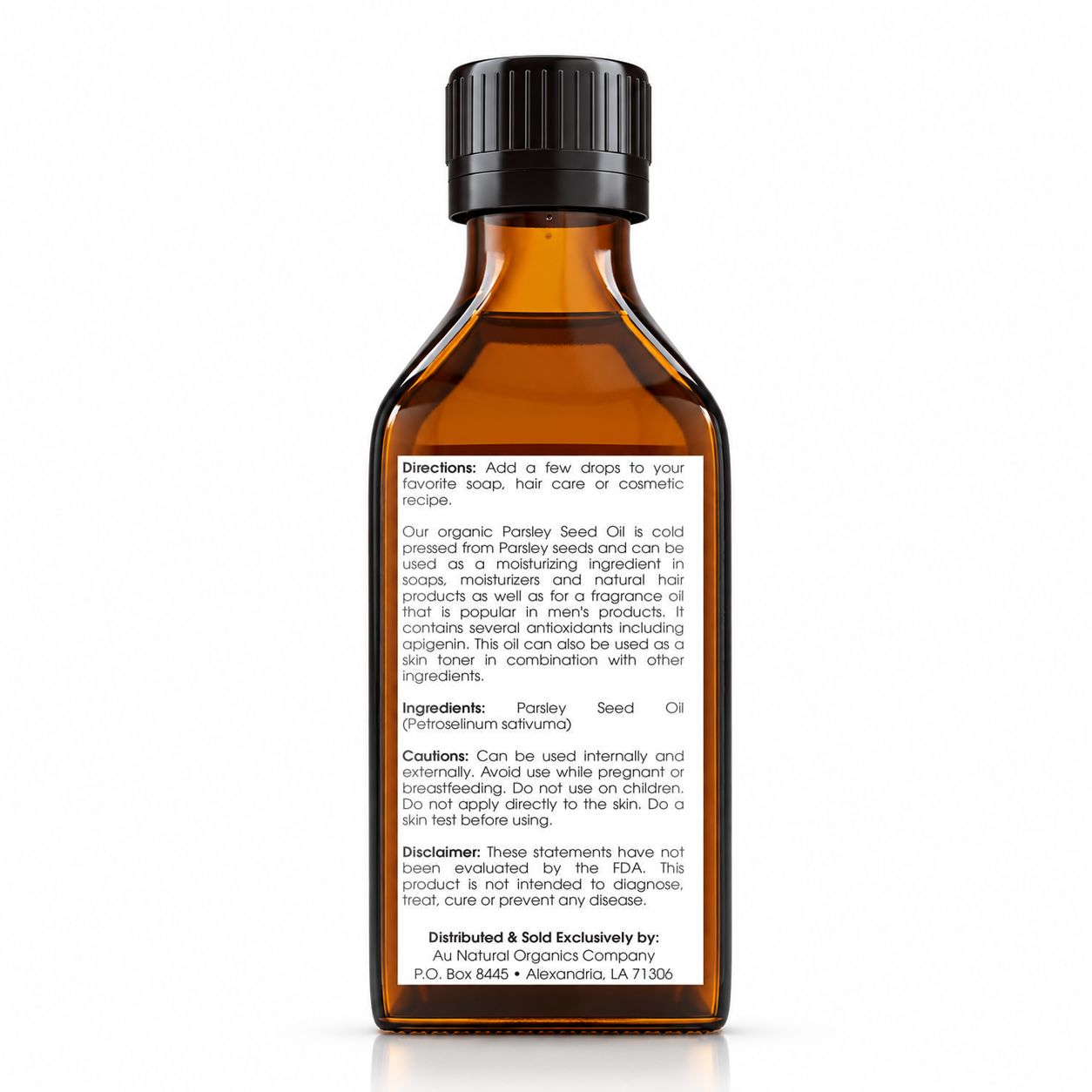
Description
Parsley is usually cut for its leaves before it flowers. Left to grow into a second year, it sends up flowering stems up to a metre tall, topped with flat clusters of small yellow-green flowers that ripen into tiny ridged seeds. Specialist seed farmers cut the plants when most heads have turned brown, dry and thresh them, and part of the seed goes to small presses. Parsley seed oil is golden to greenish yellow with a faint herbal smell. Well over half of it is petroselinic acid, a fatty acid named after parsley and uncommon outside the carrot family.
Details
| Botanical name | Petroselinum crispum (parsley) |
|---|---|
| Origin | Europe, Mediterranean |
| Part used | Seed |
| Extraction | Cold-pressed |
| Texture | Light, dry finish |
| Ingredients | 100% Petroselinum crispum seed oil |
Why supply is limited: only fields left to go to seed in their second year supply the oil, and the tiny seeds ripen unevenly, which makes harvesting slow.
How to use
- Face: press 2 to 3 drops into clean skin.
- Body: smooth a few drops over dry areas.
- Blends: add to face oils and serums.
Patch test on the inner arm before first use. Keep away from the eyes. Store somewhere cool and dark with the cap closed.
FAQs
Is this parsley essential oil?
No. It is a carrier oil pressed from the seed, not a steam-distilled essential oil.
What is petroselinic acid?
A fatty acid named after parsley, Petroselinum. It makes up well over half of this oil.
Does it smell of parsley?
Only faintly, with a light herbal note.
Reviews
There are no reviews yet.