The Ingredient Library
Parsley Seed
Petroselinum crispum
Parsley seed oil is pressed from the tiny ribbed seeds of the parsley plant, grown as a seed crop in Europe and around the Mediterranean. Most of its fat is petroselinic acid, a fatty acid named after parsley.
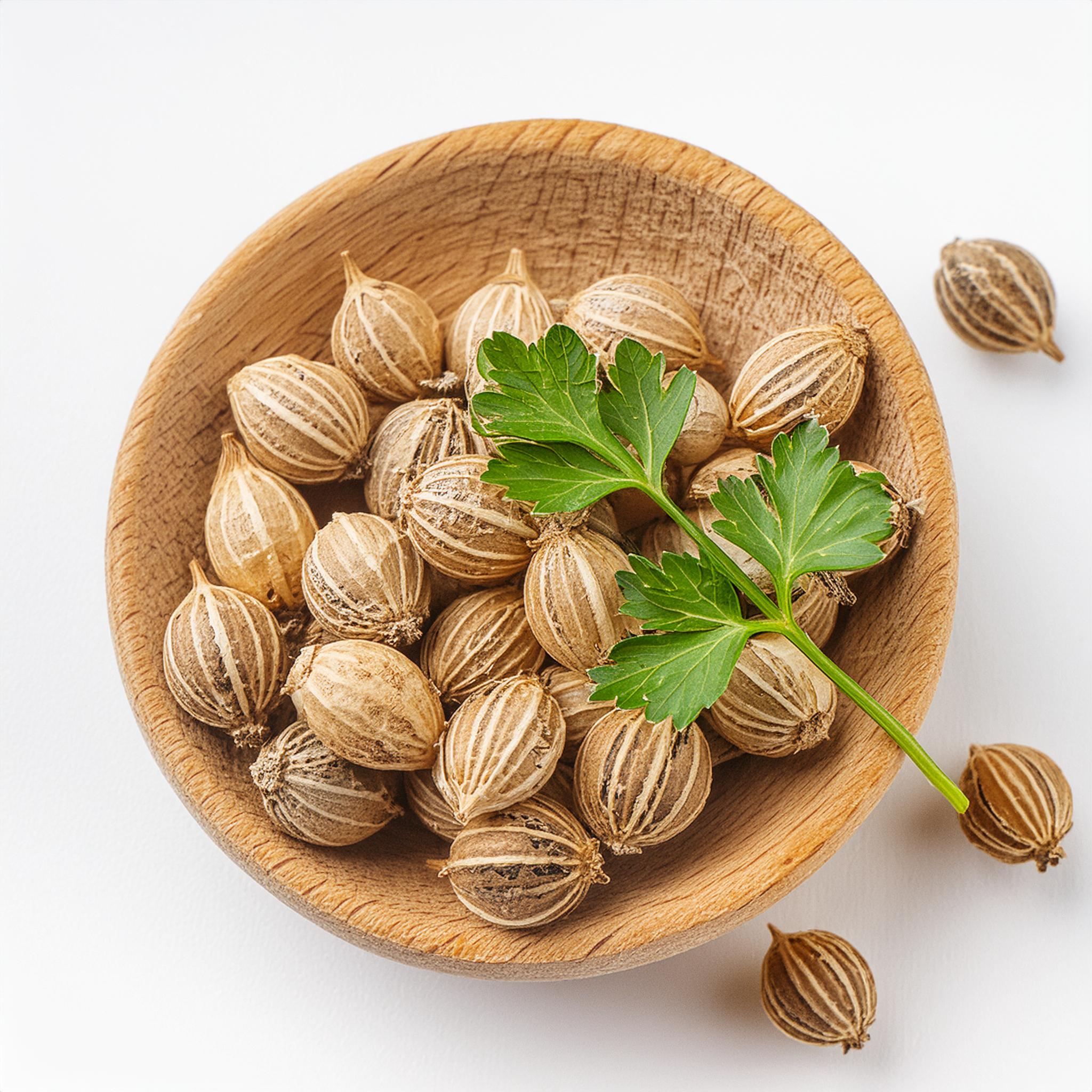
Get to know parsley seed oil
- Source
- Seed
- Origin
- Europe, Mediterranean
- Extraction
- Cold-pressed
- Texture
- Light, dry finish
What it is
Parsley Seed is a botanical carrier oil used in hair and skin care.
Why it belongs in your routine
Light carrier oil pressed from parsley seed, rich in petroselinic acid.
How to use
Warm a few drops between your palms and smooth over hair or skin. Patch test before use.
Where does parsley seed oil come from?
Parsley seed oil comes from Petroselinum crispum, the kitchen herb of the carrot family, native to the eastern Mediterranean. Left to grow into its second year, a parsley plant sends up a flowering stem up to about a metre tall, topped by flat umbrella-shaped clusters of small yellow-green flowers. These ripen into tiny, grey-brown, ridged seeds, which are grown as a seed crop in Europe and around the Mediterranean.
The pressed oil is golden to greenish yellow with a faint, herbal smell. Its most unusual feature is petroselinic acid, a fatty acid named after parsley that makes up well over half of the oil and is uncommon outside the carrot family. The oil feels light and absorbs fairly quickly. It is used in face oils, serums and light body oils.
Sourcing & extraction
How parsley seed oil is sourced and extracted
Why it is rare
Parsley is usually grown for its leaves and cut before it flowers, so only fields left to go to seed in their second year supply the oil. The seeds are very small, and their ripening across a single plant is uneven, which makes harvesting slow.
How it is gathered
Seed parsley is usually grown by specialist seed farmers. The plants are sown one year, overwintered, and flower the following summer. When most of the seed heads have turned brown, usually in mid to late summer, the plants are cut and left to dry in swaths or bundles before threshing. The cleaned seed is sold into the spice, seed and oil trades, and part of it goes to small presses for parsley seed oil.
How it is made
Cold-pressed from the seed
- Ripe parsley seed heads are cut, dried and threshed, and the seed is cleaned of stalks and chaff.
- The seed is fed into a screw press, which crushes it slowly and squeezes out the oil without added heat.
- The fresh oil is left to settle so fine seed particles sink to the bottom.
- The clear oil is filtered and bottled, ideally in dark glass to protect it from light.
How to use parsley seed oil
- Start with a few drops and warm them between your palms.
- Massage into clean skin, or work through the lengths of damp or dry hair.
- Use on its own, or add a few drops to your moisturizer or conditioner.
For external use only. Patch test on a small area before first use and stop if irritation occurs. If you are pregnant, nursing or have a medical condition, ask a healthcare professional before use.
From ingredient to routine
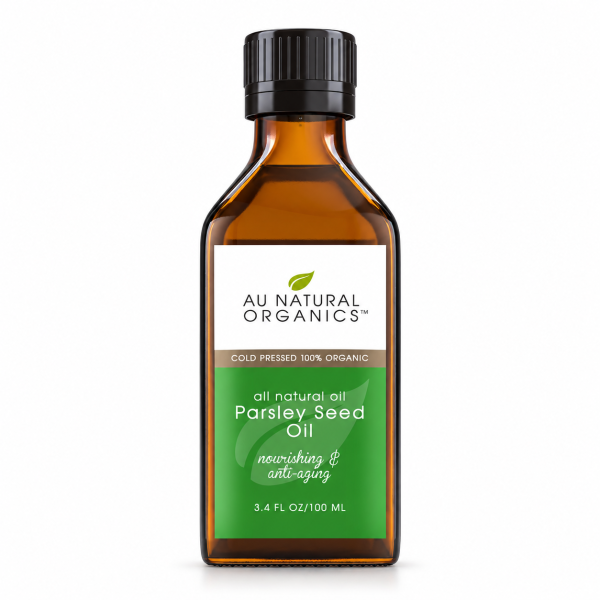
Products with Parsley Seed
Find this ingredient in our collection.
Questions about Parsley Seed
Where does Parsley Seed come from?
Seed parsley is usually grown by specialist seed farmers. The plants are sown one year, overwintered, and flower the following summer. When most of the seed heads have turned brown, usually in mid to late summer, the plants are cut and left to dry in swaths or bundles before threshing. The cleaned seed is sold into the spice, seed and oil trades, and part of it goes to small presses for parsley seed oil.
How is Parsley Seed extracted?
Cold-pressed from the seed. Ripe parsley seed heads are cut, dried and threshed, and the seed is cleaned of stalks and chaff. The seed is fed into a screw press, which crushes it slowly and squeezes out the oil without added heat. The fresh oil is left to settle so fine seed particles sink to the bottom. The clear oil is filtered and bottled, ideally in dark glass to protect it from light.
Why is Parsley Seed considered rare?
Parsley is usually grown for its leaves and cut before it flowers, so only fields left to go to seed in their second year supply the oil. The seeds are very small, and their ripening across a single plant is uneven, which makes harvesting slow.