The Ingredient Library
Sage
Salvia officinalis
Sage essential oil is steam-distilled from the grey-green leaves of common sage, a hardy shrub gathered on the rocky limestone hills of the Dalmatian coast and the Balkans.

Get to know sage essential oil
- Source
- Leaves and tops
- Origin
- Croatia and Balkans
- Extraction
- Steam-distilled
- Aroma
- Herbal, warm, camphor
What it is
Sage is an aromatic essential oil distilled from the plant.
Why it belongs in your routine
Herbal, camphor-like oil distilled from Balkan sage leaves.
How to use
Always dilute in a carrier oil before it touches skin. Never use undiluted. Patch test first.
Where does sage essential oil come from?
Common sage, often called Dalmatian sage, is a low woody shrub with velvety grey-green leaves and violet-blue flowers. It is native to the northern Mediterranean and grows wild in great numbers on the dry karst hills of Croatia, Albania, Montenegro and Bosnia. The same plant is grown in gardens across Europe as a kitchen herb, but the wild Balkan stands supply much of the leaf used for sage oil.
Sage essential oil is pale yellow with a warm, herbal, camphor-like scent. Its main constituents are usually alpha- and beta-thujone, camphor and 1,8-cineole, in proportions that vary with region and season. Because of its thujone content it is used at low levels, mainly in soaps, hair rinses, men's fragrances and room scents rather than in face care.
Sourcing & extraction
How sage essential oil is sourced and extracted
Why it is rare
Much of the leaf is still gathered from wild plants on steep, stony ground, which limits how much can be collected. The thujone and camphor balance also changes from hillside to hillside, so distillers select and blend lots carefully.
How it is gathered
Most sage oil comes from the Balkans. In Croatia, Albania and neighbouring countries, local collectors typically cut the leafy stems of wild sage by hand in late spring and early summer, around flowering. The bundles are dried or partly dried in the shade and sold to buyers who supply regional distilleries. Some sage is also grown on farms, and those fields are cut with small machines.
How it is made
Steam-distilled from the leaves
- Leafy stems of sage are cut around flowering and dried or part-dried in the shade to reduce their water content.
- The herb is loaded into a still, and low-pressure steam is passed through it to release the oil from the leaf glands.
- The vapour is cooled in a condenser, and the oil separates from the water in a collecting vessel.
- The oil is drawn off, filtered, and tested to check its thujone and camphor levels before it is packed.
How to use sage essential oil
- Add a few drops to a diffuser for its aroma.
- For skin, dilute 1 to 2 drops in a teaspoon of carrier oil before applying.
- Keep away from eyes and never use undiluted on skin.
For external use only. Patch test on a small area before first use and stop if irritation occurs. If you are pregnant, nursing or have a medical condition, ask a healthcare professional before use.
From ingredient to routine
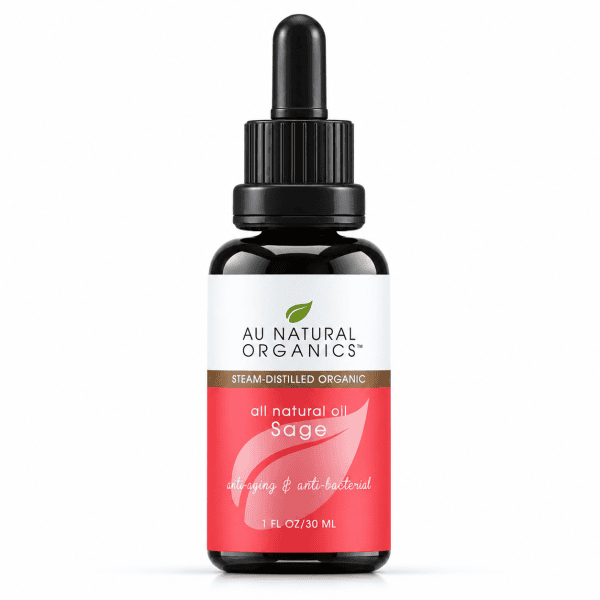
Products with Sage
Find this ingredient in our collection.
Questions about Sage
Where does Sage come from?
Most sage oil comes from the Balkans. In Croatia, Albania and neighbouring countries, local collectors typically cut the leafy stems of wild sage by hand in late spring and early summer, around flowering. The bundles are dried or partly dried in the shade and sold to buyers who supply regional distilleries. Some sage is also grown on farms, and those fields are cut with small machines.
How is Sage extracted?
Steam-distilled from the leaves. Leafy stems of sage are cut around flowering and dried or part-dried in the shade to reduce their water content. The herb is loaded into a still, and low-pressure steam is passed through it to release the oil from the leaf glands. The vapour is cooled in a condenser, and the oil separates from the water in a collecting vessel. The oil is drawn off, filtered, and tested to check its thujone and camphor levels before it is packed.
Why is Sage considered rare?
Much of the leaf is still gathered from wild plants on steep, stony ground, which limits how much can be collected. The thujone and camphor balance also changes from hillside to hillside, so distillers select and blend lots carefully.