The Ingredient Library
Passion Fruit
Passiflora edulis
Passion fruit seed oil, or maracuja oil, is pressed from the black seeds left after passion fruit is juiced, mostly in Brazil, the world's largest grower of the fruit. It is high in linoleic acid.
Get to know passion fruit seed oil
- Source
- Seed
- Origin
- Brazil, South America
- Extraction
- Cold-pressed
- Texture
- Light, dry, silky
What it is
Passion Fruit is a botanical carrier oil used in hair and skin care.
Why it belongs in your routine
Light, fast-absorbing maracuja oil pressed from Brazilian passion fruit seeds.
How to use
Warm a few drops between your palms and smooth over hair or skin. Patch test before use.
Where does passion fruit seed oil come from?
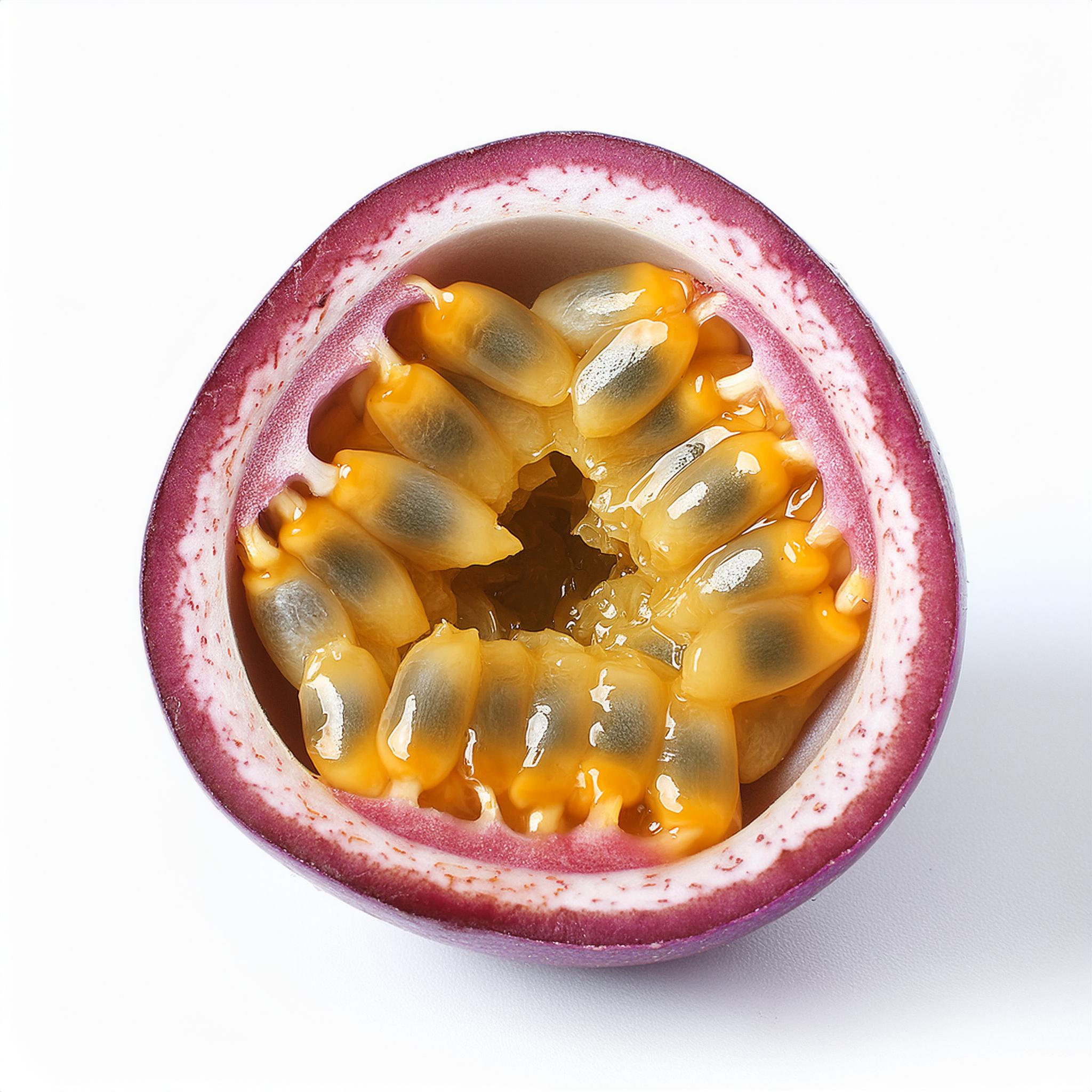
Passion fruit, Passiflora edulis, is a vigorous climbing vine native to South America, with three-lobed leaves, tendrils and showy white and purple flowers with a crown of fine filaments. The round fruits, purple or yellow, are filled with jelly-coated black seeds. Brazil grows more passion fruit than any other country, mainly the yellow form, known there as maracujá, much of it pressed for juice.
Passion fruit seed oil is pale yellow with a light, faintly fruity scent. It usually contains around 65 to 75 percent linoleic acid, along with oleic and palmitic acids and some vitamin E. The oil feels thin and dry and absorbs quickly, so it is used in face oils, serums, light body oils and in hair oils where a non-greasy finish is wanted.
Sourcing & extraction
How passion fruit seed oil is sourced and extracted
Why it is rare
Each fruit holds only a few grams of seed, and the seeds are small and hard. Passion fruit seed oil depends on the juice industry, so the seeds must be separated from the pulp, washed and dried quickly before they spoil.
How it is gathered
In Brazil, passion fruit is grown mainly by small and medium-sized farms in states such as Bahia, Ceará and Minas Gerais, with vines trained on wire trellises. The fruit ripens over much of the year and is picked or gathered after it drops. Most of it goes to juice and pulp factories, where the seeds are separated from the pulp. The seeds are then washed, dried and sent on to oil presses.
How it is made
Cold-pressed from the seed
- After juicing, the passion fruit seeds are separated from the pulp and washed to remove the jelly coating.
- The clean seeds are dried until their moisture is low enough for pressing and storage.
- A screw press crushes the dried seeds and squeezes out the oil at low temperature.
- The oil is left to settle, then filtered to remove fine particles and bottled.
How to use passion fruit seed oil
- Start with a few drops and warm them between your palms.
- Massage into clean skin, or work through the lengths of damp or dry hair.
- Use on its own, or add a few drops to your moisturizer or conditioner.
For external use only. Patch test on a small area before first use and stop if irritation occurs. If you are pregnant, nursing or have a medical condition, ask a healthcare professional before use.
From ingredient to routine
Products with Passion Fruit
Find this ingredient in our collection.

Questions about Passion Fruit
Where does Passion Fruit come from?
In Brazil, passion fruit is grown mainly by small and medium-sized farms in states such as Bahia, Ceará and Minas Gerais, with vines trained on wire trellises. The fruit ripens over much of the year and is picked or gathered after it drops. Most of it goes to juice and pulp factories, where the seeds are separated from the pulp. The seeds are then washed, dried and sent on to oil presses.
How is Passion Fruit extracted?
Cold-pressed from the seed. After juicing, the passion fruit seeds are separated from the pulp and washed to remove the jelly coating. The clean seeds are dried until their moisture is low enough for pressing and storage. A screw press crushes the dried seeds and squeezes out the oil at low temperature. The oil is left to settle, then filtered to remove fine particles and bottled.
Why is Passion Fruit considered rare?
Each fruit holds only a few grams of seed, and the seeds are small and hard. Passion fruit seed oil depends on the juice industry, so the seeds must be separated from the pulp, washed and dried quickly before they spoil.