The Ingredient Library
Lentiscus
Pistacia lentiscus
Lentiscus oil is a fixed oil pressed from the small black berries of the mastic shrub, gathered in winter from wild scrub in northern Tunisia, Algeria and Sardinia.
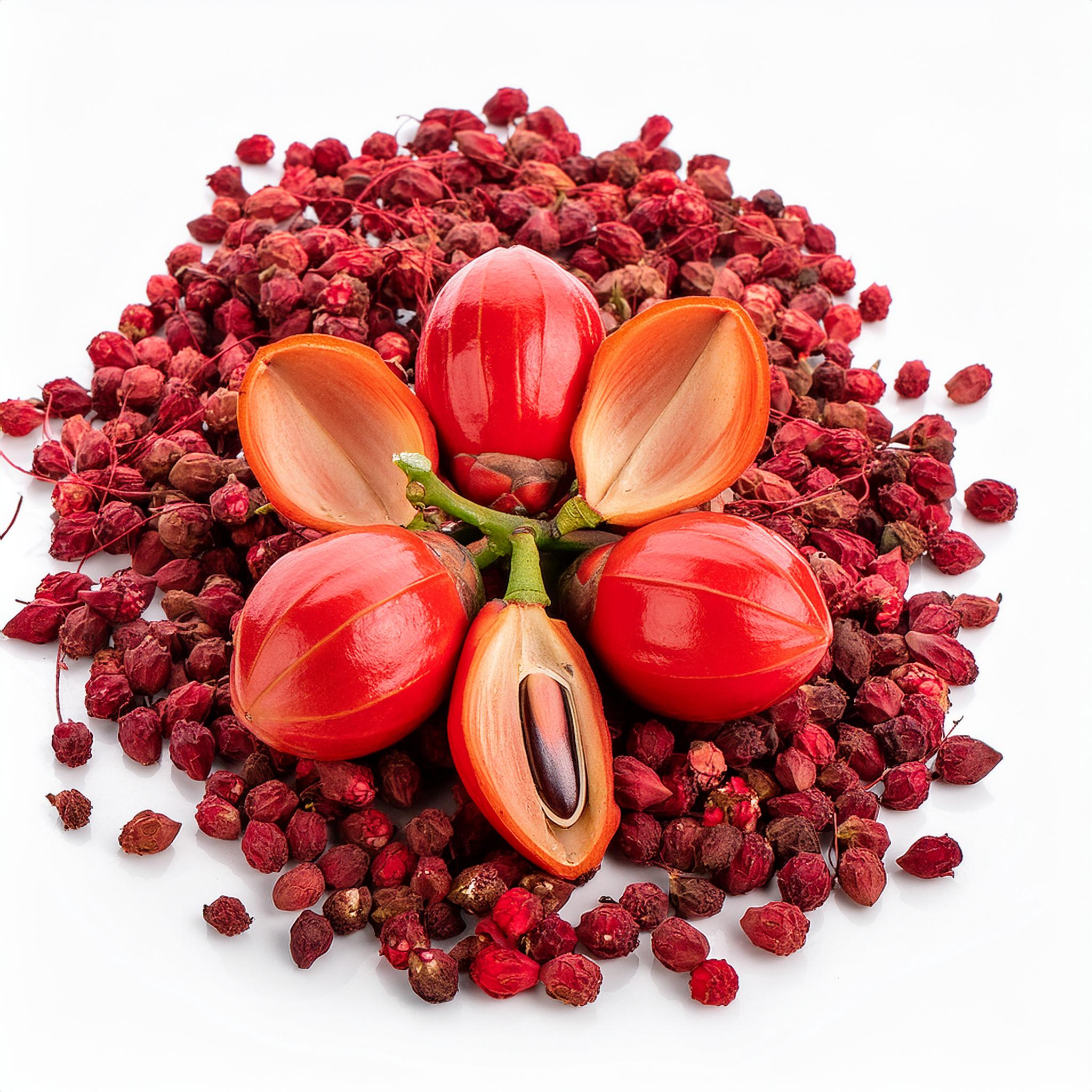
Get to know lentiscus oil
- Source
- Ripe berry
- Origin
- Tunisia, Sardinia
- Extraction
- Pressed from berries
- Texture
- Rich, green, medium weight
What it is
Lentiscus is an aromatic essential oil distilled from the plant.
Why it belongs in your routine
Green, rich berry oil from the wild mastic shrub of the Mediterranean.
How to use
Always dilute in a carrier oil before it touches skin. Never use undiluted. Patch test first.
Where does lentiscus oil come from?
Pistacia lentiscus, the lentisk or mastic tree, is an evergreen shrub of the Mediterranean maquis, usually 1 to 3 metres tall, with leathery paired leaflets and a resinous smell. In autumn it bears clusters of small berries that ripen from red to black. On the Greek island of Chios, one variety is tapped for mastic resin, and an essential oil is also distilled from the leaves and twigs elsewhere.
Our Lentiscus Oil is the fixed oil from the berries, not the resin or the essential oil. It is deep green to olive in colour, with a strong green, slightly resinous scent. Studies of Tunisian oil report oleic acid at about 42 to 48 percent, with linoleic and palmitic acids making up most of the rest. It is used in face oils, balms and soaps, and is also eaten locally in North Africa.
Sourcing & extraction
How lentiscus oil is sourced and extracted
Why it is rare
Lentisk berries are tiny, ripen unevenly and are gathered by hand from wild shrubs, and the oil is made in small, mostly family-scale batches. Production is local and seasonal, so only modest amounts ever reach outside markets.
How it is gathered
In northern Tunisia around Tabarka, in Kabylie in Algeria and in Sardinia, lentisk oil is traditionally a winter task done by rural families, often women. The ripe black berries are stripped from wild shrubs, usually between November and January, and cleaned of leaves and unripe fruit. Some are crushed and simmered with water at home in the old way; others go to small local presses that extract the oil mechanically.
How it is made
Pressed or boiled out of ripe berries
- Ripe black lentisk berries are picked by hand from wild shrubs in winter and sorted to remove leaves and red, unripe fruit.
- The berries are crushed into a paste, traditionally with a stone mill or pestle, today often in a small mechanical press.
- In the traditional method the paste is heated with water, so the oil separates and rises to the surface to be skimmed off.
- In pressed production the paste is squeezed directly, and the oil is left to settle so that solids and water drop out.
- The oil is filtered and stored in dark containers before bottling.
How to use lentiscus oil
- Add a few drops to a diffuser for its aroma.
- For skin, dilute 1 to 2 drops in a teaspoon of carrier oil before applying.
- Keep away from eyes and never use undiluted on skin.
For external use only. Patch test on a small area before first use and stop if irritation occurs. If you are pregnant, nursing or have a medical condition, ask a healthcare professional before use.
From ingredient to routine
Products with Lentiscus
Find this ingredient in our collection.

Questions about Lentiscus
Where does Lentiscus come from?
In northern Tunisia around Tabarka, in Kabylie in Algeria and in Sardinia, lentisk oil is traditionally a winter task done by rural families, often women. The ripe black berries are stripped from wild shrubs, usually between November and January, and cleaned of leaves and unripe fruit. Some are crushed and simmered with water at home in the old way; others go to small local presses that extract the oil mechanically.
How is Lentiscus extracted?
Pressed or boiled out of ripe berries. Ripe black lentisk berries are picked by hand from wild shrubs in winter and sorted to remove leaves and red, unripe fruit. The berries are crushed into a paste, traditionally with a stone mill or pestle, today often in a small mechanical press. In the traditional method the paste is heated with water, so the oil separates and rises to the surface to be skimmed off. In pressed production the paste is squeezed directly, and the oil is left to settle so that solids and water drop out. The oil is filtered and stored in dark containers before bottling.
Why is Lentiscus considered rare?
Lentisk berries are tiny, ripen unevenly and are gathered by hand from wild shrubs, and the oil is made in small, mostly family-scale batches. Production is local and seasonal, so only modest amounts ever reach outside markets.