The Ingredient Library
Lemongrass
Cymbopogon flexuosus
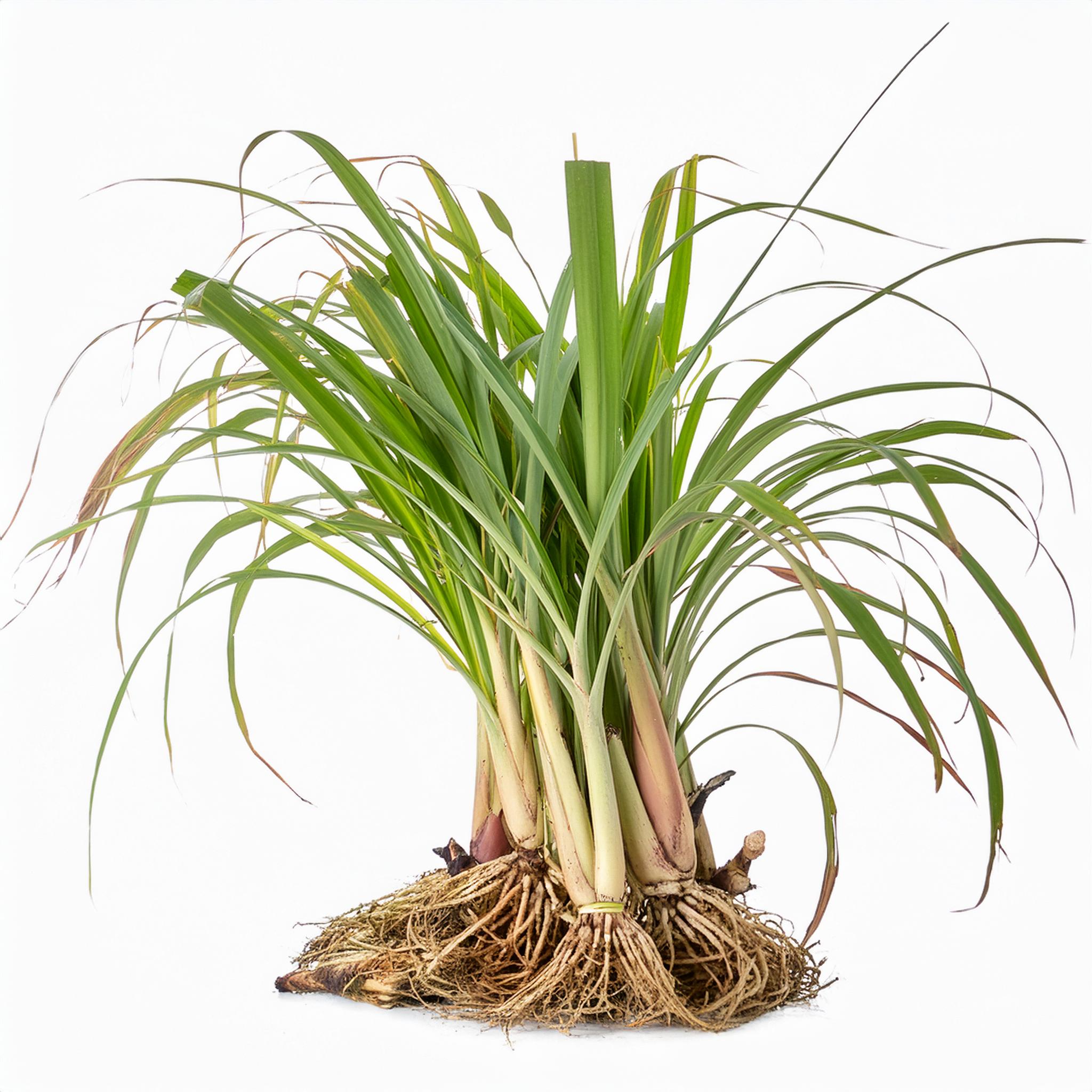
Lemongrass essential oil is steam-distilled from the leaves of East Indian lemongrass, a tall tropical grass grown mainly in southern India, where it can be cut several times a year.
Get to know Lemongrass
- Source
- Grass leaf
- Origin
- India
- Extraction
- Steam-distilled
- Aroma
- Sharp lemon, grassy
What it is
Lemongrass is an aromatic essential oil distilled from the plant.
Why it belongs in your routine
Bright, lemony grass oil distilled from East Indian lemongrass.
How to use
Always dilute in a carrier oil before it touches skin. Never use undiluted. Patch test first.
Where Lemongrass comes from
East Indian lemongrass, Cymbopogon flexuosus, is a clumping perennial grass that grows 1 to 2 metres tall, with long, narrow leaves that smell sharply of lemon when bruised. It is native to India, Sri Lanka and mainland Southeast Asia, and is farmed widely in Kerala and other southern Indian states. It is a close relative of the West Indian lemongrass used in cooking.
The essential oil is yellow to amber, with a strong, fresh lemon scent and a grassy, slightly earthy undertone. Most of that lemon note comes from citral, which usually makes up 70 to 80 percent of the oil. It is used in soaps, candles, room sprays and body care, and a little goes a long way, so it is typically used at low levels in blends.
Sourcing & extraction
How Lemongrass is sourced and extracted
Why it is rare
Lemongrass is one of the more abundant essential oils, but good oil depends on timing: grass cut too young or left too long gives lower citral. Distillation typically recovers only around 0.5 to 1 kg of oil per 100 kg of fresh leaf.
How it is gathered
In India, lemongrass is grown on small farms and plantations, many of them in Kerala, Uttar Pradesh and neighbouring states. Once established, a field is usually cut three to five times a year for several years. Farmers cut the leaves by hand or with sickles a few centimetres above the ground, let them wilt for a day or so to reduce moisture, then take them to village or farm stills close to the fields.
How it is made
Steam-distilled from the leaves
- Lemongrass leaves are cut by hand once the clumps are mature, usually every few months through the growing season.
- The cut grass is wilted in the field for a short time and often chopped to help the steam reach the oil glands.
- The chopped leaves are packed into a still and steam is passed through them for a few hours.
- The condensed liquid is left to settle, and the oil, which floats on the water, is separated and filtered.
How to use Lemongrass
- Add a few drops to a diffuser for its aroma.
- For skin, dilute 1 to 2 drops in a teaspoon of carrier oil before applying.
- Keep away from eyes and never use undiluted on skin.
For external use only. Patch test on a small area before first use and stop if irritation occurs. If you are pregnant, nursing or have a medical condition, ask a healthcare professional before use.
From ingredient to routine
Products with Lemongrass
Find this ingredient in our collection.

Questions about Lemongrass
Where does Lemongrass come from?
In India, lemongrass is grown on small farms and plantations, many of them in Kerala, Uttar Pradesh and neighbouring states. Once established, a field is usually cut three to five times a year for several years. Farmers cut the leaves by hand or with sickles a few centimetres above the ground, let them wilt for a day or so to reduce moisture, then take them to village or farm stills close to the fields.
How is Lemongrass extracted?
Steam-distilled from the leaves. Lemongrass leaves are cut by hand once the clumps are mature, usually every few months through the growing season. The cut grass is wilted in the field for a short time and often chopped to help the steam reach the oil glands. The chopped leaves are packed into a still and steam is passed through them for a few hours. The condensed liquid is left to settle, and the oil, which floats on the water, is separated and filtered.
Why is Lemongrass considered rare?
Lemongrass is one of the more abundant essential oils, but good oil depends on timing: grass cut too young or left too long gives lower citral. Distillation typically recovers only around 0.5 to 1 kg of oil per 100 kg of fresh leaf.