
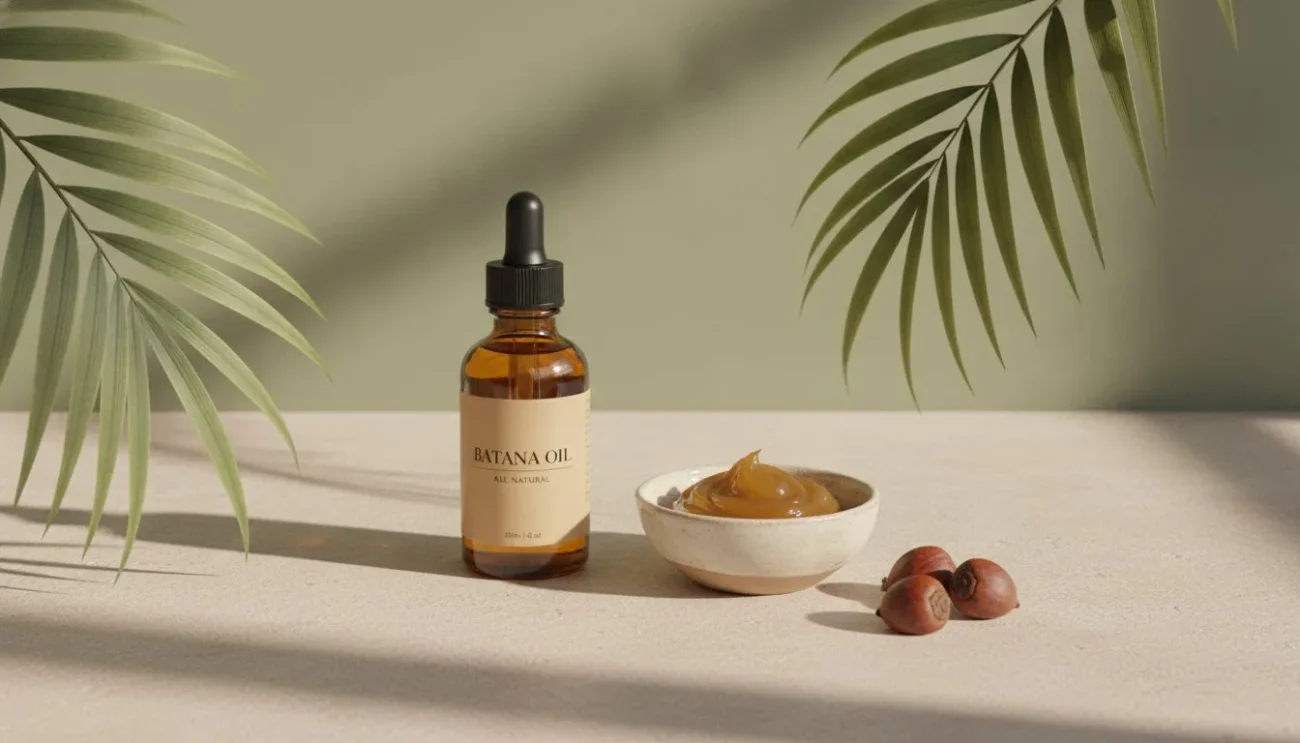
Your receding hairline isn’t a permanent sentence. It’s a structural cry for help from follicles suffocated by years of mechanical tension. Most commercial growth products fail because they ignore the physical trauma at the root. If you’ve struggled with thinning edges, using raw, unrefined batana oil for traction alopecia offers a potent, lipid-rich solution to nourish damaged skin and dormant bulbs.
The social anxiety of visible thinning is a heavy burden to carry. You’ve likely wasted money on synthetic treatments that offer nothing but empty promises. This guide provides the authoritative botanical protocol for reversing tension-induced hair loss using authentic, raw Batana oil. We’ll examine the specific fatty acid profile required for follicular recovery, the application techniques that stimulate blood flow, and the essential steps to prevent future damage. It’s time to replace chemical reliance with a grounded, nature-centric strategy for hair restoration.
Key Takeaways
- Recognize the mechanical triggers of hair loss and identify the specific “fringe sign” indicating early follicular trauma.
- Understand why the high concentration of tocotrienols in authentic Batana oil acts as a structural repair agent rather than a simple stimulant.
- Analyze the comparative benefits of batana oil for traction alopecia against standard oils to prioritize deep lipid penetration over surface-level treatments.
- Master a methodical four-step recovery protocol that combines tension release with targeted hairline application.
- Verify sourcing integrity by identifying the raw visual markers of genuine Honduran oil to avoid diluted or synthetic imitations.
Understanding Traction Alopecia: The Mechanical Crisis
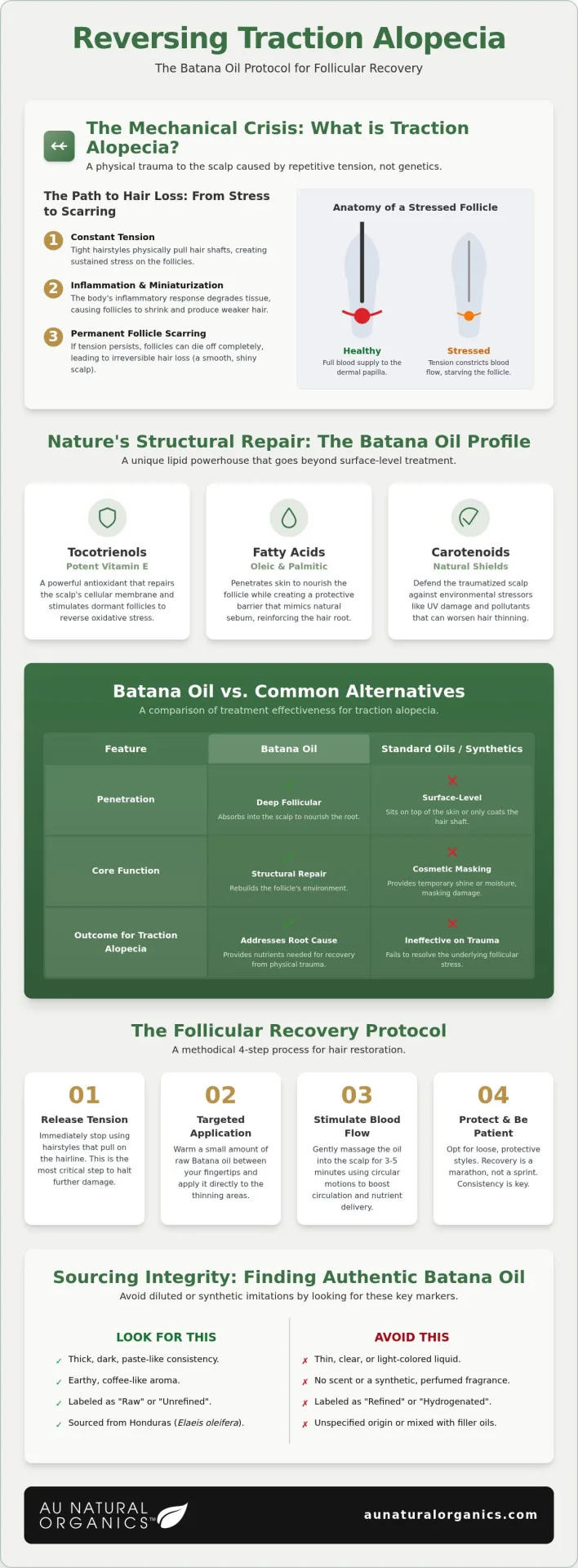
Mechanical hair loss is a silent, progressive trauma. It originates from repetitive tension. Unlike genetic thinning, this is a physical assault on the scalp. Understanding Traction Alopecia requires recognizing that persistent pulling forces eventually detach the hair shaft from its nutrient source. This isn’t a biological failure. It’s a structural one.
Early detection relies on identifying the “fringe sign.” This clinical marker is characterized by a retained line of hair along the extreme anterior margin of the hairline, while the area immediately behind it thins significantly. You might notice small white bulbs at the base of shed hairs or follicular pustules around the edges. These are not mere irritations. They are the first signals of a mechanical crisis where the follicle is being physically uprooted from the scalp.
The transition from inflammation to follicular miniaturization is the tipping point. Continuous stress triggers a localized inflammatory response that degrades the surrounding tissue. If left unchecked, the follicle eventually shrinks. It produces finer, weaker hairs before ceasing production entirely. This creates the “Recovery Window.” Botanical intervention using batana oil for traction alopecia is most effective during this phase, specifically before the follicle undergoes permanent scarring. Once the scalp becomes smooth and shiny, the damage is often irreversible.
The Anatomy of a Stressed Follicle
Constant tension disrupts the dermal papilla’s blood supply. The follicle is essentially starved. When pulling is constant, the micro-vessels supplying oxygen and nutrients to the hair bulb are compressed. The edges and the nape are most susceptible because the skin is thinner and the hair density is often lower in these regions. This vulnerability creates a localized zone of destruction. It requires deep, lipid-based nourishment to repair the environment around the bulb.
Why Traditional Remedies Often Fail
Most growth products are fundamentally flawed. Water-based sprays evaporate quickly. They leave the scalp parched and the hair shaft brittle. They don’t penetrate the lipid barrier of the skin. Similarly, synthetic silicones are a deceptive fix. They coat the hair to provide temporary shine but mask the underlying follicular trauma. True recovery requires nutrient-dense lipids that mimic the body’s natural sebum. Using authentic batana oil for traction alopecia provides the necessary structural repair agents that synthetic alternatives lack. It focuses on the skin’s health, not just the hair’s appearance.
The Batana Profile: Nature’s Structural Repair
Batana oil is not a standard cosmetic oil. Extracted from the nut of the American palm, Elaeis oleifera, it functions as a complex botanical lipid powerhouse. While most commercial oils sit on the surface of the hair shaft, this substance possesses a unique molecular weight that allows for deep follicular absorption. For those seeking Understanding Traction Alopecia, it’s vital to recognize that recovery requires more than surface-level moisture; it requires a biochemical intervention that reaches the dermal papilla.
The primary strength of this oil lies in its high concentration of tocotrienols. These are a potent form of Vitamin E that far exceed the antioxidant capacity of common tocopherols found in drugstore supplements. In the context of mechanical hair loss, tocotrienols work to repair the scalp’s cellular membrane and stimulate the dormant bulbs. Utilizing raw batana oil for traction alopecia provides the biochemical foundation needed to reverse the oxidative stress caused by years of physical pulling and scalp inflammation.
Carotenoids further enhance this protective profile. These pigments act as natural shields, defending the scalp against environmental stressors that exacerbate hair thinning. When the scalp is traumatized by tension, its natural defenses are compromised. The carotenoids in Batana stabilize the skin’s environment, ensuring that new growth isn’t immediately stifled by external pollutants or UV damage. This comprehensive protection is why the efficacy of batana oil for traction alopecia depends entirely on its molecular integrity.
Fatty Acids and Hair Shaft Integrity
The oil’s specific ratio of Oleic and Palmitic acids is critical for strengthening the hair root. Oleic acid (Omega-9) penetrates the skin to deliver nutrients directly to the follicle, while Palmitic acid creates a protective barrier that mimics the scalp’s natural sebum. This dual-action approach restores the acid mantle and reinforces the hair’s attachment to the scalp. Batana’s lipid profile acts as the intercellular ‘cement’ that binds hair cuticles and prevents the moisture loss common in tension-damaged strands.
The Power of Raw, Unrefined Processing
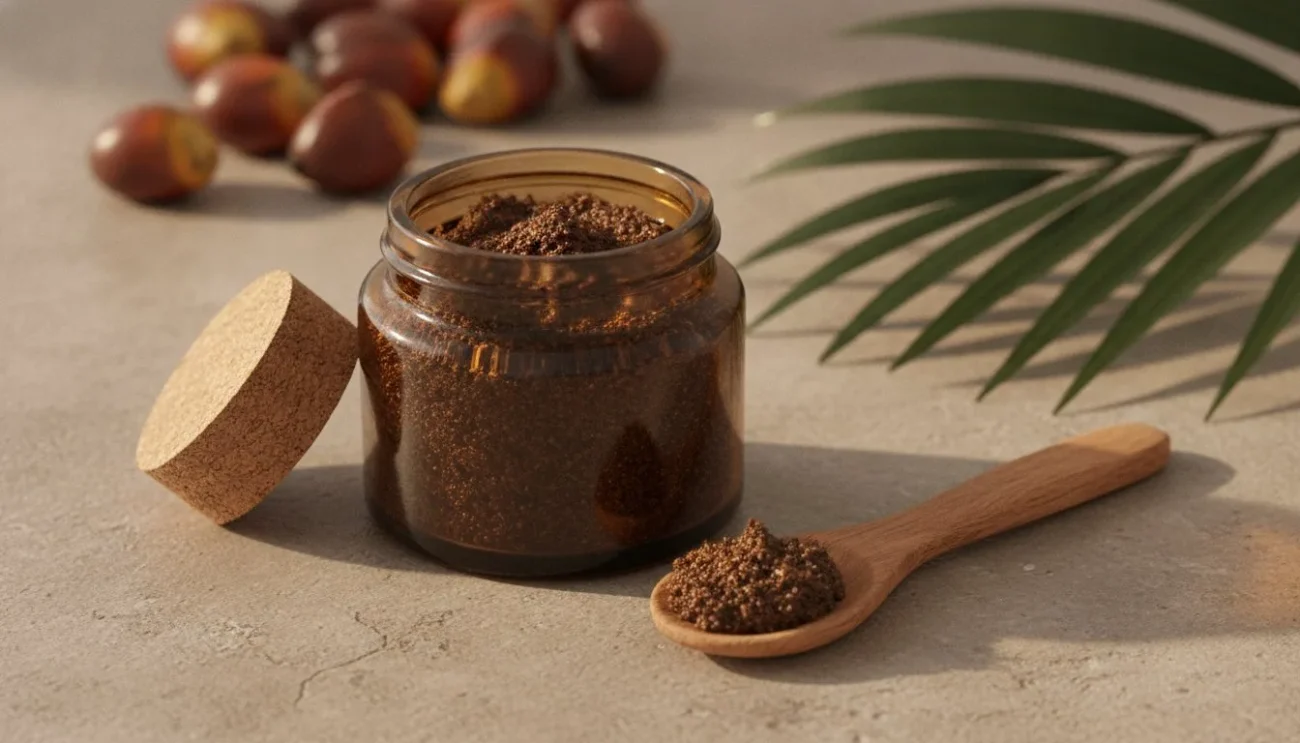
Authentic Batana is never a clear liquid. It’s a thick, dark paste with a distinct smoky, earthy scent. This aroma is a marker of traditional extraction methods used by the Miskito people, which preserve heat-sensitive nutrients that industrial refining destroys. Commercial “Batana-infused” products are often diluted with cheap carrier oils, stripping away the very tocotrienols required for repair. To ensure you are receiving the full nutrient density, always prioritize authentic batana oil over refined alternatives. The raw, unrefined state is the only form that maintains the structural integrity necessary for follicular recovery.
Batana vs. Castor Oil: A Traction Alopecia Comparison
Jamaican Black Castor Oil (JBCO) has long been the default recommendation for edge restoration. However, comparing these two substances reveals a fundamental difference in biochemical function. JBCO acts primarily as a surface-level stimulant. Its high viscosity and ricinoleic acid content trigger localized blood flow. In contrast, using batana oil for traction alopecia addresses the structural degradation of the follicle itself. Batana’s molecular weight is significantly lower than that of castor oil. It doesn’t just sit on the epidermis. It penetrates the follicular tunnel to deliver essential lipids directly to the root.
The “Grease Factor” is a practical concern for those maintaining protective styles. Castor oil is notoriously adhesive. It attracts environmental debris and can lead to heavy build-up that further suffocates a compromised scalp. Batana, though a dense paste in its raw form, melts at body temperature. It absorbs into the skin without leaving the tacky residue associated with castor blends. For daily maintenance of thinning edges, Batana offers a cleaner, more efficient delivery system that won’t compromise the integrity of your braids or twists.
During the critical thinning phase, structural repair is more important than simple stimulation. If the follicle is inflamed or miniaturizing, pushing it to grow with harsh stimulants can sometimes cause further stress. Using batana oil for traction alopecia provides the necessary building blocks for recovery. It reinforces the hair shaft and stabilizes the scalp’s barrier. This makes it a superior choice for long-term restoration rather than a temporary aesthetic fix. It is the difference between forcing a plant to grow and nourishing the soil it lives in.
The Nutrient Density Debate
Batana contains significant levels of Vitamin A and tocotrienols. Most carrier oils, including castor, lack this specific antioxidant profile. While castor oil is valued for its anti-fungal properties, it doesn’t offer the same level of cellular repair for traumatized skin. From a cost-to-benefit perspective, Batana is an investment in the follicle’s future. It addresses the root cause of mechanical thinning by providing the environment necessary for hair to anchor firmly back into the scalp.
Synergistic Blending for Maximum Results
While purity is the baseline for effective treatment, strategic blending can enhance results. You can combine Batana with rosemary oil for hair growth to create a dual-action treatment. This pairing couples Batana’s structural repair with rosemary’s ability to improve microcirculation. If you have an exceptionally sensitive scalp, diluting the raw paste with a light carrier oil like jojoba can facilitate easier application. However, never settle for pre-diluted commercial mixtures. They often contain fillers that negate the oil’s natural potency. Start with 100% pure, raw Batana to ensure the highest nutrient density for your recovery protocol.
The Follicular Recovery Protocol: A 4-Step How-To
Recovery is not a passive event. It requires a disciplined, methodical approach to reverse the damage caused by mechanical stress. The following protocol leverages the biochemical potency of batana oil for traction alopecia to restore the follicle’s structural integrity. Follow these steps with precision to maximize cellular repair and ensure long-term results.
Step 1: Scalp Preparation and Tension Release. You must immediately remove the source of trauma. This means dismantling tight braids, heavy extensions, or restrictive ponytails. If you continue to pull on the hair while applying treatments, you’re merely managing the symptoms of a worsening crisis. Allow the scalp to rest for at least 14 days before introducing any new styling tension to ensure the inflammation subsides.
Step 2: The Targeted Application Method. Focus exclusively on the areas of thinning, typically the hairline or nape. Take a pea-sized amount of raw paste and warm it between your fingertips until it liquefies. Apply the oil directly to the skin, not just the hair shaft. This ensures the lipids reach the follicular bulbs where the repair is most needed. Using batana oil for traction alopecia in this concentrated manner prevents product waste and avoids unnecessary build-up.
Step 3: The Thermal Activation Technique. Heat facilitates deeper penetration. After application, cover the area with a warm, damp towel or a silk scarf for 20 minutes. This gentle thermal activation opens the skin’s pores and softens the hair cuticle. It allows the tocotrienols in the oil to bypass the epidermis and reach the dermal papilla, which is essential for stimulating dormant follicles.
Step 4: Consistency and Protective Maintenance. Follicular recovery is a marathon. You must apply the oil at least three times a week for a minimum of 90 days. This timeline aligns with the natural hair growth cycle. Consistency is the only way to ensure the dormant bulbs receive a steady supply of nutrients. To begin your restoration journey with the correct nutrient density, you can buy authentic batana oil directly from our ethical source.
The Nightly Scalp Massage
Stimulation is vital, but it must be gentle. Use the soft pads of your fingers to perform circular motions on the affected areas. Avoid using your nails. Micro-scratches lead to further inflammation and scarring. While some advocate for the “Inversion Method,” the reality is that consistent, gentle microcirculation is more effective than short bursts of extreme blood flow. A pea-sized amount of Batana paste is the exact volume required to coat the edges without causing heavy build-up that attracts debris.
Protective Styling During Recovery
Avoid “protective” styles that are actually destructive. High-tension braids, heavy locs, and tight wigs are the primary enemies of recovery. If you must wear a wig or scarf, apply a thin layer of Batana oil first. It acts as a protective lipid barrier against friction. Incorporate “low-tension” intervals where the hair is left completely free. This allows the follicles to breathe and reduces the mechanical load on the newly forming hair shafts during their most vulnerable stage.
Sourcing Integrity: Finding Authentic Batana Oil
Sourcing determines biological activity. For a botanical lipid to facilitate follicular recovery, it must retain its complex nutrient profile. The “Honduran Standard” is the only benchmark for quality. This standard dictates that the oil must be extracted from the Elaeis oleifera nut using traditional fire-roasting techniques practiced by the Miskito people. Without this specific origin and processing, the substance loses the very tocotrienols required to treat mechanical thinning. Using diluted or refined batana oil for traction alopecia is a futile exercise that yields no structural results.
Authenticity is visible. You must look for specific authentic batana oil markers before purchase. Genuine Batana is never a clear, runny liquid. It is a dense, dark brown paste that remains solid at room temperature and melts only upon contact with skin. The “Smell Test” remains the most definitive diagnostic tool. Authentic oil possesses a deep, smoky, and earthy aroma reminiscent of roasted coffee or tobacco. If a product smells like synthetic perfume or has no scent at all, it has been chemically deodorized or heavily refined, stripping away its healing potential.
Au Natural Organics acts as a transparent guardian of this raw purity. We refuse to compromise on the integrity of our supply chain. By bridging the gap between traditional Honduran craftsmanship and modern wellness needs, we ensure that every jar contains the unfiltered power of the Ojon palm. Quality isn’t a marketing claim. It’s a chemical necessity for those relying on batana oil for traction alopecia restoration.
The Dangers of Adulterated Oils
The market is flooded with deceptive blends. Many “Batana” products found on massive third-party marketplaces are actually cheap carrier oils, such as soybean or mineral oil, dyed with synthetic pigments to mimic the traditional hue. These fillers are dangerous for a compromised scalp. Mineral oil is occlusive. It clogs the pores and suffocates the already stressed follicles, potentially worsening the inflammation associated with traction damage. We prioritize third-party testing and direct sourcing to ensure no synthetic additives or fragrances ever touch your hairline.
Our Commitment to the Miskito People
Ethical sourcing is inseparable from product efficacy. We source our oil directly from the Miskito people, known as the “Tawira” or people of beautiful hair. This partnership ensures that the traditional, labor-intensive extraction methods are preserved and that the indigenous communities receive fair compensation for their expertise. Sustainable harvesting practices protect the Ojon palm trees, ensuring the ecosystem remains vibrant for future generations. When you choose to Raw Unrefined Batana Oil, you’re supporting a legacy of global awareness and uncompromising quality. Your recovery journey starts with a product that respects both the earth and the artisan.
Reclaiming Follicular Vitality
Mechanical hair loss is not a permanent state; it’s a physiological challenge that responds to the right biochemical environment. By prioritizing structural repair over superficial growth stimulants, you address the root cause of thinning edges. Utilizing authentic, raw batana oil for traction alopecia provides the specific tocotrienols and lipids necessary to stabilize the scalp and nourish dormant bulbs. True recovery requires a commitment to sourcing integrity and a disciplined application protocol. Avoid the trap of diluted commercial blends and synthetic additives that only mask the damage. Instead, lean into the traditional wisdom and nutrient density of the Miskito heritage.
Take the first step toward a restored hairline with a product rooted in ethical responsibility and professional integrity. Order Authentic, Raw Batana Oil for Hair Growth. Our 100% Pure & Unrefined oil is Ethically Sourced from Honduras and offers Expert-Vetted Botanical Integrity for your restoration needs. Your journey to follicular recovery begins with the right foundation. Consistency is your greatest ally.
Frequently Asked Questions
How long does it take to see results for traction alopecia using Batana oil?
Visible follicular recovery typically requires a minimum of 90 days of consistent application. This timeline aligns with the natural anagen phase of the hair growth cycle. While some notice improved scalp hydration within weeks, structural repair of the hairline requires patient, uninterrupted nutrient delivery to the dormant bulbs. You must maintain the protocol through several cycles to witness significant density changes.
Can Batana oil regrow hair if the follicles are already scarred?
Batana oil cannot regrow hair once a follicle has undergone permanent cicatricial scarring. If the scalp appears smooth, shiny, and lacks visible pores, the recovery window has likely closed. However, it’s highly effective for miniaturized follicles that are still active but producing finer, weaker strands due to mechanical tension. Early intervention is the only way to prevent permanent loss.
Is Batana oil safe for all hair types and textures?
This botanical lipid is safe for all hair textures, from fine and straight to thick and coily. Because it mimics the scalp’s natural sebum, it integrates seamlessly with your biological environment. Those with fine hair should use smaller quantities to avoid weighing down the strands, while coarser textures often require more frequent application for deep penetration and moisture retention.
How often should I apply Batana oil to my edges for the best results?
For optimal recovery, apply batana oil for traction alopecia at least three times per week. Consistency is the primary factor in determining success. This methodical approach ensures the follicles receive a steady supply of tocotrienols and essential fatty acids. Nightly application is also acceptable if your scalp is exceptionally dry or if you’re in the early stages of addressing severe thinning.
Does Batana oil have a strong smell, and can I mask it?
Authentic Batana possesses a distinct, smoky aroma that serves as a hallmark of traditional roasting methods. You can mask this earthy scent by blending the paste with one or two drops of high-quality essential oils like lavender or peppermint. Don’t use synthetic fragrances, as these chemicals can irritate a scalp already sensitized by mechanical pulling and localized inflammation.
Can I use Batana oil while I still have braids or a weave in?
You can apply the oil while wearing protective styles, but we advise against it if the style is the primary cause of tension. Using batana oil for traction alopecia under a weave or braids can provide a protective barrier against friction. However, the most effective recovery occurs when the hair is free from all mechanical stress and the follicles can breathe.
What is the difference between Batana oil and Ojon oil?
Batana and Ojon both originate from the same American palm nut, but their processing and marketing often differ. Ojon was popularized as a refined commercial brand name, while raw Batana remains in its unrefined, nutrient-dense paste form. We prioritize the raw version to ensure the heat-sensitive tocotrienols and carotenoids remain fully intact for maximum follicular repair and scalp health.
Is it better to use Batana oil as a pre-shampoo treatment or a leave-in?
For treating traction alopecia, a leave-in application on the edges is superior for prolonged nutrient absorption. If you’re using it for general hair health, it functions well as a pre-shampoo treatment. Apply it to the scalp for at least 20 minutes before washing. This allows the lipids to penetrate the hair shaft without leaving a heavy residue after your cleansing routine.



Leave a comment
You must be logged in to post a comment.