
The thickest oil in your apothecary isn’t necessarily the most effective for your scalp’s biology. You’ve likely spent hours deciphering labels and battling the frustration of thinning edges or stagnant growth. It’s exhausting to navigate a market flooded with miracle claims that often lead to nothing but heavy buildup and disappointment. We believe in transparency and the raw power of unrefined botanical integrity.
Your hair growth ritual requires substance over hype. This authoritative analysis strips away the marketing fluff to reveal the molecular reality of batana oil vs castor oil for hair. You’ll gain a clear understanding of which oil to invest in based on your specific hair type and growth goals. We’ll break down the fatty acid profiles of both oils, provide an expert-led application ritual, and show you how to verify the purity of these rare botanical extracts. Knowledge is the first step toward restoration. We provide the facts so you can make an informed decision for your hair’s long-term health.
Key Takeaways
- Identify the molecular distinctions between the ricinoleic acid in Castor and the complex fatty acid synergy found in authentic Batana oil.
- Master the selection process of batana oil vs castor oil for hair by aligning their unique viscosities with your specific hair porosity and growth objectives.
- Implement a strategic application protocol that utilizes targeted lipids for scalp revitalization and strand protection.
- Learn to verify the origin and extraction methods of your ingredients to ensure you are utilizing raw, unrefined botanical power rather than diluted alternatives.
Evaluating Botanical Foundations: What Are Batana and Castor Oils?
Castor oil originates from the seeds of the Ricinus communis plant. It’s a botanical staple that has anchored traditional wellness practices for centuries. In contrast, Batana oil is a rare lipid derived from the Elaeis oleifera palm, which thrives exclusively in the tropical rainforests of Honduras. While both are celebrated in the context of batana oil vs castor oil for hair, their biological foundations dictate different roles in a hair care regimen. Castor oil is often prioritized for scalp stimulation and follicular strength. Batana oil is sought for its profound ability to penetrate the hair shaft and provide deep, lasting moisture retention.
The Miskito people of Honduras, often called the “Tawira” or “people of beautiful hair,” have utilized Batana oil for generations. This isn’t a viral trend. It’s a cultural heritage. Their legacy proves that consistent use of wild-harvested lipids can produce exceptional hair health even in harsh tropical climates. Understanding the difference between these two oils requires looking beyond the surface of marketing claims and into the source of the ingredients themselves.
The Sourcing Standard: Raw vs. Refined
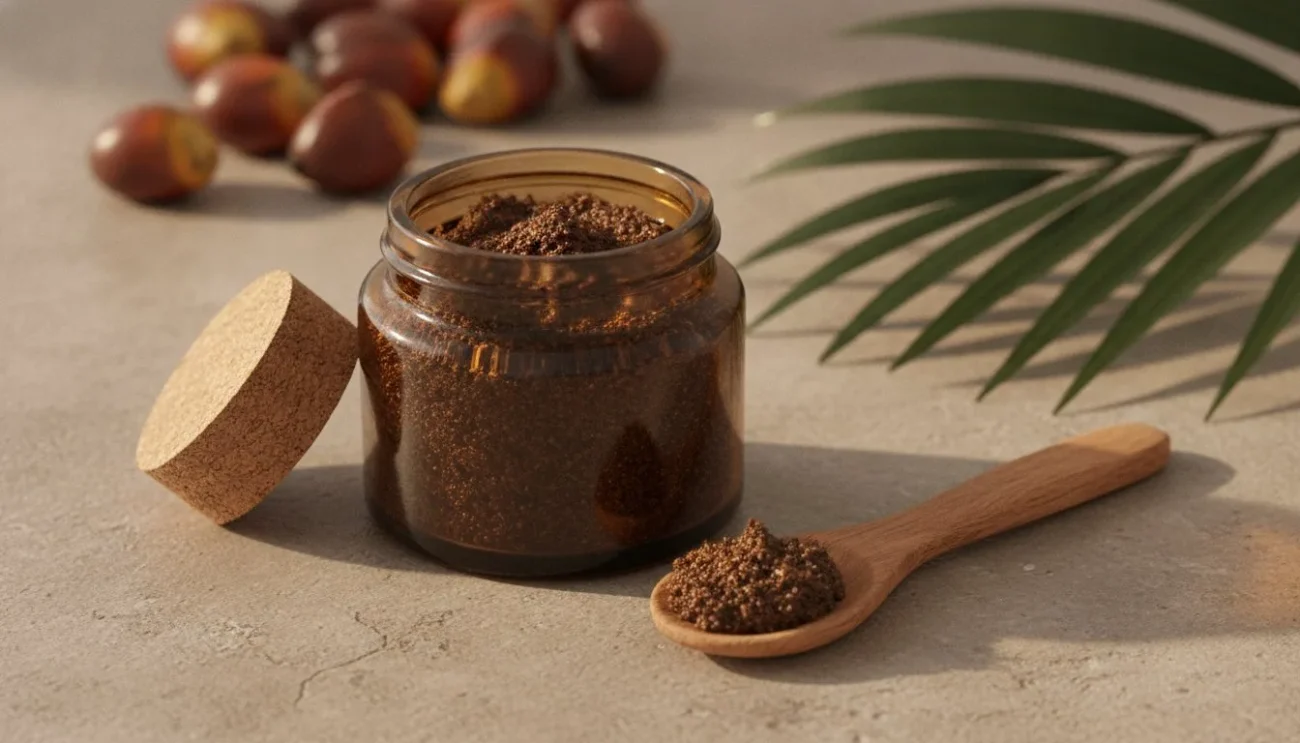
Industrial refining processes often strip away the very bioactive compounds that make these oils effective. Heat and chemical solvents destroy antioxidants. Authenticity matters. When you examine a high-quality batana oil paste, you’ll find a dark, coffee-colored substance with a distinct smoky aroma. This raw state preserves the integrity of the oil. Standard Castor oil is typically cold-pressed and pale yellow, whereas Jamaican Black Castor Oil (JBCO) is processed by roasting the beans. The ash content in JBCO increases its alkalinity, which can help open the hair cuticle for better absorption in specific hair types. Refined versions of these oils may feel lighter, but they lack the nutritional density required for professional-grade results.
Ancestral Wisdom Meets Modern Trichology
Modern trichology now validates what indigenous communities have known for centuries. The high concentration of ricinoleic acid in Castor oil supports localized circulation at the scalp level. Meanwhile, the complex fatty acids in Batana oil mirror the natural lipids found in the hair’s protective barrier. This synergy makes batana oil vs castor oil for hair a comparison of complementary strengths rather than a simple competition. Au Natural Organics remains committed to these extraction traditions. We bridge the gap between global botanical sourcing and modern wellness needs. We refuse to compromise on the slow, careful processes of nature. This ensures that every drop of oil retains its ancestral potency and professional integrity.
Molecular Profiles: Ricinoleic Acid vs. Complex Fatty Acids
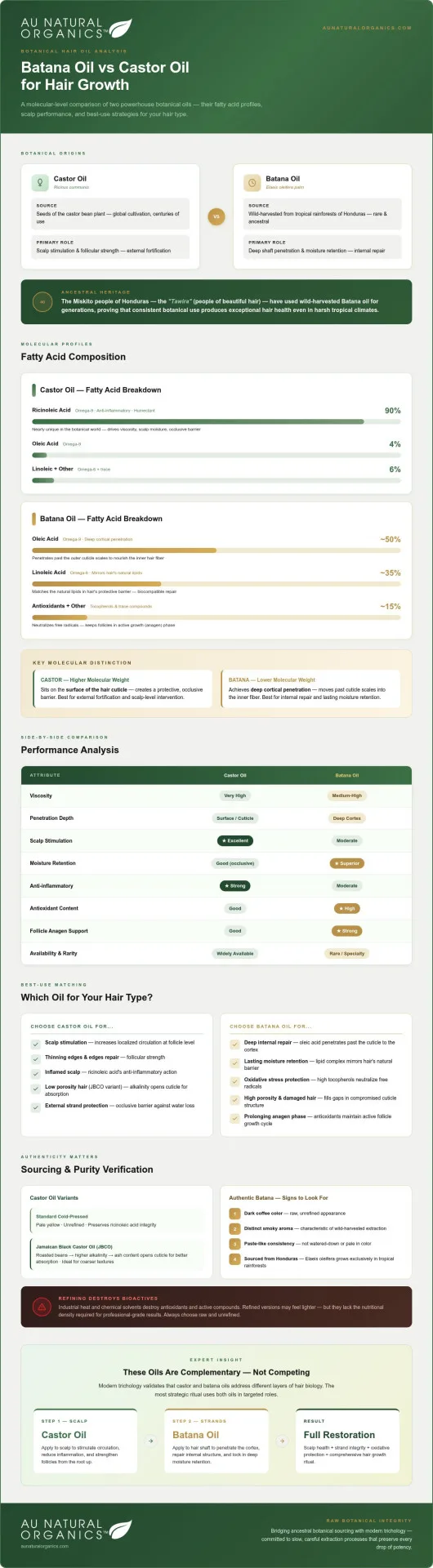
The efficacy of any botanical treatment is determined by its chemical architecture. When analyzing batana oil vs castor oil for hair, the most significant distinction lies in their primary fatty acid chains. Castor oil is nearly unique in the botanical world due to its high concentration of ricinoleic acid, an unsaturated omega-9 fatty acid that typically comprises 90 percent of its profile. This specific molecule is polar, which gives the oil its characteristic high viscosity and allows it to act as a powerful humectant. It draws moisture to the scalp while providing a protective, occlusive barrier that prevents transepidermal water loss.
Batana oil operates through a more diverse lipid complex. It contains a potent synergy of oleic and linoleic acids, which are smaller in molecular weight compared to the dense structure of castor oil. This difference in molecular weight is critical. While castor oil tends to sit on the surface of the hair cuticle to provide external protection, the fatty acids in batana oil are capable of deep cortical penetration. They move past the outer scales of the hair shaft to nourish the inner fiber. This makes batana an ideal choice for internal repair, whereas castor oil excels at external fortification and scalp-level intervention.
The Science of Scalp Stimulation
Ricinoleic acid is more than a simple lubricant. It serves as a natural anti-inflammatory agent that can soothe a compromised scalp environment. By reducing localized inflammation, it helps clear the path for optimal follicular function. The presence of tocopherols in these oils further shields the hair from environmental aggression. Oxidative stress occurs when an imbalance of free radicals damages the cellular environment of the scalp, effectively forcing active hair follicles into a premature state of dormancy. Consistent application of these antioxidant-rich lipids helps neutralize these radicals, maintaining the follicle in the anagen, or growth, phase for longer periods.
Nutrient Density and Bioavailability
The “bio-availability” of an oil refers to how easily your body can recognize and utilize its nutrients. Raw, wild-harvested oils retain a higher density of phytosterols and carotenoids than their refined counterparts. In batana oil, these carotenoids are responsible for the deep, earthy hue of the paste. These compounds are essential for maintaining the integrity of the scalp’s lipid barrier. To experience the full spectrum of these benefits, it’s vital to use products that haven’t been stripped by industrial heat. For those seeking the rawest form of these nutrients, choosing Authentic Batana Oil ensures the molecular integrity remains intact from the rainforest to your ritual.
- Ricinoleic Acid: Found in Castor; drives scalp circulation and provides antimicrobial protection.
- Oleic & Linoleic Acids: Found in Batana; facilitates deep moisture penetration into the hair cortex.
- Carotenoids: High in Batana; provides intense antioxidant support and UV protection.
- Phytosterols: Present in both; crucial for repairing the scalp’s natural barrier.
Performance Analysis: Absorption, Texture, and Hair Porosity
Texture dictates performance. When evaluating batana oil vs castor oil for hair, the physical experience of application is as distinct as their chemical compositions. Castor oil is a high-viscosity lipid. It’s dense, famously sticky, and unapologetically occlusive. This weight makes it an unparalleled sealant for high-porosity hair, where the cuticles are naturally raised or damaged. In these instances, castor oil acts as a physical barrier, effectively “plugging” the gaps in the hair shaft to prevent moisture from escaping into the environment.
Batana oil offers a different sensory profile. It presents as a buttery paste that melts upon contact with the warmth of your skin. Because its molecular structure is comprised of smaller fatty acid chains, it possesses superior spreadability compared to the tug-and-pull nature of raw castor oil. For those with low-porosity hair, where tight cuticles resist product absorption, batana oil is the logical choice. It bypasses the “buildup” barrier that often leaves heavier oils sitting uselessly on the surface of the hair.
Matching Oil to Hair Density
Hair density and strand diameter must inform your selection. Fine hair is easily overwhelmed by the sheer mass of castor oil. It often results in limp, greasy strands that lose their natural volume. If you have fine hair but require the scalp benefits of ricinoleic acid, use castor oil strictly as a pre-wash treatment. Coarse or “kinky” hair textures typically thrive with the deep nourishment of batana oil. Its melting texture allows for thorough distribution through dense coils without causing mechanical breakage during application. To avoid hygral fatigue, which is the weakening of the hair fiber caused by repeated swelling and contracting with water, apply these oils to slightly damp, rather than soaking wet, hair to lock in existing hydration without over-saturating the cortex.
The Comedogenic Factor
Scalp health is the foundation of growth. Heavy botanical oils carry a risk of clogging follicles, a condition known as folliculitis, if they aren’t managed correctly. Because castor oil is highly occlusive, a rigorous cleansing routine is mandatory to prevent the accumulation of debris and dead skin cells. Batana oil provides a unique middle ground. It delivers intense nourishment and a noticeable softening effect without the suffocating greasiness associated with synthetic alternatives or heavier raw fats. It’s a high-performance treatment that respects the scalp’s need for oxygen and cellular turnover. We prioritize the preservation of these raw textures because they are the most accurate indicators of an oil’s functional integrity.
- Castor Oil: Best for high-porosity hair and sealing split ends.
- Batana Oil: Ideal for low-porosity hair and deep cortical softening.
- Fine Hair: Use sparingly or as a pre-shampoo ritual.
- Coarse Hair: Benefit from the buttery, leave-in quality of raw batana paste.
Strategic Application: Targeted Solutions for Growth and Retention
Visible hair length is a calculation of growth minus breakage. This is the growth versus retention paradox. While the scalp dictates the rate of production, the integrity of the strand determines how much length you actually keep. In the comparison of batana oil vs castor oil for hair, a strategic approach utilizes both. Castor oil is your primary tool for the scalp and thinning edges. Its ricinoleic acid supports circulation where it’s needed most. Batana oil is your structural reinforcement. It penetrates the cortex to prevent the snapping and splitting that stalls visible progress. If you’re dealing with chemical damage from over-processing, use Batana as a pre-shampoo treatment to shield the hair fiber from the stripping effects of surfactants.
The Scalp Massage Ritual
Technique amplifies botanical efficacy. Use the inverted massage method by gently tilting your head forward to increase localized blood flow to the scalp. Apply a small amount of your chosen oil to your fingertips and work in firm, circular motions for five minutes. This physical stimulation, combined with the chemical properties of the oils, creates an optimal environment for growth. For those seeking density in other areas, such as facial hair, the same principles apply. You can learn more about batana oil for beard growth to achieve a fuller, more resilient texture. Repeat this ritual two to three times per week. Consistency is the only path to measurable results.
Maximizing Efficacy with Essential Oils
Botanical synergy creates a more potent environment for the follicle. Integrating essential oils like Rosemary or Peppermint can enhance the stimulatory effects of your base lipids. Stick to a strict dilution ratio to avoid irritation. A 1 percent to 2 percent concentration is sufficient; this typically means 6 to 12 drops of essential oil per ounce of carrier oil. For a deep restorative session, use the “Night Cap” method. Apply your custom blend, cover with a silk or satin wrap, and allow the lipids to work undisturbed while you sleep. This prevents friction and ensures maximum absorption into the hair fiber. To begin your own ritual with unrefined, ethically sourced ingredients, explore our collection of Authentic Batana Oil and pure carrier oils.
The Integrity of Sourcing: Why Authenticity Dictates Results
Sourcing is the final frontier of efficacy. The global marketplace is currently flooded with diluted imitations and refined versions of these lipids that have been stripped of their bioactive power. When comparing batana oil vs castor oil for hair, the results you see in the mirror depend entirely on the raw integrity of the extraction. Castor oil is a widely commodified product, but finding wild-harvested Batana requires a direct, ethical connection to the source. The Elaeis oleifera palm thrives in the specific mineral density of Honduran soil. The unique humidity and climate of Central America are what create this high-performance lipid. Without these environmental factors, the oil lacks the complex nutrient profile required for deep cortical repair.
Ethical responsibility is a cornerstone of our philosophy. We maintain a steadfast commitment to the Miskito communities who perform the arduous, traditional task of harvesting and processing the nuts. This isn’t a simple transaction; it’s the preservation of a lineage of wellness. For the professional or the dedicated enthusiast, choosing authentic batana oil is an investment in both personal hair vitality and global ethical standards. Compromising on sourcing means compromising on your results.
Identifying Genuine Botanical Integrity
Your senses are your best diagnostic tools. Authenticity has a specific profile. Raw, unrefined Batana oil possesses a characteristic smoky, nutty aroma that often reminds users of roasted coffee or dark earth. This scent is a marker of the traditional boiling process used by the Miskito people. If a product smells like synthetic perfume or tropical fruit, it’s a definitive red flag for purity. Synthetic fragrances are often used to mask the rancidity of low-quality oils or to hide the fact that the product contains very little actual Batana. Always read the label with scrutiny. Distinguish between “Batana Scented” and 100 percent Pure Batana Oil. If the ingredient list contains anything other than the raw botanical extract, it’s an inferior product. For a comprehensive breakdown of the sensory and chemical markers that distinguish real batana oil from Honduras from counterfeit alternatives, including the traditional extraction methods and current export regulations, consult our professional authenticity guide.
The Au Natural Organics Promise
We take an uncompromising approach to botanical quality. Every jar we offer is a testament to our refusal to use synthetic fragrances, fillers, or industrial refining methods. We prioritize substance over marketing fluff because we understand that your hair growth ritual requires real, unrefined power. Transitioning your hair care routine to professional-grade botanical oils is a move toward long-term health rather than temporary fixes. We act as a transparent guardian of quality, ensuring that the ancient wisdom of Honduras reaches you in its most potent, untouched form. Start your journey with ingredients that respect both your biology and the earth.
Elevating Your Hair Growth Ritual
Your hair care journey is an investment in biological integrity. Choosing between batana oil vs castor oil for hair requires an understanding of your strand’s specific needs and porosity. Castor oil provides the heavy, occlusive protection necessary for sealing damaged cuticles and fortifying thinning edges. Batana oil offers the deep cortical penetration required to restore internal strength and elasticity from within the hair fiber. Both lipids are high-performance tools when sourced with uncompromising standards. We believe in the power of raw, unrefined botanicals that remain free from synthetic fragrances and fillers.
True restoration begins with ingredients that respect the traditions of their origin. Our oils are sourced directly from the Honduran Miskito communities to ensure the highest level of botanical potency and ethical transparency. You don’t have to settle for diluted imitations or industrial byproducts. It’s time to prioritize substance over marketing fluff in your daily regimen. Secure Your Jar of Authentic, Wild-Harvested Batana Oil and experience 100 percent pure, unrefined integrity. Take the first step toward lasting hair vitality with nature’s most resilient lipids. Your hair deserves the clarity of professional grade care.
Frequently Asked Questions
Can I leave Batana oil in my hair overnight?
Yes, leaving Batana oil in your hair overnight is both safe and highly effective for deep restoration. This extended duration allows the smaller molecular fatty acids to bypass the cuticle and penetrate the hair cortex undisturbed. It’s a professional-grade method for reviving chronically dry or damaged strands. Use a silk or satin wrap to protect your linens and prevent friction. Ensure you cleanse your hair thoroughly the next morning to maintain optimal scalp health and cellular turnover.
Is Castor oil or Batana oil better for thinning edges?
Castor oil is the superior choice for thinning edges and hairlines due to its unique chemical profile. Its high concentration of ricinoleic acid supports localized circulation while its dense viscosity provides a physical shield against styling tension. While comparing batana oil vs castor oil for hair, the latter’s occlusive properties are better suited for protecting these fragile, high-tension areas. Apply it sparingly with firm, circular motions to stimulate the follicles at least twice weekly for the best results.
How can I tell if my Batana oil is authentic or fake?
Authenticity is verified through sensory markers and origin. Genuine, wild-harvested Batana oil presents as a dark, coffee-colored paste with a distinct smoky, burnt-nut aroma. If the product is white, pale yellow, or smells like synthetic perfume, it’s likely been refined or diluted. Always check the label for 100 percent pure Elaeis oleifera. Refined oils lose the carotenoids responsible for the characteristic deep hue and the functional integrity required for professional hair restoration.
Does Batana oil smell like Castor oil?
No, Batana oil does not share the scent profile of Castor oil. Raw Batana possesses an evocative, smoky scent similar to roasted coffee beans or dark earth. Cold-pressed Castor oil is virtually odorless or mildly nutty, while Jamaican Black Castor Oil carries a faint ash-like aroma from the roasting process. These olfactory differences are definitive indicators of their traditional processing methods and raw botanical origins. If your Batana oil lacks this smoky depth, its purity may be compromised.
Can I mix Batana and Castor oil for a DIY growth serum?
Yes, blending these lipids creates a synergistic growth serum that addresses both the scalp environment and the hair fiber. You can combine the circulatory benefits of Castor with the deep cortical repair of Batana. Mix them in equal parts for a balanced treatment or adjust the ratio based on your hair’s porosity. This combination is a potent strategy when navigating the benefits of batana oil vs castor oil for hair in a single, customized ritual for long-term vitality.
Will Castor oil cause buildup on my scalp?
Castor oil can cause significant buildup due to its extremely high viscosity and occlusive nature. It’s a heavy lipid that sits on the surface of the scalp and hair cuticle. To prevent clogged follicles or folliculitis, you must implement a rigorous cleansing routine using a clarifying wash. Avoid daily application on the scalp; instead, use it as a targeted treatment two to three times per week to ensure the scalp’s respiratory and excretory functions remain unobstructed.
Is Batana oil safe for color-treated or chemically processed hair?
Batana oil is exceptionally safe and highly recommended for color-treated or chemically processed hair. Chemical treatments often strip the hair’s natural lipid barrier, leading to brittleness and breakage. The oleic and linoleic acids in Batana penetrate the damaged shaft to restore lost moisture and improve elasticity. It acts as a structural reinforcement that helps preserve your color’s vibrancy by sealing the cuticle and preventing the premature fading associated with porous, damaged hair fibers.
How often should I apply these oils for visible hair growth results?
Consistency is the primary driver of results. Apply these oils two to three times per week as part of a dedicated ritual. Visible improvements in hair density and strand integrity typically require a minimum of 90 days of disciplined use. This timeframe aligns with the natural hair growth cycle. Rushing the process with excessive application won’t accelerate growth and may lead to unnecessary buildup. Patience and high-quality ingredients are the only path to measurable botanical results.



Leave a comment
You must be logged in to post a comment.