

Batana oil can be part of a routine for conditioning dry-feeling hair. That is different from treating hair loss. Softer strands, added shine or a smoother finish do not establish that an oil has increased hair density or changed the activity of a follicle.
This guide explains cosmetic use and product selection. It does not present Batana oil as a proven hair-loss treatment or promise a regrowth timeline.
Start with the reason for the hair loss
Hair loss has different causes, and treatment depends on the diagnosis. The American Academy of Dermatology explains how dermatologists assess hair loss and select treatments. A cosmetic oil cannot replace that assessment. Seek professional advice for sudden, patchy or persistent loss, or a scalp that is painful or inflamed.
What conditioning can and cannot tell you
Judge an oil by the job it is intended to do: how easily it spreads, whether it leaves hair feeling softer, how much residue remains and how readily it washes out. A photograph of shinier or differently styled hair is not a measurement of new growth.
Research about a nutrient, another plant oil or an oral supplement does not by itself demonstrate that this topical Batana product treats hair loss. We do not claim that it reverses thinning, blocks DHT or produces new hair within a fixed number of weeks.
Check which Batana product you are using
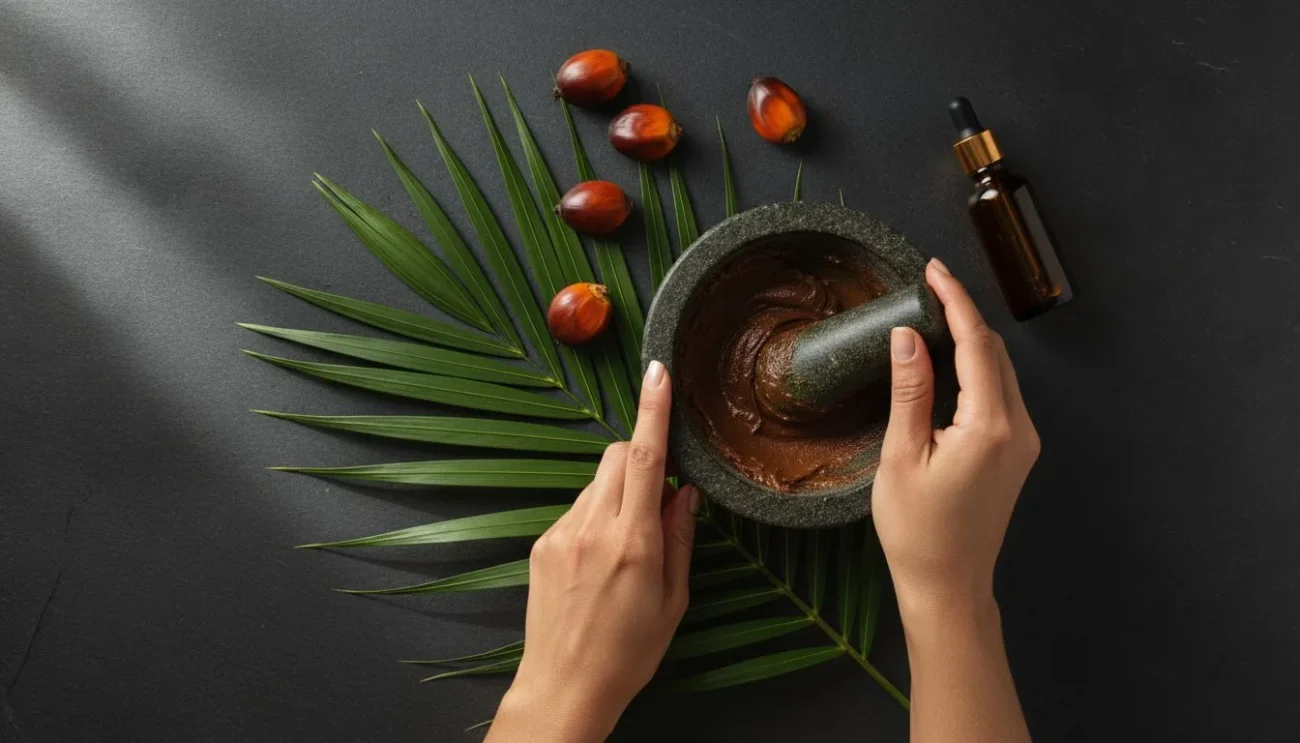
Our 100ml Batana oil is Elaeis oleifera kernel oil from La Mosquitia, Honduras, boiled and skimmed by hand. Our Ojon oil is listed separately as cooked and hand-skimmed. The processing descriptions matter when comparing these products.
A smoky aroma, a particular shade of brown or a firm texture is not a stand-alone authenticity test. Check the ingredient list, extraction method, origin and batch information with the supplier. Natural appearance may vary with processing and storage temperature. Read our Batana origin and processing profile for the product information used across our range.
A simple cosmetic routine
- Read the chosen product’s directions and test it on a small area before regular use. The AAD guide to testing skin-care products explains how to assess a new product.
- For dry lengths and ends, start with a small amount. If the oil is firm, soften the portion between your palms rather than applying a hot-oil treatment.
- Work it through gently and follow the product’s wash-out directions. More oil or a longer application does not establish a greater growth benefit.
- Stop using it if irritation occurs. Keep the container closed and follow the label’s storage instructions.
The AAD’s hair-loss care advice emphasizes gentle washing and conditioning and advises against hot-oil treatments on fragile hair.
Choose a quantity for your routine
The 100ml jar is the smaller retail option. The 6oz jar offers a larger quantity for regular use, while the 1 litre size is intended for salons and makers. Compare the actual labels and quantities; the larger size does not imply stronger effects.
Common questions
Can a softer feel be mistaken for regrowth?
Yes. Cosmetic appearance and the number of growing hairs are different observations. Keep expectations focused on conditioning rather than interpreting shine or styling as proof of treatment.
Does traditional use prove a treatment works?
Traditional use explains an ingredient’s history. It does not replace relevant clinical evidence for a specific treatment claim.
Where can I compare Batana with castor oil?
Our Batana and castor oil comparison distinguishes their cosmetic uses from hair-growth claims.
Prepared by the Au Natural Organics Team. The linked dermatology resources provide general guidance and do not endorse our products.
Leave a comment
You must be logged in to post a comment.