

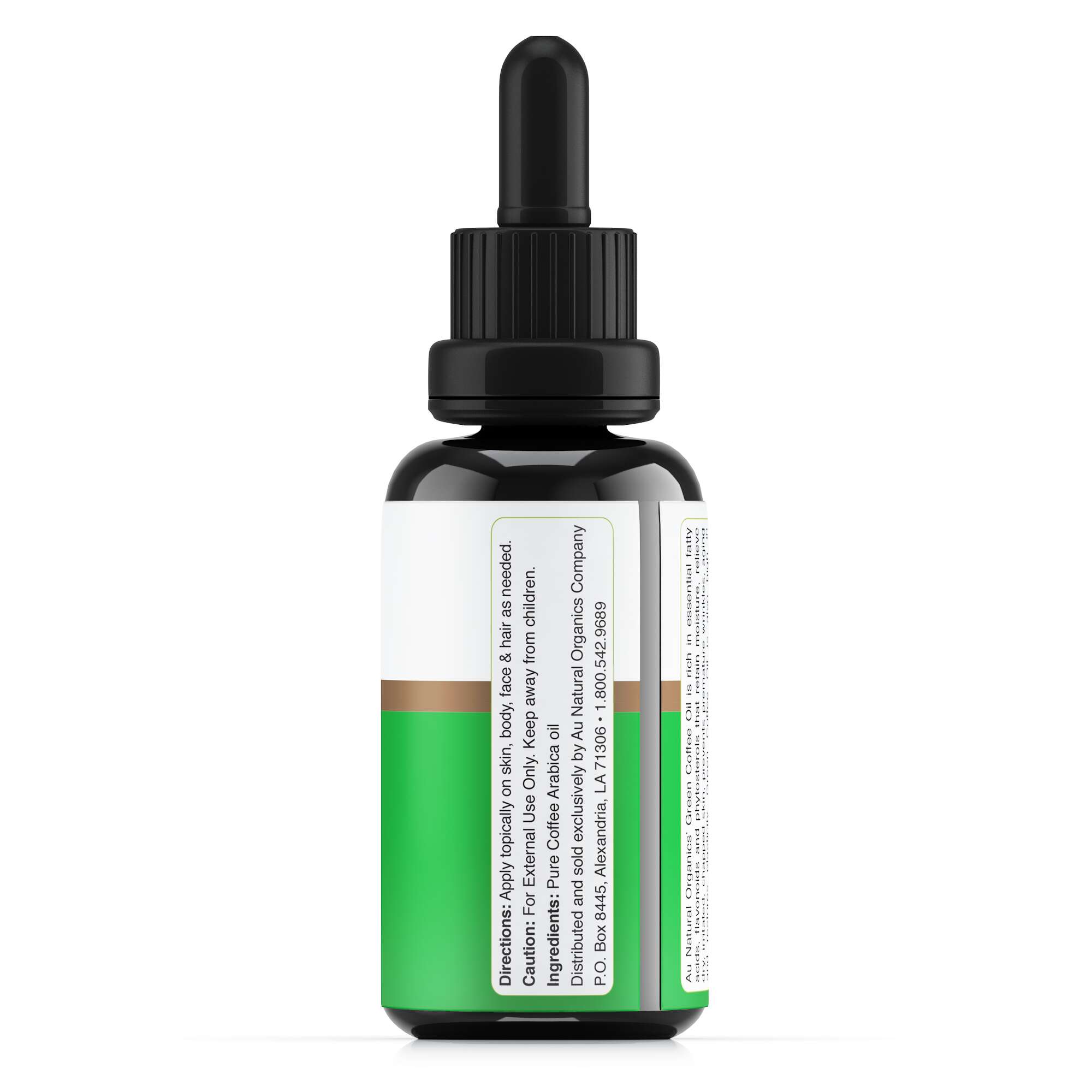

Description
Arabica coffee cherries are harvested once a year, and in Brazil that runs roughly from May to September. The fruit is dried or pulped and hulled to leave green beans. Beans used for oil are often broken or lower-grade beans sorted out of export lots, then pressed before any roasting. That is why green coffee oil smells grassy and herbal rather than of brewed coffee. It is green-gold to brown, rich in linoleic and palmitic acids, and naturally contains cafestol, kahweol and plant sterols.
Details
| Botanical name | Coffea arabica (Arabica coffee) |
|---|---|
| Origin | Brazil and tropical highlands |
| Part used | Unroasted bean |
| Extraction | Cold-pressed |
| Texture | Rich, slightly waxy |
| Ingredients | 100% Coffea arabica green bean oil |
Why supply is limited: coffee beans hold far less oil than most seeds and are hard to press, and most of the crop is sold for roasting.
How to use
- Under the eyes: tap a single drop gently around the eye area, avoiding the eyes.
- Face: mix 1 to 2 drops into your moisturiser.
- Balms and hair: add to balms and body butters, or rub a drop through dry ends.
Patch test on the inner arm before first use. Keep away from the eyes. Store somewhere cool and dark with the cap closed.
FAQs
Is green coffee oil the same as roasted coffee oil?
No. Green coffee oil is pressed from unroasted beans and smells grassy. Roasted coffee oil smells like brewed coffee.
Does it contain caffeine?
It is an oil pressed from the bean. Its main components are fatty acids, diterpenes and plant sterols.
Is it heavy?
It is rich and slightly waxy, so a drop or two is enough.
Nina Jones –
This is the real deal! It smells like coffee but it goes away. Makes hair feel like silk. Thank you.