The Ingredient Library
Rosemary Verbenone
Salvia rosmarinus ct. verbenone
Rosemary verbenone essential oil is a softer chemotype of rosemary, typically grown on Corsica and in southern France, and steam-distilled from the flowering tops of these particular plants.
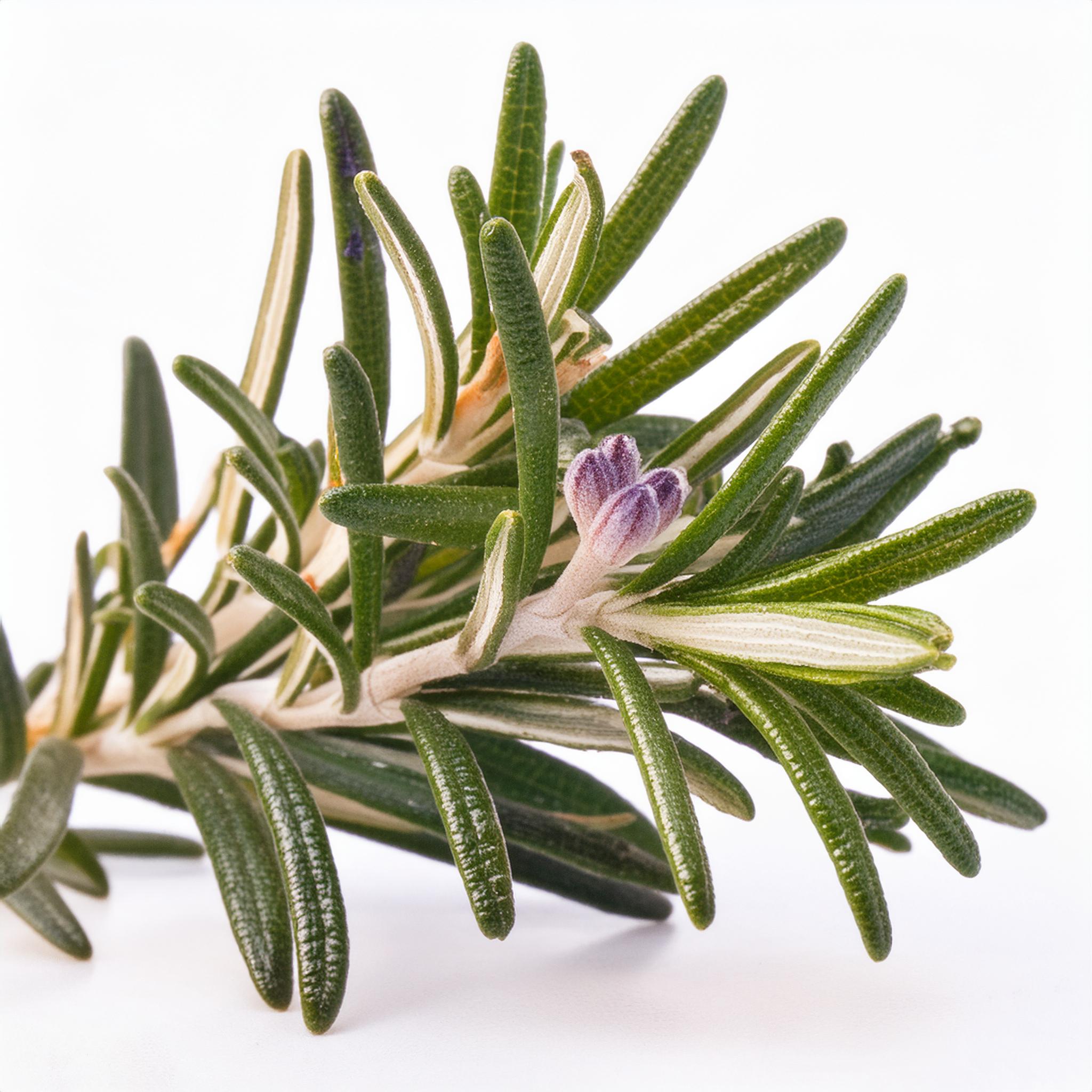
Get to know rosemary verbenone essential oil
- Source
- Flowering tops
- Origin
- Corsica and France
- Extraction
- Steam-distilled
- Aroma
- Green, herbal, soft
What it is
Rosemary Verbenone is an aromatic essential oil distilled from the plant.
Why it belongs in your routine
A gentle, herbal rosemary chemotype distilled mainly in Corsica.
How to use
Always dilute in a carrier oil before it touches skin. Never use undiluted. Patch test first.
Where does rosemary verbenone essential oil come from?
Rosemary is an evergreen Mediterranean shrub with needle-like leaves and pale blue flowers, once named Rosmarinus officinalis and now placed in the genus Salvia. The same species produces several chemotypes: plants that look alike but make different oils. The verbenone type is found mainly on Corsica and in parts of southern France, where it grows on dry, stony hillsides in the maquis scrub near the sea.
Rosemary verbenone oil is a rosemary oil whose main components are alpha-pinene, bornyl acetate and verbenone, with far less camphor and 1,8-cineole than the common types. The scent is green, herbal and slightly sweet, gentler than camphor rosemary. It is used in small amounts in face care blends, hair oils and natural perfumery.
Sourcing & extraction
How rosemary verbenone essential oil is sourced and extracted
Why it is rare
Only certain wild or selected populations produce enough verbenone to qualify, and they grow in a small range around Corsica. Each batch must be tested for its chemical profile, and the yield from the plant is low, so output stays small.
How it is gathered
Rosemary verbenone oil is typically produced by small distillers in Corsica and the south of France. The flowering tops are cut by hand or with small cutters, usually in spring and again at the end of summer when the plants flower, from wild stands or from plots grown from verbenone-type cuttings. The cut material is taken to the still within a day or so, while it still holds its aromatic oil.
How it is made
Steam-distilled from flowering tops
- Flowering branches of verbenone-type rosemary are cut and brought to the distillery while still fresh.
- The material is packed into a still, and steam is passed through it, carrying the volatile aromatic compounds out of the plant.
- The steam and oil vapour are cooled in a condenser and run into a separator, where the oil floats on the water.
- The oil is drawn off, rested and filtered, then tested by gas chromatography to confirm its verbenone content.
How to use rosemary verbenone essential oil
- Add a few drops to a diffuser for its aroma.
- For skin, dilute 1 to 2 drops in a teaspoon of carrier oil before applying.
- Keep away from eyes and never use undiluted on skin.
For external use only. Patch test on a small area before first use and stop if irritation occurs. If you are pregnant, nursing or have a medical condition, ask a healthcare professional before use.
From ingredient to routine
Products with Rosemary Verbenone
Find this ingredient in our collection.

Questions about Rosemary Verbenone
Where does Rosemary Verbenone come from?
Rosemary verbenone oil is typically produced by small distillers in Corsica and the south of France. The flowering tops are cut by hand or with small cutters, usually in spring and again at the end of summer when the plants flower, from wild stands or from plots grown from verbenone-type cuttings. The cut material is taken to the still within a day or so, while it still holds its aromatic oil.
How is Rosemary Verbenone extracted?
Steam-distilled from flowering tops. Flowering branches of verbenone-type rosemary are cut and brought to the distillery while still fresh. The material is packed into a still, and steam is passed through it, carrying the volatile aromatic compounds out of the plant. The steam and oil vapour are cooled in a condenser and run into a separator, where the oil floats on the water. The oil is drawn off, rested and filtered, then tested by gas chromatography to confirm its verbenone content.
Why is Rosemary Verbenone considered rare?
Only certain wild or selected populations produce enough verbenone to qualify, and they grow in a small range around Corsica. Each batch must be tested for its chemical profile, and the yield from the plant is low, so output stays small.