The Ingredient Library
Hyssop
Hyssopus officinalis
Hyssop essential oil is steam-distilled from the flowering tops of hyssop, a small blue-flowered herb of southern Europe grown for oil mainly in France and the Balkans.
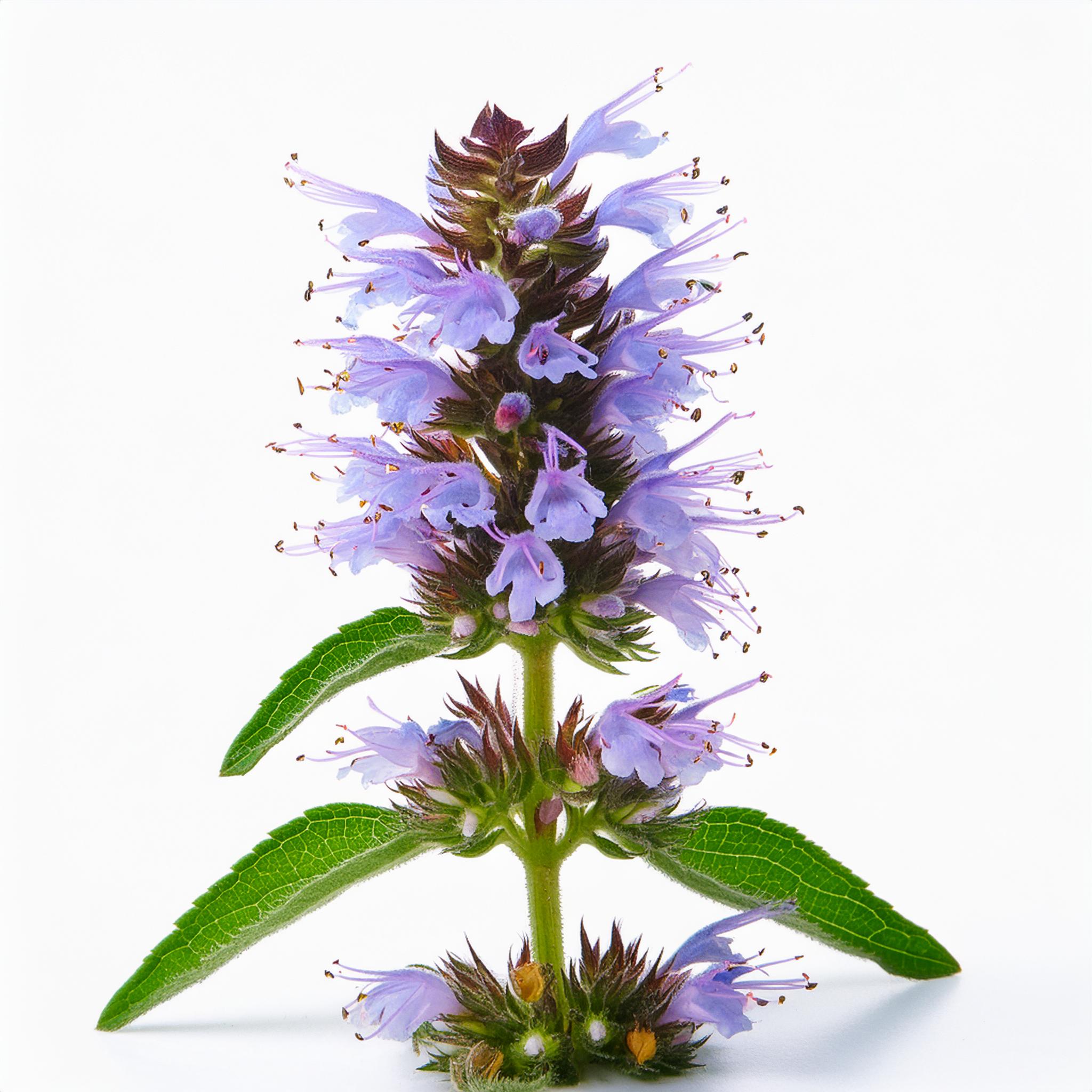
Get to know hyssop essential oil
- Source
- Flowering tops, leaves
- Origin
- S. Europe, Balkans
- Extraction
- Steam-distilled
- Aroma
- Sharp, herbal, camphor
What it is
Hyssop is an aromatic essential oil distilled from the plant.
Why it belongs in your routine
Sharp, herbal essential oil from the blue-flowered hyssop plant.
How to use
Always dilute in a carrier oil before it touches skin. Never use undiluted. Patch test first.
Where does hyssop essential oil come from?
Hyssop, Hyssopus officinalis, is a small evergreen shrub of the mint family native to southern Europe, the Middle East and around the Caspian Sea. It grows 30 to 60 cm tall with narrow dark green leaves and spikes of small blue-violet flowers from midsummer, much visited by bees. It is grown for oil mainly in France, Hungary and the Balkans, and its leaves have long flavoured herbal liqueurs.
Hyssop essential oil is colourless to pale yellow with a sharp, herbal, slightly camphor-like scent and a sweet undertone. Depending on type, it naturally contains pinocamphone and isopinocamphone or, in the decumbens type, linalool and 1,8-cineole. It is used in very small amounts in perfumes, soaps and herbal fragrance blends.
Sourcing & extraction
How hyssop essential oil is sourced and extracted
Why it is rare
Hyssop is a small specialty crop grown on limited acreage, and its oil yield from fresh plant is low. Because some types are high in ketones, many blenders use it sparingly, so few farms grow it and supply stays small.
How it is gathered
Hyssop is typically grown as a perennial herb crop on small farms in France, Hungary and the Balkans, with each planting cut for several years. The flowering tops are cut in summer, when the plants are in full bloom, usually by machine or sickle. The cut herb is taken fresh or lightly wilted to on-farm or local stills.
How it is made
Steam-distilled from flowering tops
- Hyssop is cut in summer when the flower spikes are in full bloom.
- The flowering tops and upper leaves are packed into a still, fresh or lightly wilted.
- Steam carries the volatile oil out of the plant and into a cooled condenser.
- The hyssop oil is separated from the water, filtered and stored in dark bottles.
How to use hyssop essential oil
- Add a few drops to a diffuser for its aroma.
- For skin, dilute 1 to 2 drops in a teaspoon of carrier oil before applying.
- Keep away from eyes and never use undiluted on skin.
For external use only. Patch test on a small area before first use and stop if irritation occurs. If you are pregnant, nursing or have a medical condition, ask a healthcare professional before use.
From ingredient to routine
Products with Hyssop
Find this ingredient in our collection.

Questions about Hyssop
Where does Hyssop come from?
Hyssop is typically grown as a perennial herb crop on small farms in France, Hungary and the Balkans, with each planting cut for several years. The flowering tops are cut in summer, when the plants are in full bloom, usually by machine or sickle. The cut herb is taken fresh or lightly wilted to on-farm or local stills.
How is Hyssop extracted?
Steam-distilled from flowering tops. Hyssop is cut in summer when the flower spikes are in full bloom. The flowering tops and upper leaves are packed into a still, fresh or lightly wilted. Steam carries the volatile oil out of the plant and into a cooled condenser. The hyssop oil is separated from the water, filtered and stored in dark bottles.
Why is Hyssop considered rare?
Hyssop is a small specialty crop grown on limited acreage, and its oil yield from fresh plant is low. Because some types are high in ketones, many blenders use it sparingly, so few farms grow it and supply stays small.