The Ingredient Library
Guava
Psidium guajava
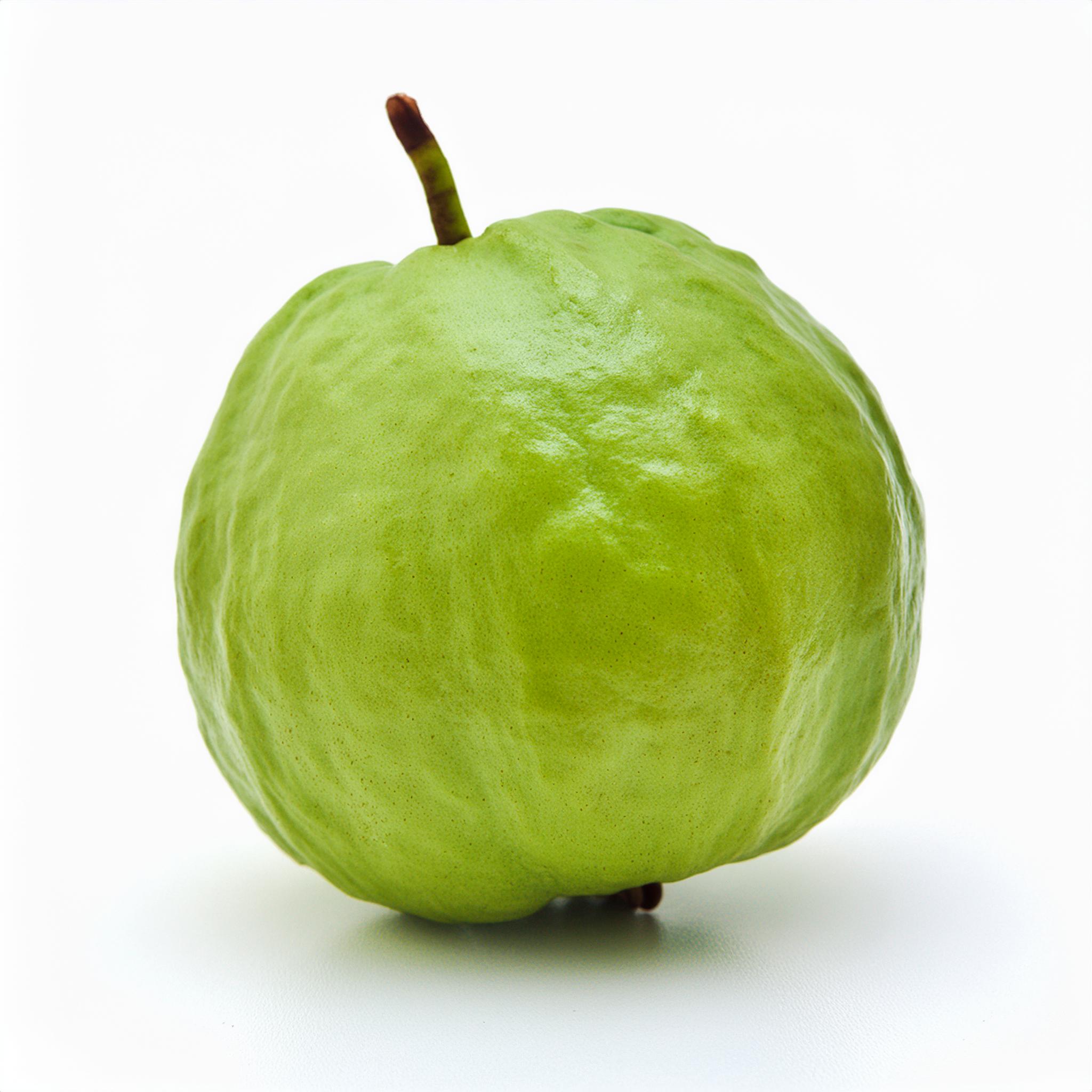
Guava seed oil is pressed from the hard seeds packed inside guava fruit, a tropical crop grown widely in India and Brazil. The seeds are usually recovered from guava pulp and juice making.
Get to know guava seed oil
- Source
- Fruit seeds
- Origin
- India, Brazil, tropics
- Extraction
- Cold-pressed
- Texture
- Light, fast-absorbing
What it is
Guava is a botanical carrier oil used in hair and skin care.
Why it belongs in your routine
Light, linoleic-rich oil from the hard seeds of the tropical guava.
How to use
Warm a few drops between your palms and smooth over hair or skin. Patch test before use.
Where does guava seed oil come from?
Guava, Psidium guajava, is a small evergreen tree of the myrtle family native to tropical America, usually 3 to 10 metres tall with peeling copper-brown bark and leathery, strongly veined leaves. Its round fruit has green to yellow skin, pink or white flesh and a centre packed with small hard seeds. India is the largest guava grower, and it is also farmed widely in Brazil, Mexico, Pakistan and Southeast Asia.
Guava seed oil is pale yellow with a light, faintly fruity smell. It is typically very high in linoleic acid, often above 70 percent, and naturally contains tocopherols. It absorbs quickly and feels light, so it is used in face oils, serums, lotions and blends for oily-feeling skin types.
Sourcing & extraction
How guava seed oil is sourced and extracted
Why it is rare
Guava seeds are small and stone-hard, and they contain relatively little oil, often around 10 to 15 percent of their weight. Collecting them depends on fruit-processing plants, so only a small amount of seed oil is made compared with more common seed oils.
How it is gathered
Guava fruit is typically hand-picked on smallholdings and orchards, with main seasons in India falling in the monsoon and winter months. Much of the fruit goes to pulp, juice, jam and guava paste factories, where the seeds are sieved out as a by-product. The seeds are then washed free of pulp, sun- or oven-dried, and sent to presses in bulk sacks.
How it is made
Cold-pressed from the seed
- Seeds are sieved out of guava pulp during juice, jam and paste making.
- The seeds are washed to remove clinging fruit flesh and dried until hard and brittle.
- The dried seeds are cracked or ground coarsely so the press can release their small oil content.
- An expeller presses the seed without added heat, and the oil is settled and filtered until clear.
How to use guava seed oil
- Start with a few drops and warm them between your palms.
- Massage into clean skin, or work through the lengths of damp or dry hair.
- Use on its own, or add a few drops to your moisturizer or conditioner.
For external use only. Patch test on a small area before first use and stop if irritation occurs. If you are pregnant, nursing or have a medical condition, ask a healthcare professional before use.
From ingredient to routine
Products with Guava
Find this ingredient in our collection.

Questions about Guava
Where does Guava come from?
Guava fruit is typically hand-picked on smallholdings and orchards, with main seasons in India falling in the monsoon and winter months. Much of the fruit goes to pulp, juice, jam and guava paste factories, where the seeds are sieved out as a by-product. The seeds are then washed free of pulp, sun- or oven-dried, and sent to presses in bulk sacks.
How is Guava extracted?
Cold-pressed from the seed. Seeds are sieved out of guava pulp during juice, jam and paste making. The seeds are washed to remove clinging fruit flesh and dried until hard and brittle. The dried seeds are cracked or ground coarsely so the press can release their small oil content. An expeller presses the seed without added heat, and the oil is settled and filtered until clear.
Why is Guava considered rare?
Guava seeds are small and stone-hard, and they contain relatively little oil, often around 10 to 15 percent of their weight. Collecting them depends on fruit-processing plants, so only a small amount of seed oil is made compared with more common seed oils.