The Ingredient Library
Frankincense
Boswellia serrata
Frankincense is the dried resin of Boswellia trees from Arabia, the Horn of Africa and India. Our essential oil is steam-distilled from Boswellia serrata resin tapped in the dry forests of India.
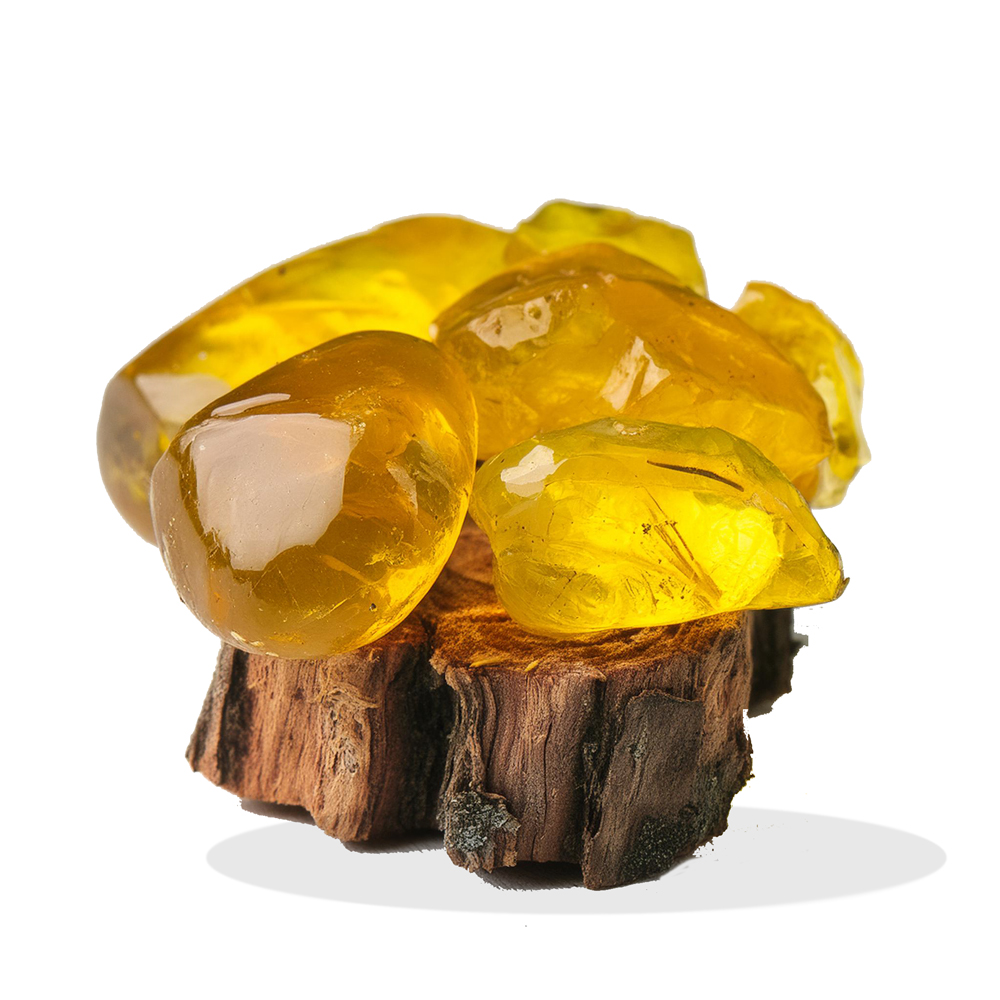
Get to know frankincense
- Source
- Tree resin
- Origin
- India (B. serrata)
- Extraction
- Steam-distilled
- Aroma
- Fresh, peppery, resinous
What it is
Frankincense is an aromatic essential oil distilled from the plant.
Why it belongs in your routine
Resin essential oil from Indian frankincense, Boswellia serrata.
How to use
Always dilute in a carrier oil before it touches skin. Never use undiluted. Patch test first.
Where does frankincense come from?
Frankincense comes from several species of Boswellia, small trees with papery peeling bark that grow in dry, rocky country. Boswellia sacra grows in Oman and Yemen, Boswellia carterii and frereana in Somalia, and Boswellia papyrifera in Ethiopia and Sudan. Boswellia serrata, Indian frankincense or salai, grows in the dry deciduous forests of central and western India, in states such as Madhya Pradesh, Chhattisgarh, Gujarat and Rajasthan.
Frankincense essential oil from Boswellia serrata is clear to pale yellow, with a fresh, peppery, citrus-edged scent over a soft resinous base. It is typically rich in monoterpenes such as alpha-thujene and alpha-pinene. Frankincense resin has been used as incense in temples and churches for thousands of years, and the oil is used today in face oils, balms, perfumes and diffuser blends.
Sourcing & extraction
How frankincense is sourced and extracted
Why it is rare
Each tree yields only a limited amount of resin per season, and tapping must be rested to keep trees productive. Boswellia serrata grows wild in forest land, so collection depends on local tappers and forest rules, and resin quality varies with tree, weather and handling.
How it is gathered
Indian frankincense resin, known locally as salai guggul, is typically tapped by tribal and forest-dwelling communities in central India during the dry months from late autumn to early summer. Tappers shave small strips of bark from wild trees, and the resin that seeps out hardens over several weeks before being scraped off. It is then graded, bagged and sold through forest depots and traders to distillers.
How it is made
Steam-distilled from the resin
- Tappers scrape small shallow cuts into the bark of Boswellia serrata trees during the dry season.
- The milky resin seeps out and hardens on the trunk over several weeks before it is scraped off by hand.
- The dried resin is sorted, cleaned and broken into smaller pieces to expose more surface.
- Steam passes through the resin in a still, and the condensed oil is separated from the water and filtered.
How to use frankincense
- Add a few drops to a diffuser for its aroma.
- For skin, dilute 1 to 2 drops in a teaspoon of carrier oil before applying.
- Keep away from eyes and never use undiluted on skin.
For external use only. Patch test on a small area before first use and stop if irritation occurs. If you are pregnant, nursing or have a medical condition, ask a healthcare professional before use.
From ingredient to routine
Products with Frankincense
Find this ingredient in our collection.

Questions about Frankincense
Where does Frankincense come from?
Indian frankincense resin, known locally as salai guggul, is typically tapped by tribal and forest-dwelling communities in central India during the dry months from late autumn to early summer. Tappers shave small strips of bark from wild trees, and the resin that seeps out hardens over several weeks before being scraped off. It is then graded, bagged and sold through forest depots and traders to distillers.
How is Frankincense extracted?
Steam-distilled from the resin. Tappers scrape small shallow cuts into the bark of Boswellia serrata trees during the dry season. The milky resin seeps out and hardens on the trunk over several weeks before it is scraped off by hand. The dried resin is sorted, cleaned and broken into smaller pieces to expose more surface. Steam passes through the resin in a still, and the condensed oil is separated from the water and filtered.
Why is Frankincense considered rare?
Each tree yields only a limited amount of resin per season, and tapping must be rested to keep trees productive. Boswellia serrata grows wild in forest land, so collection depends on local tappers and forest rules, and resin quality varies with tree, weather and handling.