
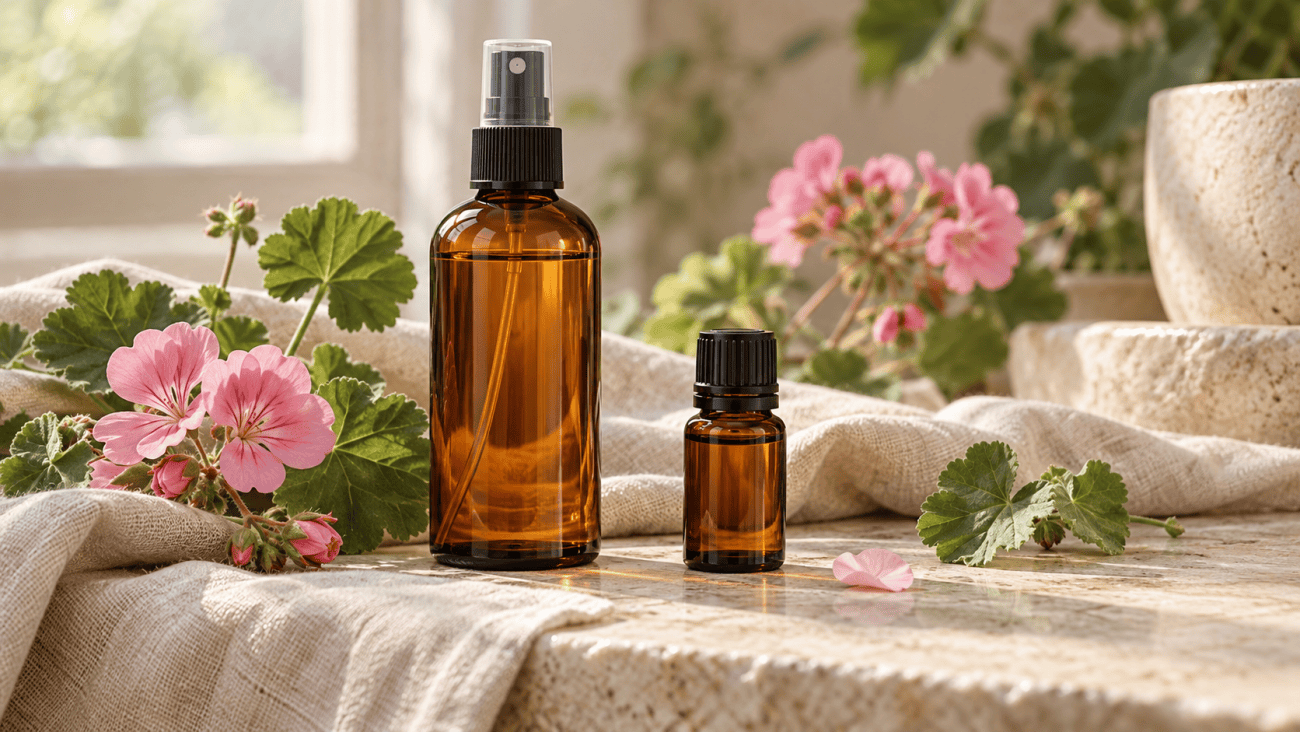
A hydrosol is an aromatic water produced through distillation. An essential oil is a concentrated aromatic oil. They can come from the same plant, but they are different product formats and should not be substituted for one another without appropriate formulation guidance.
If you are choosing between a facial mist and a small essential oil bottle, start with what you want the product to do in your routine. Then read the complete label, including directions and intended use.
What makes a hydrosol different?
The National Association for Holistic Aromatherapy explains that hydrosols and essential oils differ in their composition. Hydrosols contain water-associated plant compounds and small amounts of aromatic constituents. Their aroma may also differ from the corresponding essential oil.
That means a hydrosol is more than an essential oil bottle with a larger volume. It is a distinct material. The names “floral water” and “hydrolat” may appear in descriptions, but the ingredients and processing details still deserve a check.
Compare the formats before choosing
| Question | Hydrosol | Essential oil |
|---|---|---|
| What is the format? | Aromatic water | Concentrated aromatic oil |
| What might I be shopping for? | A labelled facial mist or toner | A product for a labelled aromatic or diluted-use application |
| Can I swap the directions? | Follow this bottle’s own instructions | Follow this oil’s own instructions |
| What should I inspect? | Ingredients, intended use and storage | Ingredients, dilution and use restrictions |
Do not assume every fragrant spray is a hydrosol. Read the ingredient list and look for an explanation of the product rather than relying only on its scent or packaging.
Choose a format by the routine you want
For a ready-to-use facial-mist option, explore the Facial Mists & Refreshing Care collection. Check each listing to establish whether the intended use fits your plan. A mist, room fragrance and skin-care ingredient may have different instructions even when they share a botanical name.
One example is the store’s Buddhawood Hydrosol Mist, described as aromatic heartwood water with a soft woody scent. Its buddhawood ingredient guide explains how the aromatic water is collected during distillation.
If you want a concentrated aromatic oil instead, read the exact essential oil’s directions. Avoid copying the instructions from a mist onto a concentrated oil. Choose one clearly labelled product rather than improvising a replacement.
A practical first-use checklist
Read the label before opening the bottle. Confirm the intended application, patch-test instructions and storage guidance. Follow them, avoid the eyes, and stop if irritation occurs. Do not infer food suitability from a familiar plant name.
Keep your first trial simple. Introduce one new product and use it in the way the manufacturer describes. There is no need to combine several botanicals just to create a more elaborate ritual.
Keep the original packaging so you can revisit its directions. If you transfer a product into another container for travel, retain its identity and instructions rather than depending on memory.
Common questions
Will the hydrosol smell exactly like the essential oil?
Not necessarily. Different composition can mean a different aroma. Read the scent description before ordering if fragrance is central to your choice.
Is every hydrosol made from flowers?
No. The term “floral water” does not limit the plant material to flowers; the store’s buddhawood example comes from heartwood.
Where should I start shopping?
Browse Au Natural Organics hydrosols and compare the individual labels. Choose the format whose directions match the routine you actually want to follow.
Leave a comment
You must be logged in to post a comment.