
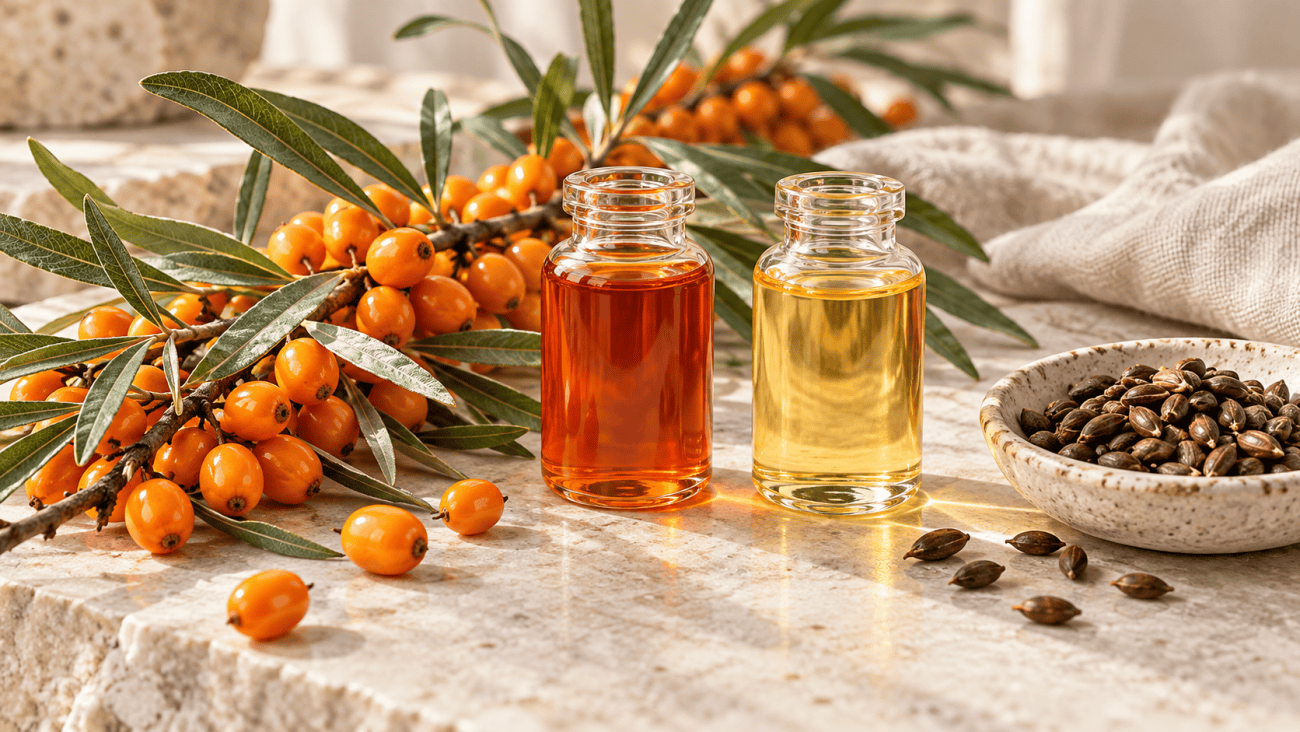
Sea buckthorn berry oil and sea buckthorn seed oil are different materials from the same plant. Berry oil comes from the fruit’s pulp, while seed oil comes from its seeds. When you compare bottles, the plant part is the first detail to check.
A label that says only “sea buckthorn oil” may leave an important question unanswered. Ask whether it contains pulp oil, seed oil or a blend before deciding how it belongs in your routine.
The difference you can see
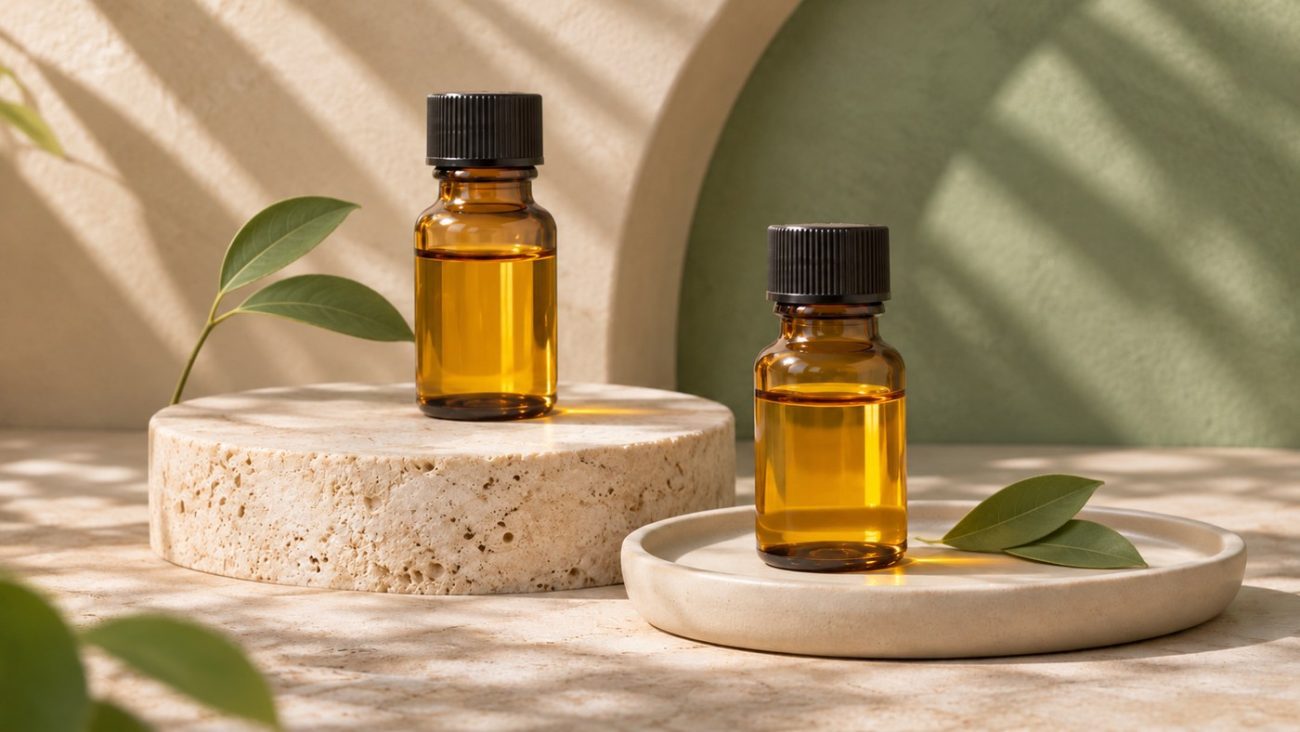
Au Natural Organics describes its sea buckthorn berry oil as a thick, deeply orange-red oil. The listing distinguishes it from paler, lighter seed oil and warns that the berry oil can tint skin and fabric.
That distinction matters when you want to use an oil near clothing, towels or bedding. A vivid botanical color can be part of an ingredient’s character, but it also changes how carefully you need to handle the product.
| Label detail | Berry or pulp oil | Seed oil |
|---|---|---|
| Plant part | Fleshy fruit pulp | Seeds |
| Appearance described in the store’s comparison | Deep orange-red | Paler |
| Practical buying question | What are the dilution and tinting precautions? | What are this supplier’s directions and specifications? |
| Substitution | Do not assume a seed-oil formula applies | Do not assume a pulp-oil formula applies |
Color is a useful observation, not a complete identity or purity test. The supplier’s ingredient information should explain what is actually being sold.
A five-point label check
Before putting a bottle in your basket, check the following:
- Botanical identity. Look for the plant name, Hippophae rhamnoides, and an explanation of the plant part.
- Complete ingredients. Establish whether the bottle is a single oil or a diluted blend.
- Intended use. Choose a product labelled for your planned cosmetic application.
- Application instructions. Use the directions for that particular bottle instead of borrowing a recipe from another product.
- Handling information. Read storage, staining and packaging guidance before opening it.
If a detail is unclear, ask the supplier before experimenting. A clear answer is more useful than an impressive list of nutrients without a description of the product.
Using a strongly colored oil thoughtfully
For the Au Natural Organics berry oil, follow the listing’s dilution guidance and use a small amount. Protect fabric, patch test before wider skin use, and stop if irritation develops. Keep the bottle closed and store it as directed.
Do not judge the right amount by how orange your skin looks. For a cosmetic routine, consider whether you enjoy the finish and whether the handling requirements fit your habits.
If you are comparing two suppliers, make a short list of the differences in plant part, formula and directions. This prevents a rich pulp oil from being compared with a pre-diluted product as if they were identical.
Common questions
Are berry oil and pulp oil the same category?
In this comparison, berry oil refers to the oil from the fleshy pulp. Confirm the supplier uses the term that way; common names can be imprecise.
Does a brighter color prove a better product?
No. Choose by documented identity, intended use and clear instructions. Appearance alone does not establish overall quality.
Does Au Natural Organics sell the berry version?
The current linked listing describes berry-pulp oil. Review its current ingredients and directions before ordering. The ingredient guide provides a starting point for further botanical reading.
Common names raise the same question as plant parts. The guide to maracuja oil vs passion fruit oil shows how two names can describe one Passiflora edulis seed oil.
Leave a comment
You must be logged in to post a comment.