
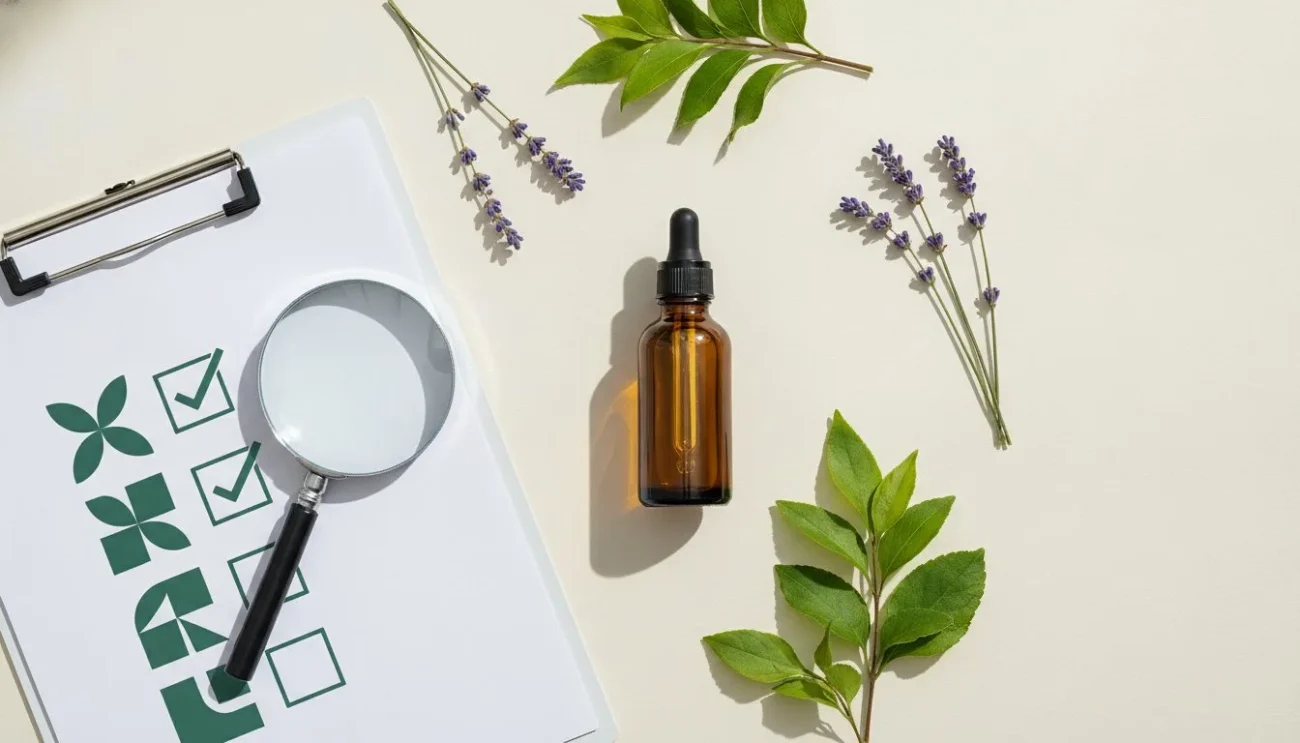
“Therapeutic grade” should not be treated as proof that an essential oil is safe to ingest, appropriate for every skin use or clinically effective. Ask what a seller’s term means and what independent documentation supports the exact product and proposed use.
Begin with the label
- Botanical name and plant part.
- Extraction method and full ingredient list.
- Lot or batch identification.
- Intended uses and application instructions.
- Storage, expiry and relevant cautions.
A common name can cover different plants. A chemotype, where relevant, adds composition information; it does not establish that one oil is universally safest or best for a clinical outcome.
Understand a batch report’s limits
GC/MS analysis can characterize volatile components. A useful report should identify the sample and batch, laboratory, method and results. Its interpretation may require qualified expertise, and one analysis is not proof of every possible quality or contaminant claim.
Check that the report matches the bottle being purchased. A generic chromatogram, a certificate for another lot or a logo reading “tested” does not establish the current batch’s identity. Composition testing also does not demonstrate effectiveness in treating a condition.
Home checks cannot certify purity
Smell, color and paper tests cannot reliably establish purity or rule out adulteration. Natural variation and processing can change sensory characteristics. Avoid declaring that every odorless oil is fake or that every blend is inferior; a disclosed formulated blend can have a different intended purpose from a single oil.
Packaging needs compatibility and storage guidance. The earlier article claimed that only amber or cobalt glass provides suitable protection, despite the store also offering violet glass. That absolute rule has been removed. Check the packaging specifications and supplier’s storage instructions instead of using bottle color as a quality test.
Separate credentials from use
Organic and other certification claims need matching documents and a clear scope. They do not prove clinical efficacy or remove irritation risks. Do not infer purity from geographic origin or describe all traditionally processed oils as safer than all refined alternatives.
FDA guidance on aromatherapy explains why natural wording does not guarantee safety and why treatment claims differ from cosmetic descriptions. Avoid ingestion and use an assessed product according to its directions rather than a universal essential-oil dilution recipe.
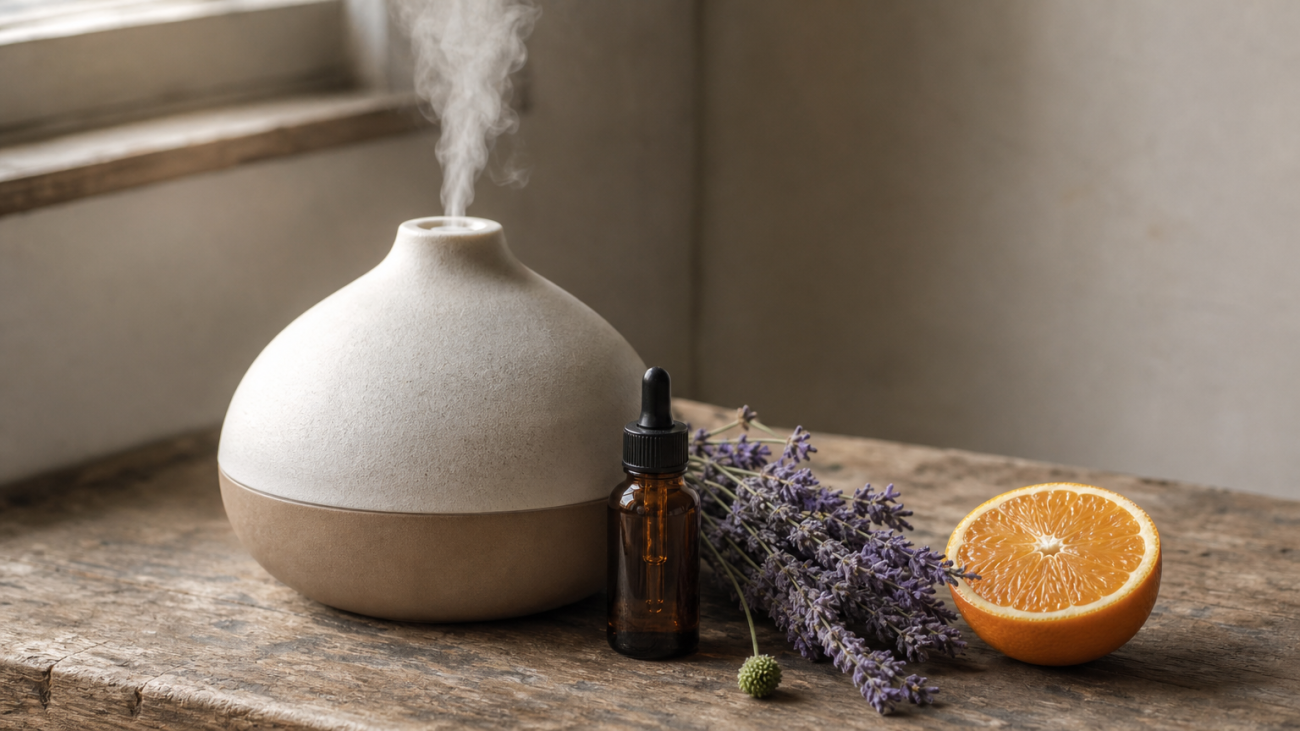
Browse the essential-oil collection alongside the Ingredient Library. For household fragrance, use the diffuser guide to check the device and oil together.
Updated 12 October 2026. This editorial refresh was prepared with AI assistance and checked against the sources linked in this article. It has not been clinically reviewed.
Leave a comment
You must be logged in to post a comment.