The Ingredient Library
Moringa
Moringa oleifera
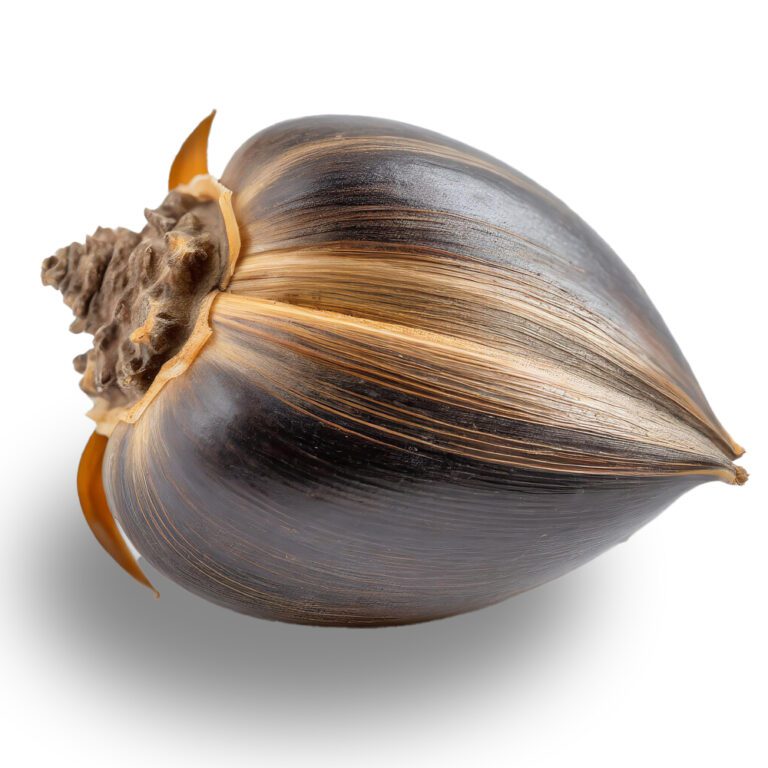
Moringa oil, also called ben oil, is pressed from the winged seeds of the fast-growing drumstick tree, grown widely in India and across Africa for its leaves, pods and seed.
Get to know moringa oil
- Source
- Seed kernel
- Origin
- India, Africa
- Extraction
- Cold-pressed
- Texture
- Light, silky, stable
What it is
Moringa is a botanical carrier oil used in hair and skin care.
Why it belongs in your routine
Stable, light ben oil pressed from moringa tree seeds.
How to use
Warm a few drops between your palms and smooth over hair or skin. Patch test before use.
Where does moringa oil come from?
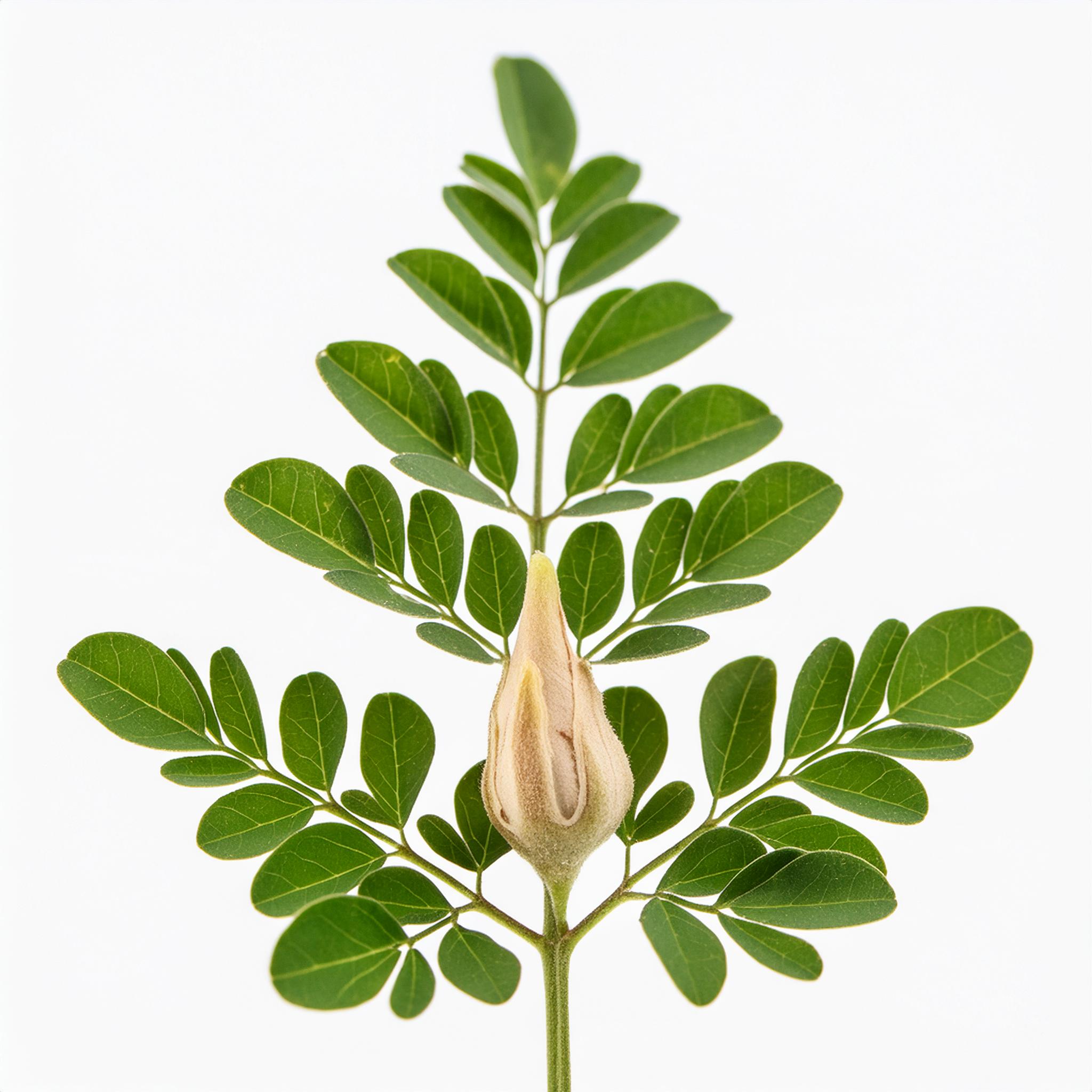
Moringa oleifera, the drumstick tree, is native to the foothills of the Himalayas in northern India. It is a fast-growing, drought-tolerant tree that reaches around 10 to 12 metres, with feathery leaves, cream flowers and long, ribbed seed pods up to 45 cm. Each pod holds rows of round seeds with three papery wings. It is now grown throughout India and across Africa.
Moringa oil is pale yellow and almost odourless, with a smooth, silky feel. It is high in oleic acid, often around 70 percent, and contains behenic acid, which is why it is sometimes called ben oil. Its composition makes it resistant to going rancid, so it has long been used in perfumery to hold scents. Today it features in face oils, hair oils and balms.
Sourcing & extraction
How moringa oil is sourced and extracted
Why it is rare
The seeds must be picked while the pods are dry but before they split, then shelled one by one. The kernels hold roughly 30 to 40 percent oil, so a substantial number of pods are needed for each litre.
How it is gathered
In India and parts of East and West Africa, moringa is grown on smallholdings, in hedgerows and in dedicated plantations. The dry brown pods are usually hand-picked from the trees during the dry season. The pods are split open and the winged seeds are removed and dried. The seeds are then shelled to remove the papery husk before the kernels are pressed, either locally or at regional oil mills.
How it is made
Cold-pressed from the seed kernel
- Mature, dry pods are picked from the trees and split open to release the winged seeds.
- The seeds are dried further, then shelled to remove the papery wings and seed coat.
- The kernels are fed through a cold press, where the oil is squeezed out at low temperature.
- The oil is left to rest so sediment settles, then filtered to give a clear, pale oil.
How to use moringa oil
- Start with a few drops and warm them between your palms.
- Massage into clean skin, or work through the lengths of damp or dry hair.
- Use on its own, or add a few drops to your moisturizer or conditioner.
For external use only. Patch test on a small area before first use and stop if irritation occurs. If you are pregnant, nursing or have a medical condition, ask a healthcare professional before use.
From ingredient to routine
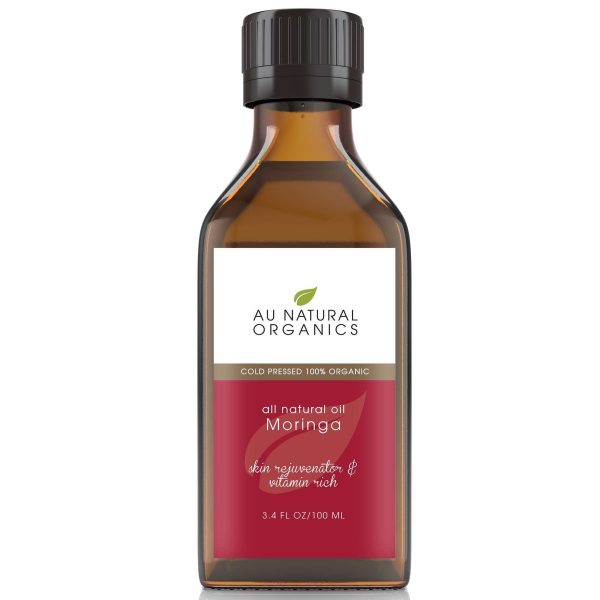
Products with Moringa
Find this ingredient in our collection.
Questions about Moringa
Where does Moringa come from?
In India and parts of East and West Africa, moringa is grown on smallholdings, in hedgerows and in dedicated plantations. The dry brown pods are usually hand-picked from the trees during the dry season. The pods are split open and the winged seeds are removed and dried. The seeds are then shelled to remove the papery husk before the kernels are pressed, either locally or at regional oil mills.
How is Moringa extracted?
Cold-pressed from the seed kernel. Mature, dry pods are picked from the trees and split open to release the winged seeds. The seeds are dried further, then shelled to remove the papery wings and seed coat. The kernels are fed through a cold press, where the oil is squeezed out at low temperature. The oil is left to rest so sediment settles, then filtered to give a clear, pale oil.
Why is Moringa considered rare?
The seeds must be picked while the pods are dry but before they split, then shelled one by one. The kernels hold roughly 30 to 40 percent oil, so a substantial number of pods are needed for each litre.