The Ingredient Library
Dragon’s Blood Extract
Croton lechleri
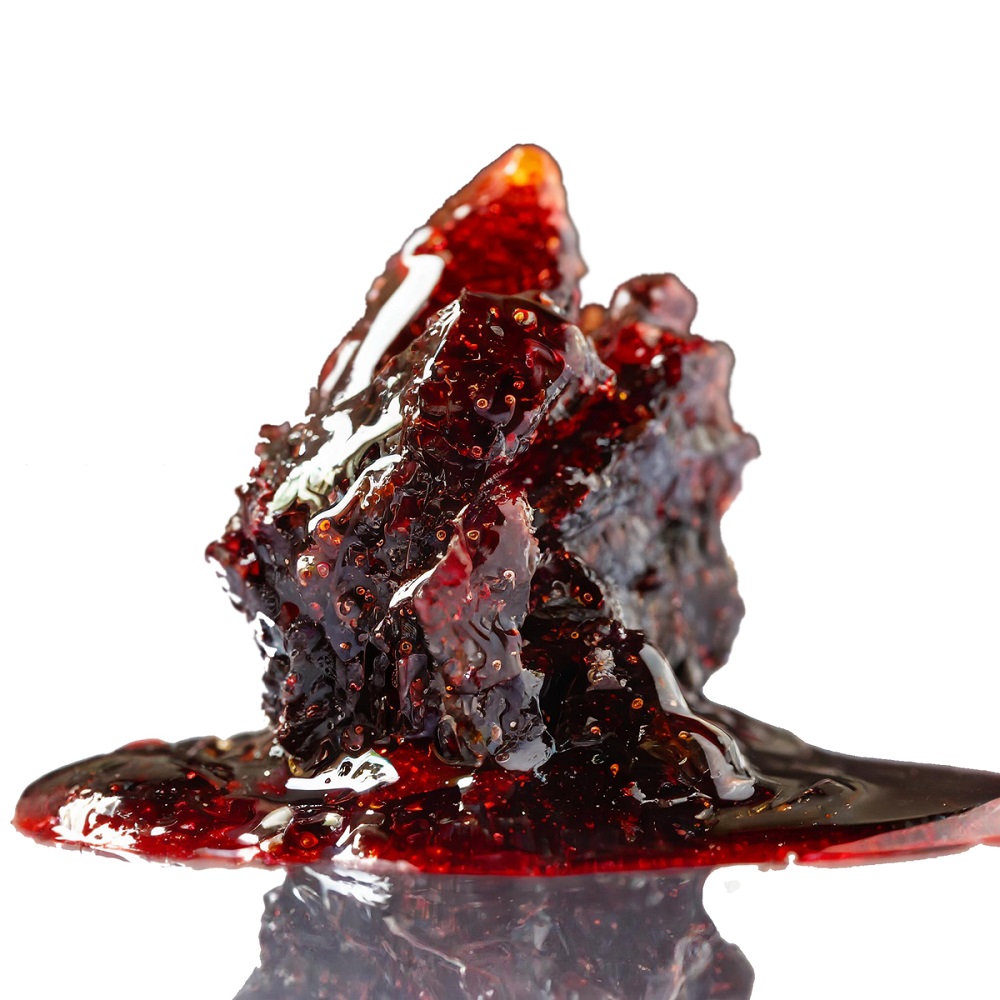
Dragon's blood extract is the deep red sap of the sangre de grado tree of the upper Amazon, collected by cutting the bark so the latex runs out like blood.
Get to know Dragon’s Blood Extract
- Source
- Bark latex (sap)
- Origin
- Upper Amazon, Peru
- Extraction
- Bark tapping, filtered
- Texture
- Thin, deep red liquid
What it is
Dragon’s Blood Extract is a botanical extract used in skin and body formulations.
Why it belongs in your routine
Deep red latex from the sangre de grado tree of the Amazon.
How to use
Follow the directions on your chosen product. Patch test before use.
Where Dragon’s Blood Extract comes from
Sangre de grado, Spanish for blood of the dragon, is a fast-growing tree of the upper Amazon in Peru, Ecuador and Colombia. It reaches about 10 to 20 metres, yet its trunk usually stays under 30 cm across. The bark is smooth and mottled grey-white, the leaves are large and heart-shaped, and long stalks carry small greenish-white flowers. Cut the bark and a dark red latex seeps out.
Dragon's blood extract is that latex, a thin, dark red liquid with a faintly earthy, woody smell. It turns a pale pinkish cream when rubbed between the fingers and dries to a thin film. The sap naturally contains proanthocyanidins and the alkaloid taspine. In cosmetics it is used in small amounts in serums, masks and creams, mainly for its colour and film-forming feel.
Sourcing & extraction
How Dragon’s Blood Extract is sourced and extracted
Why it is rare
Each tree gives a limited amount of latex, and plantations usually need around eight years before trees are worth tapping. Much of the supply still comes from wild or semi-wild trees along Amazonian rivers, so volumes depend on local collectors and the rainy season.
How it is gathered
In Peru, sangre de grado latex is typically collected by local harvesters in the Amazon lowlands of eastern Peru. Collectors cut V-shaped or spiral grooves into the bark of mature trees and let the red sap drip into containers. The latex is then carried out by boat or road to towns, where it is filtered and bottled for sale.
How it is made
Latex tapped from the bark
- Harvesters choose mature trees and cut V-shaped or spiral grooves into the bark along the middle of the trunk.
- The dark red latex runs down the grooves and drips into clean containers set at the base.
- Collected latex is carried to a processing point and strained to remove bark fragments and debris.
- The filtered sap is checked for colour and clarity, then bottled in dark containers to protect its colour.
How to use Dragon’s Blood Extract
- Follow the directions on your chosen product.
- Start with a small amount in your recipe and adjust.
- Store sealed in a cool, dry place.
For external use only. Patch test on a small area before first use and stop if irritation occurs. If you are pregnant, nursing or have a medical condition, ask a healthcare professional before use.
From ingredient to routine
Products with Dragon’s Blood Extract
Find this ingredient in our collection.

Questions about Dragon’s Blood Extract
Where does Dragon’s Blood Extract come from?
In Peru, sangre de grado latex is typically collected by local harvesters in the Amazon lowlands of eastern Peru. Collectors cut V-shaped or spiral grooves into the bark of mature trees and let the red sap drip into containers. The latex is then carried out by boat or road to towns, where it is filtered and bottled for sale.
How is Dragon’s Blood Extract extracted?
Latex tapped from the bark. Harvesters choose mature trees and cut V-shaped or spiral grooves into the bark along the middle of the trunk. The dark red latex runs down the grooves and drips into clean containers set at the base. Collected latex is carried to a processing point and strained to remove bark fragments and debris. The filtered sap is checked for colour and clarity, then bottled in dark containers to protect its colour.
Why is Dragon’s Blood Extract considered rare?
Each tree gives a limited amount of latex, and plantations usually need around eight years before trees are worth tapping. Much of the supply still comes from wild or semi-wild trees along Amazonian rivers, so volumes depend on local collectors and the rainy season.