
Description
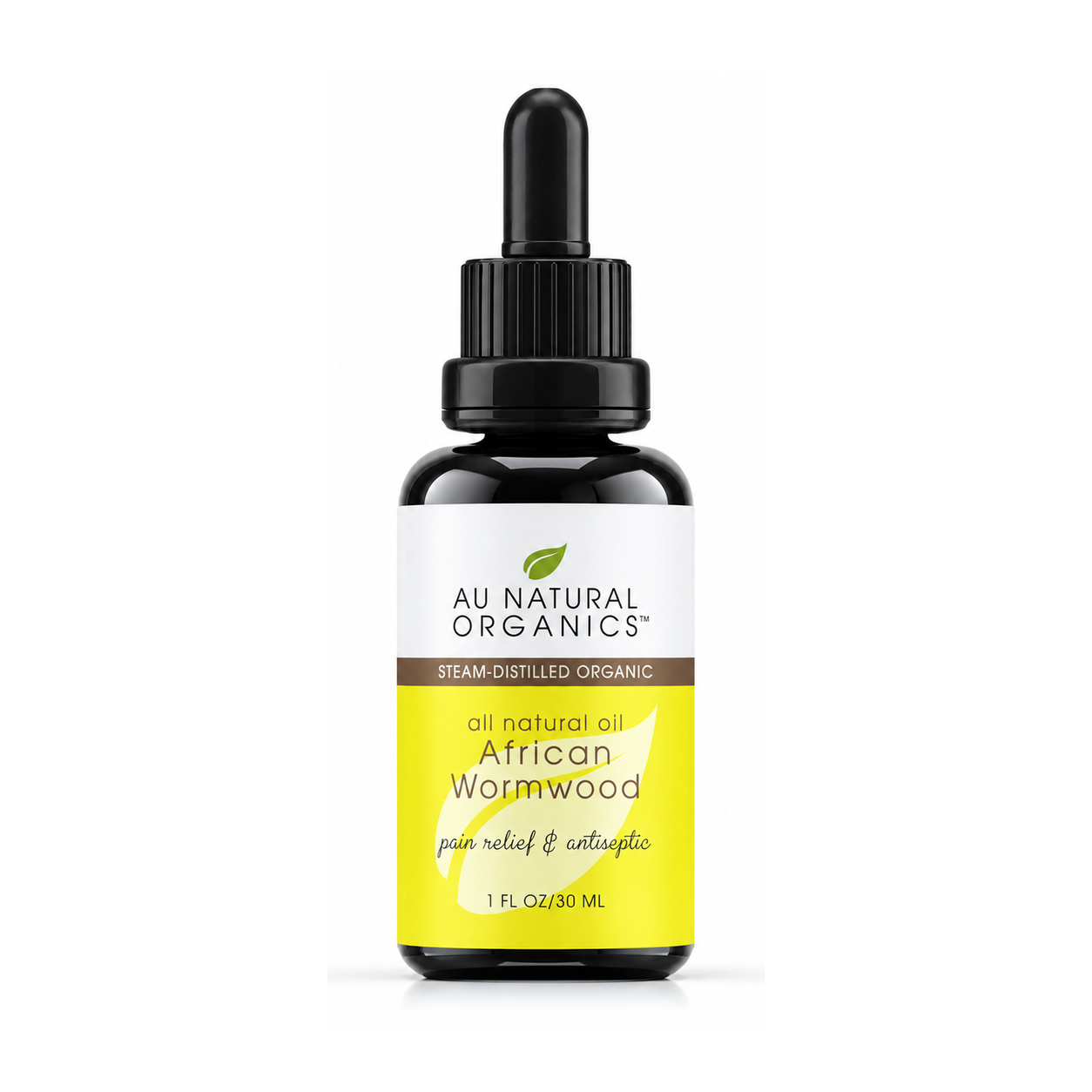
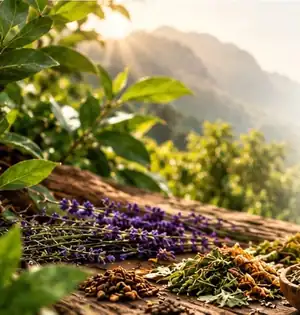
African wormwood, known as wilde als in Afrikaans and umhlonyane in isiZulu, is a multi-stemmed shrub that grows on the grasslands and mountain slopes of southern Africa. Its fern-like leaves are dark green on top and white-haired underneath, giving the bush a soft grey look. In the Eastern Cape, Free State and Lesotho, the leafy tops are cut by hand from wild stands in late summer and taken to a nearby farm still the same day. The oil is pale yellow to greenish with a strong camphor and eucalyptus-like smell. It contains 1,8-cineole, camphor and thujone.
Details
| Botanical name | Artemisia afra (African wormwood) |
|---|---|
| Origin | Southern Africa |
| Part used | Leaves and stems |
| Extraction | Steam-distilled |
| Aroma | Camphoraceous, herbal |
| Ingredients | 100% Artemisia afra oil |
Why supply is limited: it is made in small batches by a handful of South African distillers, much of it from wild stands, and the yield is well under one percent.
How to use
- Room spray: add 5 drops to a small spray bottle of water with a little alcohol.
- Diffuser: add 1 to 2 drops with eucalyptus or lavender.
- Perfume: use a single drop for a green, camphor note.
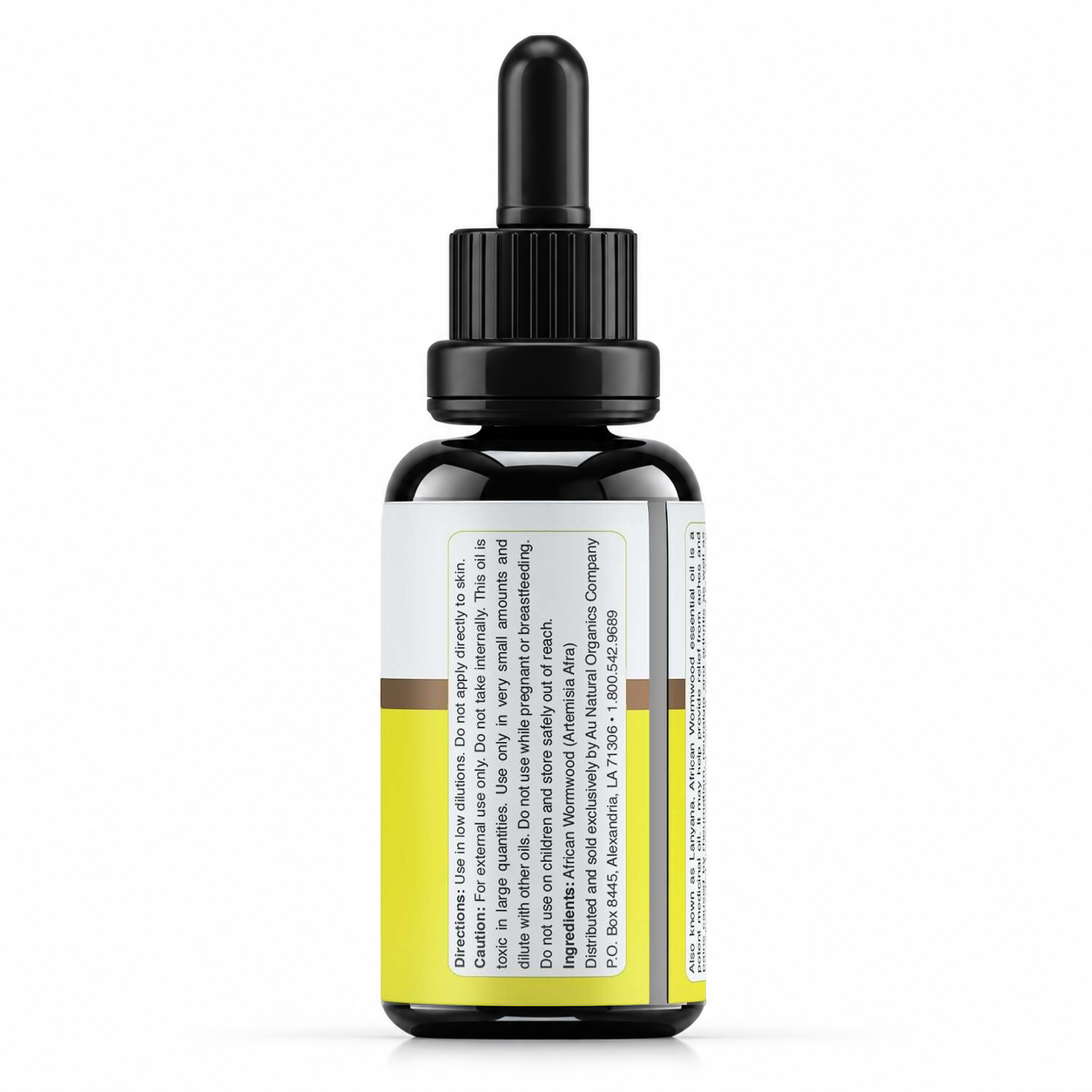
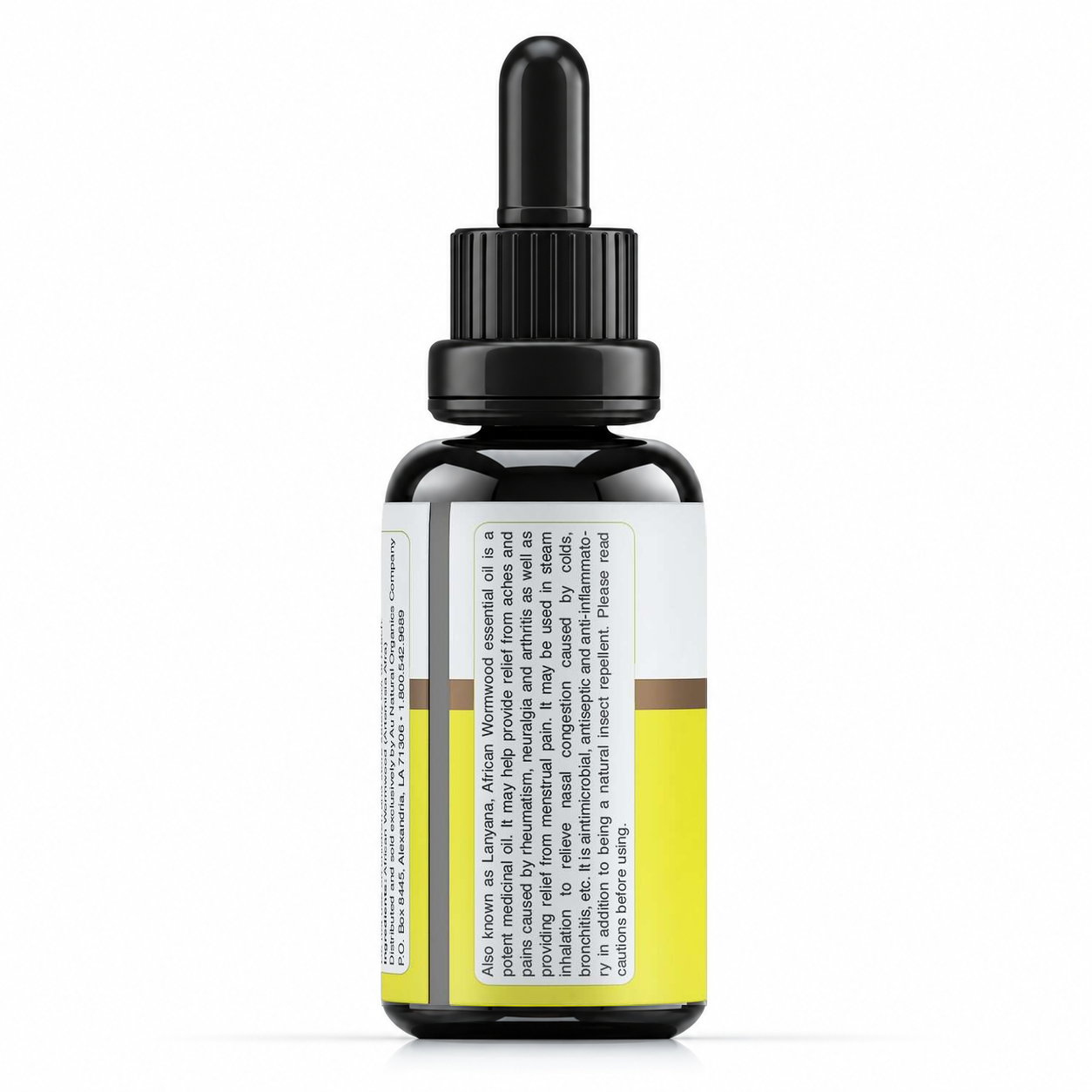
Essential oils are concentrated. Always dilute before use on skin, patch test first, keep away from eyes and out of reach of children, and do not take internally. If you are pregnant or nursing, check with your doctor before use. Do not use if you have epilepsy, and do not use on children.
FAQs
What does African wormwood smell like?
Sharp and fresh, like camphor and sage, with a bitter herbal edge.
Why use only a little?
It naturally contains thujone, so it is used in very small amounts.
Where does it grow?
On grasslands and mountain slopes across southern Africa.
Read where African wormwood oil comes from and how it is made.

Reviews