
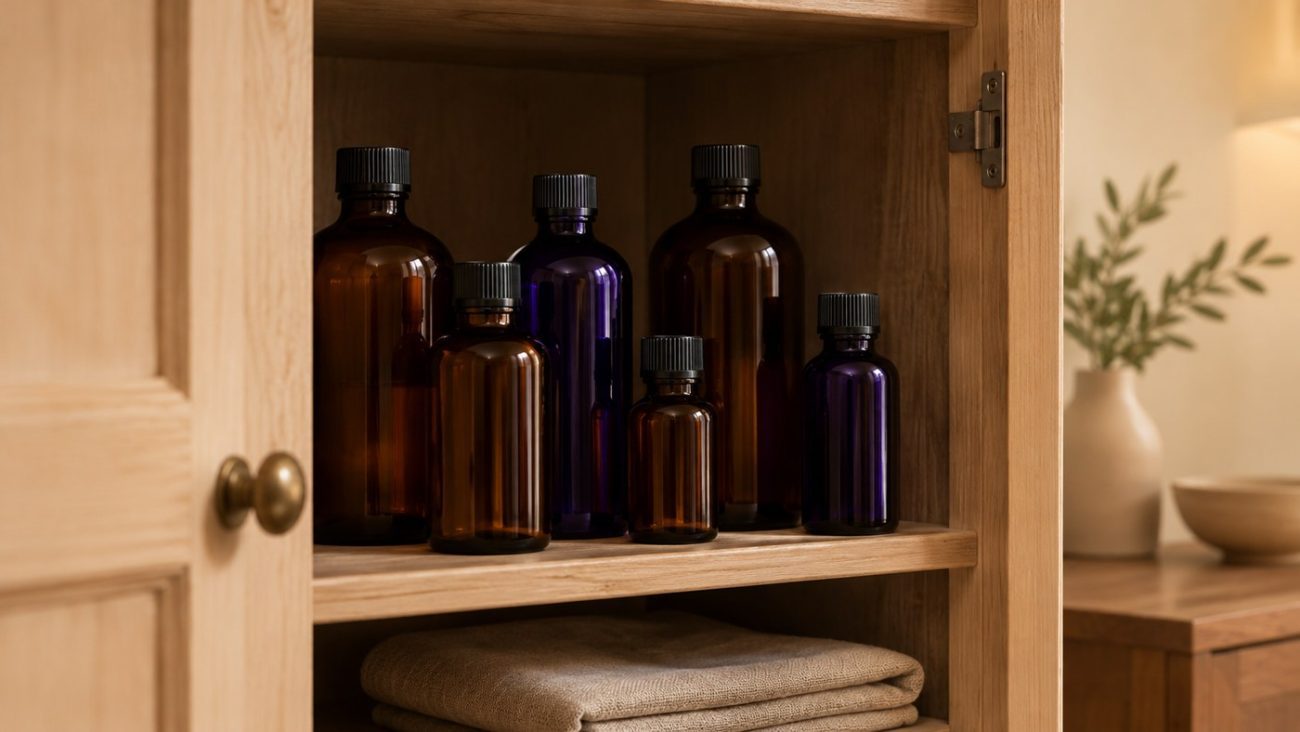
Store carrier oils according to their labels, with particular attention to light, heat and keeping the cap closed. A shaded cupboard away from direct sunlight and heat sources is a practical starting place for many cosmetic oils.
There is no single expiry date that applies to every botanical bottle. Use the seller’s instructions for the exact oil, and keep the original product information so you can check it later.
Choose the storage spot before opening
A bright windowsill may look attractive, but it is not a useful default for an oil whose directions call for cool, dark storage. Avoid choosing a shelf just because it photographs well.
Check the actual environment: Is it near a radiator or another warm appliance? Does it receive direct sun? Is it exposed to frequent splashes? A consistent shaded place can make the routine simpler.
The current Au Natural Organics jojoba oil and cacay oil pages both advise cool, dark storage with the cap closed. Those instructions are a better reference than a generic shelf-life number found for a different supplier’s product.
A five-step bottle-care routine
- Read and keep the label directions, including any expiry or period-after-opening information provided.
- Note when you open the bottle. A small dated note helps you keep track without guessing from memory.
- Close the cap after dispensing. Do not leave the bottle open while you finish the rest of your routine.
- Keep the opening and dispensing tool clean and dry. Avoid introducing water or transferring unused product back into the original container.
- Review bottles regularly so that forgotten purchases do not accumulate at the back of the shelf.
Buying an amount that fits your actual routine can also help. A large bottle is not automatically a better purchase if you use only a few drops occasionally.
Do all oils keep for the same time?
No. Ingredient composition, processing, packaging and storage conditions differ. The store explains that jojoba is mainly liquid wax esters, which distinguishes it from many other plant oils. That does not remove the need to follow its own storage directions.
Use the expiry information supplied with your particular batch. If it is missing or unclear, ask the seller rather than assigning a shelf life from an unrelated chart.
Manufacturer guidance from Plant Therapy also identifies heat, light and air as important storage considerations. Its specific shelf-life examples describe its own products, not a guarantee for every brand.
Should every oil go in the refrigerator?
Do not assume refrigeration is required or appropriate for every bottle. Follow product-specific guidance or ask the supplier. Cooling may change how some oils look or flow, so appearance alone is not enough to establish freshness.
Similarly, the fact that a product becomes thicker in a cool room does not tell you whether it has spoiled. If a change is unexpected, keep the batch information and ask the seller before continuing to use it.
What to do about an unfamiliar change
A new or unexpected odor, appearance or texture is a reason to pause and check the product, not proof of a diagnosis you can make from a photograph. Compare with the supplier’s description and contact them with the product name, batch details and storage history.
Do not try to hide an unwanted smell with fragrance or mix a questionable oil into a fresh bottle. Keeping products separate makes a concern easier to investigate.
Keep the shelf easy to maintain
Store the bottles you use together, keep their labels readable and rotate older purchases forward. For your next purchase, browse the carrier oil collection and compare bottle size as well as ingredient identity. A manageable collection is easier to use and care for.
Leave a comment
You must be logged in to post a comment.