
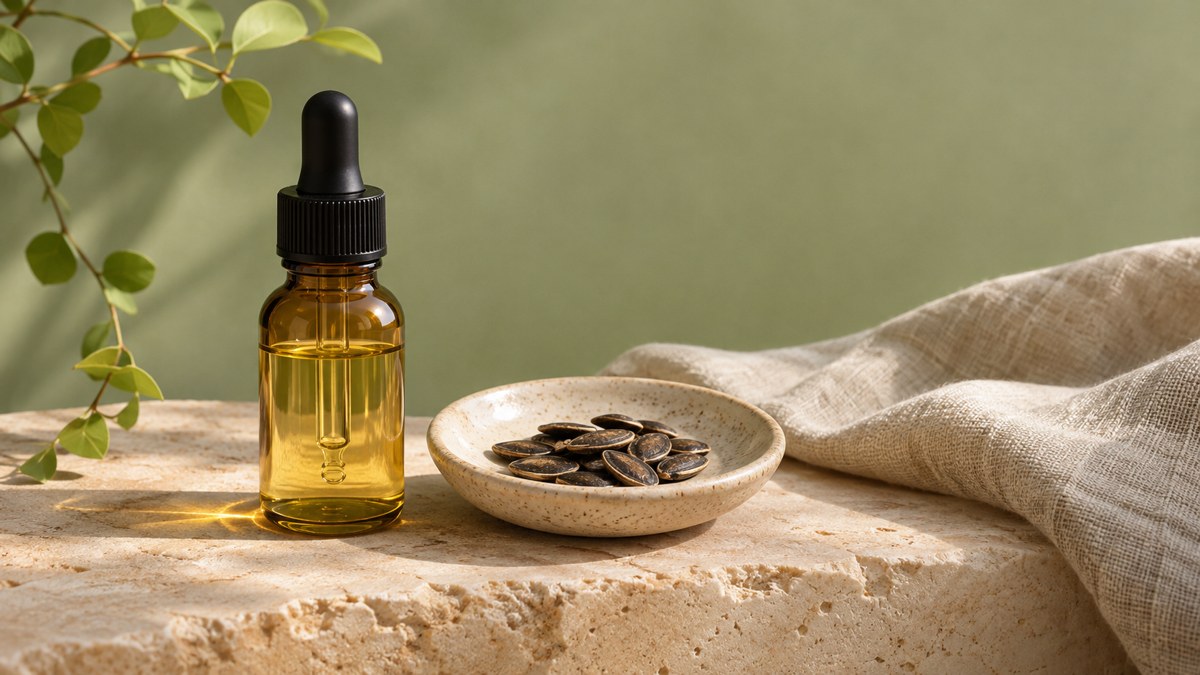
Kalahari melon seed oil may fit a face routine when you prefer a light finish and very little scent. Start with your bottle’s directions, introduce it on its own, and judge how comfortably it fits with the products you already use.
The current Au Natural Organics Kalahari melon seed oil listing suggests pressing two to three drops into clean skin. You can use that as a starting reference and adjust to the application area and finish you prefer.
Check the name and ingredients
This product is listed as 100% Citrullus lanatus seed oil, cold-pressed from Kalahari melon seeds. The store identifies Namibia and Botswana as its origin and describes a light, fast-absorbing texture with very little scent.
Common names can be confusing. When comparing a Kalahari melon oil with another watermelon seed oil, check the botanical name, plant part and supplier’s origin information. A shared species name does not establish that two bottles have the same sourcing, processing or added ingredients.
Introduce one small step
- Read the ingredient list and current directions. Confirm that you have a topical seed oil rather than a fragranced blend or a finished cream.
- Try a small area before wider use. A comfortable first trial does not guarantee future tolerance; stop if irritation occurs.
- On clean skin, dispense a small amount into your fingertips. Press or spread gently, avoiding the eyes.
- Let the finish settle before adding another layer. If it feels oilier than you like, use less at the next application.
- Keep the rest of your routine familiar while you decide whether this step is useful.
A light-feeling oil can still feel heavy if you apply more than you need. There is no benefit to using a whole dropper simply because the bottle has one.
How to judge whether it suits your routine
Look at practical questions: Is the scent comfortable? Does the amount spread easily? Does the finish work with your moisturizer and other products?
Change one variable at a time. If you increase the amount, change your cleanser and introduce another oil together, it becomes difficult to identify which choice changed the experience.
The store’s descriptions of light texture and low scent help you compare options. They do not guarantee that everyone will like the oil or that it will suit every skin type.
A separate role from sunscreen
A face oil is a cosmetic step for softness and feel. Do not treat a botanical origin or a light finish as evidence of sun protection. Keep sunscreen as its own product and follow its directions.
For more background on the plant and source, visit the Kalahari melon ingredient guide. Use the actual label to confirm the bottle you purchase.
Quick questions
Does it smell like fresh watermelon?
The store describes very little scent. Do not expect the aroma of a fruit juice or a fragranced skincare product.
Can I use it on my body too?
The current directions also include a small amount over damp skin after bathing. Face and body application areas may require different amounts.
Should I blend it with other oils first?
You can assess the single oil before making a blend. Keep the container closed and store it somewhere cool and dark as directed.
Review the Kalahari melon seed oil details if a light, low-scent option matches your preferences.

Leave a comment
You must be logged in to post a comment.