
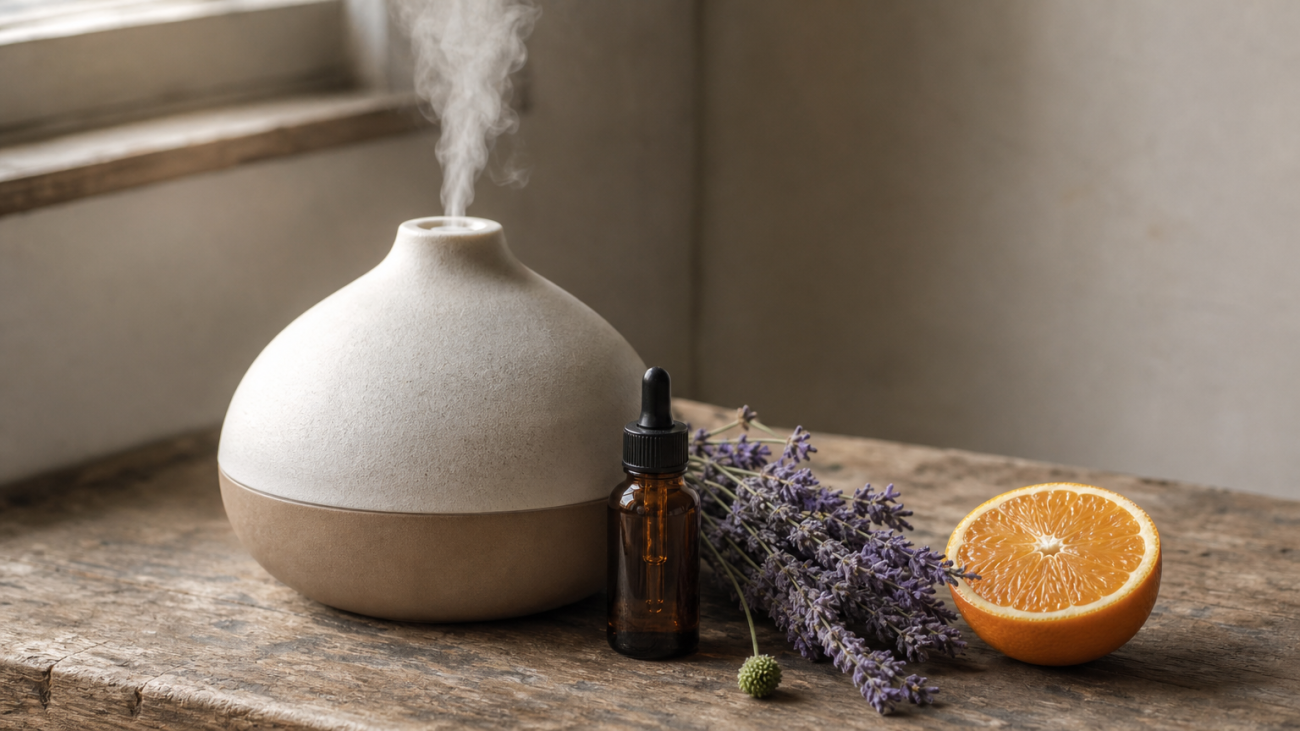
An essential-oil diffuser is a fragrance device. The right setup depends on the device, oil, room and people or animals sharing the space. A fixed number of drops per 100 ml cannot account for all of those factors.
Choose a compatible method
| Method | What to check |
|---|---|
| Ultrasonic | Water requirements, compatible oils, fill line and cleaning instructions. |
| Nebulizing | Oil suitability, output controls and the manufacturer’s operating guidance. |
| Passive | Material compatibility, spill risk and placement. |
| Heat-based | Fire, heat and product-compatibility precautions. |
Do not put carrier oils, butters or an unspecified cosmetic blend into a device designed for volatile oils. Check the intended use on the label before buying an ingredient for diffusion.
Follow directions instead of a universal recipe
The previous article specified drop counts, tank-size dose tables and timed sessions as broadly applicable. Those instructions have been replaced with device-specific guidance. Drop size, oil composition and room conditions vary.
- Read both the device manual and the oil’s intended-use instructions.
- Use the recommended setup and avoid unattended operation.
- Provide ventilation and stop if exposure causes discomfort.
- Do not keep running a device to overcome reduced awareness of the scent.
- Clean only by the manufacturer’s process; do not assume vinegar suits every device.
If the instructions conflict or do not cover your proposed oil, ask the manufacturer rather than inventing a blend. A strong scent is not evidence of a more effective or healthier session.
Consider the household
Infants, children, pets and people with respiratory sensitivities need particular consideration. Seek appropriate medical or veterinary advice before use around them. Do not regard keeping a pet briefly outside the room as a universal safety solution.
Natural, organic and pure wording does not guarantee safety. FDA’s aromatherapy resource explains this distinction. Diffusion should not be described as disinfecting indoor air, boosting immunity or treating illness.
Read the label before choosing the scent
Check botanical identity, full composition, storage and intended use. Browse the essential-oil collection and read the quality-documentation checklist. For eucalyptus specifically, consult the home-use guide.
Updated 12 October 2026. This editorial refresh was prepared with AI assistance and checked against the sources linked in this article. It has not been clinically reviewed.

Leave a comment
You must be logged in to post a comment.