

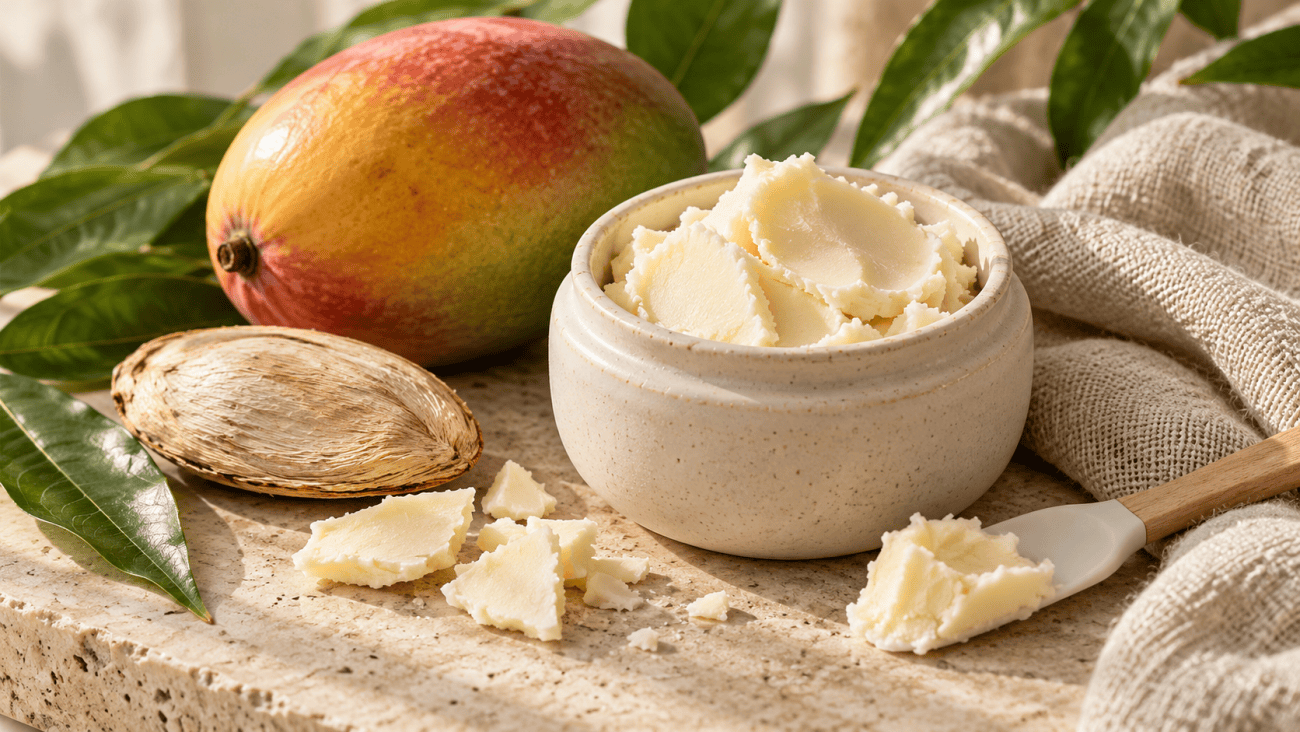
African shea butter is a plant butter used in skin-care and hair-conditioning routines. Its rich texture is the main reason to consider it: a little can spread over dry-feeling areas or hair ends. It should not be marketed as sunscreen or as a hair-regrowth treatment.

What does nilotica mean?
Our Shea ingredient profile describes East African nilotica shea and its processing. Nilotica is often softer than West African shea. The exact firmness, color and aroma can vary, so compare the product description and storage instructions rather than treating one texture as a universal purity test.
Using a rich butter in skin care
Follow the directions on the butter or finished formula you choose. Start with a small amount, warm it between your palms if the label allows, and assess how it feels on your skin. A heavier finish may suit some body-care preferences and feel excessive for others. Avoid claiming that one butter is suitable for every skin type.
For facial care, consider whether a rich butter fits the rest of your routine. Stop if irritation occurs. Persistent skin symptoms need an assessment; cosmetic softness is not evidence that a condition has been treated.
Using shea in a hair routine
A small amount on lengths or ends can be part of a conditioning routine when the product directions allow it. Fine hair may need less than thick or coarse hair. Decide whether you want a pre-wash treatment or a leave-in finish by the individual instructions, and wash out excess buildup.
Improved slip, appearance or manageability does not demonstrate new follicle growth. This article does not promise that shea grows hair or repairs a medical scalp condition.
Shea butter is not an SPF product
Do not assign a homemade shea blend an SPF or use it in place of sunscreen. The AAD sunscreen guidance recommends a labeled broad-spectrum, water-resistant SPF 30 or higher product.
Choosing and storing your butter
- Compare the ingredient list, size and directions before buying.
- Use the supplier’s storage and expiry information. Keep the container closed and avoid introducing water or dirty utensils.
- For a formulation project, work from a tested recipe; a raw butter and a preserved finished lotion are different products.
Browse Body Butters, Dry Skin & Moisture and the Ingredient Library to compare texture and routine options.
Updated 12 October 2026. This editorial refresh was prepared with AI assistance and checked against the sources linked below. It has not been clinically reviewed.


Leave a comment
You must be logged in to post a comment.