
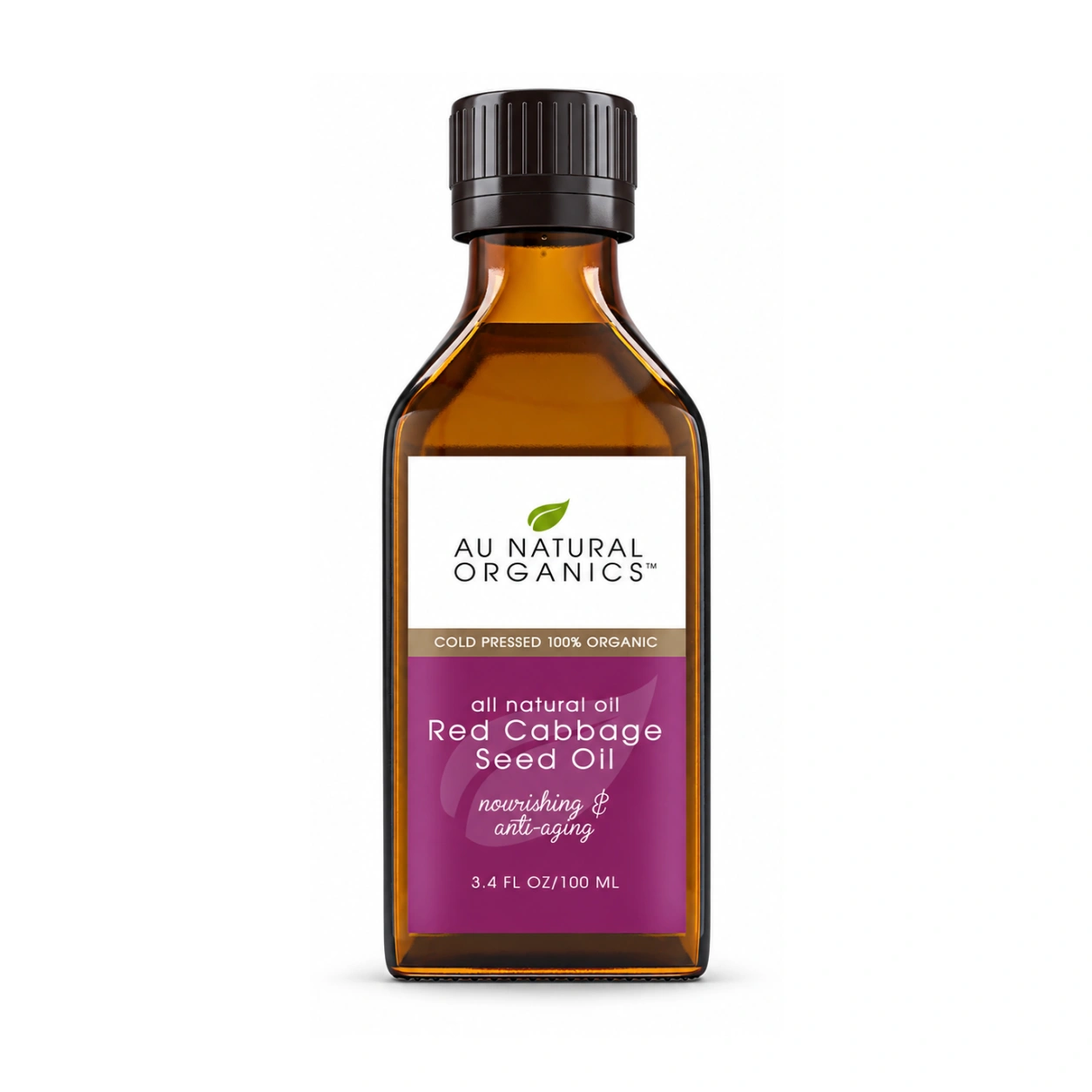
Description
Red cabbage is almost always cut as a vegetable in its first year. To make seed, specialist growers keep the plants through winter, and in the second spring they send up branched stalks of small yellow flowers that ripen into slender pods of round, dark seeds. Seed that is not needed for sowing is cold-pressed. The oil is pale yellow to golden with little smell. Like other cabbage-family seed oils it contains a high share of erucic acid, around 40 to 55 percent, which gives it a smooth, silky glide.
Details
| Botanical name | Brassica oleracea var. capitata f. rubra |
|---|---|
| Origin | Seed farms in Europe and Asia |
| Part used | Seed |
| Extraction | Cold-pressed |
| Texture | Silky, light slip |
| Ingredients | 100% red cabbage seed oil |
Why supply is limited: seed comes only from plants grown for two seasons, and most cabbage seed is sold for sowing rather than pressed.
How to use
- Hair: smooth 1 to 2 drops through dry lengths for slip and shine.
- Face: press 2 to 3 drops into clean skin.
- Formulas: use in serums and conditioners as a plant-based alternative to silicones.
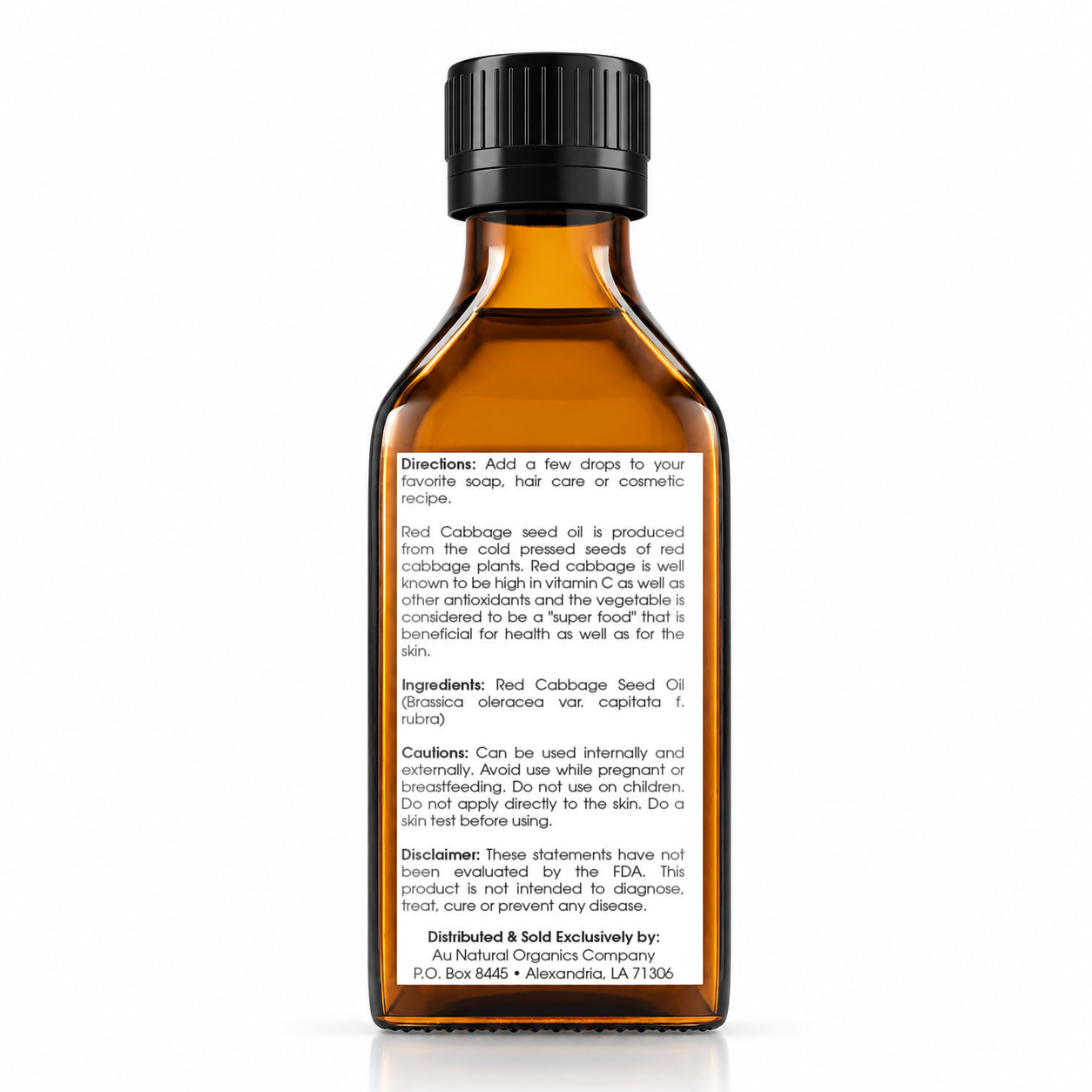
Patch test on the inner arm before first use. Keep away from the eyes. Store somewhere cool and dark with the cap closed.
FAQs
Does it smell of cabbage?
No. It has very little scent.
Why is it compared to silicone?
Its high erucic acid content gives it a smooth, silky glide similar to silicones.
Is it heavy?
No. It feels light with a silky slip.
Read where red cabbage seed oil comes from and how it is made.
Reviews