
Description
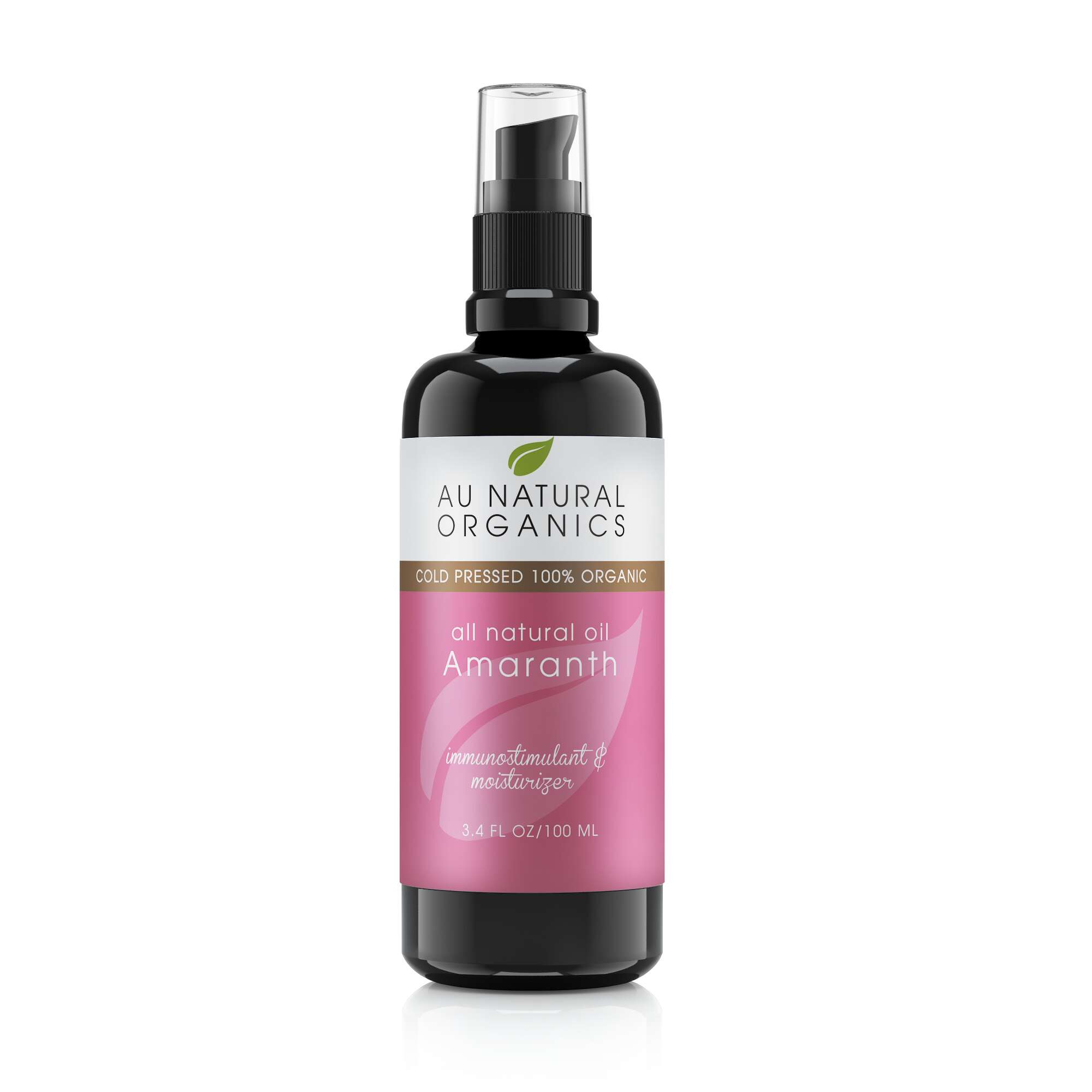
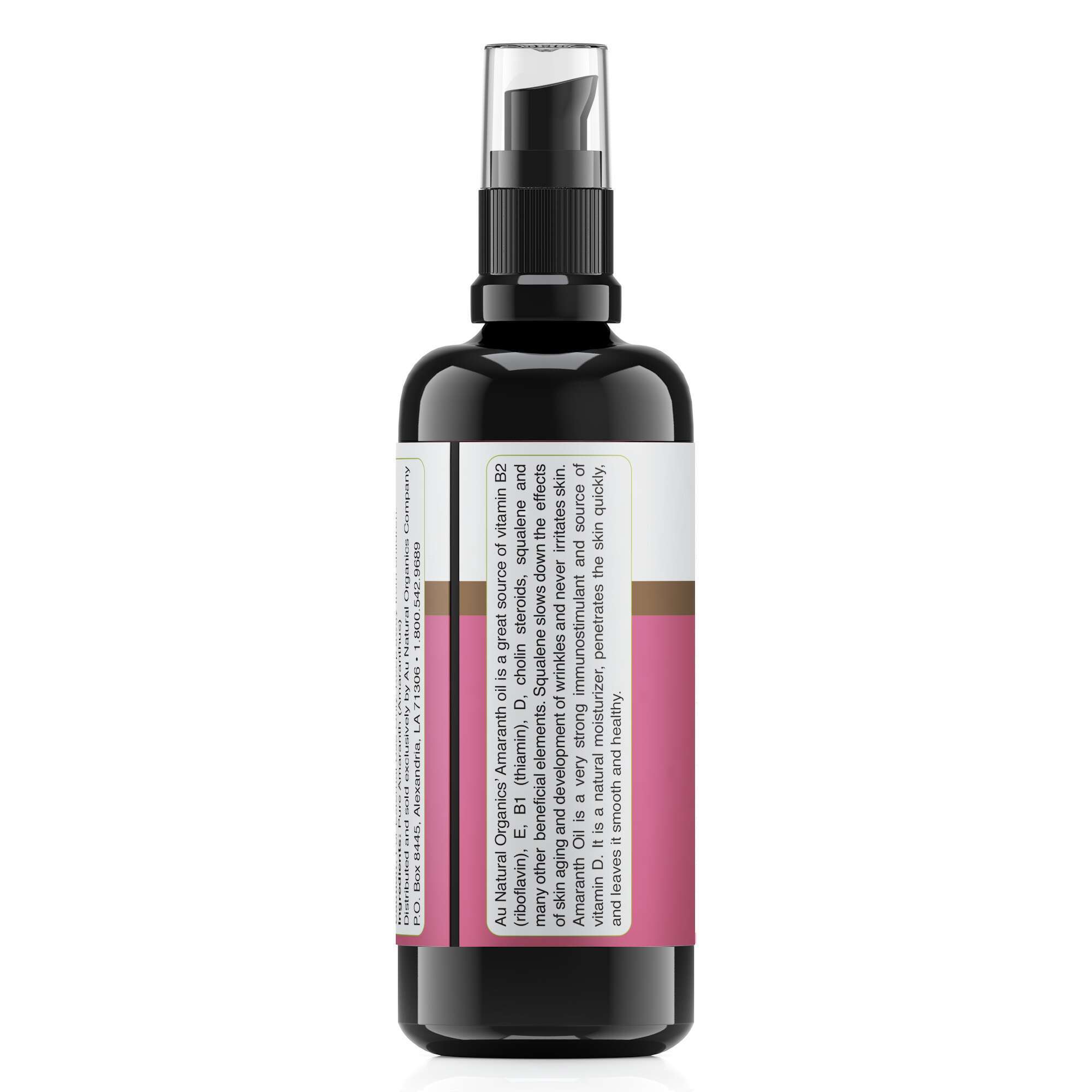
Amaranth is a fast-growing annual with dense red, purple or gold seed heads. It was domesticated in Mexico and Central America thousands of years ago and grown by the Aztecs as a staple grain. Today it is farmed in Mexico, Peru, Africa, Asia and increasingly Eastern Europe. The seeds are barely a millimetre across and hold only about five to nine percent oil, so many kilos of grain go into each litre. Amaranth oil is pale golden with a mild, nutty, slightly grassy scent. It is mostly linoleic and oleic acid and is notable for naturally containing squalene.
Details
| Botanical name | Amaranthus cruentus (amaranth) |
|---|---|
| Origin | The Americas; now grown worldwide |
| Part used | Seed |
| Extraction | Cold-pressed |
| Texture | Light, dry finish |
| Ingredients | 100% Amaranthus cruentus seed oil |
Why supply is limited: amaranth seeds hold far less oil than sunflower or sesame, so large quantities of grain are needed for each batch.
How to use
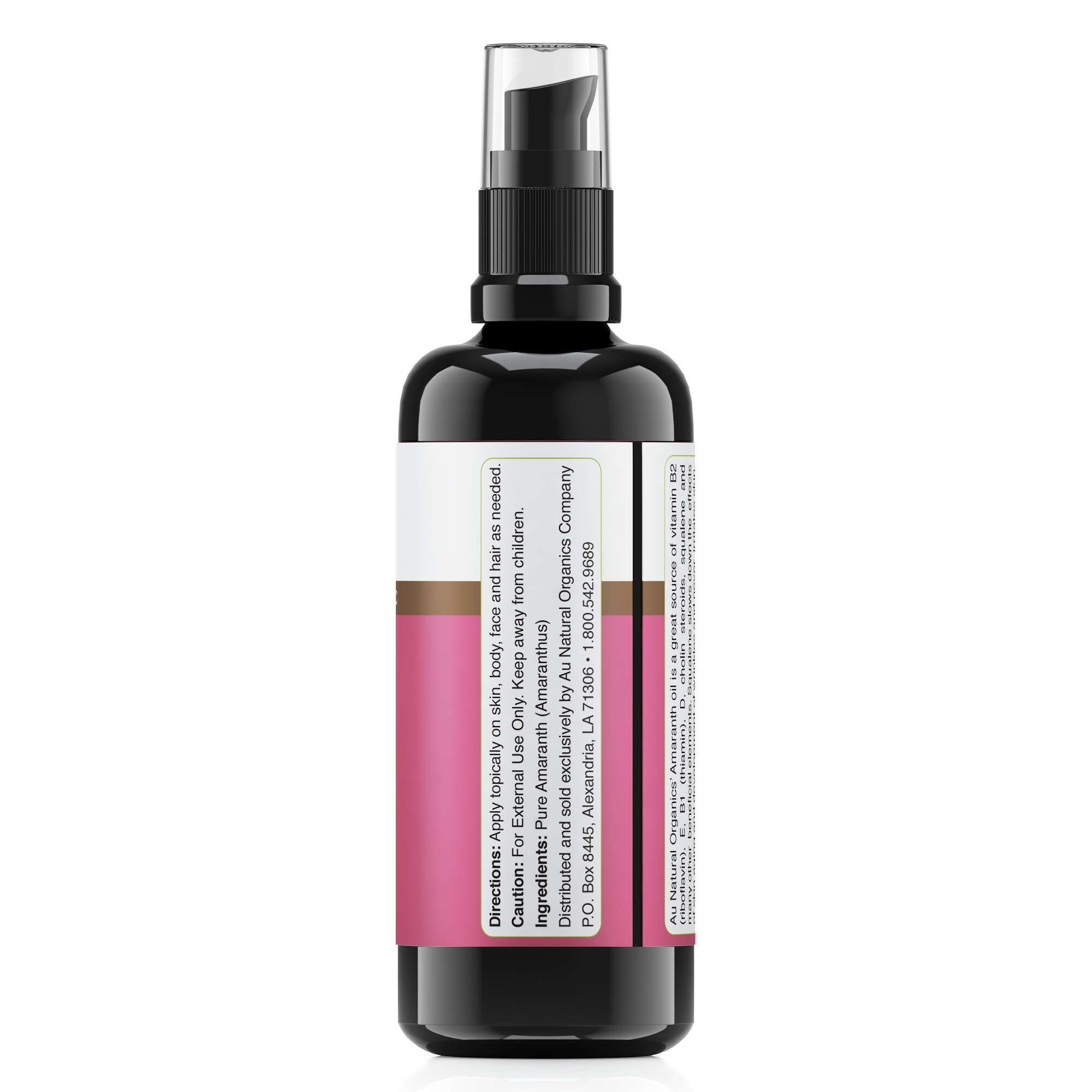
- Hair: smooth a few drops through dry lengths, or massage into the scalp before washing.
- Face: press 2 to 3 drops into clean skin.
- Blends: add to face oils and serums.
Patch test on the inner arm before first use. Keep away from the eyes. Store somewhere cool and dark with the cap closed.
FAQs
What is squalene?
A natural oil component found in amaranth seed oil and a few other plant oils.
Is it greasy?
No. It is light with a dry finish.
What does it smell like?
Mild, nutty and slightly grassy.


Dreg –
best oil ..