

Shea butter can be an ingredient in lip balm, but a list measured in tablespoons with optional essential-oil drops is not a validated formulation. A useful DIY plan starts with a tested recipe, ingredient suitability and clean preparation rather than promises of healing or UV protection.
Understand the ingredient roles
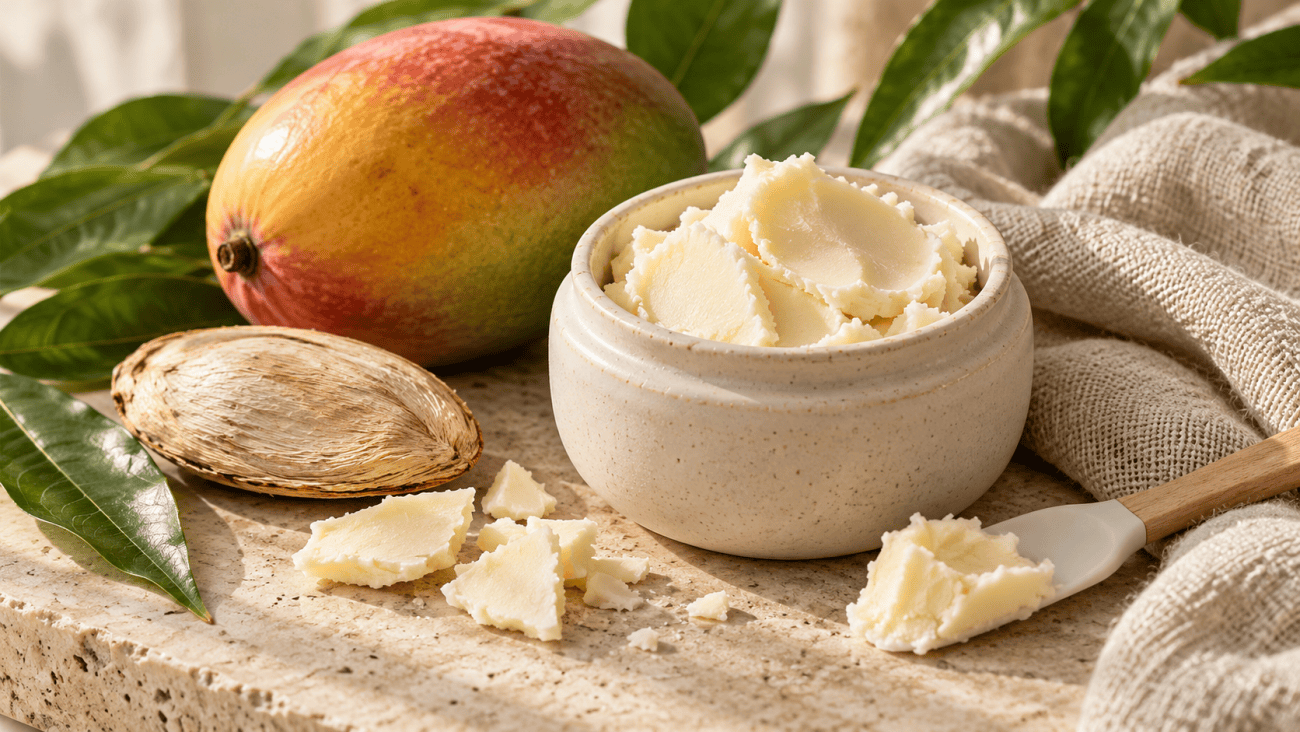
The Shea ingredient guide introduces the botanical fat. In a balm formula, a butter contributes texture and emollient feel; a wax provides structure and a suitable liquid oil adjusts spreadability. The final proportions determine whether the balm is firm, soft or difficult to apply.
Beeswax is animal-derived. If a vegan formula is your goal, use a tested recipe designed for a plant wax rather than making a one-for-one substitution and assuming the texture will remain the same.
Use a formulation you can reproduce
- Select a tested lip-balm formula with quantities by weight and a defined process.
- Confirm that every ingredient is appropriate for lip products at the stated concentration.
- Use a suitable scale, clean dry equipment and compatible containers.
- Follow the recipe’s heating, filling and cooling instructions.
- Label the ingredients and preparation date and follow supported storage guidance.
The earlier tablespoon recipe and optional 5–10 essential-oil drops have been replaced with this preparation checklist because their safety and stability were not validated. Do not add water, aloe juice, hydrosols or fresh botanicals to a water-free recipe without reformulation and appropriate preservation.
Keep fragrance and sun protection separate
For chapped lips, AAD guidance advises avoiding irritating fragrance ingredients and using a suitable SPF lip product outdoors. This DIY checklist does not establish SPF, and botanical oils or butter should not be represented as sunscreen.
A homemade balm is not automatically gentler, safer or longer-lasting than a commercially formulated product. Stop if it stings or causes irritation. Persistent or worsening lip symptoms need appropriate advice.
Do not invent a shelf life
Preparation conditions, packaging and the full formula affect stability. A pleasant smell or the addition of vitamin E does not establish that a batch is adequately preserved. For products made for sale or shared with others, review the FDA homemade-cosmetics resource and obtain qualified formulation guidance.
Compare raw materials in the butter collection, checking exact product suitability before using them on lips.
Updated 12 October 2026. This editorial refresh was prepared with AI assistance and checked against the sources linked in this article. It has not been clinically reviewed.


Leave a comment
You must be logged in to post a comment.